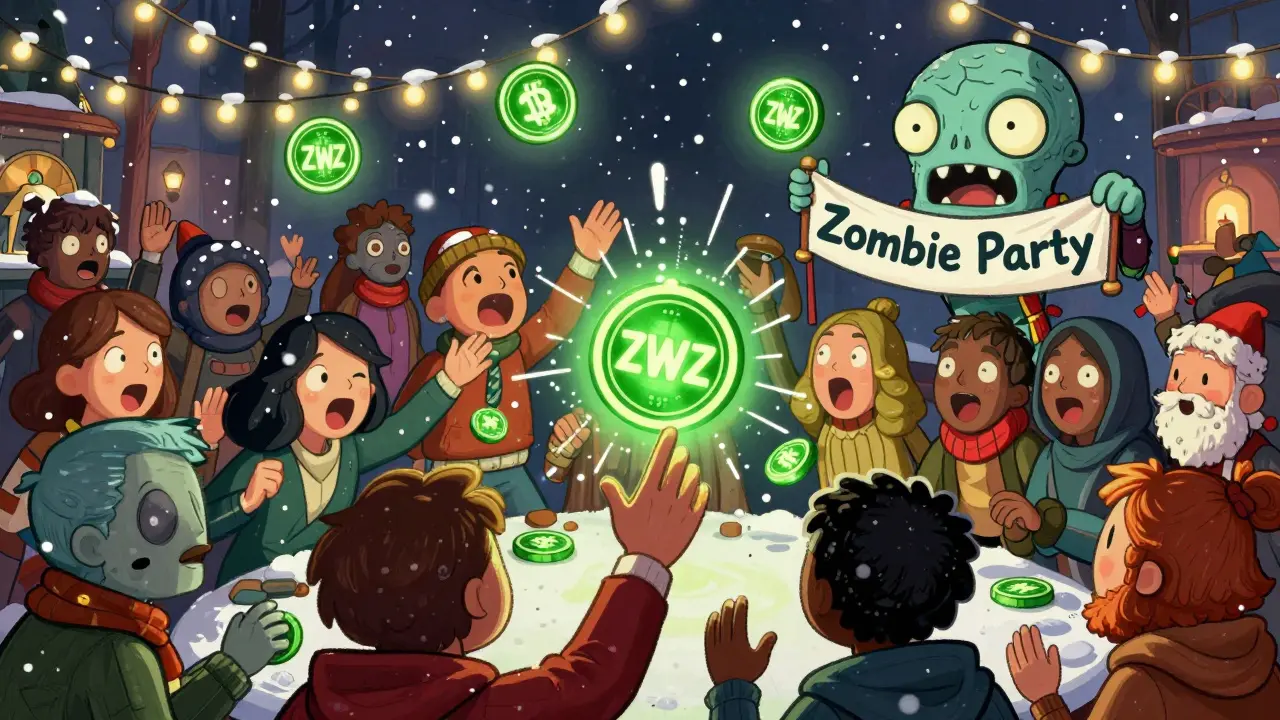
Remember the winter of 2021? The crypto market was buzzing with excitement. Projects were launching left and right, promising huge returns just for signing up. One name that popped up frequently during that holiday season was Zombie World Z, often referred to by its ticker symbol, ZWZ. It promised a "Zombie Party" and distributed tokens through a massive giveaway.
If you are reading this in 2026, you might be wondering if those tokens still hold value, or perhaps you missed out back then and want to know what happened. The short answer is complex. While the airdrop campaign was real and attracted millions of participants, the project’s current status raises serious questions about its viability and safety. This guide breaks down exactly what the ZWZ giveaway was, how it worked, and why you need to exercise extreme caution today.
The Anatomy of the 2021 ZWZ Giveaway
To understand where Zombie World Z stands today, we first have to look at its origin story. The project launched its major promotional push during the Christmas and New Year period of 2021. Specifically, the campaign ran from December 24, 2021, to January 4, 2022. This timing wasn't accidental; it targeted users who were likely looking for festive digital gifts or easy entry points into the booming crypto market.
The platform used to host this event was CoinMarketCap, specifically through their JLaunchpad section. This gave the project an initial veneer of legitimacy, as CoinMarketCap is a trusted data aggregator. However, hosting on a platform does not equal an endorsement of the project's long-term quality. During these 11 days, the project claimed to attract nearly 4,000,000 participants. That is a staggering number for a relatively unknown gaming token at the time.
The prize pool consisted of 200,000 $ZWZ tokens. These were distributed among eligible winners who completed specific tasks. But what were these tasks? They weren't just clicking a button. Participants had to follow detailed instructions published on the project’s Substack publication. This was a key part of their marketing strategy-forcing users to engage with their content and educational materials. If you missed even one step, you were excluded from the winner list. No exceptions.
How Participation Worked: Tasks and Requirements
Let’s get into the weeds of how you actually got your hands on these tokens back then. The process was designed to build community engagement, but it also acted as a filter. Here is what typical participation looked like:
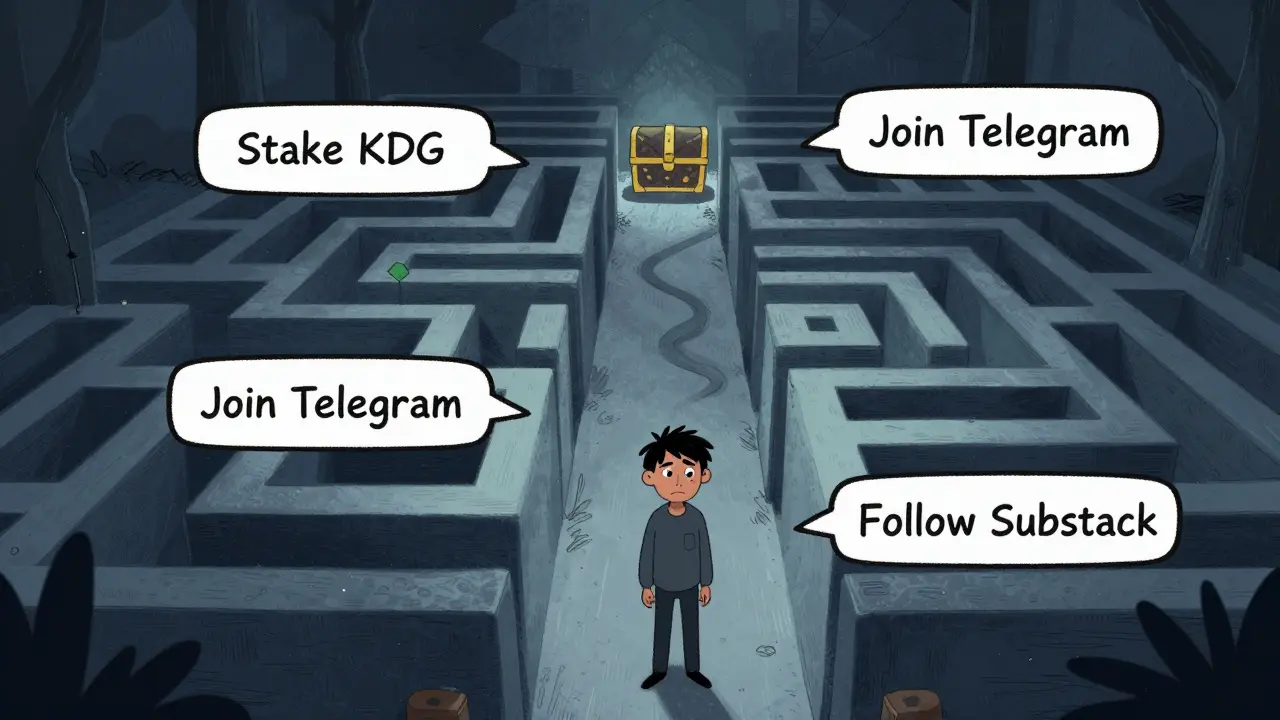
- Task Completion: Users had to follow a strict checklist provided on Substack. This often included joining Telegram groups, following social media accounts, and sharing posts.
- IDO Staking Requirement: For those interested in the Initial DEX Offering (IDO), the barrier to entry was higher. You needed to stake another token called KDG. To guarantee participation in the IDO, you had to stake a minimum of 100,000 KDG tokens. Community participation required a lower threshold of 5,000 KDG.
- Verification: The system checked for completeness. Incomplete task lists meant zero reward. This created a high-pressure environment for participants who wanted to ensure they didn't miss out.
This structure is common in early-stage crypto projects. They use airdrops to create a large user base quickly. By requiring staking of other tokens (like KDG), they also drive liquidity and attention to partner ecosystems. It’s a clever growth hack, but it doesn’t necessarily mean the underlying product-the game itself-is good.
Current Status: Where Is Zombie World Z Now?
Here is where things get tricky. We are now in May 2026. The hype from late 2021 has long faded. So, what happened to Zombie World Z?
The most glaring issue is the lack of reliable market data. According to analyses from sources like BeInCrypto, there is a severe absence of accurate trading data for the ZWZ token. When you can’t find consistent price charts, volume history, or exchange listings, it usually signals one of three things:
- The token is delisted from major exchanges.
- Trading volume is so low it’s statistically insignificant.
- The project has stalled or ceased active development.
Without recent updates, a clear roadmap, or a visible development team, it is difficult to assess the project’s operational status. The official communication channels, such as Substack, which were once active with tutorials, appear quiet or inactive compared to the peak of the airdrop. There is no evidence of significant product launches, game updates, or community growth beyond that initial 2021-2022 burst.
Red Flags: Why Caution Is Essential
In the world of cryptocurrency, silence is often louder than noise. Let’s look at the red flags associated with Zombie World Z today. These are critical points to consider before interacting with any remaining assets or related platforms.
| Risk Factor | Details | Impact Level |
|---|---|---|
| Lack of Trading Data | No reliable price or volume history available on major trackers. | High |
| Missing Documentation | No comprehensive whitepaper, technical specs, or team info found. | High |
| Stale Development | No recent milestones or updates since the 2022 airdrop conclusion. | Critical |
| Competitive Landscape | Outpaced by established giants like Axie Infinity and The Sandbox. | Medium |
Consider the competitive landscape. Since 2021, blockchain gaming has evolved dramatically. Projects like Axie Infinity, The Sandbox, and Decentraland have set high standards for gameplay, tokenomics, and community engagement. Zombie World Z has not demonstrated any technological innovation or unique gaming mechanics that would differentiate it in this crowded space. Without a clear utility function for the ZWZ token, its value proposition remains weak.
Comparison: ZWZ vs. Established Crypto Gaming Tokens
To put things in perspective, let’s compare Zombie World Z with a more established player in the field. This helps illustrate why due diligence matters.
| Feature | Zombie World Z (ZWZ) | Axie Infinity (AXS) |
|---|---|---|
| Launch Year | 2021 | 2018 (Mainnet 2020) |
| Active Development | Unclear / Likely Stalled | Active, Regular Updates |
| Token Utility | Vague / Not Defined | Governance, Staking, In-Game Purchases |
| Market Data Availability | Poor / Missing | Comprehensive on Major Exchanges |
| Community Size | Declining / Unknown | Millions of Active Users |
As you can see, the gap is significant. AXS has a clear utility, active development, and transparent market data. ZWZ lacks these foundational elements. This comparison isn't just about picking a winner; it's about understanding what a healthy crypto project looks like versus one that may have run its course.
What Should You Do With Your ZWZ Tokens?
If you received ZWZ tokens in the 2021 airdrop and still hold them, here is a practical approach:
- Check Liquidity: Try to find a legitimate exchange listing. If you can’t trade it easily, your options are limited. Do not attempt to trade on obscure decentralized exchanges with high slippage risks unless you fully understand the smart contract risks.
- Ignore Unsolicited Offers: Be wary of anyone claiming they can buy your ZWZ tokens at a premium. Scammers often target holders of dead or illiquid tokens.
- Conduct Fresh Research: Look for any new announcements from the official Substack or social channels. If there is silence, assume the project is dormant.
- Tax Implications: Remember that receiving an airdrop can have tax implications depending on your jurisdiction. Even if the token is worthless, keep records of the receipt date and fair market value at that time (which was likely very low or zero).
Don’t throw good money after bad. Investing more into a project with no clear future is rarely a winning strategy. Instead, focus on projects with transparent teams, active communities, and verifiable technology.
The Bigger Picture: Learning from Airdrop Culture
The ZWZ case is a perfect example of the "airdrop culture" that dominated 2021. Many projects used giveaways as their primary marketing tool, hoping to create a floor price through sheer numbers. While this can work short-term, it fails without a sustainable product. Zombie World Z positioned early participants as "special users" invited to a "Zombie Party." But parties end, and games need to be fun and functional to last.
Today, the crypto market is more mature. Users demand more than just free tokens. They want play-to-earn mechanics that make sense, governance rights that matter, and technology that scales. Projects that rely solely on hype and giveaways struggle to survive the bear markets that inevitably follow bull runs.
Is the Zombie World Z (ZWZ) airdrop still active in 2026?
No, the main ZWZ airdrop campaign concluded in January 2022. There are no credible reports of ongoing official airdrops from the Zombie World Z team as of 2026. Any claims of new giveaways should be treated with extreme skepticism.
Where can I buy or sell ZWZ tokens?
Finding a legitimate place to trade ZWZ is difficult due to a lack of reliable market data and exchange listings. BeInCrypto notes a severe absence of trading data. If you find a platform offering trades, verify its security thoroughly, as low-liquidity tokens are prone to scams.
What was the purpose of the KDG staking requirement?
During the Initial DEX Offering (IDO), participants had to stake KDG tokens to qualify for ZWZ allocation. This was a common tactic to drive interest and liquidity to the KDG ecosystem while filtering for serious participants. Minimum stakes ranged from 5,000 to 100,000 KDG.
Is Zombie World Z a scam?
While the airdrop itself was a real event hosted on CoinMarketCap, the project exhibits many signs of abandonment or failure. The lack of development updates, missing documentation, and absent trading data suggest it is not a viable investment today. Exercise caution and do not invest further funds.
How does Zombie World Z compare to other crypto games?
Compared to established projects like Axie Infinity or The Sandbox, Zombie World Z lacks active development, clear token utility, and a strong community presence. It has failed to keep pace with industry standards set by competitors since its 2021 launch.