You see the headline: ZedDex Exchange offers zero fees. It sounds like a dream for any trader tired of watching profits vanish into maker and taker charges. But before you connect your wallet, pause. In the crypto world, if something looks too good to be true, it usually hides a massive catch. ZedDex, often confused with the ZEDXION token, is a micro-cap platform built on the Binance Smart Chain (BSC). As of late 2026, it lists just four cryptocurrencies and six trading pairs. That’s not a typo. Four.
This isn’t a bustling hub of activity. Traffic analytics show roughly 47 monthly visits. Compare that to giants like Binance or Coinbase, which process millions daily. You’re essentially walking into an empty room hoping to find a party. This review breaks down what ZedDex actually offers, why its "zero fee" model might cost you more in hidden ways, and whether this obscure exchange deserves a spot in your portfolio strategy.
What Exactly Is ZedDex?
ZedDex Exchange is a decentralized cryptocurrency trading venue operating on the Binance Smart Chain network. Launched around 2024, it positions itself as a low-cost alternative for traders who want to avoid traditional exchange fees. Unlike centralized exchanges that hold your keys, ZedDex interacts directly with your Web3 wallet. However, don't confuse the exchange with the ZEDXION token, which trades on other platforms like PancakeSwap. The exchange itself has minimal market presence, ranking near the bottom of global exchange lists by volume and user engagement.
The platform’s core proposition is simplicity. No complex order books, no margin trading, no futures contracts. Just basic spot trading for a handful of assets. If you are looking for deep liquidity or advanced charting tools, you won't find them here. ZedDex functions more like a niche utility than a comprehensive financial ecosystem.
The Truth Behind Zero Fees
Everyone loves free stuff. ZedDex advertises 0.00% maker and taker fees. On paper, this beats Binance’s standard 0.10% taker fee or even their discounted rates for high-volume users. But fees aren't the only cost of trading. You also pay for liquidity through the bid-ask spread.
Data from CoinGecko indicates ZedDex maintains an average bid-ask spread of 0.603%. While this number seems narrow compared to some illiquid altcoins, context matters. With only six trading pairs, your ability to exit a position at a fair price depends entirely on whoever else happens to be online. If you try to sell a larger amount, you might face significant slippage because there simply aren't enough buyers. A 0.6% spread eats up nearly all the savings you gained from zero trading fees. Plus, you still pay gas fees on the Binance Smart Chain, which can fluctuate based on network congestion.
Liquidity and Asset Selection: The Major Bottlenecks
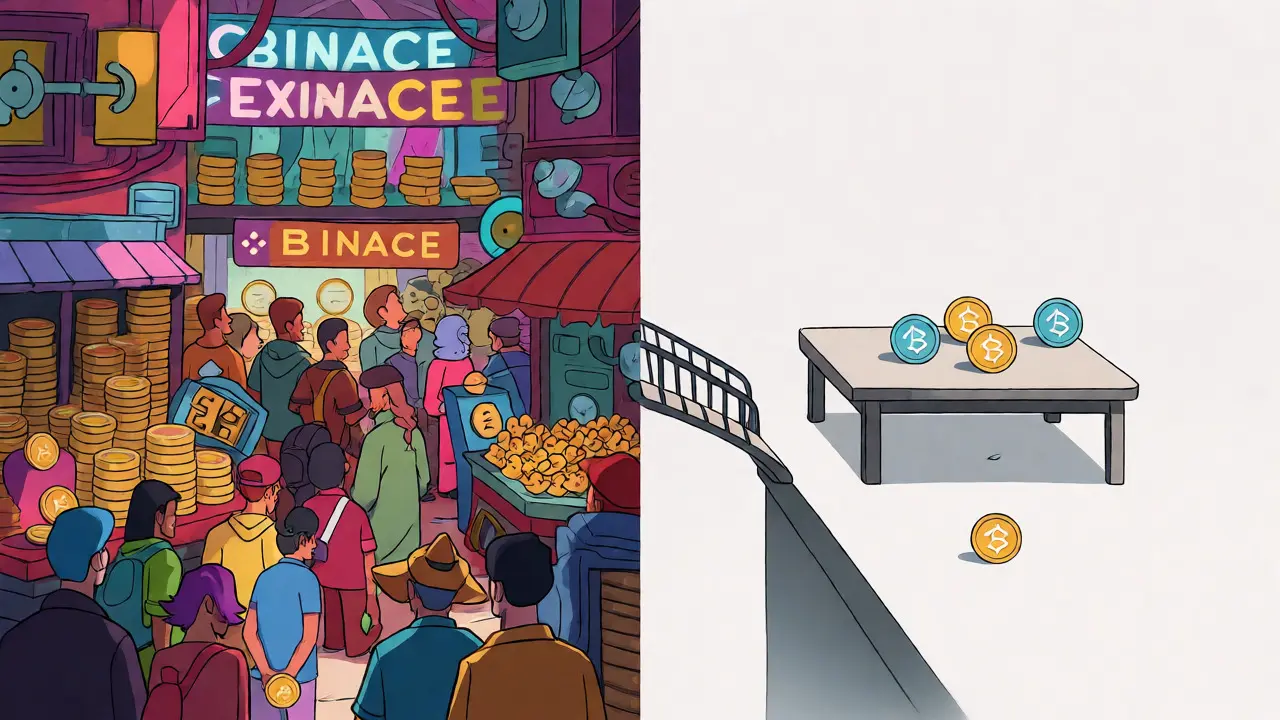
Let’s look at the hard numbers. ZedDex lists only four cryptocurrencies. For most traders, this is a dealbreaker. You cannot diversify. You cannot hedge. You are limited to whatever those four specific tokens are. If one of them crashes due to project-specific news, your entire portfolio on this exchange takes a hit. There is no safety net of broad market exposure.
Furthermore, the trading volume is negligible. ZedDex sits in the 67th percentile for trading volume among comparable low-tier platforms, but that baseline is incredibly low. In practical terms, this means orders may sit unfilled for hours or days. You might place a buy order at $1.00, but if no seller matches it immediately, you wait. Or worse, you get filled partially at a worse price. This lack of depth makes ZedDex unsuitable for anyone trading more than a few hundred dollars.
| Feature | ZedDex Exchange | Binance (Reference) | PancakeSwap (Reference) |
|---|---|---|---|
| Trading Fees | 0.00% | 0.10% (Taker) | 0.25% - 0.30% |
| Listed Assets | 4 Coins | 1,500+ Coins | Thousands |
| Monthly Traffic | ~47 Visits | Millions | Tens of Millions |
| Regulatory Status | Unregulated | Partially Regulated | Decentralized (No KYC) |
| Security Features | Basic Smart Contract | Cold Storage + Insurance Fund | Audited Contracts |
Security and Regulatory Risks
Here is where things get risky. ZedDex operates without regulatory oversight from major authorities like the FCA in the UK, ASIC in Australia, or NYDFS in New York. When you deposit funds into a regulated exchange, there are legal frameworks protecting consumer rights. If the exchange goes bankrupt, there are processes for creditor claims. On ZedDex, you are largely on your own.
There is no documented proof-of-reserves. You cannot independently verify that the exchange holds the assets it claims to have. While it runs on smart contracts, code vulnerabilities exist. Without public audits from reputable firms like CertiK or Hacken displayed prominently, you are trusting anonymous developers with your capital. Remember, the failure rate for unregulated crypto platforms under two years old is estimated at 38% by the Cambridge Centre for Alternative Finance. ZedDex fits squarely into this high-risk category.
User Experience and Community Feedback
If you search for reviews on Trustpilot, Reddit, or Bitcointalk, you will find almost nothing. Not negative reviews-just silence. ZedDex has zero user reviews on major aggregators. This absence of feedback is alarming. It suggests either extremely low adoption or a community so small it hasn't formed a voice yet.
The website itself reflects this emptiness. Analytics show users view an average of 1.04 pages per session with a bounce rate of 36%. Most visitors leave immediately after landing. There are no active Telegram groups, no Discord servers buzzing with chatter, and no support tickets being resolved publicly. If you encounter a bug or a stuck transaction, do you have customer support? Likely not. You are left troubleshooting alone with minimal documentation.
Who Should Actually Use ZedDex?
Is ZedDex useless? Not necessarily, but its use case is razor-thin. It works best for:
- Micro-traders: People testing very small amounts of capital who want to experiment with BSC-based trading without worrying about percentage fees.
- Token Specific Traders: If one of the four listed coins is specifically what you want to buy/sell and it’s cheaper here than elsewhere due to zero fees (and you accept the liquidity risk).
- Privacy Seekers: Since it’s likely non-KYC, users who prioritize anonymity over regulatory protection might tolerate the risks.
It fails completely for:
- Active Day Traders: Slippage and low volume will destroy your edge.
- Institutional Investors: Compliance and security requirements are not met.
- Long-term Holders: Why store assets on an exchange with unknown solvency when you can self-custody?
Final Verdict: High Risk, Low Reward
ZedDex Exchange is a curiosity rather than a competitor. Its zero-fee model is attractive, but the trade-off is severe: poor liquidity, limited asset selection, and zero regulatory protection. The platform lacks the transparency and community trust required for serious trading. If you decide to try it, treat it like a casino. Only deposit what you are willing to lose entirely. For most people, sticking to established platforms like Binance, Kraken, or even larger DEXs like Uniswap or PancakeSwap offers better security and execution quality, even with small fees.
Is ZedDex Exchange safe to use?
Safety is relative. ZedDex uses blockchain technology, which provides transparency, but it lacks regulatory oversight, insurance funds, and public audits. There is a higher risk of smart contract bugs or operational failure compared to regulated exchanges. Users should exercise extreme caution and limit deposits to disposable income.
Why does ZedDex claim zero fees if spreads are high?
Zero trading fees refer to the commission charged per trade. However, the bid-ask spread acts as an indirect cost. With low liquidity, the gap between the highest buy price and lowest sell price can widen significantly during volatility, effectively costing you more than a standard 0.1% fee would on a liquid exchange.
Can I withdraw my funds easily from ZedDex?
Withdrawals depend on the platform's operational status and liquidity. Given the low traffic and lack of user reviews, there is anecdotal uncertainty about withdrawal speed and reliability. Always test with a small amount first before committing significant capital.
Does ZedDex require KYC verification?
As a decentralized exchange on the Binance Smart Chain, ZedDex typically does not require Know Your Customer (KYC) identity verification for basic trading. This allows for greater privacy but also means less recourse if issues arise.
How many cryptocurrencies are listed on ZedDex?
As of recent data, ZedDex lists only four cryptocurrencies across six trading pairs. This extremely limited selection restricts diversification and increases dependency on the performance of those specific assets.
four coins is wild i tried it for a sec and the slippage ate my lunch
Four. Coins. Six pairs. Forty-seven visits. This isn't an exchange, it's a ghost town with a smart contract attached. You're not saving money on fees; you're paying a premium in risk just to feel like you're getting a deal.
Hey everyone! I think its important to look at the gas fees too since BSC can get congested :). The zero fee thing is cool but if your spread is 0.6% you are basically losing that savings instantly. Maybe stick to bigger DEXs for now? :)
You people are so naive it hurts. You see "zero fees" and your brains turn to mush. Do you have any idea how many rug pulls happen because of low liquidity? ZedDex is a death trap. If one whale sells, the price goes to zero and you lose everything. Stop gambling with your rent money!
I appreciate the detailed breakdown provided here. It is crucial for us to remember that financial decisions should always prioritize security over minor cost savings. For those new to crypto, perhaps starting with a more established platform would be beneficial to avoid unnecessary stress. We must protect our capital while we learn the ropes.
Thank you for this review, Manoj. I completely agree with your sentiment regarding security. It is often difficult to find reliable information on micro-cap exchanges, so having a clear comparison table helps immensely. I would also suggest looking into insurance funds as a key differentiator when choosing a platform. Safety first, always!
Is it though? Or is it just capitalism eating itself again... We trade fees for risk, then trade risk for obscurity. ZedDex is the modern Sisyphus, pushing a boulder up a hill made of thin liquidity. Only the fools stay at the bottom.
This is basic stuff. Anyone who has traded for more than a week knows that volume equals safety. ZedDex has no volume. Therefore, it has no safety. Why are we even discussing this? Go use Binance or Kraken and stop wasting time on garbage platforms.
To add to the point about liquidity: the bid-ask spread mentioned in the article (0.603%) is actually quite significant when you consider the total transaction cost. When you combine this with BSC gas fees, the effective cost per trade might exceed what you'd pay on a centralized exchange with lower spreads. It is worth calculating the exact breakeven point before moving any funds there.
The lack of regulatory oversight is the primary concern. Without legal recourse, investors assume all liability. This platform does not meet the standard criteria for institutional-grade investment vehicles. It remains speculative at best.