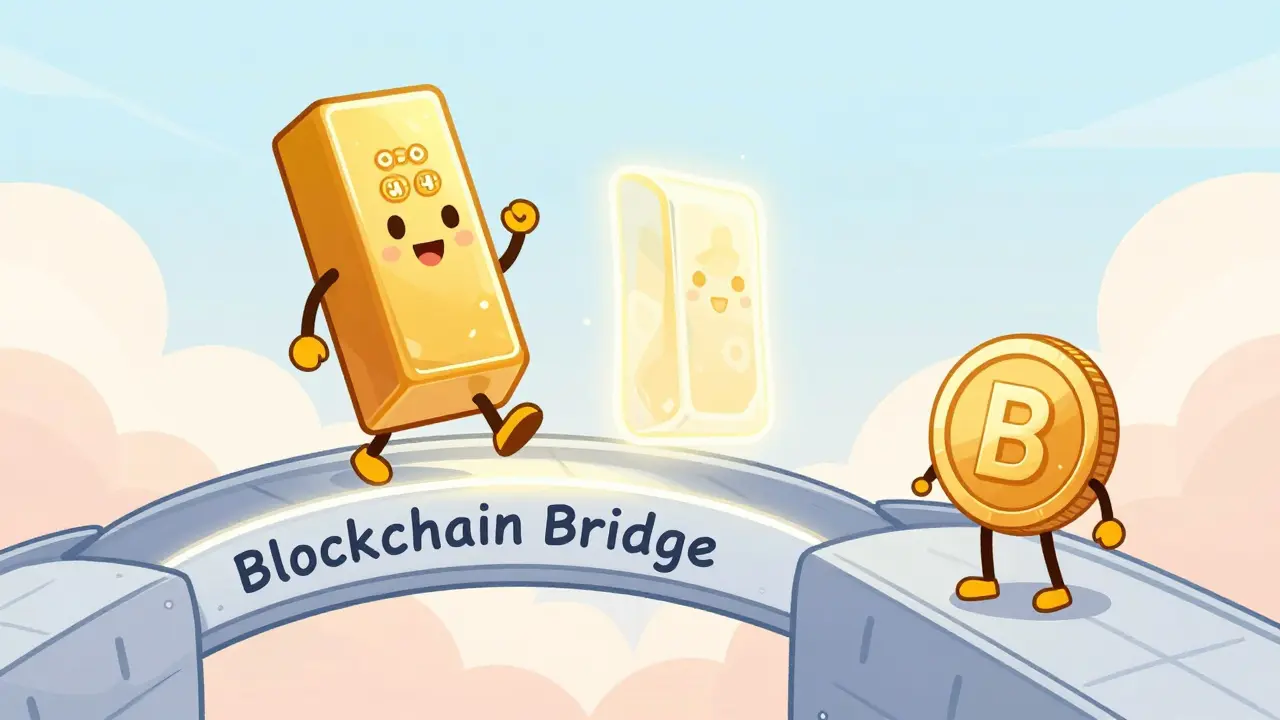
Imagine holding a stack of gold bars in your safe at home. You want to use that gold as collateral to buy a car from a dealer across town, but the dealer only accepts digital credits issued by his local bank. You can’t just mail the physical gold there instantly, nor can you easily convert it without selling it off first. This is the exact problem facing Bitcoin holders who want to participate in the vibrant lending and trading ecosystems built on Ethereum. Enter wrapped tokens, the bridge that allows assets from one blockchain to live and work on another.
In the world of Decentralized Finance (DeFi), wrapped tokens are not just a technical curiosity; they are the plumbing that keeps the entire industry flowing. Without them, billions of dollars in value would be trapped in isolated networks, unable to generate yield or facilitate trade. By mid-2026, the landscape has shifted from experimental bridges to robust, institutional-grade systems, yet the core mechanics remain simple: lock an asset here, get a receipt token there.
The Mechanics Behind the Magic
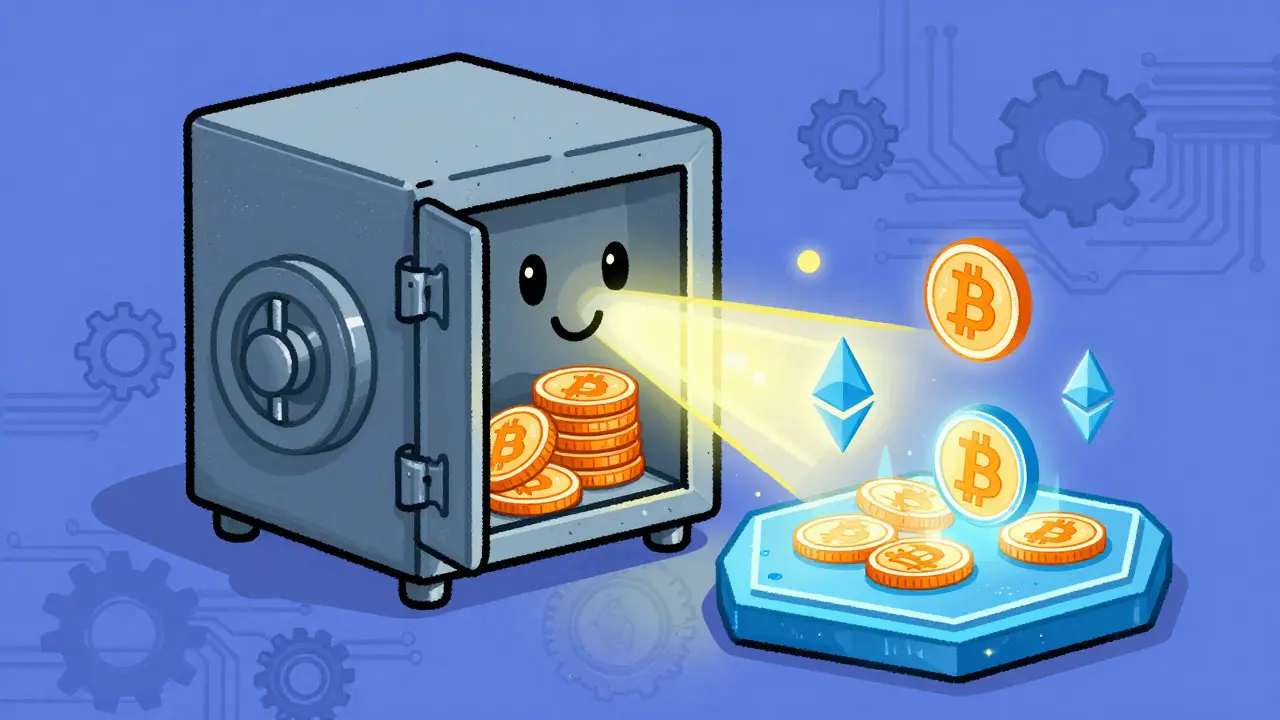
To understand why wrapped tokens matter, you first need to grasp how they are created. It isn’t magic; it’s a custodial process governed by smart contracts. When you decide to wrap your Bitcoin into Wrapped Bitcoin (WBTC), you aren’t creating new Bitcoin. Instead, you send your BTC to a secure vault managed by a custodian. Once the network confirms the deposit, a minting function triggers on the Ethereum blockchain, issuing an equivalent amount of WBTC to your wallet.
This process relies on three key players: merchants who initiate the request, custodians who hold the underlying assets, and sometimes Decentralized Autonomous Organizations (DAOs) that oversee governance. The crucial element is the 1:1 backing ratio. For every single WBTC in circulation, there must be exactly one BTC sitting in reserve. If you later decide you want your original Bitcoin back, you send the WBTC to a burning address. The smart contract destroys the token, and the custodian releases the corresponding BTC from the vault to your address. This mint-and-burn mechanism ensures that the supply of wrapped tokens never outpaces the real assets backing them, maintaining trust in the system.
Unlocking Bitcoin for Ethereum DeFi
The most prominent use case for wrapped tokens is enabling Bitcoin participation in Ethereum’s ecosystem. Bitcoin is the largest cryptocurrency by market cap, but its native blockchain is limited in functionality. It doesn’t support complex smart contracts like those found on Ethereum. Before WBTC existed, if you wanted to lend your crypto or provide liquidity, you had to sell your Bitcoin for Ether (ETH). This meant missing out on potential Bitcoin price appreciation while trying to earn yields elsewhere.
With WBTC, which operates as an ERC-20 token, Bitcoin holders can now plug directly into platforms like Uniswap and Curve Finance. You can deposit WBTC into a liquidity pool, earn trading fees, or use it as collateral to borrow stablecoins like USDC. This expands Bitcoin’s utility far beyond being a store of value. It turns a static asset into a productive financial tool without ever leaving the security of your self-custody wallet during the active DeFi phase.
| Feature | Native Asset (e.g., BTC) | Wrapped Asset (e.g., WBTC) |
|---|---|---|
| Smart Contract Support | Limited / None | Full Compatibility |
| DeFi Integration | Requires Bridging/Selling | Direct Access |
| Custody Risk | None (Self-Custody) | Custodian Dependency |
| Transaction Speed | Network Dependent | Host Chain Speed (e.g., ETH L2) |
| Primary Use Case | Store of Value / Payments | Lending / Yield Farming / Trading |
Cross-Chain Liquidity and Interoperability
Beyond Bitcoin, wrapped tokens solve the fragmentation problem across all major blockchains. In 2026, the multi-chain reality is fully established. Projects build on specialized chains: some for speed, others for storage, and others for privacy. However, liquidity tends to cluster where the users are. Wrapped tokens act as portable liquidity, allowing assets to flow to wherever the demand is highest.
Consider Wrapped Chainlink (wLINK). Chainlink provides oracle services-data feeds that connect blockchains to real-world information. These services are needed on many different networks. By wrapping LINK tokens, holders can stake their assets on non-Ethereum chains to secure oracle nodes, ensuring data integrity across the entire web3 infrastructure. Similarly, Wrapped Filecoin (wFIL) allows FIL holders to engage with financial protocols outside the Filecoin network. Since Filecoin is designed for decentralized storage, its native token wasn’t originally optimized for complex DeFi interactions on other chains. Wrapping FIL unlocks its value for lending and borrowing markets, increasing capital efficiency for storage providers.
This interoperability extends to smaller ecosystems too. Wrapped Tezos (wXTZ) enables XTZ holders to access DeFi applications built on chains different from Tezos. Without this, XTZ holders would be confined to the Tezos ecosystem, limiting their exposure to broader market trends and opportunities. Wrapped tokens democratize access, allowing any asset holder to participate in the global DeFi economy regardless of their native chain.
Enhancing Market Depth and Capital Efficiency
Liquidity is the lifeblood of DeFi. Thin order books lead to high slippage, meaning traders lose money simply by executing large orders. Wrapped tokens address this by aggregating demand. When a niche asset is wrapped onto a major hub like Ethereum or Arbitrum, it becomes accessible to thousands of existing users who already have wallets set up for those networks. They don’t need to learn new interfaces or manage keys for obscure chains.
Take Wrapped Stellar (wXLM) as an example. Stellar is known for fast, low-cost payments, but its DeFi ecosystem is relatively small compared to Ethereum. By wrapping XLM, holders can bring their assets to larger decentralized exchanges (DEXs). This increases visibility among the wider crypto community. As more traders see wXLM pools, they provide liquidity, which deepens the market. This creates a positive feedback loop: better liquidity attracts more users, which attracts more liquidity. The same logic applies to Wrapped Litecoin (wLTC), allowing LTC holders to utilize Ethereum-based platforms, thereby increasing the versatility of Litecoin within the broader financial landscape.
Capital efficiency is also improved because users no longer need to maintain separate balances for every chain they wish to interact with. You can hold one primary asset, wrap it as needed, and deploy it across various protocols for yield farming, staking, or swapping. This reduces the friction of entry and allows for more sophisticated portfolio strategies, such as arbitrage between different chains, without the hassle of constant manual bridging.

Security Considerations and Trust Models
While wrapped tokens offer immense utility, they introduce a critical vulnerability: counterparty risk. Unlike native Bitcoin, which is secured by its own proof-of-work consensus, WBTC relies on the honesty and security of its custodians. If the custodian loses the private keys to the vault, gets hacked, or acts maliciously, the wrapped tokens could become worthless. This centralization point contradicts the ethos of decentralization.
To mitigate this, the industry has moved toward greater transparency. Many modern wrapped token systems publish regular attestations proving the reserves match the circulating supply. Some projects are transitioning to decentralized custody models using multi-signature wallets controlled by diverse, independent entities rather than a single company. Users must always evaluate the trust assumptions behind a wrapped token. Is it backed by a reputable institution? Are the smart contracts audited? Is the redemption process transparent?
Additionally, smart contract risks exist on the host chain. Even if the custodian is honest, a bug in the wrapping protocol’s code could allow attackers to drain funds. Therefore, choosing well-established wrapped tokens with long track records and extensive audits is crucial. Newer, less-audited wrappers may offer higher yields but come with significantly higher risks.
Future Trends: Beyond Cryptocurrencies
The technology behind wrapped tokens is evolving beyond just cryptocurrencies. We are seeing the emergence of wrapped real-world assets (RWAs). Imagine owning a fraction of a commercial building or a treasury bond, represented as a token on a blockchain. To make these assets usable in DeFi, they are often wrapped to ensure compatibility with standard lending protocols. This brings traditional finance instruments into the decentralized sphere, potentially lowering barriers to entry for institutional investors.
Furthermore, as Layer 2 solutions mature, wrapped tokens will play a vital role in moving assets between mainnets and these faster, cheaper execution layers. The goal is seamless abstraction, where the user doesn’t even realize they are interacting with a wrapped version of their asset. The interface handles the wrapping and unwrapping in the background, providing a unified experience across the fragmented blockchain landscape.
What is the biggest risk associated with wrapped tokens?
The primary risk is counterparty risk. Wrapped tokens rely on custodians to hold the underlying assets. If the custodian is hacked, goes bankrupt, or refuses to release funds, the wrapped tokens may lose their value. Additionally, smart contract vulnerabilities in the wrapping protocol can lead to exploits.
How does WBTC differ from native Bitcoin?
Native Bitcoin exists on the Bitcoin blockchain and is used primarily for payments and store of value. WBTC is an ERC-20 token on the Ethereum blockchain that represents Bitcoin 1:1. WBTC can be used in Ethereum DeFi applications for lending, borrowing, and trading, whereas native Bitcoin cannot directly interact with Ethereum smart contracts.
Can I convert wrapped tokens back to the original asset?
Yes. The process is called unwrapping. You send the wrapped tokens to a designated burning address or through a supported platform. The smart contract destroys the wrapped tokens, and the custodian releases the equivalent amount of the underlying native asset to your wallet.
Why do I need wrapped tokens if I already have the native asset?
You need wrapped tokens to access features on blockchains that your native asset doesn't support. For example, if you hold Bitcoin but want to use a lending protocol on Ethereum, you must wrap your Bitcoin into WBTC first. This allows your asset to function within the foreign blockchain's ecosystem.
Are all wrapped tokens backed 1:1?
Reputable wrapped tokens are designed to be backed 1:1 by the underlying asset held in reserve. However, users should always verify the audit reports and reserve attestations of the specific wrapped token project to ensure transparency and solvency.