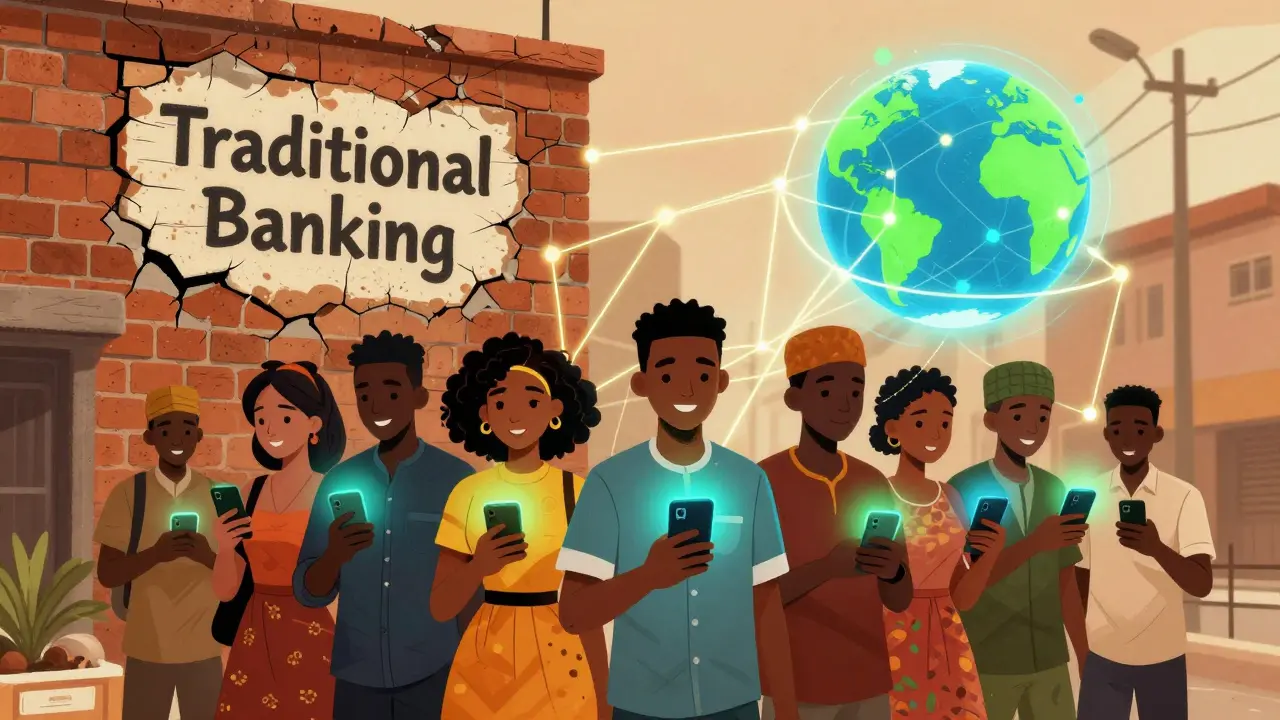
Imagine trying to send money to a friend abroad, only to have your bank freeze the transaction because you can’t prove where the funds came from. For millions of Nigerians, this isn’t a hypothetical nightmare-it’s daily life. Yet, instead of giving up, they found a workaround that has turned their country into the global heavyweight champion of peer-to-peer (P2P) cryptocurrency trading. While Western regulators debate rules, Nigeria is living them, driven by necessity and ingenuity.
As of mid-2026, Nigeria is the leading nation in global P2P crypto adoption, a title earned not through government subsidies but through sheer survival instinct. The Central Bank of Nigeria (CBN) spent years trying to ban crypto, inadvertently forcing users into decentralized networks. Now, with regulations shifting, that underground infrastructure is becoming the backbone of the nation’s financial system. This article breaks down how a banking ban created a crypto boom, why P2P trading is the preferred method for over 22 million users, and what this means for the future of finance in emerging markets.
The Push Factor: Why Banks Failed the People
To understand why Nigeria leads in P2P crypto trading is a direct response to systemic banking failures and currency instability, you first have to look at the problems it solves. It wasn’t about getting rich quick; it was about keeping money safe. Between 2016 and 2023, the Nigerian Naira lost more than 75% of its value against the US Dollar. Inflation spiked above 24%. If you kept your savings in a traditional bank account, you watched them evaporate every month.
Then there was the access issue. Approximately 36% of Nigerian adults are unbanked, meaning they don’t even have an account to save in. For those who do, the experience is often frustrating. Foreign remittances carry fees as high as 8%, and cross-border transactions are frequently blocked or delayed due to strict capital controls. The Central Bank of Nigeria (CBN) issued directives in 2017 instructing commercial banks to cease processing any cryptocurrency-related transactions. The goal was to protect the Naira and prevent capital flight. The result? It pushed the entire crypto ecosystem underground, forcing users to find ways to trade without touching traditional banking rails directly.
| Feature | Traditional Banking | P2P Crypto Trading |
|---|---|---|
| Transaction Fees (Remittance) | Up to 8% | 0.5% - 2% (platform dependent) |
| Currency Protection | None (exposed to Naira devaluation) | High (hold stablecoins like USDT) |
| Access Barrier | High (requires formal ID, credit history) | Low (smartphone + basic ID) |
| Speed of Transfer | 1-3 business days (international) | Minutes (on-chain settlement) |
| Regulatory Risk | Account freezes common | Platform bans possible, but funds remain on-chain |
How P2P Trading Became the Default Solution
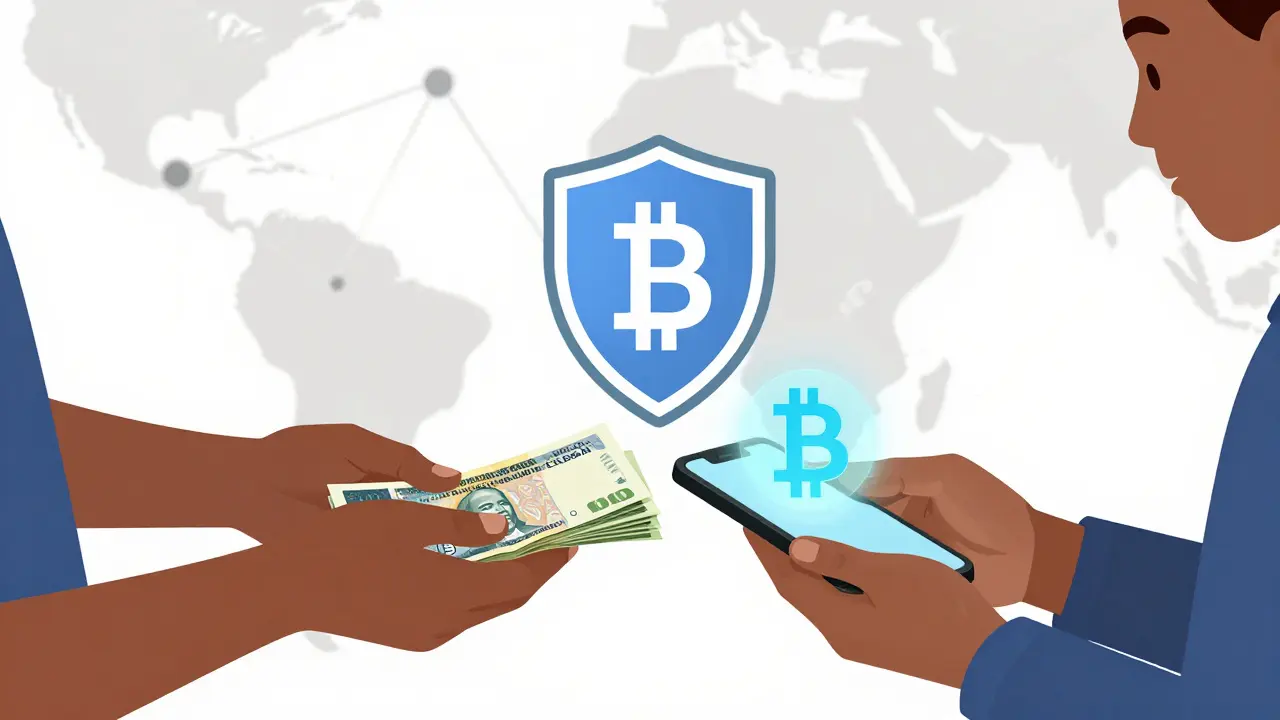
When banks stopped facilitating crypto purchases, Nigerians didn’t stop buying Bitcoin. They just changed how they did it. Peer-to-peer (P2P) trading platforms emerged as the bridge between the fiat world and the blockchain. In a P2P transaction, two individuals agree on a price. One sends Naira via bank transfer or mobile money, and the other releases crypto from an escrow account held by the exchange platform. The platform acts as a trusted middleman, holding the crypto until the buyer confirms receipt of the Naira.
This model bypasses the CBN’s restrictions on banks dealing directly with crypto exchanges. The bank sees a normal person-to-person transfer, while the exchange handles the crypto side. By 2020, Bitcoin/Naira had become the most traded pair in the country, with total transaction volumes reaching $400 million. Today, that number is exponentially higher. Platforms like Quidax, Patricia, and Luno localized their services, offering customer support in local languages and integrating popular payment methods like OPay and Palmpay. This localization lowered the barrier to entry significantly. You didn’t need to be a tech expert; you just needed a smartphone and a willingness to learn.
The sophistication of this network is remarkable. Users developed strategies to avoid triggering anti-money laundering (AML) alerts on their bank accounts. They split large transfers into smaller chunks, used multiple accounts, and timed transactions to match typical salary deposits. This grassroots innovation created a resilient infrastructure that could withstand regulatory pressure. When the CBN tightened rules in 2021, causing a temporary crash in liquidity, the P2P market adapted within weeks by introducing new verification tiers and alternative payment methods.
The Regulatory U-Turn: From Ban to Blueprint
For years, the relationship between the Nigerian government and crypto was adversarial. But by late 2023, the reality became undeniable: you cannot ban what half the population relies on. The CBN lifted its ban on banks servicing crypto businesses, marking a pivotal shift. This wasn’t just a concession; it was a recognition of opportunity. The government realized that taxing and regulating crypto would generate more revenue than fighting it.
In 2025, the Investments and Securities Act was enacted, formally recognizing digital assets as financial securities. This provided legal clarity for exchanges and investors. Suddenly, institutional players entered the space. The Nigeria Inter-Bank Settlement System (NIBSS), the backbone of the country’s electronic payments, partnered with Zone’s blockchain network. This integration allowed for faster, more transparent interbank settlements using blockchain technology. It signaled a move from informal P2P chaos to regulated, institutional-grade infrastructure.
This regulatory maturity has boosted investor confidence. Moniepoint, a major fintech player, achieved unicorn status in 2025 with a $1 billion valuation, partly fueled by the broader acceptance of digital finance tools. The shift suggests that Nigeria’s P2P dominance won’t disappear; it will evolve. We are seeing a hybrid model emerge where grassroots P2P trading coexists with regulated exchange-traded products. This balance allows everyday users to retain control over their assets while providing institutions with compliant entry points.

User Experience: Safety, Security, and Community
Despite the growth, trust remains the biggest hurdle. Early associations with scams like Bitconnect and MMM left a scar on public perception. Many older Nigerians still view crypto as a Ponzi scheme. Overcoming this required massive community-led education. Telegram groups, WhatsApp communities, and YouTube tutorials became the primary schools for crypto literacy. Users taught each other how to secure wallets, recognize phishing attempts, and verify traders’ reputations on P2P platforms.
Security practices have improved dramatically. Most reputable P2P platforms now require multi-factor authentication (MFA) and biometric verification. However, risks persist. Chargeback fraud-where a buyer pays with Naira but then disputes the transaction with their bank-is a constant threat. To combat this, platforms use AI-driven risk scoring to flag suspicious behavior. Traders with high completion rates and positive reviews enjoy lower fees and higher limits, creating a meritocratic system within the marketplace.
The learning curve is manageable but real. A beginner typically needs 2-4 weeks to feel comfortable with basic P2P trading. Advanced strategies, such as arbitrage between different platforms or leveraging stablecoins for yield farming, take months to master. Nevertheless, the payoff is significant. Users report saving 60-80% on transaction costs compared to traditional money transfer services like Western Union. For a freelancer earning in Dollars but living in Lagos, this difference is life-changing.
Future Outlook: Africa’s Crypto Capital?
Nigeria’s trajectory suggests it will remain a global leader in crypto adoption for the foreseeable future. With an estimated 22 million users expected by 2025-a figure that likely grew by mid-2026-the penetration rate surpasses many developed economies. The young, tech-savvy demographic ensures sustained demand. As inflation pressures continue and the Naira faces volatility, the appeal of holding assets in USD-pegged stablecoins will only increase.
However, challenges remain. International pressure regarding financial compliance could lead to stricter KYC (Know Your Customer) requirements, potentially slowing down casual trading. Competition from Central Bank Digital Currencies (CBDCs), such as the eNaira, poses another variable. While the eNaira offers official backing, it lacks the privacy and borderless nature of decentralized cryptocurrencies. Most analysts believe the two will coexist, serving different user needs.
Ultimately, Nigeria’s story is one of resilience. It proves that when traditional systems fail, people will innovate. The P2P crypto ecosystem is no longer just a workaround; it’s a robust financial layer that complements the national economy. For other emerging markets facing similar banking restrictions and currency crises, Nigeria offers a clear blueprint: empower the people, regulate wisely, and let the market decide.
Is P2P crypto trading legal in Nigeria in 2026?
Yes, P2P crypto trading is legal. The Central Bank of Nigeria lifted its ban on banks servicing crypto businesses in late 2023, and the 2025 Investments and Securities Act recognized digital assets as financial securities. However, users must comply with KYC regulations on licensed exchanges.
Which P2P platforms are most popular in Nigeria?
The most widely used platforms include Quidax, Patricia, Luno, and Binance P2P. These platforms offer localized support, integration with local payment methods like OPay and Palmpay, and robust escrow services to protect traders.
Why do Nigerians prefer P2P over direct bank transfers for crypto?
Historically, banks were prohibited from facilitating crypto transactions, making direct purchases impossible. Even after the ban was lifted, P2P remains preferred due to better exchange rates, lower fees, and the ability to use various local payment methods without triggering bank flags.
What are the risks associated with P2P trading in Nigeria?
Key risks include chargeback fraud (where buyers dispute payments), phishing scams, and platform security breaches. Users mitigate these by trading only with verified merchants, using platform escrow services, and enabling multi-factor authentication.
How does crypto help Nigerians cope with inflation?
By converting Naira into stablecoins like USDT or USDC, which are pegged to the US Dollar, users protect their savings from Naira devaluation. This allows them to preserve purchasing power despite high inflation rates exceeding 24%.