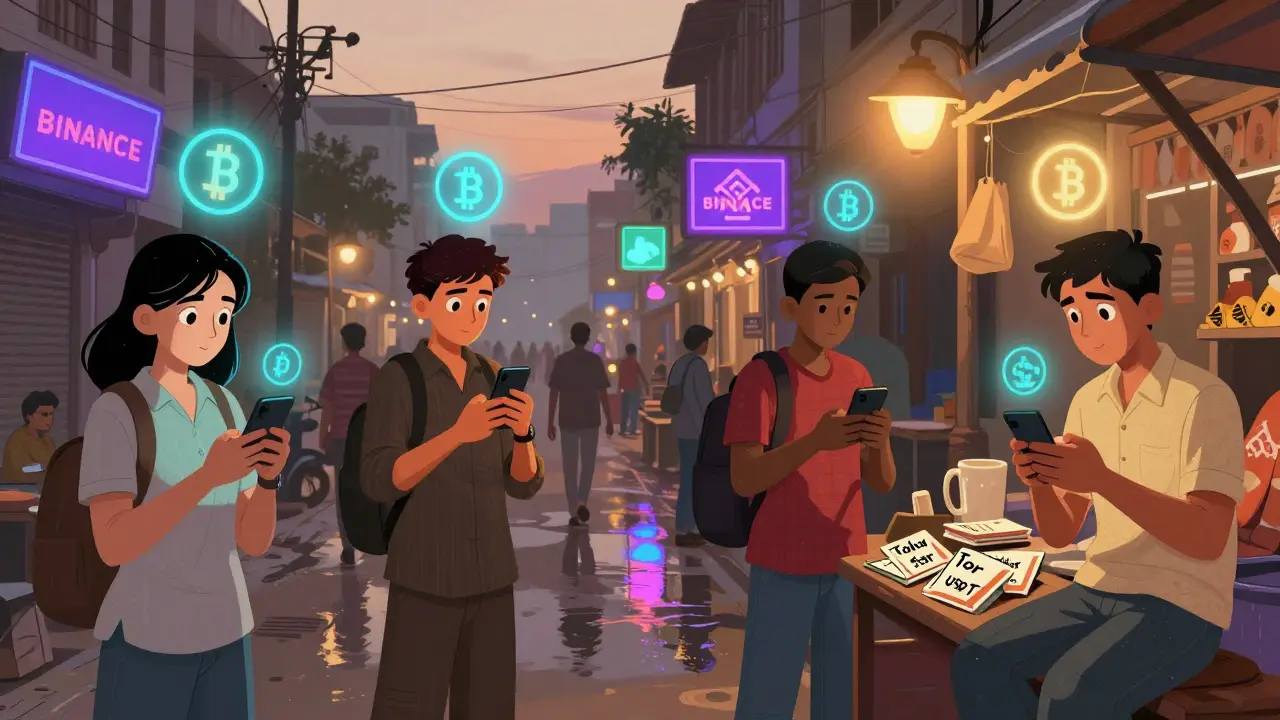
Over 600,000 people in Bangladesh are using Binance every day-even though the government says it’s illegal. They’re not hackers. They’re not criminals. They’re students, shop owners, factory workers, and freelancers trying to get ahead in a country where the banking system doesn’t work for them. The Bangladesh Bank has banned cryptocurrency since 2014. They’ve warned people repeatedly. They’ve threatened fines and jail time. But the ban hasn’t stopped anything. It’s just pushed crypto underground, where it’s thriving.
How a Ban Became a Backdoor
Bangladesh doesn’t have a specific law that says, "Crypto is illegal." Instead, it uses old financial rules to make it dangerous. The Foreign Exchange Regulation Act of 1947 was written before anyone even heard of Bitcoin. It’s meant to stop people from moving money out of the country without permission. So when someone buys USDT on Binance, the government says: "That’s a violation." It’s not about technology. It’s about control. The central bank doesn’t block Binance’s website or app. You can still download it from the Google Play Store. You can still sign up. You can still trade. The only thing they’ve done is say, "If you get caught, you’re breaking the law." That’s not enforcement. That’s a warning sign on a door that’s wide open.How People Actually Buy Crypto
Most Bangladeshis don’t use credit cards to buy crypto anymore. Banks track those. If you spend $500 on Binance with your Visa, the bank flags it. Then you get a call. Then you get in trouble. Instead, people use local agents. These are everyday guys-maybe a student who runs a small shop, or a delivery driver with a smartphone. They take Bangladeshi Taka in cash. Then they send the equivalent in USDT or Bitcoin to your Binance wallet. They charge 1-3% fee. It’s cheaper than Western Union. Faster than bank wires. And no one asks where the money came from. These agents aren’t part of some secret network. They’re just people who figured out a gap. If you’re sending money to your sister in Malaysia, or paying a freelance designer in India, or buying a server from a U.S. company, traditional banks take days and charge 8-10% in fees. Crypto? Done in minutes. For 2%.The Real Reason People Don’t Care About the Ban
People in Bangladesh aren’t ignoring the law because they’re rebellious. They’re ignoring it because the system failed them. The country’s banking system is slow, expensive, and exclusionary. Millions don’t have bank accounts. Those who do can’t easily send money abroad. Remittances-money sent home by workers overseas-are worth over $20 billion a year. But the official channels are clogged. People turn to crypto because it’s the only option that works. A 22-year-old programmer in Chittagong told me last year: "I code for clients in the U.S. They pay me in crypto. If I had to wait three weeks for a bank transfer, I’d starve. The ban doesn’t protect me. It just makes me a criminal for trying to earn a living."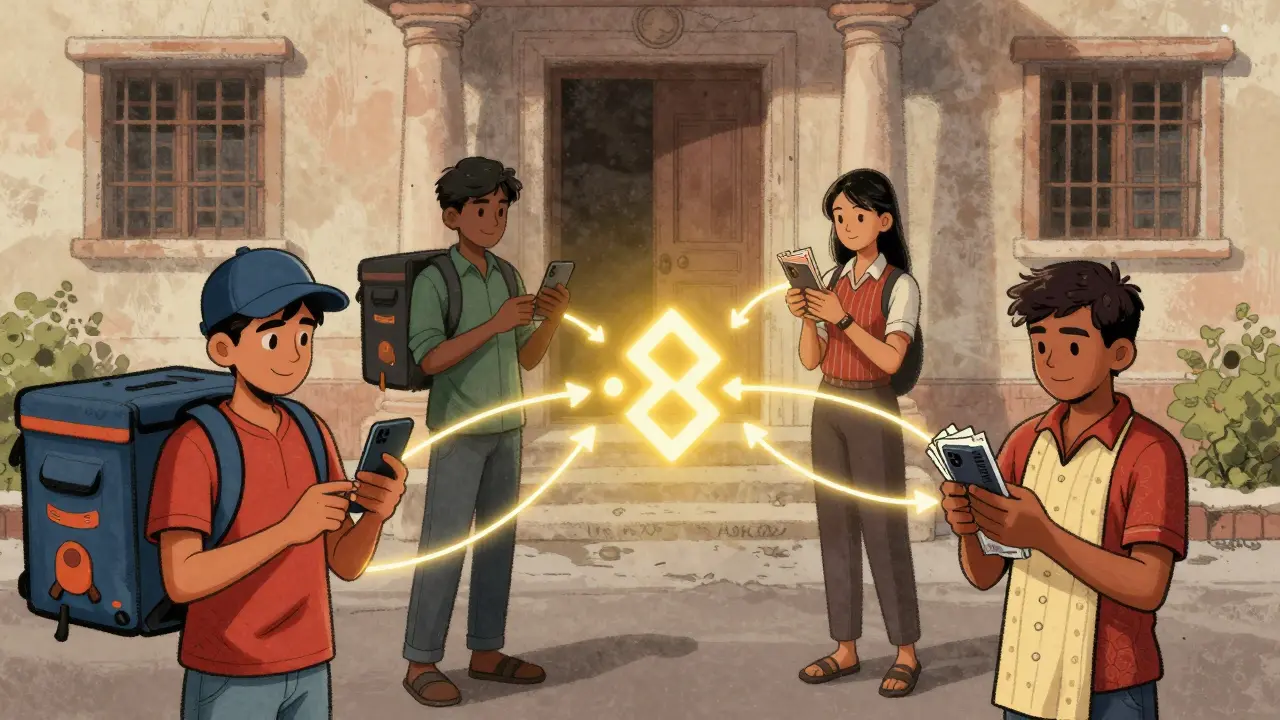
What the Government Gets Wrong
The government says crypto is a risk. It’s true-it can be used for money laundering. But so can cash. So can hawala networks. So can fake invoices. The difference? Crypto leaves a trail. Cash doesn’t. In 2020, Bangladesh released a National Blockchain Strategy. They called blockchain "essential for digital transformation." That’s the same technology behind Bitcoin. So they’re okay with the tech-but not the currency? That’s like saying you support cars but ban gas stations. Experts like Dr. B M Mainul Hossain from Dhaka University say it plainly: "Banning is not a solution." He’s not pro-crypto. He’s pro-reality. "If people are using it anyway," he says, "why not regulate it? Track it? Tax it?" Right now, the government doesn’t track crypto users. They don’t know who owns what. They can’t seize wallets. They can’t audit transactions. They just yell into the wind.The Shadow Economy Is Bigger Than You Think
There’s no official number for how much crypto is traded in Bangladesh. But estimates from blockchain analytics firms put it at $1.2 billion to $1.8 billion annually. That’s more than what’s sent through official remittance channels like MoneyGram or Ria. Binance is the biggest player-not because it’s the best, but because it’s the easiest. It doesn’t require ID to open a basic account. You can deposit Taka via agent, trade BTC, ETH, or USDT, and withdraw to a local wallet. KuCoin and OKX are also popular. All of them are accessible. All of them are banned. And all of them are used daily. Even the Financial Intelligence Unit (FIU), the body meant to catch money laundering, hasn’t made a single public arrest for crypto-related activity since 2020. Why? Because they don’t have the tools. Or the will. Or maybe they know it’s futile.What Happens If You Get Caught?
Technically, you could face jail time. The Money Laundering Prevention Act says so. But in reality? Nothing happens. There are no known cases of someone being jailed just for using Binance. There are no reports of wallets being seized. No bank accounts frozen for crypto trading. The threat is real. The punishment? Almost never applied. That’s the problem with bans without enforcement. They lose credibility. People stop fearing them. They start ignoring them.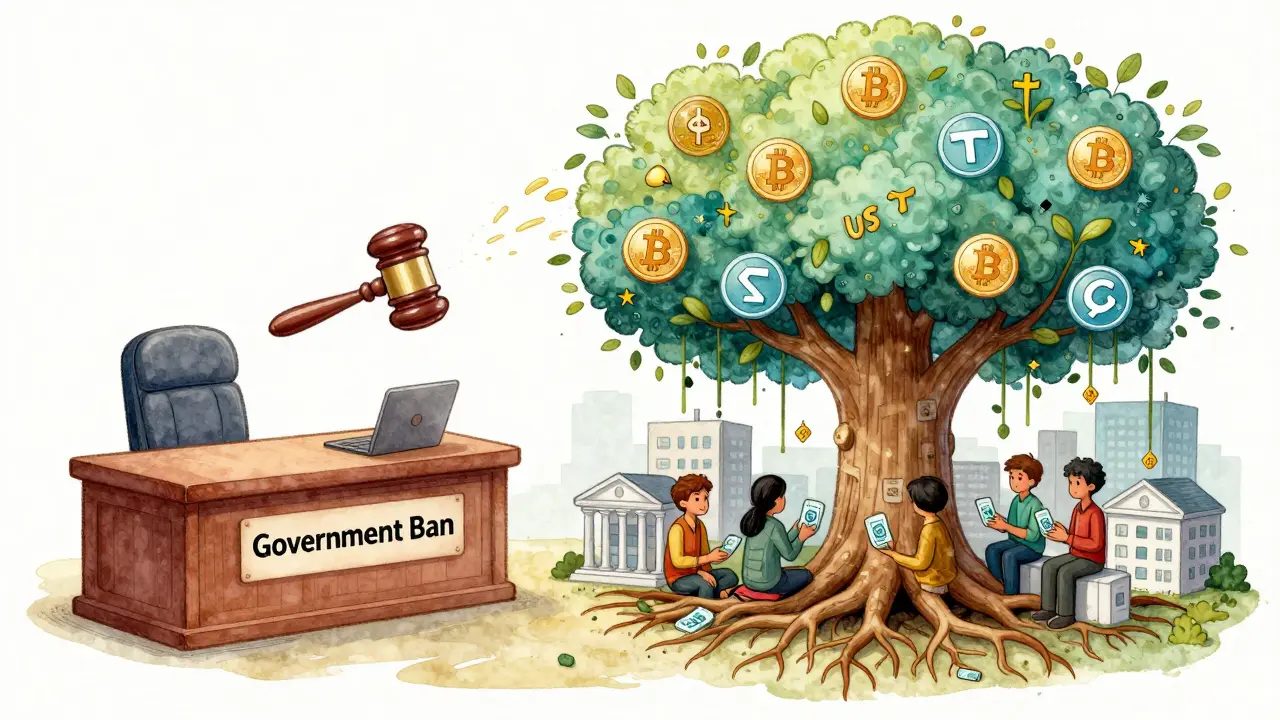
Why This Isn’t Just About Bangladesh
This isn’t unique. Nigeria has the same problem. India restricts crypto but has 15 million users. Russia blocks exchanges but people still use them through VPNs. The pattern is clear: when a government bans something people need, they find a way. Countries like El Salvador and the UAE saw this coming. They built legal frameworks. They taxed crypto income. They licensed exchanges. They turned a threat into an opportunity. Bangladesh could do the same. They could let people trade crypto-but require KYC. They could tax profits. They could use blockchain to improve land records, supply chains, and voter IDs. They already have the tech. They just refuse to use it.What’s Next?
The underground market isn’t slowing down. It’s growing. More young people are learning to trade. More agents are opening up. More apps are being downloaded. The government is losing control-not because people are clever, but because the ban is out of touch. If nothing changes, Bangladesh will keep falling behind. Its youth will keep using crypto. Its businesses will keep bypassing banks. Its economy will keep leaking value into unregulated channels. The real question isn’t whether crypto should be banned. It’s whether Bangladesh wants to be a country that controls its people-or one that works with them.What You Can Learn From Bangladesh’s Crypto Underground
If you’re in a country with strict crypto rules, look at Bangladesh. You’ll see how people adapt:- Don’t rely on banks for cross-border payments-use agents or peer-to-peer networks.
- Use USDT (Tether) instead of Bitcoin for stability and speed.
- Never link your bank account directly to a crypto exchange.
- Learn how to use a hardware wallet-even if you’re not a pro, it’s safer than leaving coins on an app.
- Understand that regulation follows adoption, not the other way around.
It's fascinating to observe how economic necessity overrides legal frameworks. The Bangladeshi people aren't defying authority-they're adapting to systemic failure. The use of USDT via local agents is a brilliant, low-tech workaround that bypasses inefficient banking infrastructure. This isn't crypto rebellion; it's economic pragmatism at its finest.
What's more, the government's refusal to regulate while simultaneously acknowledging blockchain's potential reveals a profound cognitive dissonance. They want the benefits of innovation without accepting its tools. This contradiction undermines institutional credibility.
Compare this to India's own crypto journey: restrictive policies, public outcry, and eventual cautious acceptance. Bangladesh may be ahead of the curve-not because of policy, but because of survival instinct.
Let’s not romanticize this as rebellion. It’s a quiet revolution of the marginalized, using technology to reclaim financial autonomy.
👏
So... let me get this straight. The U.S. government bans marijuana, yet millions still use it. The U.S. bans certain firearms, yet they’re still everywhere. And now you’re shocked that people in Bangladesh use crypto despite a ban? This isn’t a story-it’s a universal law of human behavior!
It’s not about Bangladesh. It’s about control. Governments fear what they can’t control. And crypto? It’s the ultimate decentralized middle finger to centralized power.
So stop pretending this is unique. It’s not. It’s inevitable. And if you’re surprised, you’ve been living under a rock.
Also: Binance doesn’t need to be ‘blocked’-because it doesn’t have to be. The people are the network. Not the servers. Not the apps. The PEOPLE.
🇺🇸 #Freedom
lol so people use crypto bc banks suck? groundbreaking.
also why is everyone acting like this is a revelation? i’ve been using usdt for years in my country. its just… money now. no biggie.
the real story? the government’s too lazy to update laws. again.
also why is this on reddit like its some deep investigative piece? its just… capitalism.
¯\_(ツ)_/¯
As an Indian observer, I find this situation deeply resonant. In India, too, we have seen the same pattern: restrictive regulations, public defiance, and eventual de facto normalization. The Indian government once declared cryptocurrency illegal-yet today, over 15 million citizens trade it daily.
The lesson? Regulation follows adoption, not the reverse. The state’s role should not be to prohibit innovation, but to channel it responsibly. Blockchain technology, as Bangladesh’s own National Strategy admits, is indispensable for digital governance.
Why, then, deny its most accessible application? The people are not criminals. They are users of a tool that works. The state must evolve-or be bypassed.
Let us not mistake resilience for rebellion.
Respectfully,
Sathish
you ever wonder if this is all a psyop to normalize crypto before the global reset?
the central bank doesn't block it because they're waiting for everyone to get addicted... then they'll introduce CBDC and trace every single transaction
they want you to use usdt so they can track you better later
the ban is a trap
they're letting you build your own surveillance infrastructure with your own hands
they're not stupid
they're just patient
and you're the experiment
the real crime isn't using crypto
it's believing you're free
the system always wins
...or does it?
I’ve seen this play out in so many countries. When institutions fail people, they find their own way. It’s not rebellion-it’s resourcefulness.
People aren’t breaking the law because they want to. They’re doing it because they have to.
And honestly? If I had to wait weeks to get paid for my work, I’d find a way too.
Let them trade. Let them grow. Let them build.
The rest will follow.
Let’s break this down simply: the government doesn’t ban crypto because it’s dangerous. They ban it because it’s uncontrollable. And that’s the real threat-not the technology, but the loss of power.
They can’t track agent-based USDT transfers. They can’t freeze wallets without IDs. They can’t tax income they can’t see.
Meanwhile, the underground economy is worth over $1.5B annually. That’s more than official remittances. That’s real money moving. Real livelihoods being sustained.
And guess what? The government’s own blockchain strategy admits the tech is vital.
So why the hypocrisy? Because they’re scared of losing control. Not because crypto is evil. Because it’s empowering.
And empowerment? That’s the real danger to authoritarian systems.
Oh my GOD. You mean to tell me that people in a country with broken banking systems are using a decentralized digital currency to send money faster and cheaper than traditional methods?!
WHAT A SHOCKER.
Did you know water is wet? Did you know the sun rises in the east? Did you know people will find a way when the system fails them?!
And now you’re writing a 2,000-word essay like this is some revolutionary revelation?!
It’s not crypto. It’s capitalism. It’s human nature. It’s not news-it’s common sense.
Can we PLEASE move on? I need a nap.
This is the most beautiful thing I’ve read all year.
People aren’t breaking the law-they’re rebuilding the system from the ground up.
They’re not hackers. They’re not criminals. They’re moms paying for their kids’ school. They’re coders getting paid. They’re farmers sending money to relatives overseas.
This isn’t about crypto. It’s about dignity.
And guess what? The government doesn’t get to decide who gets dignity.
They’re watching. But they’re not stopping it.
And that? That’s hope.
Keep going. We see you.
💪🌍
So the government bans crypto but doesn’t enforce it. That’s not a policy. That’s a joke.
It’s like putting up a ‘No Swimming’ sign in a lake where everyone’s already swimming.
And now they’re surprised people are still in the water?
Just legalize it. Tax it. Regulate it. You’ll get more revenue and less chaos.
But no. Better to pretend it’s not happening.
Classic.
It’s interesting how the same governments that preach financial inclusion are the ones making it hardest for people to access finance.
They want people to be ‘included’-but only on their terms.
Meanwhile, crypto offers inclusion without permission.
That’s the real innovation.
Not the tech.
The autonomy.
If you’re a freelancer, a student, or a small shop owner in Bangladesh, and you need to pay someone overseas-what’s your real choice?
Wait 3 weeks for a bank transfer that costs 10%? Or pay 2% and get it in 5 minutes?
The answer isn’t even close.
This isn’t about crypto. It’s about survival.
And honestly? I wish more governments would stop pretending they can control what’s already out in the open.
Let people use what works. Then help them use it safely.
That’s leadership.
Not bans.
And if you’re still stuck on ‘it’s illegal’? You’re not helping. You’re just blocking.
What strikes me most is the quiet dignity of this movement. No grand protests. No rallies. Just people, quietly using technology to reclaim agency.
There’s no manifesto. No leader. Just a network of agents, students, workers-each doing their part.
This is organic resistance. Not political. Not ideological. Practical.
And perhaps that’s why it’s so unstoppable.
It doesn’t need to be loud to be powerful.
Let’s be honest: this isn’t ‘economic resilience.’ It’s financial chaos masked as innovation.
USDT is not money. It’s a speculative instrument backed by opaque reserves.
People are gambling with their livelihoods, thinking they’re being smart.
And the government? They’re right to be concerned.
Because when the tether collapses-and it will-these people will be left with worthless digital tokens and no recourse.
This isn’t empowerment. It’s exploitation disguised as freedom.
And you’re celebrating it like it’s a victory?
Wake up.
Okay, let’s go deeper. The real issue isn’t crypto. It’s the fact that Bangladesh’s financial infrastructure is a relic from the 1940s. The banking system was designed for a colonial economy where capital was tightly controlled by elites.
Now, in 2024, you have a population of 170 million-mostly under 30-with smartphones and zero access to global finance.
Crypto isn’t the problem. It’s the symptom.
The real question: why hasn’t the government modernized its payment rails? Why not partner with fintechs? Why not issue digital IDs to enable secure, traceable remittances?
Because modernization requires transparency. And transparency threatens corruption.
So they ban crypto instead of fixing the system.
It’s not about control. It’s about convenience-for the powerful.
And the people? They’re just trying to live.
Meanwhile, the central bank sits on a mountain of outdated regulations, pretending they still matter.
Oh please. You call this ‘resilience’? It’s a dumpster fire with a blockchain logo.
USDT? Tether’s reserves are a black box. You’re trusting a company in the Cayman Islands with your life savings.
And you think that’s smarter than waiting three weeks for a bank transfer?
What’s next? Trading NFTs for rice?
At least the old hawala system had accountability. This? It’s digital snake oil.
And you’re all clapping like it’s a revolution?
It’s not innovation. It’s desperation.
And I’m not impressed.
Everyone’s acting like this is noble. Like these people are heroes.
But what happens when the agents get arrested? When the police raid a shop and find 200k in cash and USDT wallets?
Who protects the girl who sent her rent money to her brother in Dubai? Who pays for her hospital bills when the wallet gets frozen?
No one.
Because crypto isn’t justice.
It’s a gamble with no safety net.
And you’re all cheering for the gamble?
Pathetic.
There is a deeper philosophical truth here: when institutions fail to serve, the individual becomes the institution.
The agent is now the bank.
The smartphone is now the ledger.
The community is now the regulator.
And the state? It remains an anachronism-clinging to paper laws while the world moves on.
This is not rebellion.
This is evolution.
And evolution does not ask permission.
so people are using crypto bc banks are slow?? wow what a shocker
next you'll tell me water is wet
and why are you all acting like this is some deep moral victory
its just people being dumb and trusting shady agents with their life savings
and the government is right to ban it
you think you're clever
but you're just getting scammed
and when it all goes to hell
you'll be crying on reddit
while the agents disappear with your cash
lol
Let’s be real-this isn’t about freedom. It’s about money laundering.
These agents? They’re not just helping freelancers. They’re moving drug money. Smuggled goods. Bribe payments.
And you’re romanticizing it?
Blockchain doesn’t make crime invisible-it makes it traceable.
So why isn’t the FIU doing anything?
Because they’re corrupt.
Or scared.
Or both.
And you? You’re just part of the problem.
👏
One of the agents I met in Dhaka told me: ‘We don’t need permission to help each other.’
That’s the whole point.
They didn’t wait for a law. They didn’t wait for a policy.
They just started.
And now, millions are fed.
Children are schooled.
Businesses are running.
This isn’t a loophole.
This is community.
And if your government can’t see that?
Then maybe they’re not the ones who should be in charge.
Jon Martín’s comment resonates deeply. The agents aren’t middlemen-they’re the new financial infrastructure.
And here’s what’s even more remarkable: they operate without contracts, without apps, without KYC.
Just trust, cash, and a WhatsApp message.
This isn’t crypto innovation.
This is human innovation.
And no algorithm, no blockchain, no government policy can replicate that kind of organic, local trust.
Maybe the answer isn’t to regulate crypto.
But to learn from the people who built a system from nothing.
They didn’t ask for permission.
They just did it.
And that? That’s the real lesson.