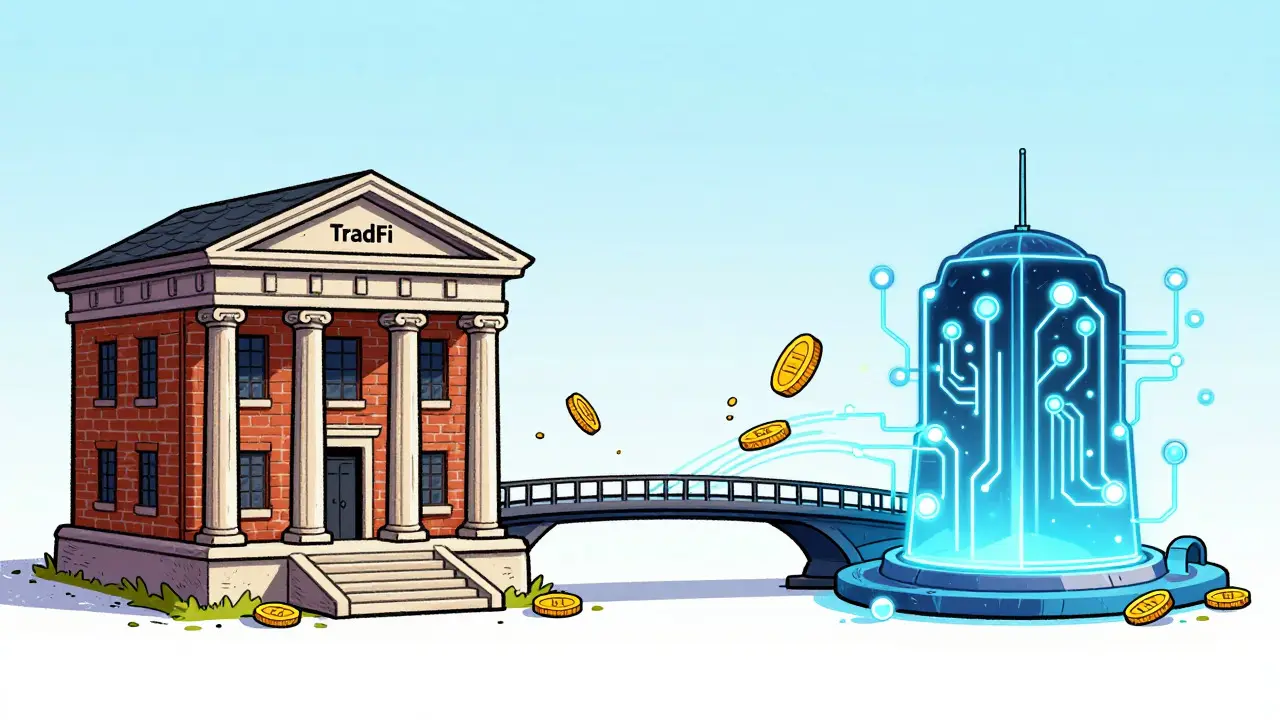
Have you ever seen a crypto token that promises to bridge the gap between your bank account and the blockchain? That’s exactly what World Liberty Financial claims to do. With its native token, WLFI, this platform has caught the attention of investors looking for the next big thing in decentralized finance (DeFi). But before you buy, you need to know what it actually does.
World Liberty Financial isn’t just another meme coin or a speculative asset with no utility. It positions itself as a serious player aiming to merge traditional finance (TradFi) with decentralized systems. The WLFI token serves as the key to this ecosystem, giving holders a voice in how the protocol evolves. However, like many new projects, it comes with significant volatility and liquidity challenges that every investor should understand.
The Core Mission: Bridging TradFi and DeFi
At its heart, World Liberty Financial aims to remove the barriers that keep everyday people out of advanced financial services. Traditional banks often have high fees, slow processing times, and strict access rules. On the other hand, pure DeFi platforms can be too complex for the average user. This project tries to sit right in the middle.
The platform builds on-chain products designed for both institutions and individuals. Think of it as a digital bridge. On one side, you have the stability and familiarity of dollar-based transactions. On the other, you have the speed and transparency of blockchain technology. By connecting these two worlds, they hope to unlock financial access for everyone, regardless of where they live or how much money they have.
This approach requires more than just hype. It needs robust infrastructure, regulatory compliance, and real-world partnerships. The team behind World Liberty Financial emphasizes building relationships with industry leaders to ensure their products are secure and legally sound. This focus on institutional adoption sets them apart from many smaller DeFi projects that operate in the shadows.
Understanding the WLFI Token Utility
So, what can you actually do with a WLFI token? Unlike some cryptocurrencies that only serve as a store of value or a medium of exchange, WLFI has a specific function within its ecosystem. Its primary role is governance.
When you hold WLFI tokens, you become part of the decision-making process. You can propose changes to the protocol, vote on upgrades, and influence the direction of the platform. This democratic approach ensures that the community, not just a central team, controls the future of the project. In fact, the ability to trade WLFI publicly was decided through a community governance vote, proving that this system works in practice.
Beyond voting, the token integrates with various tools within the World Liberty Financial app. Users can deposit cryptocurrency via wallet or bank account, spend it easily, and access liquidity anytime. The WLFI token acts as the fuel that keeps this engine running, aligning the interests of users, developers, and investors.
The Ecosystem: USD1 Stablecoin and Lending Services
A governance token is only as good as the ecosystem it supports. For World Liberty Financial, that ecosystem includes several key products, most notably the USD1 stablecoin. Described as "the US Dollar stablecoin upgraded for a new era of finance," USD1 is designed to be stable, secure, and transparent by design.
Stablecoins are crucial for bridging TradFi and DeFi because they provide price stability. While Bitcoin and Ethereum swing wildly in value, USD1 stays pegged to the US dollar. This makes it ideal for cross-border payments and daily transactions. You can send money anywhere in the world quickly and cheaply without worrying about currency fluctuations.
In addition to USD1, the platform offers lending and borrowing services. Here’s how it works: you can supply your digital assets to the protocol and earn interest. Alternatively, you can borrow against your holdings if you need liquidity but don’t want to sell your crypto. To manage risk, the system uses a real-time health factor calculation. If your collateral value drops too low, the system alerts you, preventing unexpected liquidations.
| Feature | Description | Benefit |
|---|---|---|
| WLFI Governance | Voting rights on protocol upgrades | Community-driven development |
| USD1 Stablecoin | Transparent, secure dollar-pegged asset | Stable transactions and payments |
| Lending & Borrowing | Earn interest or borrow against assets | Flexible liquidity management |
| Multi-Chain Support | Bridging across different blockchains | Enhanced accessibility and interoperability |

Tokenomics: Supply, Circulation, and Market Data
Understanding the numbers behind a token is essential for any investor. Let’s break down the tokenomics of WLFI. The total supply is capped at 100 billion WLFI tokens. As of late 2025, approximately 24.6 billion tokens were in circulation, representing about 24.6% of the total supply. This means there is still a large amount of tokens yet to be released, which could impact future price dynamics.
The market capitalization stands at around $5.11 billion, while the fully diluted valuation (FDV) is significantly higher at $20.77 billion. A high FDV compared to market cap often indicates that future inflation from token unlocks might put downward pressure on the price unless demand increases proportionally.
Trading volume varies wildly depending on the data source. Some platforms report hundreds of millions in daily volume, while others show near-zero activity. This discrepancy highlights a critical issue: liquidity. Low liquidity means that buying or selling large amounts of WLFI could drastically move the price, leading to slippage and unpredictable costs.
Price Volatility and Liquidity Challenges
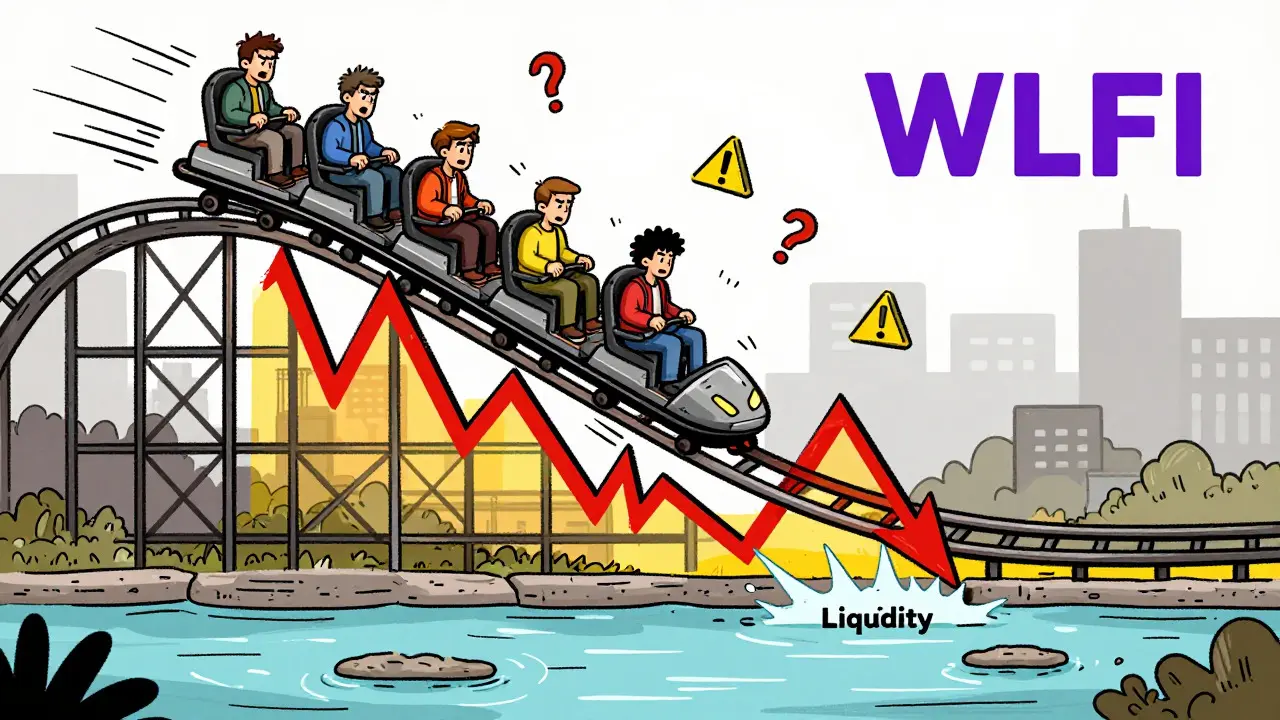
If you’ve been watching WLFI closely, you’ve likely noticed its wild price swings. The token reached an all-time high of $0.46 in September 2025, only to crash to an all-time low of $0.1632 shortly after. That’s a drop of nearly 55%. While it has recovered somewhat, hitting lows like this shows how volatile new DeFi tokens can be.
Liquidity remains a major concern. Reports indicate extremely low liquidity on some exchanges, with warnings that prices may differ drastically between platforms. When liquidity is thin, even small trades can cause big price movements. This makes WLFI a risky investment for those who need quick entry or exit points.
However, the platform is working to improve this situation. They are integrating with more blockchain networks and expanding their presence on major trading platforms like Robinhood. Being available on a regulated US platform adds a layer of credibility and accessibility for mainstream investors.
How to Buy and Trade WLFI Safely
If you decide to invest in WLFI, here are some practical steps to follow:
- Choose a Reputable Exchange: Look for platforms that list WLFI, such as Robinhood or established decentralized exchanges. Verify the contract address (0xdA5e...7CBeF6) to avoid scams.
- Check Liquidity: Before buying, check the order book depth. If the spread between buy and sell orders is wide, expect higher costs.
- Use a Secure Wallet: Transfer your tokens to a non-custodial wallet where you control the private keys. Never leave large amounts on an exchange.
- Diversify Your Portfolio: Don’t put all your eggs in one basket. WLFI is a high-risk asset, so balance it with more stable investments.
- Monitor Governance Votes: Stay engaged with the community. Voting on proposals can affect the token’s value and utility.
Risks to Consider Before Investing
No investment is without risk, and WLFI is no exception. Here are the main pitfalls to watch out for:
- Regulatory Uncertainty: DeFi regulations are still evolving. Changes in laws could impact how the platform operates.
- Smart Contract Risk: Like all DeFi protocols, bugs in the code could lead to hacks or losses. Audits help, but they aren’t foolproof.
- Market Volatility: Crypto markets are emotional and reactive. Prices can swing based on news, sentiment, or whale activity.
- Liquidity Traps: As mentioned, low liquidity can make it hard to sell your tokens at a fair price.
Future Outlook and Development Roadmap
World Liberty Financial is actively developing its infrastructure. Plans include integrating more blockchain networks, enhancing the USD1 stablecoin features, and expanding lending products. The goal is to create a seamless experience where users can move assets between chains effortlessly.
The emphasis on partnerships suggests a long-term vision of becoming a go-to platform for institutional DeFi. If they succeed in attracting major banks or corporations, the demand for WLFI and USD1 could surge. However, execution is key. Many projects promise innovation but fail to deliver.
For now, WLFI represents an interesting experiment in democratizing finance. It offers real utility through governance and stablecoin usage, but it also carries the typical risks of early-stage crypto projects. Keep an eye on their progress, stay informed, and invest wisely.
What is the current price of WLFI?
As of late 2025, WLFI trades around $0.20 to $0.36 depending on the exchange. Prices vary due to liquidity differences and market volatility. Always check multiple sources for the most accurate rate.
Is WLFI a good investment?
WLFI has potential due to its utility in governance and the USD1 ecosystem. However, it is highly volatile and faces liquidity challenges. It suits investors comfortable with high risk and active participation in DeFi.
What is USD1 used for?
USD1 is a stablecoin pegged to the US dollar. It facilitates cross-border payments, DeFi transactions, and provides stability within the World Liberty Financial ecosystem.
Where can I buy WLFI tokens?
WLFI is available on platforms like Robinhood and various decentralized exchanges. Ensure you use the correct contract address to avoid counterfeit tokens.
What happens if I lose my WLFI tokens?
If you lose access to your wallet or forget your private keys, recovery is difficult. Always back up your seed phrase securely. Exchanges may offer support if tokens are held in custodial accounts.
How does WLFI governance work?
Holders can propose and vote on protocol changes. Decisions are made democratically, allowing the community to shape the platform's future development and features.
Is World Liberty Financial regulated?
The platform aims for regulatory compliance and partners with industry leaders. Availability on regulated exchanges like Robinhood suggests some level of oversight, but DeFi regulations are still evolving globally.