Buying a cryptocurrency that costs less than a fraction of a penny sounds exciting until you realize there’s no one to sell it to. That is the reality for SpacePi, an ERC-20 token on the Ethereum blockchain designed as a decentralized finance asset with minimal market presence and liquidity. If you stumbled upon SPACEPI because you saw its name pop up in a list or heard about its "quadrillion" supply, you need to pause. This isn’t just another altcoin; it is a textbook example of a micro-cap asset with severe structural risks.
The core problem with SpacePi isn't just its low price-it's the lack of utility, community, and liquidity that usually sustains even the smallest projects. As we move through 2026, the crypto market has matured significantly, leaving little room for tokens that offer nothing but speculation. Understanding what SpacePi actually is requires looking past the marketing fluff and examining the hard data: contract addresses, trading volumes, and developer activity.
The Basics: What Is SpacePi?
At its simplest level, SpacePi is a digital token built on the Ethereum network. It operates as an ERC-20 standard token, which means it behaves like most other cryptocurrencies you might find on platforms like MetaMask or Uniswap. However, unlike established tokens such as Shiba Inu or Pepe, SpacePi lacks a clear narrative or functional utility.
The token was launched with a total supply of 1 quadrillion (1,000,000,000,000,000) tokens. To put that number in perspective, if you bought $100 worth of SpacePi at its recent price points, you would be holding trillions of individual tokens. While large numbers can feel impressive, they often serve only to create psychological illusions of value rather than actual economic power.
- Blockchain: Ethereum (ERC-20)
- Total Supply: 1 Quadrillion tokens
- Contract Address: 0x69b14e8d3cebfdd8196bfe530954a0c226e5008e
- Primary Trading Venue: Uniswap V2 (Decentralized Exchange)
You can add SpacePi to your wallet by importing this contract address into MetaMask. But adding it to your wallet doesn’t mean it has value-it just means your software recognizes the code. The real question is whether anyone else wants to buy it from you.
Market Reality: Price, Volume, and Liquidity
Let’s look at the numbers without sugarcoating them. As of early 2026, SpacePi trades at approximately $0.000081. This price point places it firmly in the "micro-cap" category, meaning its total market capitalization is negligible compared to the broader cryptocurrency market.
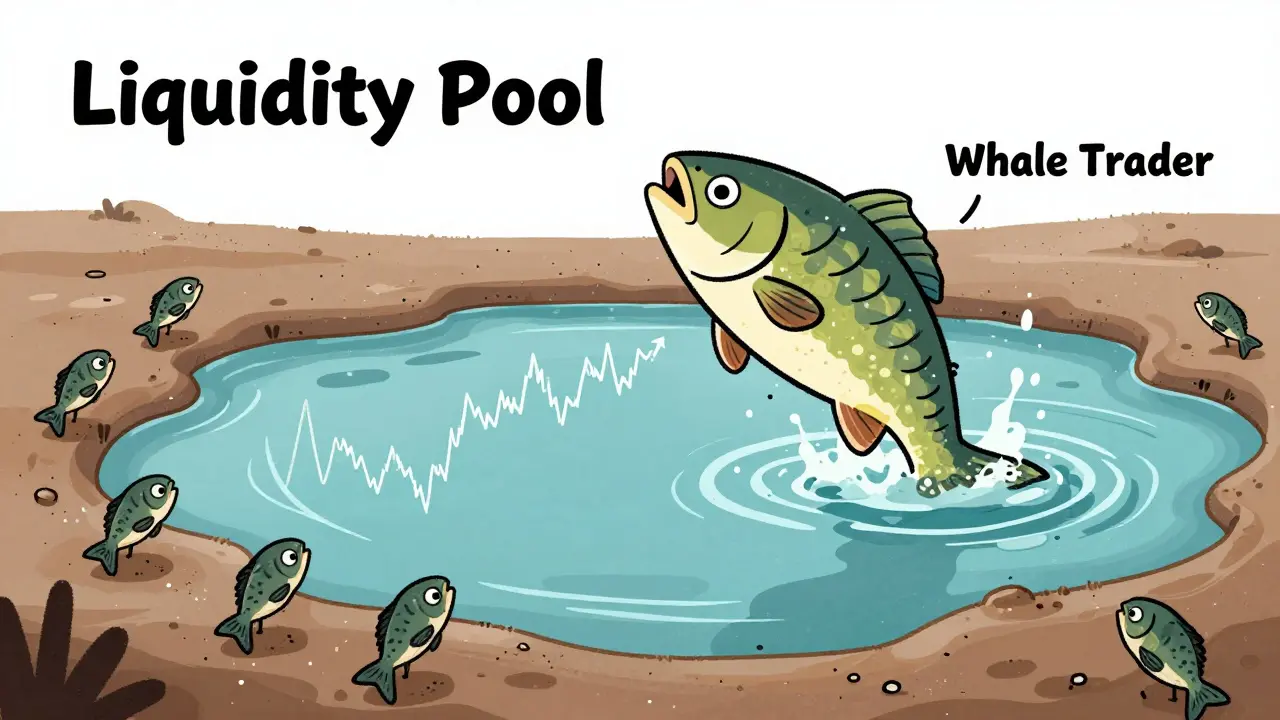
The most critical metric here is not the price per token, but the 24-hour trading volume. SpacePi typically sees around $21,000 in daily trading volume. Compare this to major meme coins like Dogecoin or Shiba Inu, which see billions in volume. With only $21k in volume, the liquidity pool on Uniswap is extremely shallow. This creates a dangerous situation known as "slippage."
If you try to sell a significant amount of SpacePi-say, $1,000 worth-you could crash the local price instantly because there aren’t enough buyers in the pool to absorb your sale. You might end up selling for half the price you expected. This is why professional traders avoid tokens with sub-$50k daily volume unless they are insiders.
| Feature | SpacePi (SPACEPI) | Dogecoin (DOGE) | Pepe (PEPE) |
|---|---|---|---|
| Blockchain | Ethereum | Dogechain/Ethereum | Ethereum |
| 24h Volume | ~$21,000 | Billions | Hundreds of Millions |
| Liquidity Risk | Extremely High | Low | Medium-Low |
| Community Presence | Virtually None | Massive | Strong |
The "Zombie Token" Phenomenon
In the crypto world, a "zombie token" is a project that remains listed on exchanges but has no active development, community engagement, or roadmap updates. By January 2026, analysts categorized SpacePi as a zombie token due to 18+ months of silence from its developers.
There is no official whitepaper, no GitHub repository with recent commits, and no social media channels with organic engagement. Reddit discussions about SpacePi are virtually nonexistent. When you search for "SpacePi crypto" on major forums, you won’t find debates about its future use cases or technical upgrades. You’ll find silence.
This lack of activity is a red flag. Cryptocurrencies thrive on network effects-the more people who care about a project, the more valuable it becomes. Without a community pushing the narrative or developers building features, the token relies entirely on random speculative buys, which are unsustainable.
Risks You Need to Understand Before Buying
If you are considering buying SpacePi, you must understand the specific risks associated with micro-cap Ethereum tokens. These are not theoretical risks; they are practical barriers that have caused many investors to lose money.
- Liquidity Traps: You may be able to buy SpacePi easily, but selling it can be impossible without losing a significant percentage of your investment due to thin order books.
- Price Volatility: With such a small market cap, a single whale selling $5,000 worth of tokens can drop the price by 10-20% in minutes.
- No Regulatory Protection: As an unlisted, low-volume token, there is no oversight. If the developers abandon the project or pull the liquidity rug, you have no recourse.
- Opportunity Cost: Money tied up in SpacePi cannot be used in more productive investments with clearer growth trajectories.
Furthermore, the token’s all-time high was reached in March 2024, and it has since traded below that level consistently. As of April 2025, it hit an all-time low, indicating a long-term downward trend rather than accumulation phase.
How to Trade SpacePi (If You Insist)
While I advise extreme caution, some users still want to interact with SpacePi for educational purposes or high-risk speculation. Here is how the process works technically.
First, you need an Ethereum-compatible wallet like MetaMask. Ensure you have ETH to pay for gas fees, which can be expensive depending on network congestion. Next, go to Uniswap V2, the primary decentralized exchange where SpacePi is traded.
Paste the contract address 0x69b14e8d3cebfdd8196bfe530954a0c226e5008e into the token field. Double-check this address carefully. Scammers often create fake tokens with similar names and slightly different addresses. Once verified, you can swap ETH for SPACEPI.
Be aware that slippage tolerance should be set higher than usual (perhaps 5-10%) to ensure your trade executes, given the low liquidity. However, remember that executing a trade does not guarantee you can exit it profitably later.
Is There Any Future for SpacePi?
The short answer is: unlikely, unless something changes dramatically. For a micro-cap token to recover, it needs three things: a catalyst (new partnership, tech upgrade), a community (social media buzz), and liquidity (market makers entering the pool). SpacePi currently has none of these.
CryptoSlate’s 2026 micro-cap report highlighted SpacePi as a prime example of a token that failed to establish a foothold. Unlike projects that pivot to new narratives or integrate with emerging technologies like Layer 2 scaling solutions, SpacePi has remained static. Without a roadmap or developer activity, the probability of sustainable recovery approaches zero.
Investors should focus their energy on projects with transparent teams, active development, and clear utility. The crypto market is vast, and while there are opportunities in smaller caps, they require rigorous due diligence-not blind speculation on dormant tokens.
What is the current price of SpacePi (SPACEPI)?
As of early 2026, SpacePi trades at approximately $0.000081. However, prices vary significantly between decentralized exchanges due to low liquidity. Always check real-time data on platforms like CoinGecko or Uniswap before trading.
Is SpacePi a scam?
SpacePi is not necessarily a "scam" in the legal sense, as it operates on the public Ethereum blockchain. However, it exhibits characteristics of high-risk assets, including abandoned development, negligible liquidity, and no clear utility. These factors make it highly susceptible to value erosion and potential rug pulls.
Where can I buy SpacePi?
SpacePi is primarily traded on Uniswap V2, a decentralized exchange on the Ethereum network. It is not listed on major centralized exchanges like Binance or Coinbase. To buy it, you need an Ethereum wallet (like MetaMask) and ETH for gas fees.
Why is the supply of SpacePi so large?
SpacePi has a total supply of 1 quadrillion tokens. This massive supply is common among meme coins and micro-caps to allow for fractional pricing (e.g., $0.000081 instead of $800). However, large supplies do not indicate value; they simply dilute the ownership percentage per token.
Does SpacePi have any utility or use case?
Currently, SpacePi has no verifiable utility. There is no official documentation, whitepaper, or ecosystem integration that demonstrates how the token provides value beyond speculation. This lack of utility is a major risk factor for long-term viability.