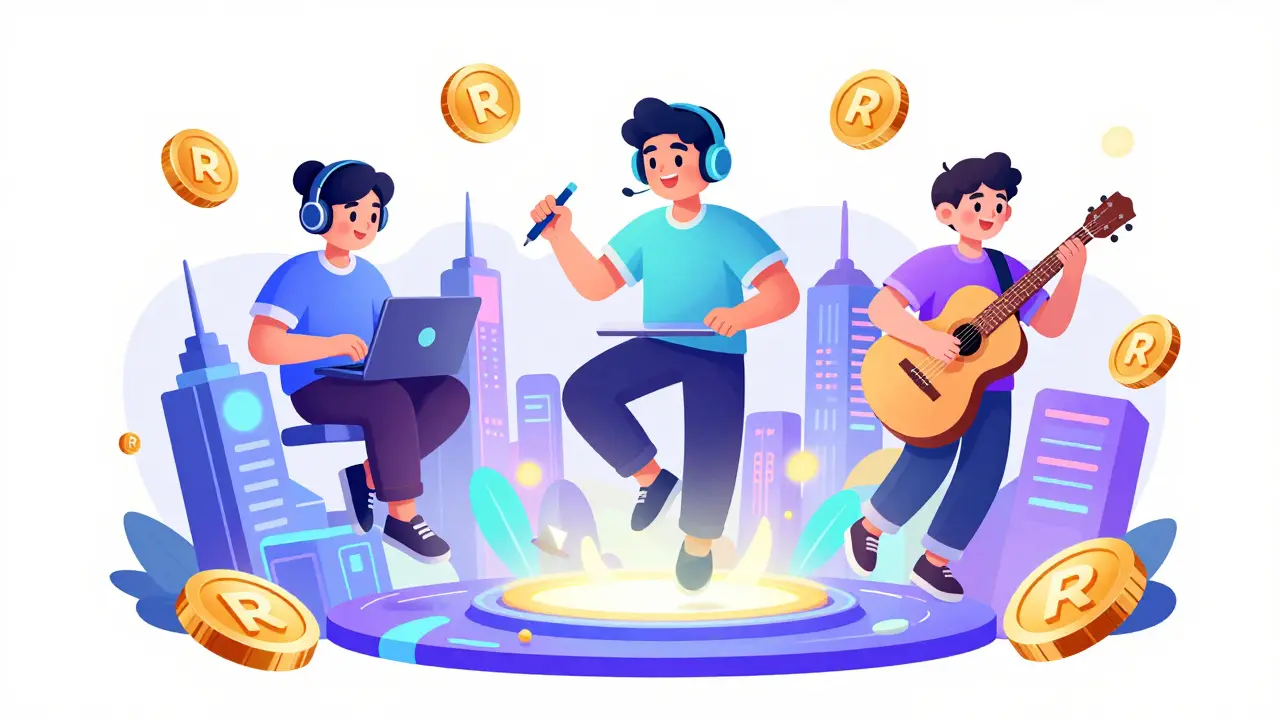
Imagine if your favorite YouTuber, Twitch streamer, or digital artist had their own personal currency. Instead of just hitting a like button or sending a one-time donation, you could actually own a piece of their digital economy. That's exactly what Rally is a social token protocol and platform that allows creators to launch their own customized tokens and NFTs. It turns a creator's reputation into a tradable asset, moving the power away from big platform algorithms and putting it directly into the hands of the people who make the content and the fans who love it.
Key Takeaways for Quick Reading
- What it is: A platform where creators launch "Creator Coins" to monetize their community.
- The Native Token: RLY is the fuel for the network, used to set up tokens and facilitate trades.
- Tech Advantage: Uses a private sidechain to avoid expensive gas fees and stay eco-friendly.
- For Fans: Holding creator tokens can unlock exclusive perks and weekly rewards.
- For Creators: A way to build a direct financial relationship with a loyal audience.
How the Rally Ecosystem Actually Works
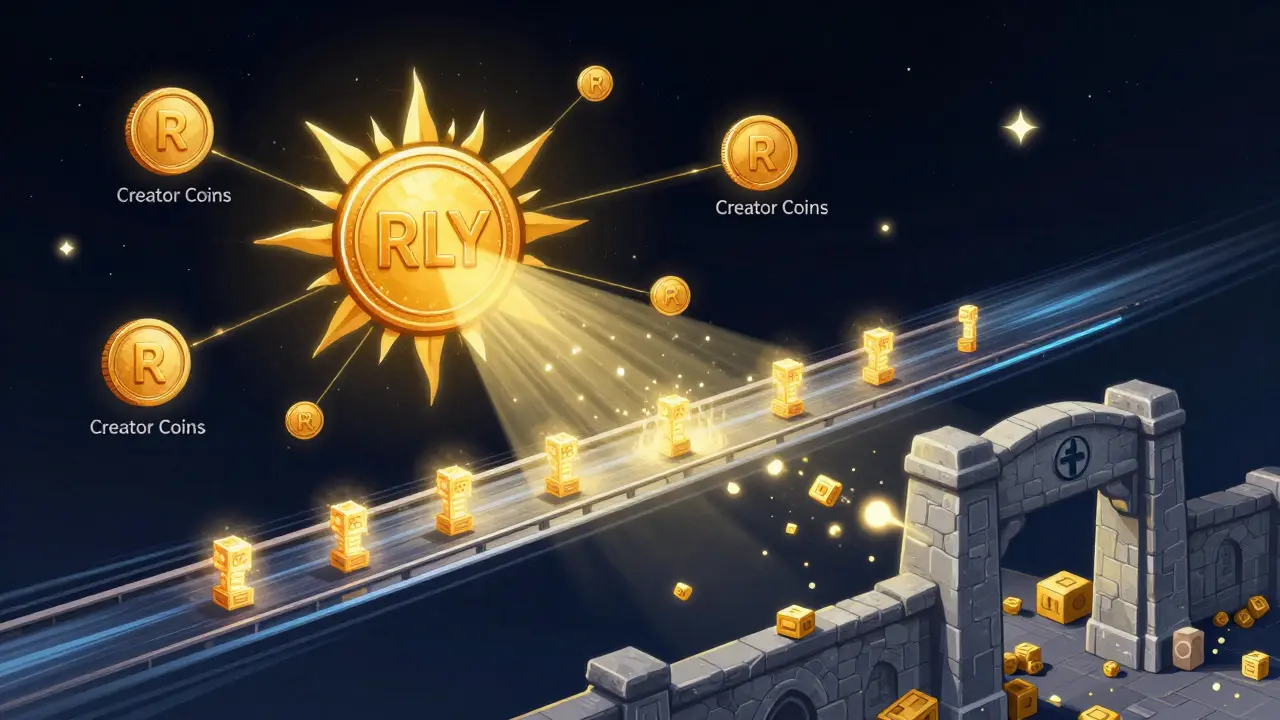
At its core, Rally isn't just a single coin; it's a software suite. While the RLY token is the main cryptocurrency you see on exchanges, the real action happens with "Creator Coins." Think of RLY as the gold standard that backs the entire system. When a creator wants to start their own economy, they use the protocol to mint tokens that represent their brand and influence.
One of the smartest moves Rally made was avoiding the main Ethereum network for daily transactions. If every single fan interaction required a massive gas fee, the system would crash under its own weight. Instead, Rally uses a private sidechain. This means the carbon footprint of creating a token is roughly the same as sending a tweet, and users don't have to worry about losing half their investment to network fees.
The Role of the RLY Token
You can't really have the platform without RLY. It is an ERC-20 token, meaning it follows the standard for tokens on the Ethereum blockchain, but it functions as the primary currency for the RLY Network. If you're a creator, you need RLY to configure your tokens and NFTs. If you're a fan, you use RLY as the bridge to enter a creator's specific economy.
If you want to cash out your Creator Coins for "real world" money, the process is a specific loop: you convert those social tokens back into RLY, and then you trade that RLY for a stablecoin like USDT or a major currency on an exchange. It acts as the universal liquidity layer that keeps the various creator economies connected.
For Creators: Building a Digital Economy
For someone like a gamer or a musician, the traditional way of making money is through ads or sponsorships. That's a bit like renting your audience from a company like Google or Meta. With Rally, you're building your own house. Creators apply to the platform, get approved, and then customize their "tokenomics." This means they decide how many coins exist and what benefits come with holding them.
| Feature | Creator Benefit | Fan Benefit |
|---|---|---|
| Monetization | Direct income from token sales | Potential value increase if creator grows |
| Engagement | Direct link to loyal supporters | Exclusive access and perks |
| Rewards | Ability to set resale fees | Weekly RLY rewards for activity |
Creators can set up perks to recruit and keep their followers. Maybe holding 1,000 coins gets you a monthly Zoom call with the artist, or 10,000 coins gives you a permanent spot in a private Discord channel. This turns a passive viewer into an active stakeholder.
For Fans: More Than Just Speculation
If you're a fan, buying a Creator Coin is essentially a bet on that person's future success. But it's not just about the price going up. Rally incentivizes active participation through a reward system. The platform calculates rewards based on the total RLY backing of a coin compared to its average over the previous four weeks. If a community is growing and active, the participants get a share of RLY rewards proportional to how many tokens they hold.
Getting started is relatively simple. You can buy RLY on major exchanges like Coinbase or KuCoin and bridge it onto the sidechain. Alternatively, if you're not a crypto pro, you can use a credit card to buy Creator Coins directly, though there's a limit of $500 per transaction to keep things secure.
The Reality Check: Price and Performance
It's important to look at the numbers without the hype. Rally had a wild start. In December 2020, it launched at $0.07. By March 2021, it rocketed to an all-time high of $1.40. Why? A perfect storm of a booming bull market, a successful liquid token sale, and a competitor called Roll getting hacked, which drove a lot of panicked users toward Rally.
However, the crypto market is brutal. The price has seen a massive correction, landing at a fraction of its peak. As of current data, the circulating supply is around 5.2 billion RLY, which is about 35% of the total supply of 15 billion. While the market cap has shrunk to around $7.4 million, Rally remains one of the largest social token projects by market cap, showing that while the price is volatile, the infrastructure still holds a dominant position in this niche.

Potential Pitfalls to Watch Out For
No investment is without risk. The biggest issue with social tokens is that their value is tied entirely to a person's reputation. If a creator stops posting, gets involved in a scandal, or simply loses interest in the platform, the value of their coin can plummet instantly. Unlike a company with revenue and assets, a Creator Coin is based on "social capital."
There are also system limits to be aware of. For example, there's a daily limit of 50,000 RLY per user and a global maximum of 1,000,000 RLY per day. This is designed to prevent massive price swings and bot manipulation, but it can be a hurdle for "whales" looking to move large amounts of capital quickly.
Is Rally the same as a regular cryptocurrency?
Not exactly. While RLY is a cryptocurrency you can trade, Rally is primarily a platform. It allows other people to create their own "social tokens." Think of RLY as the currency of the city, and Creator Coins as the local vouchers used in specific stores within that city.
How do I buy Creator Coins?
You have two main paths. You can buy RLY tokens on an exchange like Coinbase or Uniswap and bridge them to the Rally sidechain. Or, you can buy Creator Coins directly using a credit card on the Rally platform (up to $500 per transaction).
What are the "weekly rewards" on Rally?
Rally rewards active communities. They compare the current week's RLY backing of a specific Creator Coin against the average of the last four weeks. If the community is growing and engaged, participants receive a portion of RLY rewards based on how many tokens they hold.
Why does Rally use a sidechain instead of Ethereum?
Efficiency and cost. Using the main Ethereum network for every small tip or token swap would result in massive gas fees. The sidechain allows for near-instant transactions, zero platform fees, and a much lower carbon footprint.
Can I lose money with Rally?
Yes. Cryptocurrency is highly volatile. Because Creator Coins depend on a person's popularity and activity, their value can drop if the creator stops producing content or loses their following. Always invest only what you can afford to lose.
Next Steps for Users
If you're a fan, the best way to start is to identify a creator you actually enjoy and see if they have a token. Check their specific perks-are they offering something you actually want, or is it just a speculative coin? If it's the former, a small investment in RLY to bridge over is a good entry point.
For creators, the first step is submitting an application to the platform. Before you do, map out your tokenomics. Decide exactly what your holders get. A token without a clear benefit is just a gamble; a token with a roadmap and a reward system is a business model. If you've already had bad luck with other platforms, checking out the fee-less structure of Rally's sidechain is a good way to compare costs.
The whole concept of turning social capital into a tradable asset is absolutely wild! 😱 It's essentially gamifying human relationships, which is both terrifying and brilliant at the same time. The sidechain approach is definitely the only way this works because Ethereum gas fees are a nightmare from hell. 🌌
This sounds like such a wonderful opportunity for creators!!! I love seeing new ways for artists to get the support they truly deserve!!! 🌟✨
Oh great, another way for people to gamble their rent money on a YouTuber who might have a meltdown on stream tomorrow. Real genius stuff here.
We are witnessing the birth of a new digital consciousness where value is no longer tied to gold or oil but to the essence of human connection. It's a poetic shift in how we perceive worth in a decentralized world. Imagine the liberation of a creator who no longer has to dance for a corporate algorithm just to feed their family. This is about more than money; it's about the sovereignty of the soul in the age of the internet. We're moving toward a collective where the community is the curator and the currency is the bond. It's a beautiful, chaotic experiment in trust. I can see a future where every niche passion has its own micro-economy. The potential for inclusivity here is staggering if we do it right. We just need to ensure we don't bring the old greed into this new space. Let's treat these tokens as badges of honor and support, not just tickers on a chart. This is the evolution of the fan-artist relationship into a symbiotic partnership. Truly a paradigm shift!
I've spent some time looking into sidechain architectures, and the choice here is spot on for scalability!!! It really removes the friction for new users who are scared of wallets and gas!!!
Yo, imagine the drama when a coin crashes because someone got cancelled lol 🍿🔥 definitely watching this space closely!! 🚀
This is simply a pyramid scheme based on popularity and it is wrong to promote it as a business model
The fundamental risk here is the lack of intrinsic value. A social token is a derivative of a person's brand, meaning the volatility is inherent and extreme. It's an interesting exercise in market psychology, but not a stable store of value.
Only those who understand the flow of energy would actually enjoy this 🙄 it's just another distraction from true enlightenment :)
Utterly pedestrian. The prose of this guide is as bland as the prospect of investing in a 'gamer's' coin.
Pure speculation. Waste of time.
Quite a neat little system :)
I'm broke. Need coins.
Oh look, another 'revolution' that just lets a few whales manipulate the price while the 'community' holds the bag. How original.
Cool tech ✌️😎
The author fails to mention that the correlation between social media engagement and token value is often non-linear. One must be precise when discussing market caps.
I completely agree with the point about building your own house!!! It's all about taking ownership of your work and your audience!!! Keep pushing forward!!!
Seems like a fun way to support creators if you have some spare cash to play with!