Buying a cryptocurrency that costs fractions of a cent sounds like a bargain until you realize the market cap is smaller than your monthly rent. PYRATE is a Solana-based micro-cap cryptocurrency that blends pirate-themed meme culture with Web3 utilities like token voting and planned DAO governance. Launched in October 2024, it targets a niche audience of "degen" traders looking for high-risk, high-reward plays outside major exchanges.
If you stumbled upon $PYRATE on a social media feed or a decentralized exchange leaderboard, you need to know exactly what you are dealing with before sending any funds. This isn't Bitcoin or even a top-tier altcoin. It is a speculative asset operating in the wild west of crypto. Here is the reality behind the pirate flag.
The Origin Story: Memes Meets Utility
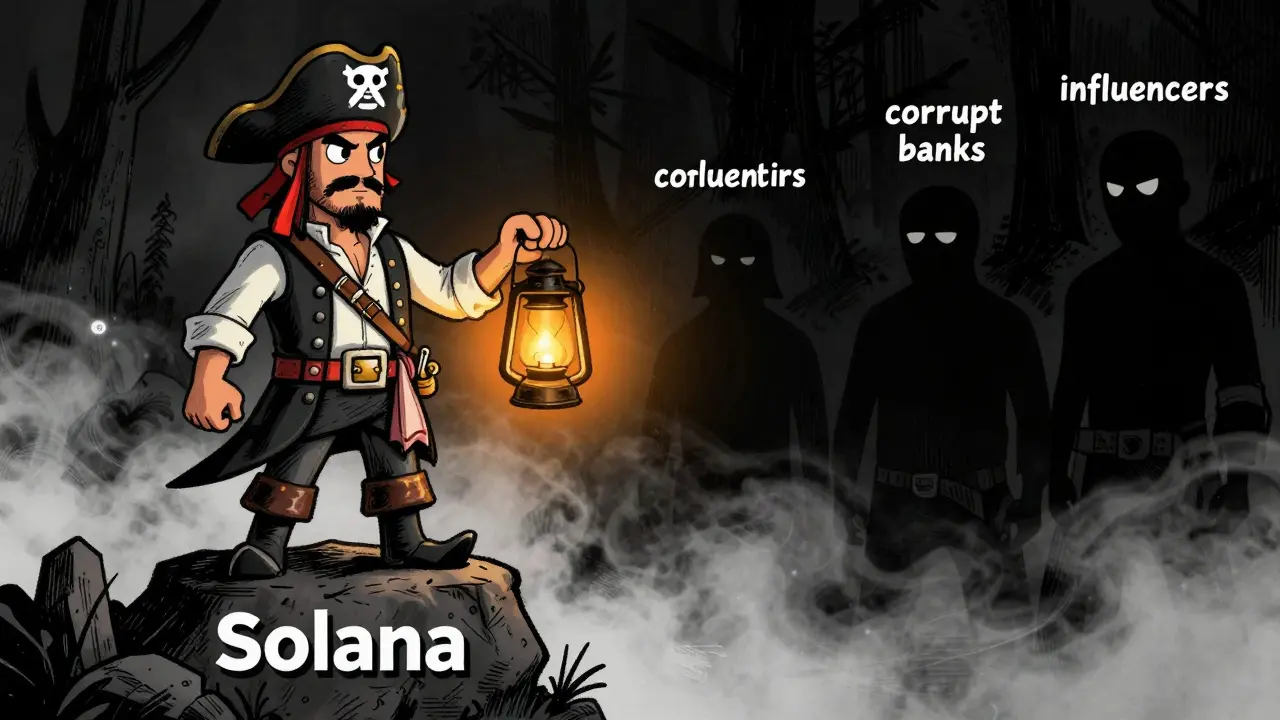
PYRATE launched on October 29, 2024, debuting on platforms like Moonshot and DexScreener. The project positions itself as more than just a joke coin. Its marketing narrative frames PYRATE as a resistance movement against "corrupt banks, governments, and soulless influencers." While that sounds dramatic, the core appeal is simpler: it combines the viral potential of pirate memes with actual functional tools.
The team describes PYRATE as a "degen meme & dApp ecosystem." In plain English, this means they are building software applications on top of the token. Currently, their primary utility is a token-voting platform where holders can participate in community decisions. They also plan to launch a Decentralized Autonomous Organization (DAO), which would give token owners formal control over the project's treasury and direction. The stated goal is ambitious: reach a $69 million market capitalization while building tools that improve users' lives in Web3.
| Feature | Details |
|---|---|
| Ticker Symbol | PYRATE |
| Blockchain | Solana |
| Launch Date | October 29, 2024 |
| Max Supply | 1,000,000,000 PYRATE |
| Primary Utility | Token Voting, Contests, Future DAO |
| Target Market Cap | $69 Million |
Technical Specs and Supply Dynamics
Understanding the numbers is crucial because they dictate scarcity and value. PYRATE has a maximum supply of 1 billion tokens. As of early 2025, approximately 988 million tokens were already circulating. This means nearly 99% of all PYRATE tokens exist right now. There is no hidden stash of millions of tokens waiting to dump on retail investors later, which is a common fear in new crypto projects.
A critical event in PYRATE’s history was a 1:1 contract swap. The team migrated users from an old smart contract to a new one. For every old PYRATE token held, users received one new PYRATE token. This process often happens to fix bugs, upgrade security features, or integrate new functionalities without changing the total supply. If you held PYRATE during this period, you likely had to manually claim or swap your tokens to ensure they remained valid on the new contract address.
Because PYRATE runs on the Solana blockchain, transactions are fast and fees are negligible compared to Ethereum. However, this also means you need SOL (Solana’s native token) to pay for transaction fees when buying, selling, or using PYRATE utilities. You cannot interact with PYRATE directly using USDT or BTC; you must bridge through SOL.
Market Reality: Extreme Volatility and Low Liquidity
Let’s look at the cold hard data. PYRATE is a micro-cap asset. Its price history shows extreme swings typical of meme coins. The all-time high (ATH) was roughly $0.00297 in December 2024. By February 2026, the price had crashed to an all-time low (ATL) of about $0.00000398. That is a drop of nearly 99.8%.
As of mid-2026, prices fluctuate between $0.000004 and $0.00005 depending on the exchange. The market capitalization hovers in the thousands or low tens of thousands of dollars. For context, a market cap under $100,000 is considered extremely small. This implies two major risks:
- Low Liquidity: With daily trading volumes sometimes dipping below $50, large buy or sell orders can drastically move the price. Slippage-the difference between the expected price and the executed price-can be severe.
- Data Discrepancies: Different aggregators show different prices. CoinGecko might list it at $0.00005 while another tracker shows $0.000004. Always check multiple sources and verify the price on the actual exchange interface before trading.
This volatility means PYRATE is not suitable for conservative investing. It is a speculative play where gains can be massive, but losses are equally likely to be total.
How to Buy PYRATE: A Step-by-Step Guide
You will not find PYRATE on major centralized exchanges like Coinbase or Binance. These platforms explicitly state that PYRATE is not tradable on their sites. To acquire PYRATE, you must use decentralized finance (DeFi) tools. Here is the standard process:
- Get a Wallet: Download a self-custodial wallet that supports Solana, such as Trust Wallet or Phantom. Secure your seed phrase offline. Never share it.
- Buy Solana (SOL): Purchase SOL on a major exchange like Binance, Coinbase, or Kraken. Withdraw the SOL to your self-custodial wallet address.
- Connect to a DEX: Navigate to a Solana-compatible decentralized exchange. Raydium is the most popular venue for PYRATE trading.
- Find the Contract: Connect your wallet to Raydium. Paste the official PYRATE smart contract address into the search bar. Do not rely on the ticker symbol alone, as fake tokens often use the same name.
- Swap: Set your slippage tolerance (often needs to be higher for volatile tokens, e.g., 1-5%). Swap your SOL for PYRATE. Confirm the transaction in your wallet.
Note that this process requires technical comfort. If you lose your seed phrase, there is no customer support to call. Your funds are gone forever.
Risks and Due Diligence
Before putting money into PYRATE, consider these red flags and realities:
- No Major Listings: The absence from Tier-1 exchanges limits accessibility and legitimacy in the eyes of institutional investors.
- Unverified Claims: The project claims usage by "100,000+ people in 1,000+ crypto projects." Independent verification of these integrations is scarce. Treat these figures as marketing aspirations rather than proven facts.
- Security Audits: Publicly available information does not highlight third-party security audits of the smart contracts. While the Solana network is secure, individual token contracts can have vulnerabilities.
- Community Dependence: Like many meme coins, PYRATE’s value relies heavily on community hype. If interest wanes, the price can collapse with little recovery potential.
There are no formal ratings from agencies like Messari or Delphi Digital for PYRATE. Expert analysis is virtually non-existent. You are betting on the community’s ability to sustain momentum and execute on their roadmap (DAO, voting tools).
Is PYRATE Worth It?
PYRATE offers a unique blend of thematic branding and attempted utility in the crowded Solana meme coin space. If you enjoy the pirate aesthetic and want to experiment with DeFi governance tools, it provides a low-cost entry point. However, the financial risk is exceptionally high. The near-total drawdown from its all-time high demonstrates how quickly value can evaporate.
Only invest what you can afford to lose completely. Use reputable wallets, verify contract addresses meticulously, and understand that liquidity is thin. For most investors, established cryptocurrencies offer safer exposure to blockchain technology. PYRATE remains a niche, high-speculation asset best suited for experienced degens who understand the mechanics of decentralized trading.
Can I buy PYRATE on Coinbase or Binance?
No. Both Coinbase and Binance explicitly state that PYRATE is not listed or tradable on their platforms. You must use decentralized exchanges like Raydium and transfer SOL from a centralized exchange to a self-custodial wallet first.
What happened to the old PYRATE contract?
PYRATE underwent a 1:1 contract swap. Holders of the old token were required to migrate to a new smart contract address. Each old token was exchanged for one new token. Ensure you are using the current active contract address to avoid losing funds.
Why is the PYRATE price so different across websites?
PYRATE is a micro-cap token with very low liquidity. Prices vary significantly between decentralized exchanges and data aggregators due to thin order books and delayed data updates. Always check the live price on the specific DEX you intend to trade on.
Does PYRATE have any real utility?
The project claims to offer utility through a token-voting platform and plans for a DAO. It also promotes contests and interactive experiences within its ecosystem. However, independent verification of widespread adoption beyond the immediate community is limited.
What is the maximum supply of PYRATE?
The maximum supply of PYRATE is 1,000,000,000 (1 billion) tokens. Approximately 988 million tokens are currently circulating, meaning nearly all tokens have been minted.