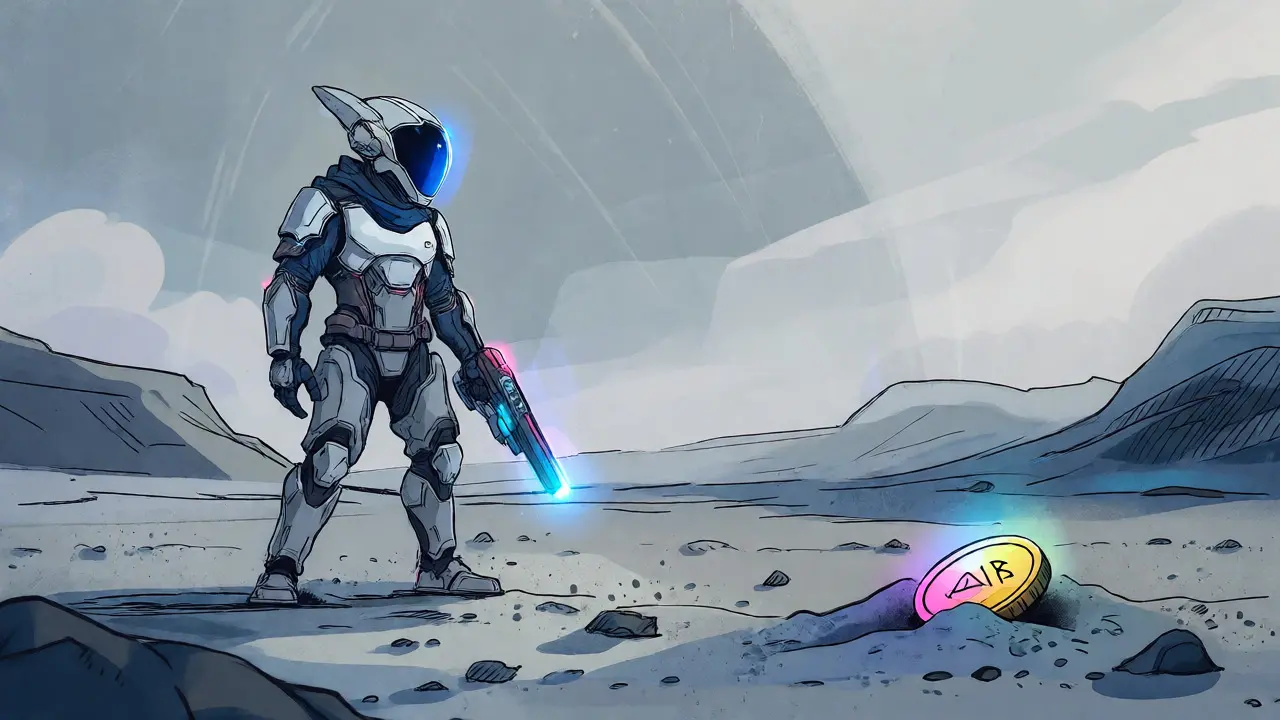
You click on a link promising the next big thing in blockchain gaming. You expect to see a bustling marketplace, thousands of players fighting for loot, and a token price that reflects real demand. Instead, you find Project Quantum, a project touting a AAA game built on Unreal Engine 5, yet trading with zero volume and a price so low it’s practically invisible. Is this an early-stage gem waiting to explode, or has the hype train already left the station without passengers?
If you’re digging into QBIT because you saw a flashy trailer or a promotional tweet, you need the cold, hard facts before you connect your wallet. This isn’t just about buying a coin; it’s about understanding whether the underlying product actually exists. Let’s cut through the marketing noise and look at what Project Quantum really is, how its economy works, and why its market data looks suspiciously quiet.
The Core Concept: AAA Gaming Meets Blockchain
Project Quantum positions itself as a bridge between high-fidelity console-quality graphics and decentralized ownership. Founded in May 2021 by Fraser Gordon in Scotland, the venture aims to create an instanced MMOFPS (Massively Multiplayer Online First-Person Shooter). In this universe, players take on the role of "Seekers," exploring a sci-fi world to mine resources, hunt monsters, and fight other players for equipment.
The pitch is seductive: imagine playing a game where every gun, skin, or resource you find has real-world value. Unlike traditional games where your loot stays trapped on a server, Project Quantum promises that these assets live on the blockchain. This means you can theoretically sell them for profit outside the game environment. However, there is a massive gap between promising a AAA experience and delivering one. As of late 2026, verifiable evidence of a fully launched, widely played version of this game remains scarce. Most users interacting with QBIT are likely speculating on the potential rather than spending time inside a vibrant active ecosystem.
How QBIT Tokenomics Actually Work
At the heart of the Project Quantum economy sits the QBIT token. It operates as a BEP-20 token on the Binance Smart Chain (BSC), which keeps transaction fees low compared to Ethereum-based alternatives. But don’t let the technical jargon fool you into thinking it’s complex; the mechanics are straightforward, if slightly aggressive on taxes.
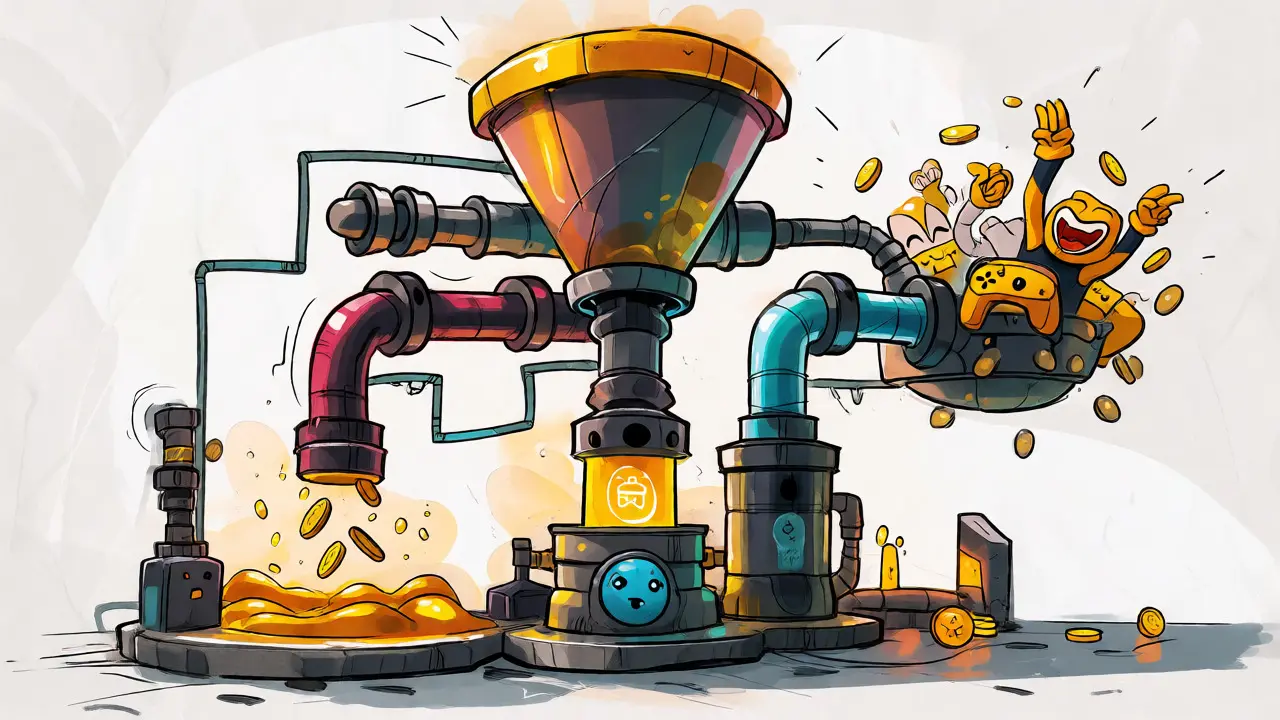
Every time you buy, sell, or transfer QBIT, a 10% tax is applied to the transaction. Here is exactly where that money goes:
- 3.5% to BNB Liquidity: This portion is swapped into BNB and added to the liquidity pool. This helps stabilize the token’s price and ensures there is always some depth for trading.
- 3.5% to Game Economy: This is reinjected into the game via rewards and item values. The idea is to keep the in-game currency valuable by backing it with real economic activity.
- 3% to Holders: This is redistributed directly to existing QBIT holders and players. It acts as a passive yield mechanism, rewarding those who hold onto their coins during volatile periods.
This structure is designed to discourage day-trading and encourage long-term holding. If you plan to flip QBIT quickly, that 10% haircut will eat your profits fast. You need significant price appreciation just to break even on entry and exit.
Market Reality: Zero Volume and Micro Prices
Here is the part that usually stops investors in their tracks. According to recent data from CoinMarketCap, QBIT trades at approximately $0.0000001786 USD. More concerning than the low price is the trading volume. For many days, the 24-hour trading volume sits at $0. What does that mean for you?
It means there are almost no buyers or sellers. If you buy $100 worth of QBIT today, you might not be able to sell it tomorrow without crashing the price further because there’s simply no one on the other side of the trade. The project currently holds a ranking around #6653 on major aggregators, placing it in the deep tail of the cryptocurrency market. Compare this to established competitors like Gala Games (GALA) or The Sandbox (SAND), which maintain millions in daily volume and active user bases.
| Feature | Project Quantum (QBIT) | Gala Games (GALA) | The Sandbox (SAND) |
|---|---|---|---|
| Token Standard | BEP-20 (Binance Smart Chain) | Ethereum/BSC/Polygon | Ethereum |
| Transaction Tax | 10% | Variable/Low | Low |
| Game Status | In Development / Early Access | Multiple Live Games | Live Metaverse Platform |
| Trading Volume | Near Zero ($0 - Low) | High (Millions) | High (Millions) |
| Community Size | Marginal | Large | Very Large |
Buying QBIT: The PancakeSwap Hurdle
Since QBIT isn’t listed on centralized exchanges like Coinbase or Kraken, you can’t just log in and buy it with a credit card. You have to navigate the decentralized exchange (DEX) landscape. The primary venue for trading QBIT is PancakeSwap, the leading DEX on the Binance Smart Chain.
Here is the practical workflow you’ll face:
- Set up a Web3 Wallet: You need MetaMask or Binance Web3 Wallet. Make sure you’ve backed up your seed phrase offline.
- Fund with BNB: Since QBIT is on BSC, you need BNB to pay for gas fees and to swap for tokens.
- Connect to PancakeSwap: Go to the V2 or V3 interface and connect your wallet.
- Add the Contract Address: Always verify the official contract address from the project’s GitHub or website. Scammers love creating fake tokens with the same name.
- Adjust Slippage: Because liquidity is thin, you often need to set slippage tolerance higher than the default 0.5%. Expect to set it between 10% and 15% to get your transaction through. Remember, the 10% tax is separate from slippage.
If you aren’t comfortable managing private keys and navigating DeFi interfaces, the barrier to entry here is steep. One wrong click could cost you your entire investment.
Is the Project Dead or Just Sleeping?
With zero trading volume and conflicting reports about listing status, skepticism is healthy. Some sources state the project is "awaiting listing," while others show it’s already on CoinMarketCap but inactive. The founder, Fraser Gordon, has emphasized building a custom plugin for Unreal Engine 5 to facilitate blockchain integration for other studios. This suggests a pivot toward infrastructure tools rather than just being a game publisher.
However, without visible player activity or regular development updates on social channels like Twitter or Discord, it’s hard to gauge momentum. Price prediction algorithms from sites like Bitscreener suggest modest growth possibilities by 2025, projecting prices around $0.00007, but these models rely heavily on historical volatility that barely exists for QBIT. Relying on these predictions is risky when the asset has essentially flatlined.
Who Should Consider QBIT?
You should only consider buying QBIT if you fit a specific profile:
- The High-Risk Speculator: You are willing to lose 100% of your investment for the chance of a 10x return if the game launches successfully.
- The Tech Enthusiast: You believe in the specific utility of their Unreal Engine plugin and want to support infrastructure development.
- The Patient Holder: You understand the 10% tax structure and plan to hold for years, ignoring short-term volatility.
If you are looking for steady returns, active gameplay, or easy liquidity, QBIT is likely not the right fit. The risk-to-reward ratio is skewed heavily toward risk due to the lack of market depth.
Where can I buy Project Quantum (QBIT)?
QBIT is primarily traded on decentralized exchanges, specifically PancakeSwap on the Binance Smart Chain. It is generally not available on major centralized exchanges like Coinbase or Binance.com spot markets. You will need a Web3 wallet like MetaMask and BNB to purchase it.
Why is QBIT trading volume so low?
The low volume indicates limited market interest and liquidity. Many small-cap altcoins suffer from this issue, especially if the associated product (the game) hasn't reached mass adoption. Without active players driving demand for the token, trading activity dries up.
What is the tax on QBIT transactions?
There is a 10% tax on all buys, sells, and transfers. 3.5% goes to BNB liquidity, 3.5% is reinjected into the game economy, and 3% is redistributed to holders. This makes frequent trading expensive.
Is Project Quantum a scam?
It is not necessarily a scam, but it is a high-risk, low-liquidity project. There is a team and a stated roadmap, but the lack of active trading and verified widespread gameplay makes it speculative. Always do your own research and never invest more than you can afford to lose.
Does QBIT work on Ethereum?
No, QBIT is a BEP-20 token, meaning it runs on the Binance Smart Chain. Sending it to an Ethereum address via a bridge requires careful handling; sending BEP-20 tokens directly to an ERC-20 wallet on Ethereum without bridging will result in lost funds.