
You might have seen OtterHome pop up in your wallet or a price tracker and wondered what it actually does. It’s not the next Bitcoin. It’s a niche Decentralized Finance (DeFi) project built on the Arbitrum Layer2 network, trying to solve one specific problem: making Ethereum trading cheaper and faster without losing security. But here’s the catch-data on this token is messy. Supply figures conflict, prices swing wildly, and documentation is thin. If you’re thinking about buying $HOME or using their swap platform, you need to cut through the noise first.
The Core Concept: A DEX on Arbitrum
OtterHome is a decentralized finance protocol that functions as an automated market maker (AMM), similar to Uniswap but optimized for the Arbitrum network. The goal is simple: let users trade tokens directly from their wallets without relying on centralized exchanges like Coinbase or Binance. By building on Arbitrum, an optimistic rollup scaling solution, OtterHome claims to offer near-instant transactions with negligible gas fees while inheriting Ethereum’s robust security model.
The platform centers around "OtterHome Swap," a user-friendly interface where you can swap tokens, provide liquidity, and stake your holdings. Think of it as a local shop on a fast highway (Arbitrum) rather than a crowded mall (Ethereum mainnet). You get the same goods, but you don’t wait in line or pay exorbitant parking fees. The native token, $HOME, acts as the fuel for this machine-it’s used for governance votes, staking rewards, and paying transaction costs within the ecosystem.
Tokenomics: The Confusing Supply Reality
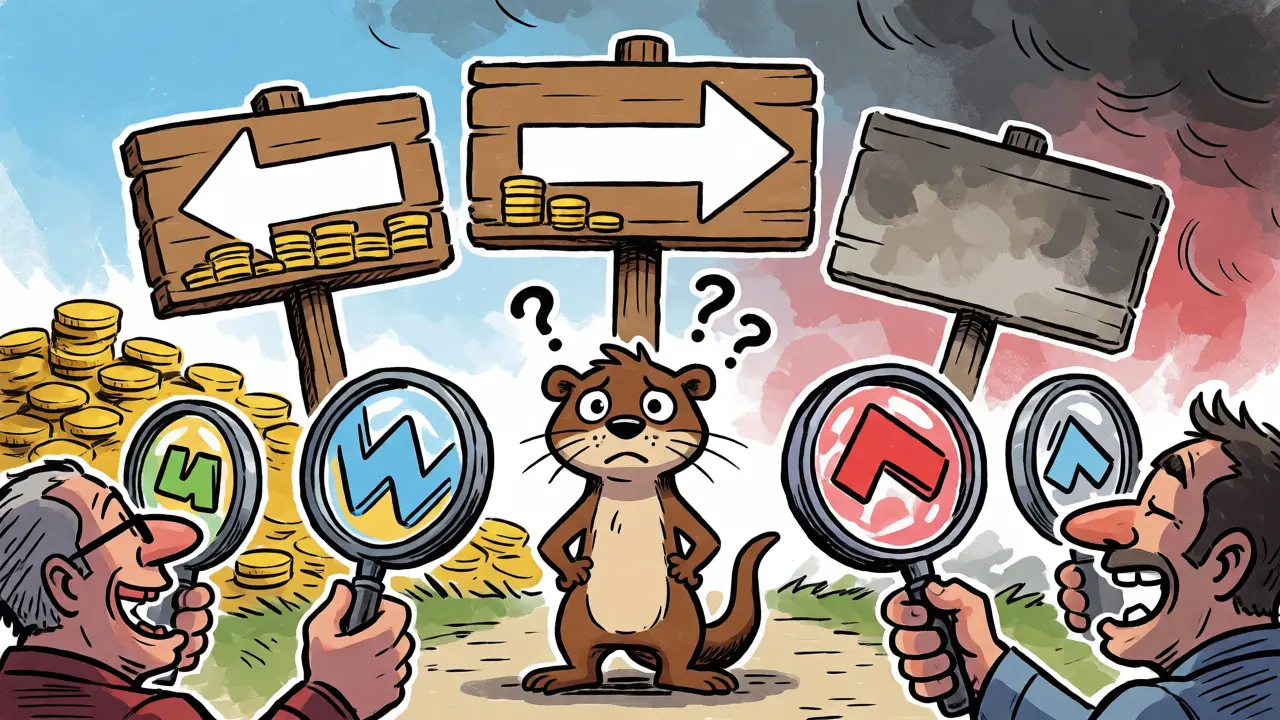
If you try to look up how many $HOME tokens exist, you’ll hit a wall of contradictions. This isn’t just a minor typo; it’s a red flag for serious investors. Different data aggregators report vastly different numbers, which makes calculating market cap nearly impossible.
| Data Provider | Circulating/Max Supply | Reported Price (Approx.) | Notes |
|---|---|---|---|
| Coinranking | 10,000,000,000 HOME | $0.000094 (ATH) | Reports full circulation; FDV ~$50k |
| Crypto.com | 1,000,000,000 HOME | $0.036 | Lists max supply at 1B; volume N/A |
| Binance | 0 (Unknown) | $0.018 | Tracks price/volume but lacks supply data |
| CoinGecko | Variable | $0.054 | Shows recent volatility spikes |
Why the discrepancy? One theory is that older data from a previous contract deployment lingers on some sites. Another is that CoinCarp describes a multi-year emissions schedule totaling roughly 937 million tokens over four years, which aligns closer to the 1 billion figure. Meanwhile, Coinranking suggests 10 billion are already circulating. Until the team releases a clear, audited token distribution report, treat any market cap calculation as a rough guess, not a fact.
Utility: What Can You Actually Do With $HOME?
Buying a coin just to hold it is risky when the utility is unclear. For OtterHome, the value proposition rests on three pillars:
- Governance: Holding $HOME gives you voting rights on protocol upgrades and fee structures. It’s democratic, but only if people actually vote.
- Staking Rewards: The project promotes a five-year staking program. In Year 1, they planned to distribute 500 million HOME to stakers, halving annually thereafter. This incentivizes locking up tokens to reduce sell pressure.
- Liquidity Provision: You can pair $HOME with other tokens (like USDC or ETH) in liquidity pools. In return, you earn trading fees plus additional $HOME rewards.
There’s also mention of NFT integration and community-driven initiatives, suggesting the team wants $HOME to be more than just a speculative asset. However, unlike major protocols like Aave or Compound, there are no public audits listed for their smart contracts. That means you’re trusting the code implicitly, which is a significant risk factor in DeFi.
Market Performance and Volatility Risks
Let’s talk numbers, because they tell a cautionary tale. OtterHome’s all-time high was recorded in June 2023 at approximately $0.000094. Depending on which tracker you believe, the current price fluctuates between fractions of a cent and a few cents. On Dropstab, one snapshot showed a daily drop of 30% with only $18 in total trading volume. That’s not a market; that’s a ghost town.
High volatility combined with low liquidity creates a dangerous environment for traders. A small sell order can crash the price by double digits. Conversely, a modest buy order can spike it temporarily. If you plan to exit a position, you might face significant slippage-the difference between the expected price and the actual execution price. Always check the order book depth before entering large trades.
How to Buy and Use OtterHome
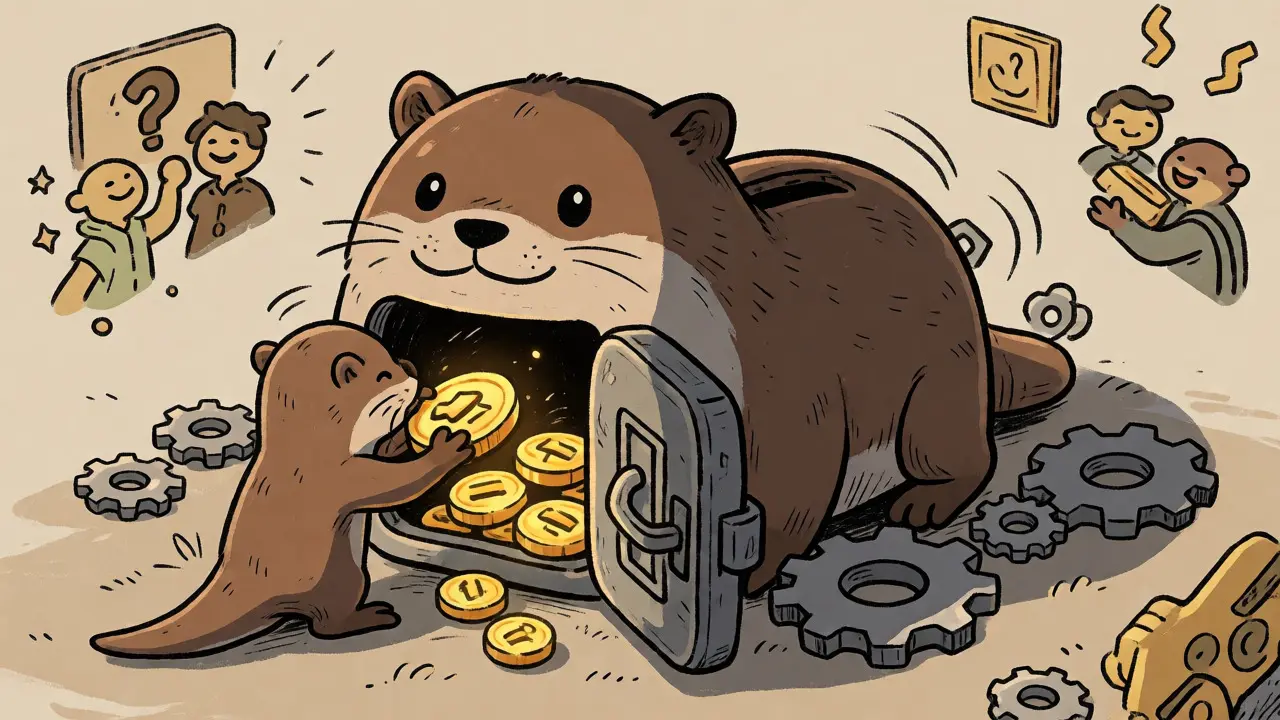
Getting started requires a bit more effort than clicking "Buy" on Coinbase. Since $HOME is primarily an Arbitrum-native token, you’ll need to navigate the Web3 landscape.
- Set Up a Wallet: Install MetaMask or Rabby. Ensure you’ve added the Arbitrum One network to your wallet settings.
- Fund Your Wallet: Bridge some ETH from Ethereum Mainnet to Arbitrum. You’ll need ETH for gas fees and to swap into $HOME.
- Find a Liquidity Source: Check DEXes like SushiSwap or Uniswap on Arbitrum for $HOME pairs. Note that Coinpaprika lists Gate.io and MEXC as centralized exchanges offering HOME/USDT pairs, which might be easier for beginners.
- Swap Tokens: Connect your wallet to the chosen platform, select $HOME, and execute the swap. Be mindful of slippage tolerance; set it higher if the pool is thin.
- Stake (Optional): Visit the official OtterHome site to lock your tokens in the staking contract. Confirm the transaction and wait for the reward accrual to begin.
Verdict: Is It Worth Your Attention?
OtterHome sits in the "high-risk, high-reward" bucket of micro-cap DeFi. It has the right tech stack-Arbitrum is booming, and low-cost swaps are in demand. But the lack of transparency regarding supply, absence of third-party audits, and inconsistent exchange listings suggest it’s still in its infancy or struggling for traction.
If you’re a casual investor, this might be too opaque for your portfolio. If you’re a DeFi degenerate who enjoys hunting for gems with potential for 10x returns (or 90% losses), do your own deep dive. Verify the contract address (0x1bD013bD089C2B6b2D30a0e0B545810a5844E761 on Arbitrum) yourself, test with small amounts, and never invest money you can’t afford to lose completely.
Is OtterHome safe to use?
Safety depends on your risk tolerance. While it uses Arbitrum's secure layer, the specific smart contracts for OtterHome lack widely published independent audits. Additionally, low liquidity increases the risk of price manipulation. Always verify the correct contract address before interacting.
Where can I buy HOME tokens?
You can find $HOME on decentralized exchanges like Uniswap or SushiSwap via the Arbitrum network. Some centralized exchanges such as Gate.io and MEXC also list HOME/USDT pairs, though availability can vary based on current liquidity conditions.
Why do supply numbers differ across websites?
Data providers often lag behind real-time blockchain updates or may track different contract deployments. Some sources cite a 1 billion max supply, while others show 10 billion circulating. This inconsistency usually indicates outdated indexing or multiple token versions, so always cross-reference with on-chain data.
Does OtterHome support NFTs?
Yes, the ecosystem description mentions interaction with NFTs and DeFi apps. Users can potentially use $HOME for payments or governance related to NFT projects within the broader OtterHome community, though specific major integrations are not heavily documented.
What is the staking reward schedule?
The project outlines a decreasing emission model: 500 million HOME in Year 1, dropping to 250 million in Year 2, and continuing to halve annually. This design aims to reward early adopters while gradually reducing inflationary pressure on the token supply.