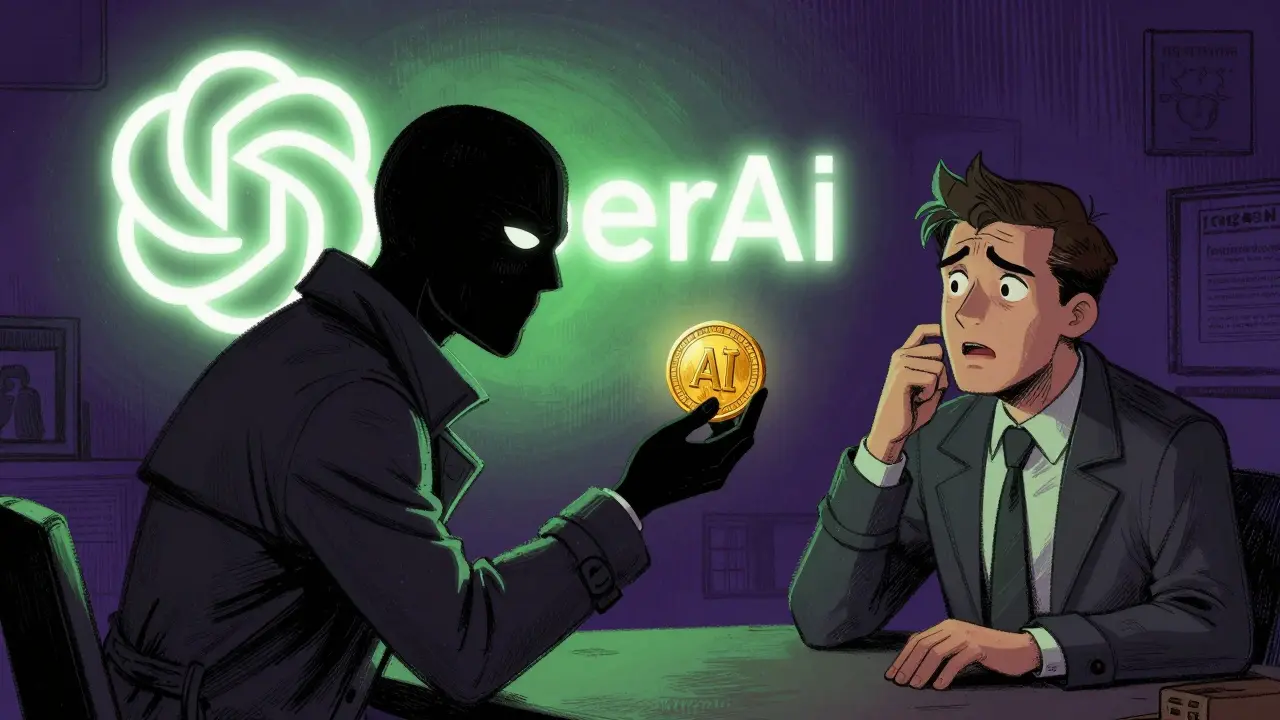
You’ve probably seen the ticker symbol OPERATOR popping up on social media or low-tier exchange lists. The name sounds official. It leans heavily on the massive hype surrounding OpenAI, the artificial intelligence giant behind ChatGPT. But here is the hard truth you need to hear before you spend a single dollar: this is not an official OpenAI product. In fact, it is likely one of the most dangerous traps in the current crypto market.
If you are asking "what is OpenAI Agent (OPERATOR) crypto coin," you are looking at a speculative meme token with no real utility, no official backing, and a price that has already collapsed by over 80%. This article breaks down exactly what this token is, why it exists, and how to spot these kinds of scams so you don’t lose your capital.
The Illusion of Official Backing
The biggest trick with the OPERATOR token is its name. It plays off the confusion between OpenAI’s actual software products and the chaotic world of cryptocurrency speculation. In September 2024, OpenAI announced a new AI agent system called "Operator." This is a software tool designed to automate tasks like booking travel or writing code for users. It is a legitimate piece of technology developed by engineers at OpenAI.
Crypto scammers and opportunistic developers saw this announcement and quickly created a token named OPERATOR to ride the coattails of that news. There is zero connection between the two. OpenAI has never issued a cryptocurrency. They have never endorsed a token. If you buy OPERATOR, you are not investing in AI technology; you are buying a digital receipt for a gamble based on a stolen brand name.
This pattern is common in the crypto space. When a major tech company announces a product, dozens of fake tokens appear within hours. They use similar names, logos, or ticker symbols to trick retail investors into thinking they are getting in early on a legitimate project. Always check the official website of the company in question. If OpenAI wanted to launch a token, they would announce it directly, not through random Telegram groups or obscure exchanges.
Technical Chaos: Solana or Ethereum?
Legitimate cryptocurrencies have clear technical specifications. You know which blockchain they run on, who developed them, and where their code lives. With OPERATOR, none of this adds up. The data is contradictory, which is a massive red flag.
Some data aggregators list OPERATOR as an Ethereum token, claiming it was launched in 2023 to facilitate AI interactions. Other sources, including CoinMarketCap and LiveCoinWatch, list it as a Solana token, providing a specific contract address on the Solana network. This discrepancy suggests either multiple different tokens using the same name, or worse, that the project documentation is fabricated and inconsistent.
| Attribute | Source A (e.g., CoinPaprika) | Source B (e.g., CoinMarketCap) |
|---|---|---|
| Blockchain Network | Ethereum | Solana |
| Launch Year | 2023 | Unclear / Opportunistic |
| Official Documentation | Claims of whitepaper | No GitHub repo, no audit |
| Total Supply | ~1 Quadrillion | ~1 Quadrillion |
The lack of a verified GitHub repository, smart contract audits, or technical whitepaper is fatal for any serious investment. Real projects publish their code so experts can review it for security flaws. OPERATOR has none of this. It is a black box with no transparency.
The Math Behind the Collapse
Let’s look at the numbers, because they tell the story of a dead project. As of May 2026, the OPERATOR token trades at approximately $0.000000000006539 USD. That is six zeros after the decimal point before you even see a number. To put that in perspective, you could buy billions of tokens for less than the cost of a cup of coffee.
Why is the price so low? Because the supply is absurdly high. The total supply is roughly 1 quadrillion tokens (999,999,999,999,999). Most legitimate cryptocurrencies have supplies in the millions or billions. A quadrillion supply means each individual token is worth virtually nothing unless there is massive demand-which there isn’t.
The market capitalization is equally telling. Depending on the data source, it ranges from $0 to around $16,000 USD. For context, the entire global cryptocurrency market is worth trillions. OPERATOR represents 0% of that market. It is statistically invisible.
Even more alarming is the price history. The token hit an all-time high of $0.0000000001 USD on July 2, 2025. Since then, it has dropped by 86%. This is not a temporary dip; it is a collapse. The token has lost almost all of its value in less than a year. There is no recovery trend, no institutional interest, and no fundamental reason for anyone to buy it back.
Liquidity Traps: Why You Can’t Sell
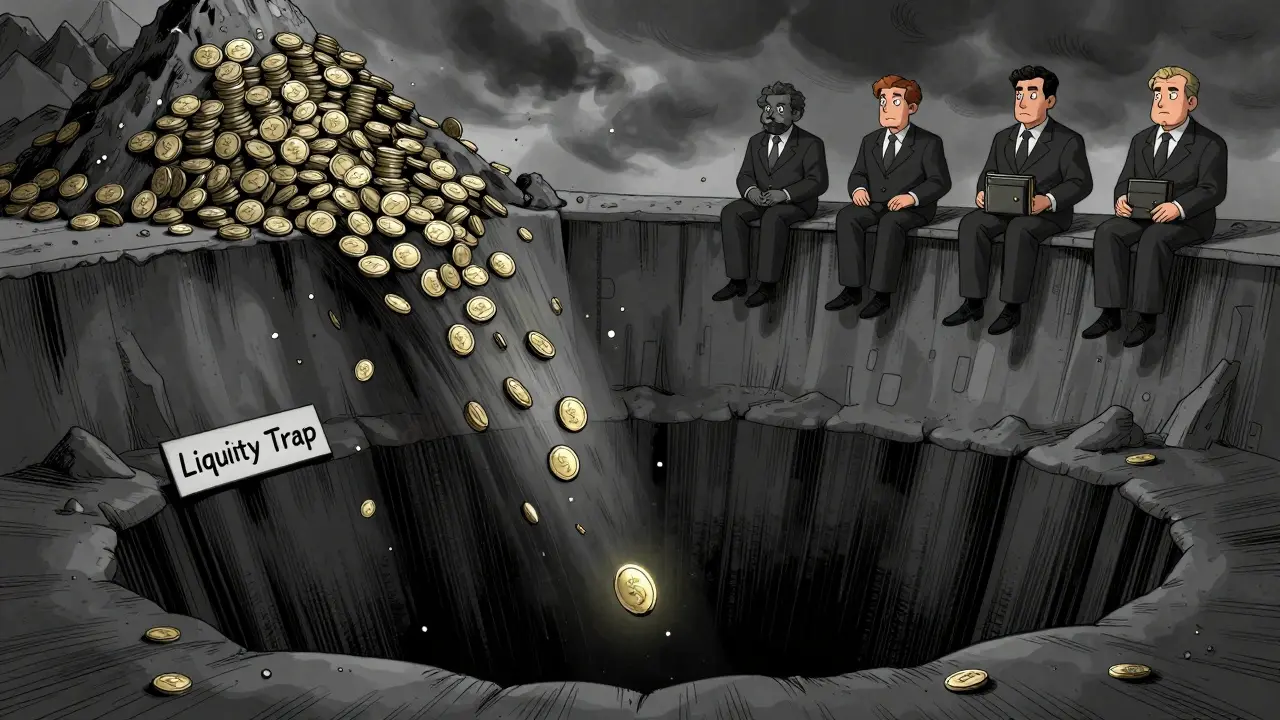
In crypto, liquidity is king. Liquidity means you can buy or sell your assets without drastically affecting the price. OPERATOR has no liquidity. The 24-hour trading volume hovers between $7 and $900 USD across various exchanges. Compare that to Bitcoin, which trades hundreds of billions daily, or even mid-cap altcoins that trade millions.
This creates a "liquidity trap." Imagine you manage to buy $1,000 worth of OPERATOR tokens. When you try to sell them, there are no buyers waiting in the order book. Your sell order will crash the price further, or it will sit unfilled for weeks. You are effectively locked in. This is a classic characteristic of abandoned or failed meme coins.
Furthermore, the holder distribution is extremely concentrated. Only about 2,670 wallets hold this token. Given the quadrillion supply, this means a tiny group of people-likely the creators and early bots-control the vast majority of the tokens. They can dump their holdings at any time, wiping out any remaining retail investors.
Red Flags Checklist: Is It a Scam?
You don’t need to be a blockchain expert to spot danger signs. Here is a checklist of red flags that apply directly to OPERATOR:
- Name Impersonation: Uses the name of a famous company (OpenAI) without permission.
- No Utility: Claims to support AI services but provides no working platform or API.
- Contradictory Tech: Sources disagree on whether it runs on Ethereum or Solana.
- Extreme Dilution: Quadrillion token supply makes meaningful appreciation impossible.
- Zero Volume: Daily trading volume is negligible, indicating no real market interest.
- No Development: No GitHub activity, no regular updates, no roadmap milestones met.
- Price Crash: Down 86% from its all-time high with no signs of recovery.
If a token checks even three of these boxes, it is not an investment. It is a lottery ticket with odds stacked against you. OPERATOR checks all of them.
What Should You Do Instead?
If you are interested in the intersection of AI and cryptocurrency, there are legitimate ways to explore this sector. Look for projects with transparent teams, open-source code, and real-world usage. Tokens associated with established AI infrastructure providers, such as those involved in decentralized compute networks or verifiable machine learning models, offer far more substance than a meme coin named after a software feature.
Always perform your own due diligence. Check if the project has a verified presence on LinkedIn, a active developer community on Discord or GitHub, and clear financial disclosures. Avoid tokens that promise "guaranteed returns" or rely solely on hype from anonymous influencers.
In the case of OPERATOR, the advice is simple: stay away. The risk of total loss is near 100%, and the potential for gain is nonexistent. Protect your capital by focusing on assets with proven track records and genuine technological innovation.
Is OPERATOR an official OpenAI cryptocurrency?
No. OpenAI has never issued a cryptocurrency. The OPERATOR token is an unofficial, community-created meme coin that uses the name of OpenAI's "Operator" AI agent to attract attention. It has no affiliation with or endorsement from OpenAI.
Which blockchain does the OPERATOR token run on?
There is conflicting information. Some sources list it as an Ethereum token, while others list it as a Solana token. This inconsistency is a major red flag indicating poor documentation or potential fraud. Legitimate projects have a single, clear blockchain foundation.
Why is the price of OPERATOR so low?
The price is extremely low because the total supply is roughly 1 quadrillion tokens. This massive supply dilutes the value of each individual token. Additionally, the lack of demand, utility, and liquidity has caused the price to collapse by over 80% from its all-time high.
Can I make money trading OPERATOR?
It is highly unlikely. The token has negligible trading volume, meaning you may not be able to sell your tokens even if the price rises slightly. The concentration of holdings among a few wallets also increases the risk of a sudden dump by creators, leading to total loss.
What are better alternatives for AI-related crypto investments?
Look for projects with transparent development teams, open-source code repositories, and real-world utility in AI infrastructure, such as decentralized computing or data verification. Avoid tokens that rely solely on brand impersonation or hype without technical substance.