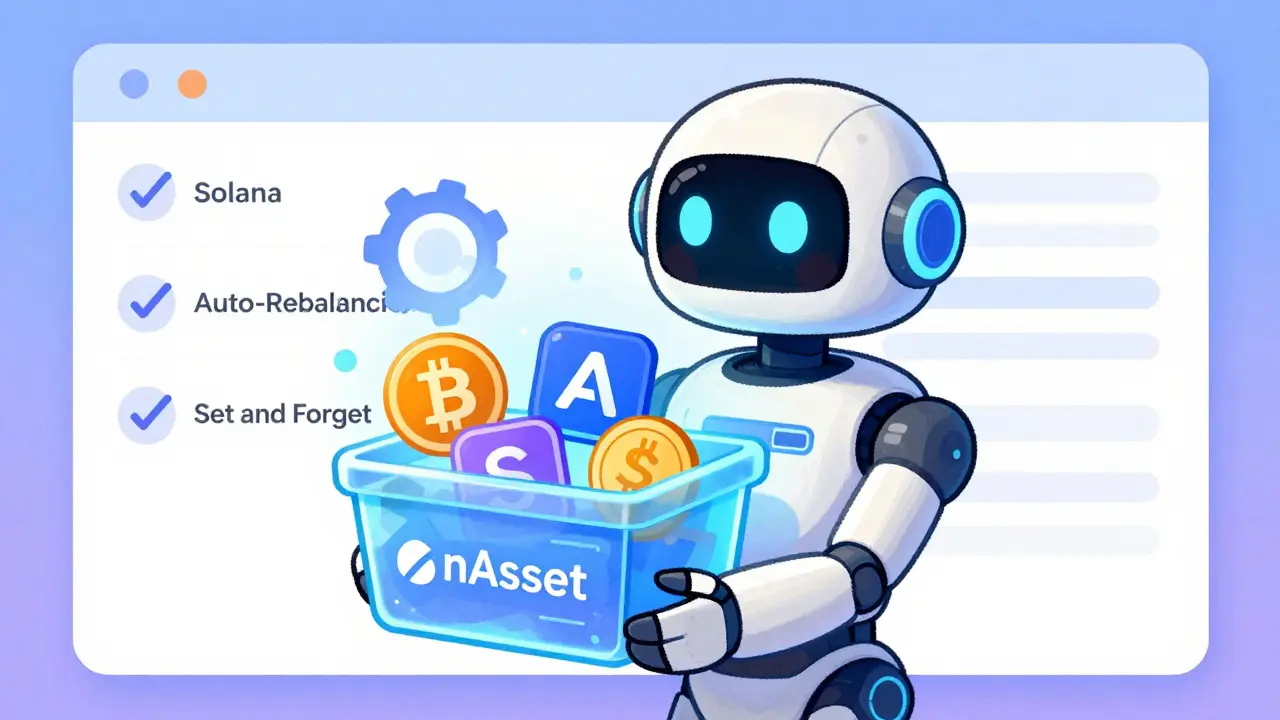
Have you ever wished you could set up a crypto investment strategy once and let it run on autopilot? That is exactly what Nova Finance is a decentralized finance protocol built on the Solana blockchain that allows users to create, customize, and automate crypto investment portfolios through programmable assets called 'nAssets'. If you have been scrolling through your exchange apps lately, you might have spotted the NOVA token. But what is it really for? Is it just another meme coin hoping for a pump, or does it actually do something useful?
The short answer is: it’s a tool. Nova Finance isn’t just a currency; it’s a platform designed to manage your digital assets automatically. However, like many projects in the volatile world of crypto, its journey has been anything but smooth. By July 2026, the story of Nova Finance is one of ambitious technology meeting harsh market realities.
How Nova Finance Actually Works
To understand Nova Finance, you need to forget about traditional banks for a second. In the traditional world, if you want a diversified portfolio, you hire a financial advisor or buy a mutual fund. They take a cut, and you hope they make good decisions. In the crypto world, specifically within Decentralized Finance (DeFi), users interact directly with smart contracts without intermediaries.
Nova Finance sits on top of the Solana blockchain, known for its high speed and low transaction fees. This choice is crucial. Why? Because automated trading requires frequent small transactions. On slower, more expensive networks like Ethereum, the gas fees would eat up all your profits before you even started. Solana makes these micro-transactions cheap enough to be viable.
The core feature here is something called nAssets. Think of an nAsset as a programmable basket of goods. Instead of holding just Bitcoin or just USDC, you hold an nAsset that contains a mix of both, plus maybe some stablecoins and NFTs. The magic happens because this basket follows rules you set-or rules someone else created and shared with you.
- Recurring Buys: Set your wallet to buy $10 worth of an asset every day, regardless of price.
- Buy-the-Dip Logic: Automatically purchase more when the price drops by a certain percentage.
- Auto-Rebalancing: If your target is 50% Bitcoin and 50% Solana, but Bitcoin rallies and becomes 70% of your portfolio, the system sells some Bitcoin and buys Solana to get back to 50/50.
You don’t need to sit in front of a screen watching charts. The smart contracts handle the heavy lifting. And because it is non-custodial, you keep control of your private keys. You are not handing your money over to a company; you are interacting with code.
The NOVA Token: Utility vs. Speculation
Every DeFi project needs a native token, and Nova Finance uses NOVA as its utility and governance token. But what can you actually do with it? Holding NOVA doesn’t just mean you own a piece of paper; it gives you access to specific functions within the ecosystem.
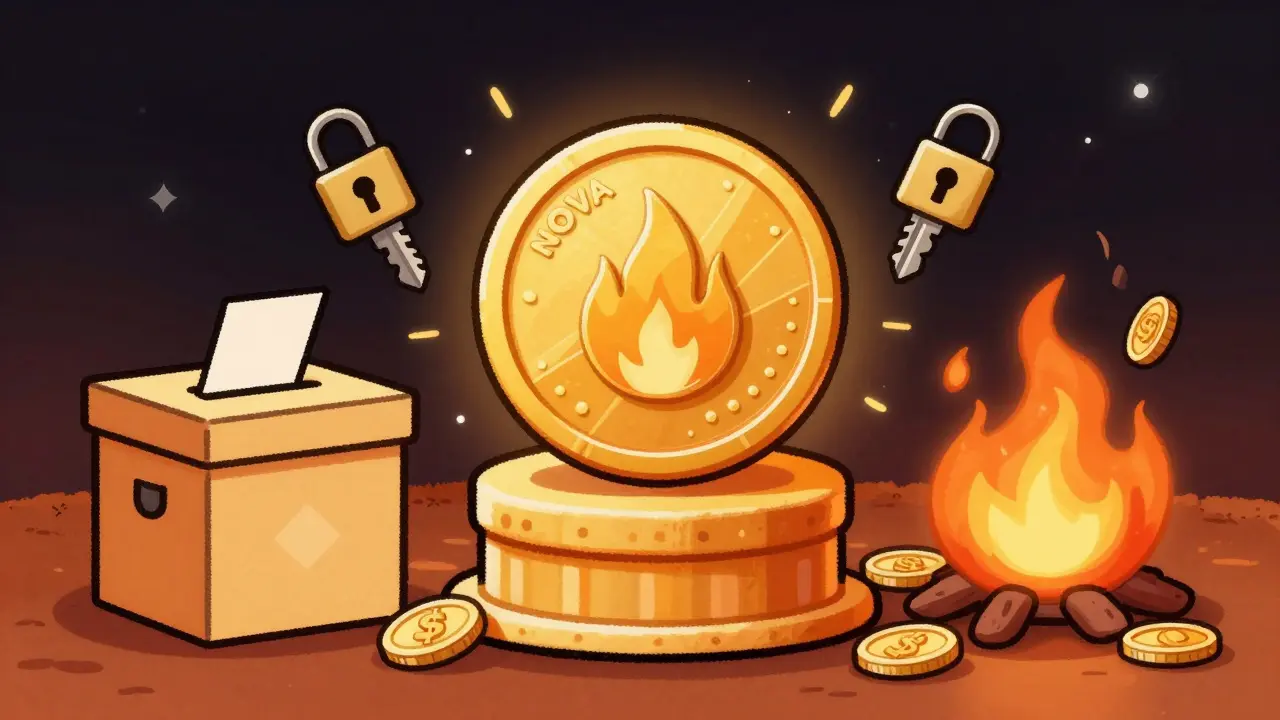
First, there is governance. As a holder, you can vote on proposals that affect the future of the protocol. This might include changes to fee structures, new features, or how the treasury funds are spent. It’s a democratic process, but only if people actually bother to vote.
Second, there is staking. You can lock up your NOVA tokens to earn rewards. These rewards often come from the revenue generated by the platform itself. When users pay fees to use the automation tools, a portion of that revenue goes to stakers. This aligns incentives: if the platform is useful and people use it, stakers get paid.
Third, there is a buyback-and-burn mechanism. This is a deflationary model. The protocol takes some of its revenue, buys NOVA tokens from the open market, and permanently destroys them. Fewer tokens in circulation means each remaining token represents a larger share of the network’s value-assuming demand stays constant or grows.
| Attribute | Details |
|---|---|
| Blockchain | Solana |
| Total Supply | Disputed: Sources cite either 1 billion or 10 million |
| Primary Use | Governance, Staking, Fee Discounts |
| Economic Model | Buyback-and-Burn (Deflationary) |
| Initial Sale Price | $2.00 (December 2021) |
The Elephant in the Room: Price and Market Reality
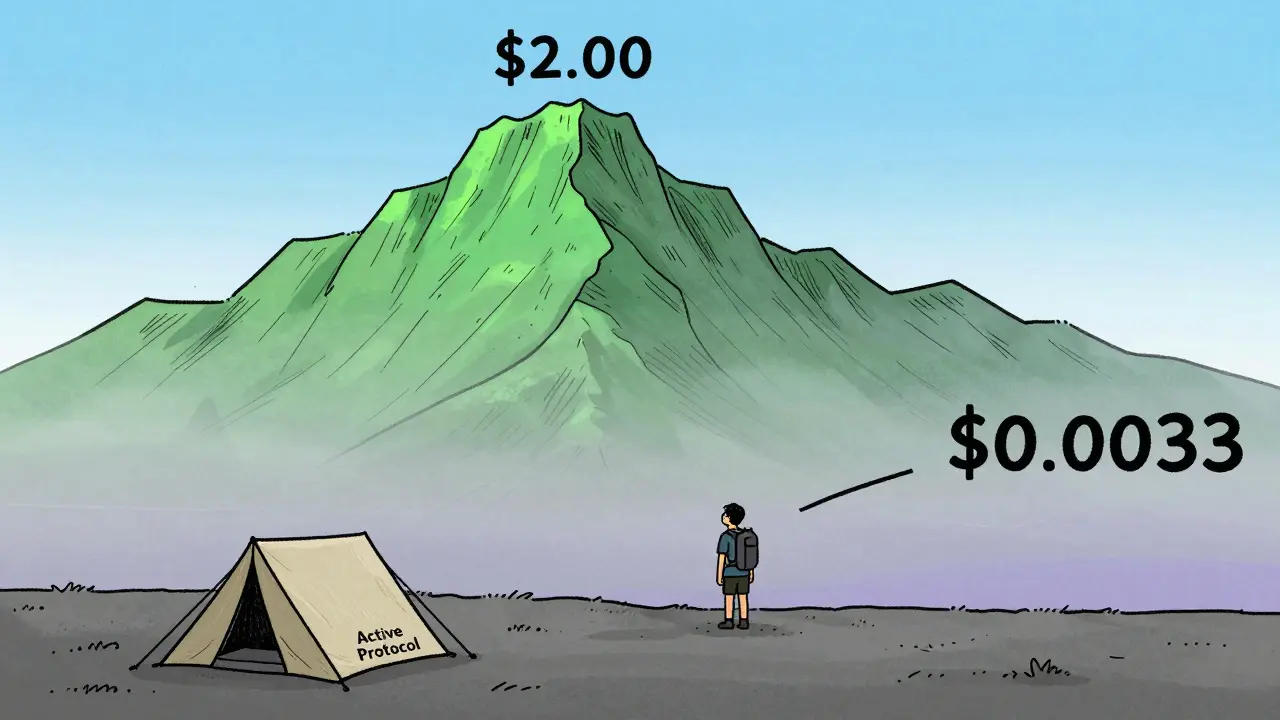
Let’s talk numbers, because they tell a stark story. When Nova Finance launched its token generation event in December 2021, the initial sale price was $2.00 per token. The project raised $3.2 million across three rounds and had a pre-money valuation of around $20 million. At the time, it looked like a promising entry into the Solana ecosystem.
Fast forward to July 2026. The price of NOVA hovers around $0.0033. That is a decline of over 99.8%. For anyone who bought at the initial offering, the loss is devastating. But why did this happen?
Crypto markets are brutal, especially for mid-cap and micro-cap projects. Between 2022 and 2024, the entire industry went through significant bear markets. Many DeFi protocols failed due to hacks, poor liquidity, or simply lack of user adoption. Nova Finance survived, but it didn’t thrive in terms of price action.
Currently, the daily trading volume is roughly $50,000, mostly concentrated on a single centralized exchange, AscendEX (formerly BitMax). This indicates very thin liquidity. If you try to sell a large amount of NOVA, you could significantly drop the price because there aren’t enough buyers waiting in the queue. The market cap is now in the tens of thousands of dollars, placing it firmly in the "micro-cap" category. It is no longer a household name in crypto.
There is also confusion regarding the total supply. Some sources claim a cap of 1 billion tokens, while others list 10 million. This discrepancy makes it hard to calculate accurate market capitalization figures. Always check the on-chain data yourself if you are serious about investing.
Who Should Use Nova Finance?
If the price chart looks scary, who is this platform even for? It’s not for day traders looking for quick pumps. It’s for a specific type of user: the hands-off investor who believes in the long-term potential of Solana-based assets but lacks the time or expertise to manage them manually.
Imagine you work a full-time job. You want to invest in crypto, but you don’t want to wake up at 3 AM to rebalance your portfolio after a market crash. Nova Finance allows you to set parameters once. "Keep 40% in stablecoins, 40% in SOL, and 20% in BTC." The system handles the rest.
It is also useful for creators. If you are a financial influencer or a strategist, you can build a custom nAsset based on your unique strategy and share it with your audience. Your followers can then replicate your portfolio with a single click. This creates a marketplace of strategies, where good performers attract more users.
Risks and Considerations
No investment is risk-free, and DeFi carries extra layers of complexity. Before you connect your wallet to Nova Finance, consider these factors:
- Smart Contract Risk: All your assets are managed by code. If there is a bug or a vulnerability in the Nova Finance contracts, hackers could drain funds. While audits help, they are not guarantees.
- Liquidity Risk: As mentioned, trading volume is low. Getting in is easy; getting out with large amounts might be difficult without slippage.
- Token Volatility: The NOVA token itself has lost almost all its value. While the utility of the platform remains, the economic incentive to stake might be less attractive if the token continues to depreciate.
- Brand Confusion: Be careful not to confuse Nova Finance (the crypto protocol) with other entities named "Nova," such as traditional financial groups or property firms. They are completely unrelated.
Is Nova Finance Dead?
Not necessarily. "Dead" in crypto usually means the developers have abandoned the project, the website is down, and the community has vanished. Nova Finance still has active smart contracts on Solana. Users can still create nAssets. The staking mechanisms are live. Recent reviews from mid-2026 indicate that the team is still maintaining the infrastructure.
However, "alive" doesn’t mean "successful." The project is operating in the shadows compared to giants like Jupiter or Marinade Finance on Solana. Its survival depends on whether it can find a niche audience that values its specific automation tools enough to generate steady revenue, which in turn supports the buyback-and-burn mechanism for NOVA holders.
Getting Started: A Practical Guide
If you decide to give it a shot, here is how you typically proceed:
- Get a Solana Wallet: Phantom or Solflare are popular choices. Make sure you have SOL for transaction fees.
- Connect to Nova Finance: Visit the official Nova Finance website and connect your wallet. Never share your seed phrase.
- Fund Your Account: Transfer some SOL or stablecoins (like USDC) to your wallet.
- Create or Choose an nAsset: You can start with a preset portfolio or build your own. Define your asset allocation percentages.
- Set Automation Rules: Enable features like auto-rebalancing or recurring buys if desired.
- Monitor: Even though it’s automated, check in periodically to ensure the strategy is performing as expected.
Nova Finance offers a fascinating glimpse into the future of automated wealth management on blockchains. It solves a real problem: the difficulty of managing complex crypto portfolios manually. But its journey serves as a cautionary tale about the volatility of crypto investments and the importance of looking beyond marketing hype to examine actual usage, liquidity, and tokenomics. Whether it will recover its past glory or remain a niche tool for dedicated Solana enthusiasts remains to be seen.
What is the current price of NOVA token?
As of July 2026, the NOVA token trades at approximately $0.0033. This represents a significant drop from its initial launch price of $2.00 in late 2021. Prices fluctuate daily, so always check a live market aggregator for the most recent data.
Is Nova Finance safe to use?
Nova Finance is non-custodial, meaning you retain control of your private keys, which reduces the risk of exchange hacks. However, all DeFi platforms carry smart contract risks. If there is a bug in the code, funds could be vulnerable. Always do your own research and never invest more than you can afford to lose.
What are nAssets?
nAssets are programmable portfolio tokens on the Nova Finance platform. Instead of holding individual cryptocurrencies, you hold an nAsset that represents a diversified basket of assets. These baskets can be configured to automatically rebalance, buy dips, or follow other algorithmic strategies.
Why did the NOVA token price drop so much?
The drop is attributed to broader market downturns in the crypto space between 2022 and 2024, combined with low liquidity and limited mainstream adoption for the Nova Finance protocol. Like many altcoins, it suffered during bear markets when speculative interest dried up.
Can I stake NOVA tokens?
Yes, NOVA holders can stake their tokens to earn a share of the platform's revenue and additional NOVA incentives. Staking also grants governance rights, allowing you to vote on protocol upgrades and treasury allocations.