Minato (MNTO) isn’t another meme coin trying to ride the wave of hype. It’s a crypto project built around a Decentralized Autonomous Organization with a clear, if ambitious, goal: to build a community-owned multichain metaverse. But here’s the reality check - while the vision sounds exciting, the market data tells a very different story. As of March 2026, MNTO trades on a single decentralized exchange with almost no volume, its price has crashed over 98% from its peak, and major tracking platforms barely list it anymore. So what’s really going on with Minato?
What Minato (MNTO) Actually Is
Minato is a cryptocurrency token that powers a DAO - a blockchain-based organization run by its members, not a company. The idea is simple: instead of a CEO making decisions, token holders vote on how the project evolves. Minato’s stated mission is to create a metaverse where users own assets, earn rewards, and participate in storytelling - all across multiple blockchains.
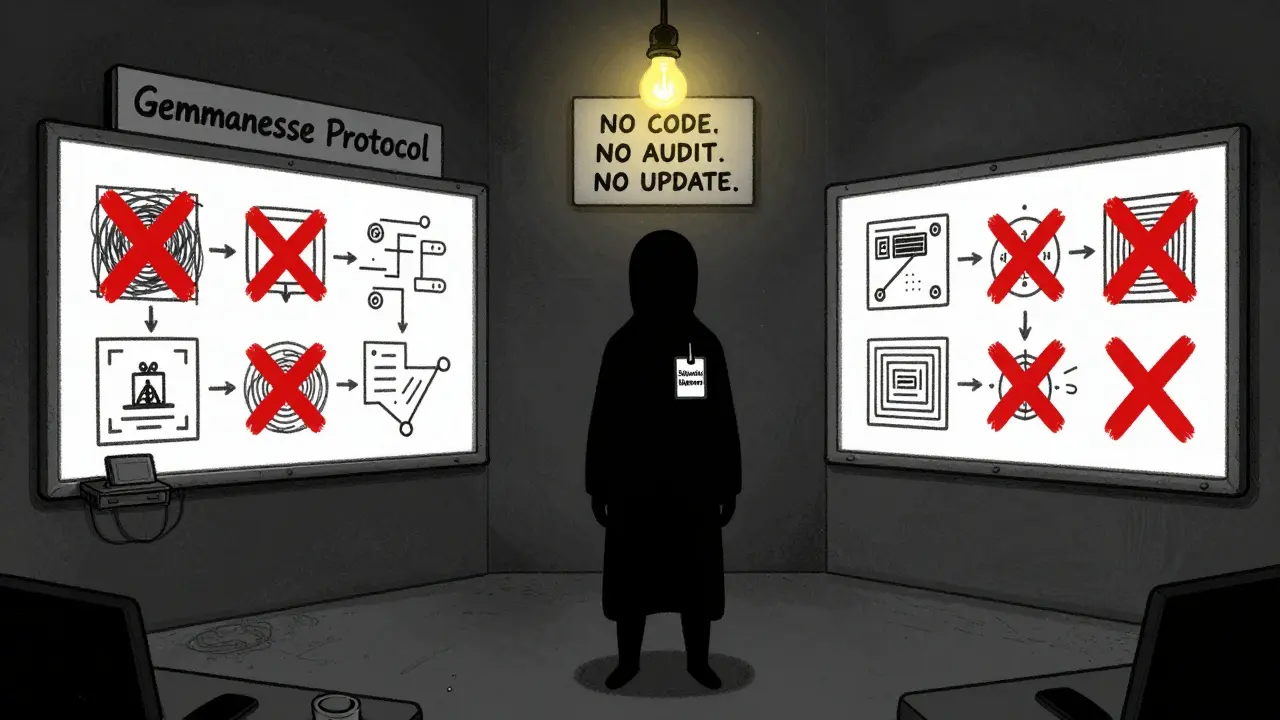
The project calls itself a "web3 ecosystem," and it’s built around something called the Gemmanesse Protocol. According to their documentation, this is a proprietary system designed to automatically pick the best blockchain for each task - whether it’s NFT minting, staking, or running a game. Think of it as a smart router for decentralized apps. But there’s no public code to verify this. No GitHub repo. No audit reports. Just claims.
The team behind Minato says it’s made up of about a dozen experienced web3 builders, led by someone using the pseudonym Shibatoshi Nakamoto. That name alone raises eyebrows - it’s a clear nod to Bitcoin’s Satoshi Nakamoto. Whether it’s a tribute, a joke, or an attempt to borrow credibility, it doesn’t inspire confidence in transparency.
The Token: Supply, Price, and Trading Reality
Minato has a fixed supply of 1,000,000 MNTO tokens. That’s it. No more will ever be created. Sounds tight, right? But here’s where things get messy.
Price data across platforms doesn’t match up. CoinGecko says MNTO was trading at $0.2853 in March 2025. CoinStats says $0.2625. holder.io claims $1.24. Bybit listed $0.62 in late 2025. Why the chaos? Because there’s almost no trading happening.
As of February 2026, Minato only trades on Pancakeswap V3 - a decentralized exchange on the Binance Smart Chain. The entire 24-hour trading volume? Around $10 to $33. That’s less than what a single Bitcoin ATM makes in five minutes. Most of that volume comes from just one trading pair: MNTO/WBNB.
What does this mean? It means the price you see isn’t real. It’s just the last trade that happened - maybe hours or days ago. CoinGecko even notes that MNTO wasn’t traded at all during some 24-hour windows. So when you see a price, it’s not a market price. It’s a ghost price.
The all-time high? $33.21 on April 3, 2022. That’s over three years ago. Today’s price? Around $0.28. That’s a 98.4% drop. The all-time low? $0.5014 in November 2024. So even its lowest point is still higher than where it sits now.
What Minato Claims to Offer
Minato’s website lists a long wishlist of features:
- A multichain metaverse with virtual land already purchased
- A DEX that lets you swap tokens and NFTs across blockchains
- NFTs you can use in games
- Staking with rewards
- Play-to-Earn, Metaverse-to-Earn, and Loot-to-Earn models
- A digital wallet
- Community contests and in-person meetups
- Exclusive content
- A virtual asset service provider license
That’s a lot. But here’s the problem - none of it is live in any meaningful way.
The metaverse? No public demo. No map. No assets you can explore. The DEX? Only works on BSC. No Polygon, no Solana, no Ethereum integration - despite claims of "multichain." The NFTs? No marketplace. No gallery. No trading history. The staking? No smart contract you can verify. No on-chain proof that rewards are being paid.
The project says it’s "community-driven," but there’s no public voting history. No governance proposals. No on-chain votes. Just a Twitter account and a Reddit thread with barely 50 posts. If this were a real DAO, you’d see weekly votes, treasury updates, and active discussion. You don’t.
Technical Setup: Where It Lives
Minato’s main contract is on Polygon, with the address 0x97a9bac06f90940bce9caec2b880ff17707519e4. That means you can connect MetaMask and interact with it - if you know how. But even this is misleading.
The contract isn’t used for anything major. It doesn’t hold liquidity. It doesn’t manage staking. It doesn’t handle NFTs. It’s basically a placeholder. The real trading happens on Pancakeswap, which is on Binance Smart Chain - a separate network. So Minato isn’t truly multichain. It’s just scattered.
There’s no documentation on how the Gemmanesse Protocol works. No whitepaper. No technical specs. No API. Just a name and a promise. And without open-source code or audits, there’s no way to know if it’s real or just marketing.
Market Position: Why Nobody Cares
Minato sits at #6946 on CoinGecko’s list of cryptocurrencies. That’s not just low - it’s invisible. Out of over 25,000 tracked tokens, it’s buried in the bottom 99%. Most platforms don’t even show a market cap - just a dash.
Compare that to other Polygon-based projects. ApeCoin? Top 100. Polygon (MATIC)? Top 20. Minato? Not even on the radar.
Why? Because liquidity is dead. Trading volume is negligible. No major exchanges list it. No institutional interest. No developer activity. No updates. The last major announcement was over a year ago.
And here’s the kicker: the 7-day price change? Zero percent. Meanwhile, the whole crypto market rose 1.6%. Minato didn’t move. Not up. Not down. Just stuck.
Should You Buy Minato (MNTO)?
If you’re looking for a speculative play - maybe a 100x moonshot - Minato is not it. The token has been stuck in a narrow range for months. The odds of it suddenly exploding are near zero.
If you’re looking for utility - a real metaverse, real rewards, real governance - you won’t find it here. The features are all promises. No demos. No proof. No track record.
The only people who might benefit from MNTO are those who bought it at $33 in 2022 and are now holding on, hoping for a comeback. Everyone else? You’re buying into a ghost.
There’s no red flag that says "scam." But there’s also no green light that says "legit." It’s in a gray zone - a project that sounds plausible on paper but has zero execution. No code. No volume. No community. No updates.
What Minato Needs to Survive
If Minato wants to be taken seriously, it needs to do three things:
- Open-source the Gemmanesse Protocol - publish the code on GitHub with clear documentation.
- Launch a live, working metaverse demo - even a basic one - with real NFTs and real interactions.
- Start on-chain governance - show actual votes, treasury spending, and community decisions.
Until then, it’s just a token with a cool name and a dream.
Is Minato (MNTO) a good investment?
No, not as a serious investment. MNTO has almost no trading volume, no real utility, and no transparency. Its price has dropped over 98% from its peak, and it trades on only one decentralized exchange with less than $35 in daily volume. There’s no evidence of development, community growth, or active governance. Buying MNTO now is not investing - it’s gambling on a project that has stopped moving.
Where can I buy Minato (MNTO)?
As of February 2026, Minato (MNTO) trades exclusively on Pancakeswap V3 on the Binance Smart Chain. You can’t buy it on any centralized exchange like Binance, Coinbase, or Kraken. To trade it, you need a Web3 wallet like MetaMask, some BNB for gas fees, and access to the Pancakeswap interface. Be warned: the liquidity is extremely low, and slippage can be high even on small trades.
What is the Gemmanesse Protocol?
The Gemmanesse Protocol is Minato’s claimed proprietary system for selecting the best blockchain for each task in its metaverse - like NFT minting, staking, or gaming. It’s described as an aggregation layer that automatically routes data across chains. But there’s no public code, no documentation, and no audits. No developer has verified its existence. It’s currently just a buzzword with no technical proof behind it.
Does Minato have a working metaverse?
No. Minato claims to have purchased virtual land and built a multichain metaverse, but there’s no public demo, no website to explore, no NFTs you can interact with, and no user activity. All of these features exist only in whitepapers and promotional material. There’s zero evidence that any of this has been built or launched.
Why is Minato’s price so volatile?
It’s not volatile - it’s stagnant. The price swings you see online are not from real trading. They’re artifacts from outdated trades. With less than $35 traded per day, the last transaction can be hours or days old. When a new trade finally happens - even for $1 - the price jumps. That’s not volatility from market demand. That’s a dead market with one buyer and one seller.
Is Minato a scam?
There’s no proof it’s a scam - but there’s also no proof it’s real. It doesn’t have the hallmarks of a classic rug pull (like a locked contract or sudden withdrawal). But it also doesn’t have the signs of a legitimate project: active development, public code, community engagement, or market traction. It’s best described as an abandoned project with a still-active token. Avoid it unless you’re prepared to lose everything you invest.
Minato isn't a project. It's a graveyard. $10 in daily volume? That's not illiquid-that's dead. The 'Gemmanesse Protocol' is just crypto-speak for 'we have no idea how this works.' No code, no audits, no updates. This isn't a DAO. It's a ghost town with a token.
I've seen this movie before. Team with a cool name, vague promises, zero transparency. They're not building a metaverse-they're building a Ponzi slide. The price chart isn't flat because the market's calm. It's flat because no one with skin in the game is willing to touch it. Buy MNTO? Only if you want to fund someone's vacation.
If you're looking at MNTO, ask yourself: why does no one talk about it? No Reddit threads. No Twitter buzz. No GitHub commits. Even the price data is inconsistent. That's not a bug-it's a feature of abandonment. This isn't a crypto project. It's a digital relic.
The real tragedy here isn't the 98% drop-it's the delusion. People still think this is a 'community-driven DAO' when the only community is the one that posted on Reddit three years ago and vanished. You don't build a metaverse with promises. You build it with code. And code? Minato has none.
I'm from India. We've seen this pattern a hundred times. Team drops a whitepaper with fancy words. No GitHub. No real team. Just a Twitter handle and a CoinGecko listing. Then they disappear. MNTO? Same script. The only thing that's real is the loss. Don't romanticize dead projects. Just walk away.
There's a difference between a failed project and a phantom one. Failed projects at least had moments of execution. Minato never even got past the PowerPoint slide. The Gemmanesse Protocol? That's not a technical term-it's a euphemism for 'we never wrote a single line of code.' The metaverse? A PowerPoint mockup with a fake land map. This isn't crypto. It's performance art.
You know what's wild? People still think this is a 'hidden gem.' It's not hidden. It's buried. And the shovel? Still in the hands of the same guy who made the website in 2021. If you're holding MNTO hoping for a comeback, you're not an investor-you're a museum curator of dead tokens.
What if this is all a test? A controlled burn. A psychological experiment to see how long people will cling to a dead token because they refuse to admit they were wrong? The team never disappeared. They're just waiting for the last believer to send in their last BNB. Then-poof. No more ghost. Just silence.
I get why people get attached. The idea of a community-owned metaverse sounds amazing. But passion doesn't build ecosystems. Code does. And Minato? It's got zip. No updates. No commits. No liquidity. No future. The only thing this token is good for is a lesson: if it's not on GitHub, it doesn't exist. Period.
This is not a crypto project. This is a violation of fiduciary responsibility masquerading as innovation. The team has zero accountability. No audits. No transparency. No governance. And yet, people still throw money at it. That's not speculation. That's mass delusion. And if you're still holding MNTO? You're not just losing money-you're enabling fraud by default.