Ever heard of a crypto that sounds like it belongs in a cartoon but trades on serious infrastructure? That’s Mantle Inu. It’s not just another dog-themed meme coin; it’s a token built on the Mantle network with a specific promise to deliver real utility through its "MINUverse" ecosystem. But does it actually deliver, or is it just hype? Let’s break down what Mantle Inu really is, how it works, and whether it’s worth your attention.
What Exactly Is Mantle Inu?
Mantle Inu is a meme cryptocurrency token operating on the Mantle blockchain, designed to evolve from a speculative asset into a utility-driven ecosystem known as the MINUverse. The ticker symbol for this project is MINU, and it launched in early 2024. Unlike many meme coins that rely solely on viral marketing, Mantle Inu claims to offer tangible services to its community. However, as of mid-2026, much of that promised utility remains in development phases rather than fully deployed products.
The core idea behind Mantle Inu is simple: take the fun, community-driven nature of meme coins and back it with actual tools. The project describes itself as part of the broader Mantle ecosystem, which is an Ethereum-compatible Layer 2 solution focused on scaling and efficiency. This means when you buy or sell MINU, you’re interacting with smart contracts on the Mantle network, not Bitcoin or Ethereum directly.
Tokenomics: Supply, Liquidity, and Fees
Understanding the numbers behind any crypto is crucial. Here’s how Mantle Inu structures its economy:
- Total Supply: Fixed at 420.69 million tokens. Yes, that number is a classic internet joke reference, fitting the meme theme perfectly.
- Liquidity Lock: The entire initial supply was placed into a liquidity pool. To prevent rug pulls (where developers abandon the project and take the money), the LP tokens are locked. A 1% fee is associated with this lock.
- Fee Allocation: That 1% fee isn’t just sitting there. It’s earmarked for cross-chain bridges, future exchange listings, roadmap development, and marketing. This creates a self-sustaining funding model for ongoing operations.
This structure is relatively standard for modern meme coins trying to build trust. By locking liquidity and defining clear fee uses, the team aims to show they aren’t planning to dump their holdings overnight. Still, always remember: locked liquidity doesn’t guarantee price stability or long-term success.
| Attribute | Value / Detail |
|---|---|
| Blockchain Network | Mantle (EVM-compatible) |
| Total Supply | 420,690,000 MINU |
| Circulating Supply | ~420,690,000 MINU (fully circulating) |
| Contract Address | 0x51cf…3517ed (on Mantle) |
| Liquidity Status | Locked with 1% fee allocation |
| Primary Use Case | Speculation + Future Utility (MINUverse) |
The MINUverse: Promises vs. Reality
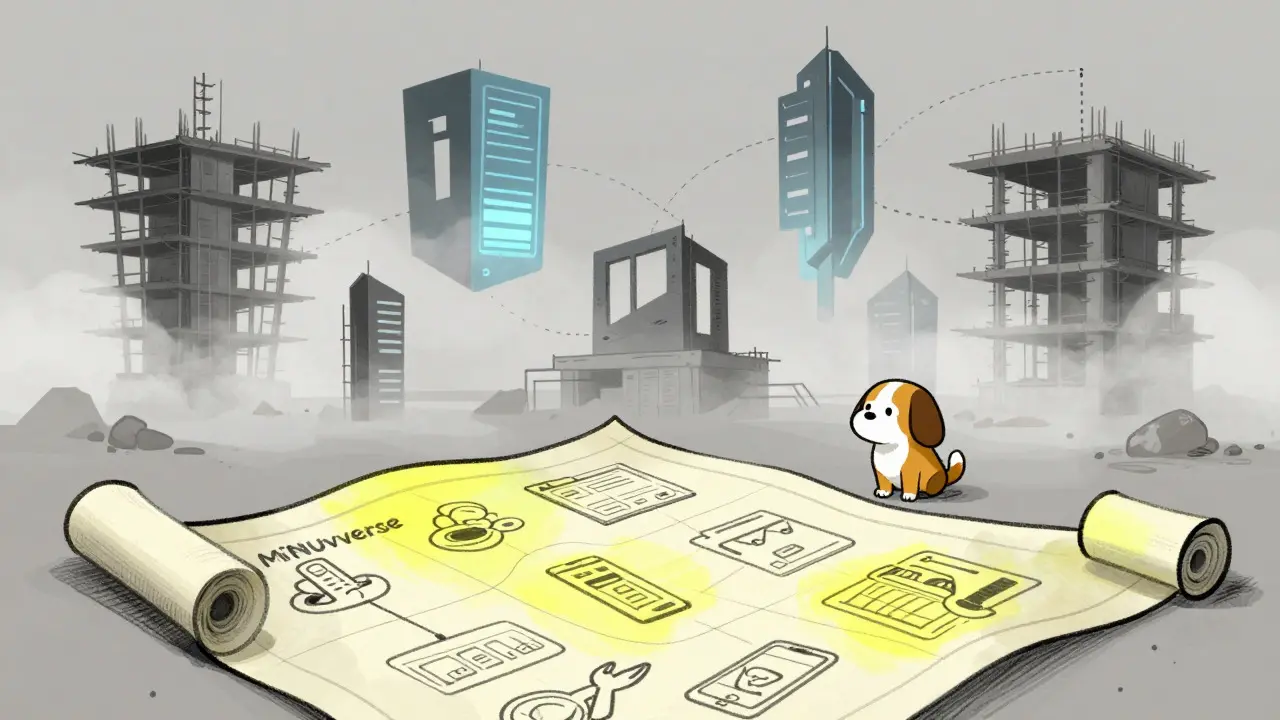
The biggest selling point for Mantle Inu isn’t just the dog mascot-it’s the MINUverse, an ecosystem of planned products and services. According to early reports from Bybit Learn in February 2024, the project intends to roll out these utilities over three phases across several years.
So far, only one component has been confirmed live: the "MINU terminal." Beyond that, details get fuzzy. There’s no public whitepaper linking to technical specs, no audited smart contract reports from major firms, and no clear timeline for when the next phases will launch. This gap between promise and delivery is common in crypto. Many projects announce grand visions but struggle to execute them due to lack of resources, talent, or market interest.
If you’re considering buying MINU, ask yourself: Are you betting on the current speculative value, or do you believe the team can actually build useful apps on top of the Mantle chain? Right now, the evidence leans heavily toward speculation.
Price History and Market Performance
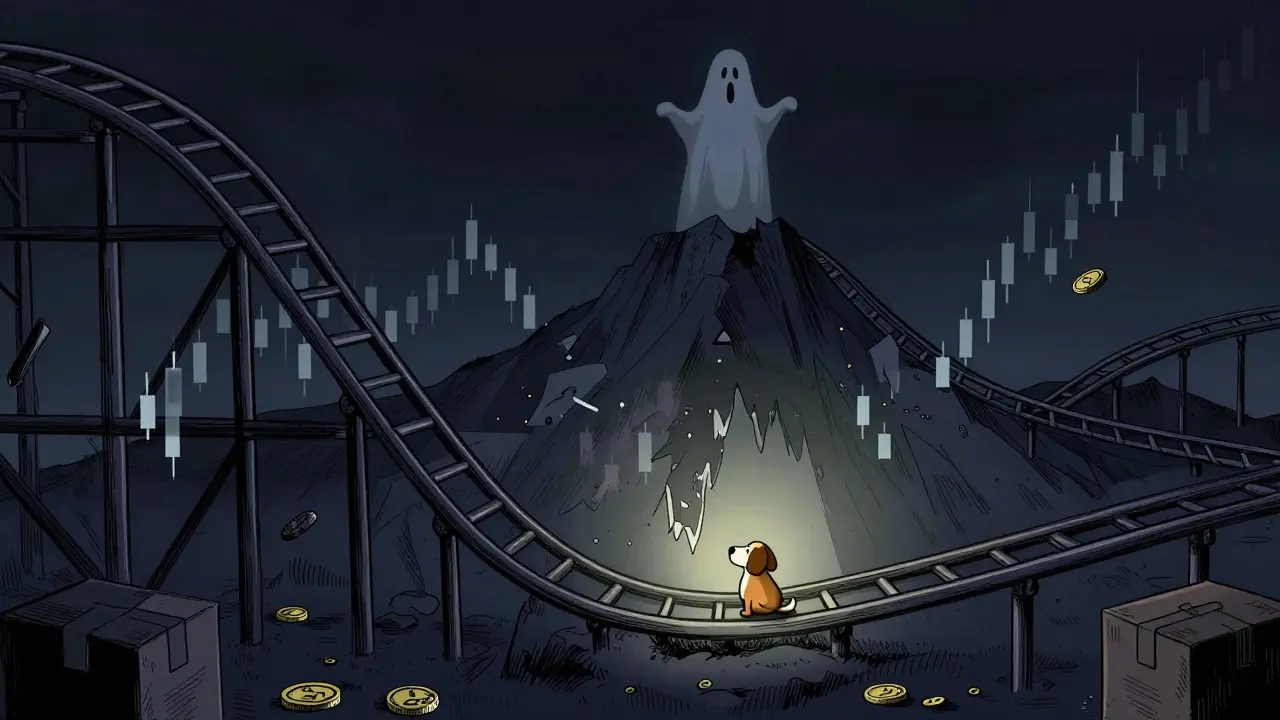
Let’s talk numbers, because they tell a stark story. Mantle Inu experienced a classic meme coin lifecycle: a massive spike followed by a steep decline.
- All-Time High (ATH): Between $0.01443 and $0.0163, reached in February-March 2024. During this peak, trading volume hit over $6.5 million in a single day, showing intense retail interest.
- The Crash: From that high, the price dropped roughly 99%. By late 2025 and early 2026, prices hovered around $0.00005 to $0.00009.
- Current Status (Mid-2026): Market cap sits between $21,000 and $39,000. Trading volume is often near zero, with some days recording literally $0 in transactions on decentralized exchanges.
This volatility is extreme. If you bought at the top, you’ve lost almost everything. If you bought recently, you’re holding a micro-cap asset with very little liquidity. Thin liquidity means even small buys or sells can cause huge price swings-a double-edged sword for traders.
Where Can You Buy MINU?
Accessing Mantle Inu requires navigating both centralized and decentralized platforms. Here’s where things stand:
- Centralized Exchanges (CEXs): Bybit listed MINU/USDT pairs early on, providing easy fiat-to-crypto entry points. However, major players like Binance and Coinbase list MINU only for price tracking-they don’t support direct trading. This limits accessibility for mainstream users.
- Decentralized Exchanges (DEXs): On the Mantle network, you can trade MINU against WMNT (wrapped Mantle) on FusionX V3. This requires using a Web3 wallet like MetaMask configured for the Mantle chain. Be prepared for low liquidity here too.
Before buying, ensure your wallet supports EVM-compatible chains and that you have enough WMNT to pay for gas fees. Gas costs on Mantle are generally low compared to Ethereum mainnet, which is a plus for smaller transactions.
Risks You Should Know Before Buying
Crypto investing is risky, but meme coins like Mantle Inu carry extra baggage. Consider these factors carefully:
- Extreme Volatility: Prices can swing 50% or more in hours. With such a low market cap, whale movements can drastically affect price action.
- Low Liquidity: Zero-volume days mean you might struggle to sell your tokens without crashing the price further.
- Unproven Utility: The MINUverse roadmap is vague. Without working products, the token lacks fundamental value anchors.
- Anonymous Team: Founders’ identities and legal entities aren’t publicly disclosed. This increases counterparty risk-what if the team disappears?
- No Audits: Major security audits from reputable firms are missing. While the code runs on Mantle, unverified contracts can hide bugs or vulnerabilities.
These aren’t deal-breakers for every investor, but they should be red flags for anyone looking for stable, long-term growth. Treat MINU as high-risk speculation, not a savings account.
How Does Mantle Inu Compare to Other Meme Coins?
To put MINU in perspective, let’s compare it briefly with established giants like Dogecoin (DOGE) and Shiba Inu (SHIB). Those tokens have billions in market cap, widespread exchange support, and active communities building real-world use cases. Mantle Inu, by contrast, operates in the shadows of those behemoths.
Its advantage lies in being newer and potentially having less competition within the niche Mantle ecosystem. If the MINUverse succeeds, it could capture loyal users who prefer Mantle’s speed and cost-efficiency. But until then, it remains a distant follower in the meme coin hierarchy. Don’t expect DOGE-level adoption anytime soon.
Final Thoughts: Is Mantle Inu Worth It?
Mantle Inu is a fascinating experiment in blending meme culture with blockchain utility. The concept of the MINUverse is appealing, and the fixed supply with locked liquidity shows some thoughtfulness in design. However, execution matters more than ideas. As of mid-2026, the execution is still pending.
If you love high-risk, high-reward plays and want exposure to the Mantle network, MINU might fit your portfolio. Just keep position sizes small. Never invest money you can’t afford to lose entirely. And always do your own research beyond this article-check official channels, monitor on-chain activity, and watch for any updates on the MINUverse roadmap.
Is Mantle Inu (MINU) a scam?
There is no definitive proof that Mantle Inu is a scam, as the liquidity is locked and the team has published a roadmap. However, the lack of transparent founder information, absent security audits, and extreme price volatility make it highly speculative. Always treat unknown meme coins with caution.
Where can I buy MINU tokens?
You can trade MINU on the Bybit exchange via the MINU/USDT pair. Alternatively, you can use decentralized exchanges like FusionX V3 on the Mantle network by connecting a Web3 wallet and swapping WMNT for MINU.
What is the total supply of Mantle Inu?
The total and maximum supply of Mantle Inu is fixed at 420,690,000 tokens. No new tokens will be minted after this amount.
Does Mantle Inu have any utility?
Currently, utility is limited. The project plans to develop the "MINUverse" ecosystem with various services, but as of mid-2026, only the "MINU terminal" is reportedly live. Most other features remain in the roadmap phase.
Why did Mantle Inu’s price drop so much?
Like many meme coins, MINU saw a massive surge in early 2024 driven by hype. Once the initial excitement faded and trading volume dried up, the price corrected sharply. Low liquidity and lack of sustained adoption contributed to the ~99% decline from its all-time high.