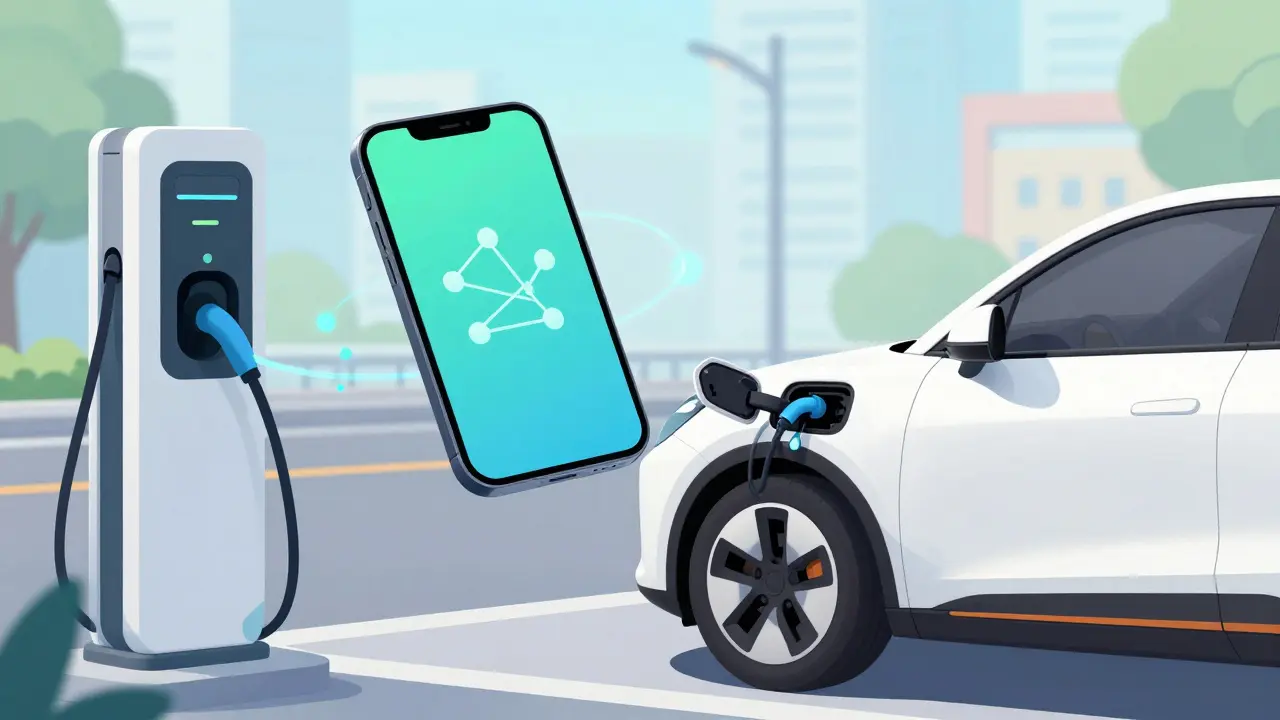
Imagine plugging in your electric vehicle or renting a power bank and paying with cryptocurrency. It sounds like the future of decentralized energy, right? That’s exactly what GoCharge Tech promises. But if you’ve been looking at the charts lately, you might be scratching your head. The project exists, the white paper looks ambitious, but where is the actual activity? As of mid-2026, GoCharge Tech remains one of those intriguing yet puzzling projects that sit at the intersection of Internet of Things (IoT) infrastructure and blockchain payments. Before you decide whether this is a hidden gem or a dead end, we need to look past the hype and examine the hard data.
The Core Concept: Bridging Physical Charging with Blockchain
At its heart, GoCharge Tech isn’t just another meme coin or a speculative token with no utility. It aims to solve a real-world problem: how do we make physical charging infrastructure accessible through decentralized finance? The platform was founded to connect two specific types of hardware-power bank sharing stations and electric vehicle (EV) chargers-to blockchain networks. This allows users to pay for these services using either traditional fiat currency or cryptocurrency.
The journey started small. In 2022, the team demonstrated a proof-of-concept at the xDay conference in Paris. They successfully connected power bank rental stations to the MultiversX blockchain, allowing attendees to rent devices using EGLD tokens. This wasn't just a slide deck; it was a functional integration. Since then, the vision has expanded to include a broader network of EV chargers and integration with Binance Smart Chain (now BNB Chain). The goal is a decentralized global network where anyone can connect their charger and accept crypto payments.
Understanding the CHARGED Token Utility
The native asset of this ecosystem is the CHARGED token. According to documentation from Holder.io in late 2023, this token serves as the key utility instrument within the GoCharge Tech environment. Its primary function is unlocking payments for EV charging and power bank rentals. Think of it as the digital fuel that powers the transactions between the user, the device owner, and the platform.
Here are the critical attributes of the CHARGED token based on available data:
- Maximum Supply: Exactly 189,388,000 tokens. This fixed supply creates a deflationary pressure model if demand increases, assuming tokens are burned or locked during transactions.
- Blockchain Compatibility: Initially built on MultiversX, later expanding to Binance Smart Chain to reach a wider user base.
- Use Case: Direct payment for IoT services (charging/rentals) and potentially governance or staking within the franchise solution, though specifics on governance remain vague.
The scarcity of the token (under 190 million max supply) is notable compared to many inflationary altcoins, but without transaction volume, scarcity doesn't drive price action. You need people actually using the chargers to create organic demand for CHARGED.
The Elephant in the Room: Market Performance and Liquidity
This is where the story gets complicated. If you’re reading this in June 2026, you need to understand the current market reality. GoCharge Tech is not trading on major centralized exchanges like Binance, Coinbase, or Kraken. In fact, Binance explicitly noted as recently as October 2025 that "this coin is not listed on Binance for trading and services." This is a significant red flag for liquidity.
Let’s look at the numbers. Historical data from late 2023 showed 24-hour trading volumes often dipping below $200. Yes, you read that right. Less than two hundred dollars in a day. By comparison, established crypto-payment platforms process millions daily. When volume is this low, the price becomes incredibly volatile. A single buy order of $500 could spike the price by double digits, while a sell-off of similar size could crash it. This makes it nearly impossible to execute large trades without slipping significantly.
| Feature | GoCharge Tech (CHARGED) | ChargePoint (Public Equity) | Power Ledger (POWR) |
|---|---|---|---|
| Primary Focus | IoT Charging + Crypto Payments | EV Charging Infrastructure | Energy Trading & Management |
| Exchange Listings | Limited (OTC / Small DEXs) | NASDAQ (Stock Market) | Major Exchanges (Binance, Coinbase) |
| Daily Volume (Approx.) | < $30 (Historical lows) | $50M+ (Stock) | $5M+ (Crypto) |
| Infrastructure Scale | Unverified / Early Stage | 75,000+ Ports (Global) | 50+ Projects across 10 countries |
| Risk Level | Extremely High | Moderate | High |
The table above highlights the stark contrast. ChargePoint generates over a billion dollars in revenue. Power Ledger has tangible deployments across multiple countries. GoCharge Tech, meanwhile, lacks verifiable deployment statistics for its physical infrastructure. There are no public records of thousands of chargers going live under the GoCharge banner. Without physical adoption, the token has no fundamental anchor.
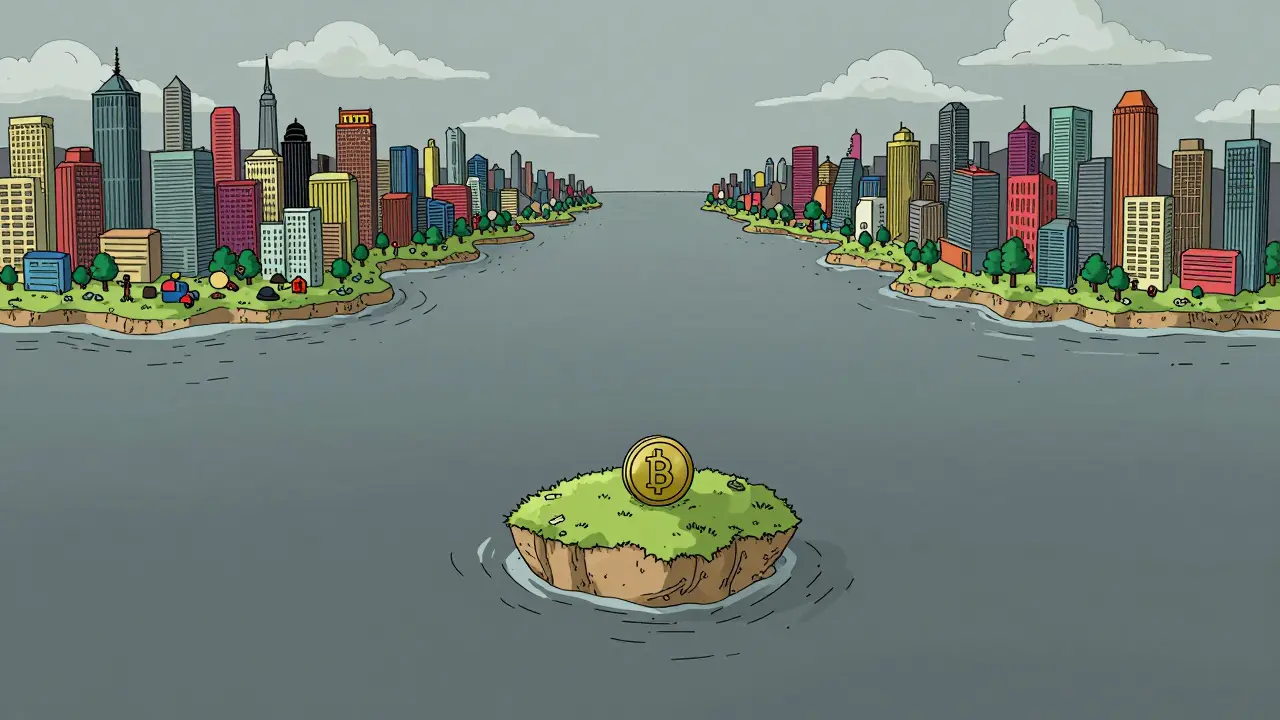
Technical Architecture and Integration Challenges
From a technical standpoint, the idea of integrating IoT devices with blockchain is sound but difficult. The GoCharge Tech white paper outlines a system designed to be easily integrated with other services. Theoretically, an individual or company could connect their existing EV charger to the GoCharge app and start accepting crypto payments. This decentralizes the network, removing the need for a central corporate entity to own every charging station.
However, the devil is in the details. How does the hardware communicate with the blockchain? Does it require a specific gateway? What happens if the internet connection drops? The available documentation does not provide deep technical specifications on hardware requirements or software implementation guides. For developers, the GitHub repository exists, but there is little evidence of active community contributions or robust API references. This lack of open-source transparency makes it hard for third-party engineers to verify the security and reliability of the codebase.
Furthermore, operating payment systems across borders introduces regulatory headaches. Accepting crypto for physical goods and services triggers Anti-Money Laundering (AML) and Payment Services Directive (PSD2) compliance issues in Europe and other regulated markets. While the white paper mentions multi-chain support, it stays silent on how the platform handles KYC (Know Your Customer) verification for users renting power banks or charging cars. This is a critical gap that could hinder widespread adoption.
Community Sentiment and Expert Opinions
If you want to gauge the health of a crypto project, look at the community. For GoCharge Tech, the silence is deafening. There are virtually no Reddit threads discussing the CHARGED token. Trustpilot has zero reviews. Social media accounts on Twitter and Facebook show minimal engagement. Holder.io reported zero user sentiment ratings in their last update.
Expert analysis has been equally cautious. CoinCarp, a crypto analytics platform, labeled GoCharge Tech as "highly volatile" and advised investors to conduct thorough due diligence. They explicitly warned that the token may not be suitable for all investors due to its instability. Major research firms like Messari or Delphi Digital have not published reports on the project, which usually indicates that the market cap and relevance haven't reached a threshold worthy of professional scrutiny.
This absence of noise isn't necessarily a sign of fraud, but it is a sign of irrelevance in the current market cycle. In the crypto world, attention is currency. Without a vocal community or developer advocacy, projects struggle to survive bear markets.

How to Buy (And Why You Should Be Careful)
So, can you buy CHARGED today? Technically, yes, but it’s not straightforward. Because it’s not listed on major exchanges, you cannot simply log into Coinbase and click "Buy." You would likely need to use Over-the-Counter (OTC) trading desks or find it on smaller, less liquid decentralized exchanges (DEXs). This introduces significant counterparty risk. Who are you trading with? Is the platform secure?
CoinCarp previously suggested that OTC trading might be an option, but they highlighted the considerable risks associated with this method. For the average investor, the barrier to entry is high, and the exit strategy is non-existent. If you manage to buy 10,000 CHARGED tokens, finding a buyer willing to take them off your hands at a fair price could be nearly impossible given the sub-$30 daily volume.
Future Outlook: Dead End or Sleeping Giant?
The global EV charging market is booming, projected to reach $158 billion by 2030. The demand for efficient, decentralized payment methods for these services is real. GoCharge Tech identified a niche that hasn't been fully dominated by incumbents. Their early integration with MultiversX was innovative. However, innovation alone doesn't build a business.
For GoCharge Tech to succeed in 2026 and beyond, three things must happen:
- Physical Deployment: They need to publish verifiable data showing hundreds or thousands of active charging points and power bank stations using their system.
- Exchange Listings: Getting listed on a Tier-1 or Tier-2 exchange is essential for liquidity and credibility.
- Regulatory Clarity: They must address how they handle compliance for cross-border crypto payments.
As of now, none of these milestones appear to have been met. The project remains in a state of limbo-neither failing publicly nor succeeding visibly. For investors, this uncertainty is the biggest risk factor.
Is GoCharge Tech (CHARGED) a scam?
There is no definitive evidence labeling GoCharge Tech as a scam. They have a white paper, a GitHub repository, and a past proof-of-concept demonstration. However, the lack of transparency regarding physical infrastructure deployment, extremely low trading volume, and absence from major exchanges raise serious concerns about its viability and legitimacy. Proceed with extreme caution.
Which blockchain is CHARGED token built on?
The CHARGED token was initially developed on the MultiversX blockchain, where the first power bank rental demo took place. The project later expanded its architecture to include compatibility with Binance Smart Chain (BNB Chain) to facilitate broader access and lower transaction fees.
Where can I buy CHARGED tokens?
CHARGED is not listed on major centralized exchanges like Binance or Coinbase. Purchasing options are limited to Over-the-Counter (OTC) trades or potentially small decentralized exchanges (DEXs). Due to low liquidity, buying and selling can be difficult and risky.
What is the maximum supply of CHARGED?
The maximum supply of the CHARGED token is capped at exactly 189,388,000 tokens. This fixed supply is designed to prevent inflation, but value depends entirely on demand generated by actual usage of the charging network.
Does GoCharge Tech have any real-world partnerships?
Aside from their initial demonstration with MultiversX at the xDay conference in 2022, there are no widely publicized major partnerships with large EV manufacturers or charging networks. Unlike competitors such as ChargePoint or Electrify America, GoCharge Tech lacks visible corporate alliances.