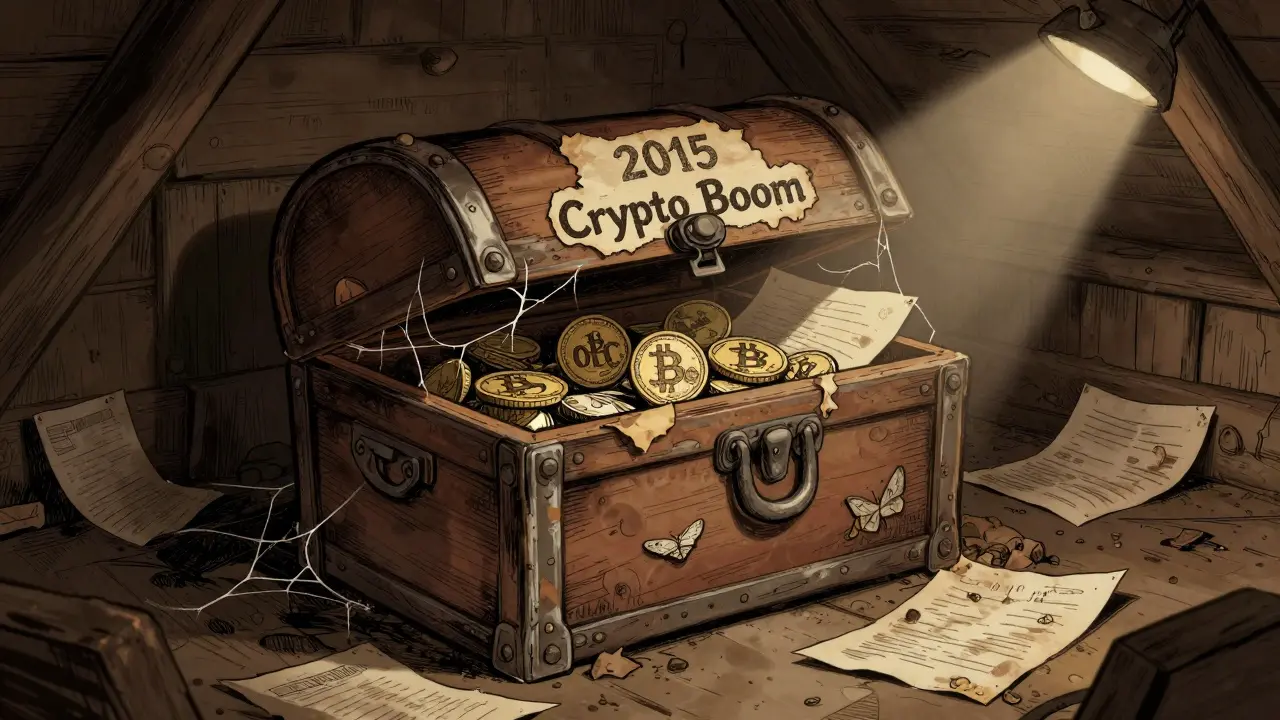
You might have stumbled upon Bitcoin Plus, often referred to by its ticker XBC. It’s a name that sounds familiar, perhaps even promising, given its connection to the original cryptocurrency. But here is the hard truth: this isn’t the next big thing. It is a relic from the mid-2010s crypto boom, a small-cap asset that exists more for historical curiosity than practical use today.
If you are asking "what is Bitcoin Plus" because you found it on a list of old coins or saw a sudden price spike on a niche exchange, you need to understand exactly what you are looking at before you spend a single dollar. This guide breaks down the reality of XBC, stripping away the hype to show you the technical specs, the severe liquidity issues, and why most investors steer clear.
The Origins of Bitcoin Plus (XBC)
To understand where Bitcoin Plus stands now, you have to look back at where it started. Launched around late 2015 or early 2016, Bitcoin Plus was created as a fork of the Bitcoin codebase, aiming to solve specific limitations of the original network. The developers, who remain largely pseudonymous-a common trait for projects from that era-wanted to create a "next-generation" version of Bitcoin that was faster, cheaper, and more energy-efficient.
The core innovation they pitched was the shift from Proof-of-Work (PoW), which powers Bitcoin, to Proof-of-Stake (PoS). In simple terms, instead of miners burning electricity to secure the network, holders of XBC could "stake" their coins to validate transactions and earn rewards. This model was inspired by earlier experiments like Peercoin and Blackcoin. At the time, this sounded revolutionary. It promised sustainability and lower barriers to entry for participants.
However, unlike modern smart contract platforms such as Ethereum or Solana, Bitcoin Plus never evolved beyond being a simple payment chain. It runs its own independent blockchain, meaning it is not an ERC-20 token sitting on another network. You can verify its activity on explorers like Chainz, but the pace of development has slowed to a crawl over the last decade.
Technical Architecture and Supply Mechanics
Let’s get into the nuts and bolts. Bitcoin Plus operates on a standard Bitcoin-derived architecture. This means if you know how Bitcoin addresses work, you will recognize the format for XBC. It uses ECDSA cryptography and SHA-256 hashing for address generation, ensuring compatibility with legacy wallet software.
The most distinct feature of XBC is its supply cap. While Bitcoin has a hard cap of 21 million coins, Bitcoin Plus was designed with a much smaller maximum supply. Historical data and current aggregators suggest a total supply hovering between 200,000 and 266,000 XBC. This low supply was marketed as a way to keep the unit price high, appealing to traders who liked seeing numbers in the hundreds rather than fractions of a cent.
Here is how the consensus mechanism works in practice:
- Staking Rewards: Users run a desktop wallet and keep it online. The network selects validators based on the amount of XBC they hold and the duration it has been held.
- Energy Efficiency: Because there is no mining competition, the energy consumption is negligible compared to Bitcoin or Litecoin.
- Block Time: Like many Bitcoin forks, it aims for consistent block intervals, though exact throughput metrics are rarely published in modern documentation.
Despite these technical features, the lack of smart contract functionality means you cannot build decentralized applications (dApps) on Bitcoin Plus. It remains a basic ledger for transferring value from point A to point B, a utility that has been largely superseded by faster, more versatile networks.
Market Reality: Price, Liquidity, and Volatility
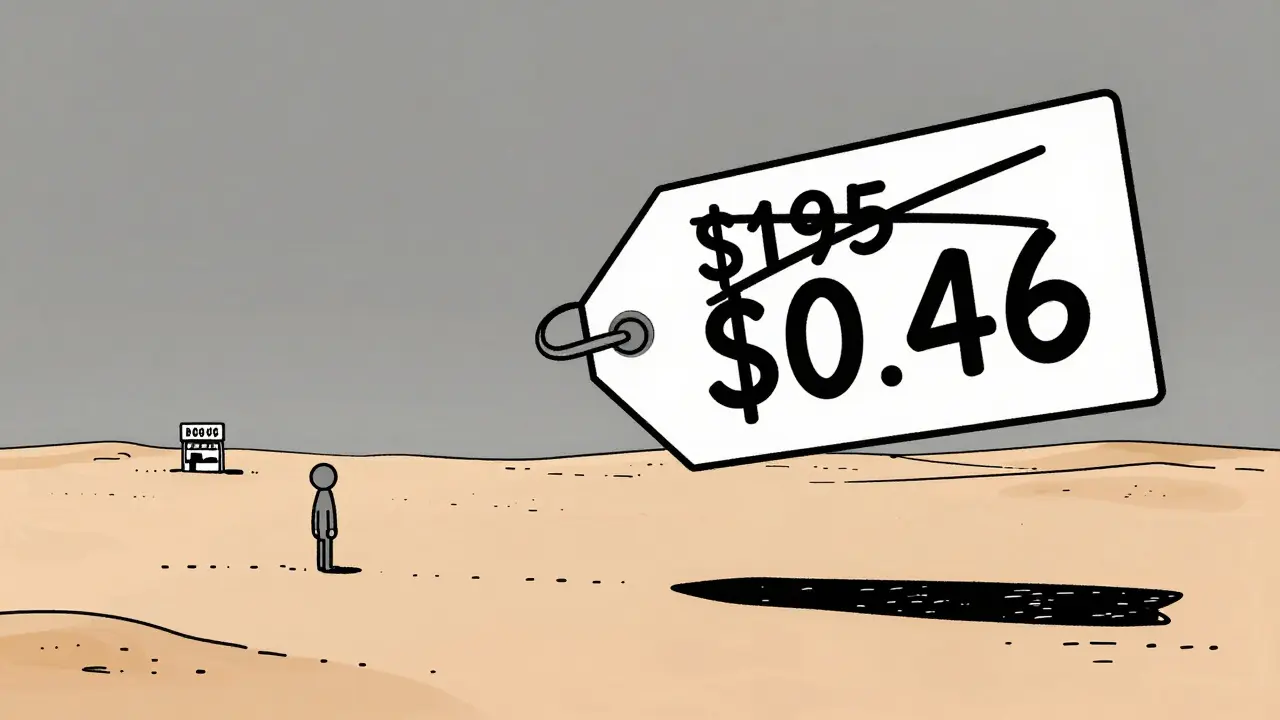
This is where the story gets complicated. If you check the price of Bitcoin Plus today, you might see conflicting numbers across different websites. One aggregator might say $1.47, while another says $0.46. Why? Because Bitcoin Plus is extremely illiquid.
In financial markets, liquidity refers to how easily you can buy or sell an asset without affecting its price. For Bitcoin Plus, the daily trading volume is often less than $1,000. In some cases, it drops to zero. When volume is this thin, a single trade of $100 can swing the price by several percent. This makes the "price" listed on sites like CoinGecko or CoinMarketCap somewhat synthetic-it reflects the last known transaction, not necessarily what you would get if you tried to sell right now.
| Metric | Value / Status | Context |
|---|---|---|
| All-Time High (ATH) | $195.51 | Reached June 25, 2017 during the altcoin bubble. |
| All-Time Low (ATL) | $0.04987 | Recorded January 28, 2016 shortly after launch. |
| Circulating Supply | ~200k - 266k XBC | Varies by source due to low reporting accuracy. |
| Daily Volume | < $1,000 | Often near zero; highly volatile price discovery. |
| Market Cap Rank | #2800+ | Deep in the "long tail" of cryptocurrencies. |
Look at that All-Time High. Back in 2017, during the peak of the speculative mania, XBC hit nearly $200 per coin. Today, it trades for a fraction of that. That represents a drop of over 99%. This is not an isolated incident; it is the typical lifecycle of many micro-cap altcoins from that era. They pumped hard when attention was scarce, and then faded as the market matured around larger, more useful projects.
Where Can You Buy or Store XBC?
If you are determined to interact with Bitcoin Plus, you will find the process frustratingly difficult compared to buying Bitcoin or Ethereum. Major exchanges like Coinbase, Binance, Kraken, and Crypto.com do not support XBC trading. Even if they track the price for informational purposes, you cannot deposit fiat currency to buy it directly.
Your options are limited to niche, smaller centralized exchanges. Historically, platforms like Freiexchange have been among the few venues listing the XBC/BTC pair. However, be warned: these platforms often have thin order books. This means the difference between the highest buy order and the lowest sell order (the spread) can be massive. You might want to sell your XBC for $1.50, but the best offer available is $1.10. That is a 26% loss just from slippage.
For storage, you cannot use popular hardware wallets like Ledger or Trezor out of the box for staking purposes. You typically need to download the official desktop wallet from the project's website, bitcoinplus.org. This introduces security risks. Downloading executable files from obscure sources requires caution. Always verify checksums if possible, and ensure your computer is free of malware. Since the project is considered dormant by many standards, updates to this wallet software may be infrequent or non-existent, leaving potential vulnerabilities unpatched.

Risks and Red Flags for Investors
We need to talk about risk. Investing in Bitcoin Plus carries a profile that most financial advisors would classify as extreme. Here are the primary dangers:
- Liquidity Trap: The biggest risk is getting stuck. You might buy XBC, watch the price go up on a chart, but realize you cannot sell it because there are no buyers. Your paper gains become meaningless if you cannot exit the position.
- Development Stagnation: There is no active roadmap, no new partnerships, and no significant developer activity visible in public repositories. Without innovation, the technology becomes obsolete. Security patches for older codebases are critical, and neglect can lead to exploits.
- Centralization Concerns: In Proof-of-Stake systems, security relies on a diverse group of stakeholders. With such a small and inactive community, the number of nodes validating the network is likely tiny. This makes the chain vulnerable to attacks where a small group could theoretically manipulate the ledger.
- Regulatory Ambiguity: While not specifically targeted by regulators yet, micro-cap coins are often scrutinized for pump-and-dump schemes. The lack of transparency regarding the original developers adds to this concern.
Compare this to established Proof-of-Stake networks like Cardano (ADA) or Polkadot (DOT). These projects have thousands of developers, billions in market capitalization, and robust ecosystems. Bitcoin Plus has none of that. It exists in a vacuum.
Conclusion: Is Bitcoin Plus Worth Your Attention?
So, what is Bitcoin Plus really? It is a historical artifact. It served its purpose as an early experiment in Proof-of-Stake mechanics and low-supply economics. For collectors of crypto history or those with sentimental ties to the 2017 bull run, it holds a place in the portfolio of memories.
But for a serious investor looking for growth, utility, or stability, Bitcoin Plus offers very little. The liquidity is too thin, the technology is outdated, and the development team is effectively absent. If you are new to crypto, stick to assets with deep liquidity, active communities, and clear use cases. If you already hold XBC, be aware that selling large amounts could crash the price further due to the lack of buyers.
Understanding what Bitcoin Plus is helps you avoid common pitfalls. It teaches us that a cool idea (energy-efficient Bitcoin) isn't enough; execution, community, and continuous development are what keep a cryptocurrency alive in the long run.
Is Bitcoin Plus (XBC) a scam?
Bitcoin Plus is not inherently a scam in the sense of a fraudulent scheme designed to steal funds directly. It is a legitimate, albeit dormant, cryptocurrency project launched in the mid-2010s. However, it carries high risks due to extreme illiquidity, lack of active development, and the potential for price manipulation on small exchanges. Many investors consider it a "dead coin" because it has lost almost all its value and relevance since its 2017 peak.
Can I mine Bitcoin Plus (XBC)?
No, you cannot mine Bitcoin Plus in the traditional sense. It uses a Proof-of-Stake (PoS) consensus mechanism, not Proof-of-Work (PoW). Instead of using computational power to solve puzzles, users "stake" their existing XBC coins by keeping their wallets online to help validate transactions and secure the network. In return, they may earn staking rewards, though yields are currently low due to minimal network activity.
Why is the price of XBC so volatile?
The volatility is driven by extremely low liquidity. With daily trading volumes often under $1,000, even a small trade can significantly impact the price. Additionally, data feeds from different exchanges may be stale or inconsistent, leading to discrepancies in reported prices. This thin market makes price discovery inefficient and risky for traders.
Where can I buy Bitcoin Plus (XBC) in 2026?
You cannot buy XBC on major exchanges like Coinbase, Binance, or Kraken. It is primarily traded on niche, smaller centralized exchanges such as Freiexchange. Be cautious when using these platforms, as they may have poor security standards, high fees, and wide bid-ask spreads. Always verify the legitimacy of any exchange before connecting your funds.
What is the maximum supply of Bitcoin Plus?
The circulating supply of Bitcoin Plus is relatively small, estimated between 200,000 and 266,000 XBC. Unlike Bitcoin's 21 million cap, XBC was designed with a much lower total supply to potentially drive higher unit prices. However, the exact hard cap details are less prominently documented in current resources, and the effective supply is determined by the amount minted through staking over the years.
Is Bitcoin Plus still active?
Technically, yes. The blockchain continues to produce blocks, as seen on explorers like Chainz. However, "active" in terms of development, community engagement, and ecosystem growth is debatable. There is no significant new development, major partnerships, or institutional interest. It is considered a legacy project with minimal ongoing activity compared to modern cryptocurrencies.
it is truly disheartening to observe the sheer lack of due diligence displayed by those who continue to chase these digital ghosts from the mid-2010s era as if they hold any intrinsic value in the current market landscape one must understand that liquidity is not merely a metric but the very lifeblood of any financial instrument and without it you are holding nothing more than expensive digital confetti that cannot be exchanged for real goods or services the technical architecture described here while historically interesting is fundamentally obsolete compared to modern layer-one solutions that offer smart contract functionality and robust developer ecosystems i urge anyone reading this to educate themselves on the fundamentals of market microstructure before risking capital on assets with daily volumes under a thousand dollars because ignorance in this space is not bliss it is financial suicide
i literally cannot believe people still care about this trash coin 😩 like wow just wow can we stop pretending this has any relevance in 2026? it’s giving major dead vibe and i’m so tired of seeing newbies fall for these old hype trains 🚂💀 my heart hurts for everyone who bought at the top back in 2017 and is now staring at a bag of worthless pixels 😭 please someone save them before they lose their shirts over a relic nobody uses anymore
the silence surrounding the development team is deafening and suspiciously convenient for those who wish to maintain control over the remaining supply without scrutiny one must wonder if the pseudonymous creators have quietly drained the last vestiges of utility from the network while leaving the public with a hollow shell of a protocol designed to trap unwary investors in a liquidity vacuum where exit is impossible and manipulation is effortless the blockchain itself becomes a tool of surveillance rather than liberation when no new nodes join to verify the truth of transactions
hey there! 👋 i totally get why this might look confusing at first glance since the name sounds legit but yeah jesse here to give you the heads up that xbc is basically crypto history museum stuff 🏛️ if you’re looking to actually use crypto for payments or staking rewards i’d highly recommend checking out something like cardano or polkadot instead because they have active communities and actual developers working on updates every day 💡 don’t let the shiny ticker symbol fool you into thinking it’s a good investment opportunity right now!
there is a certain poetic tragedy in the lifecycle of coins like bitcoin plus which rise on the hopes of innovation only to fade into obscurity when the promise fails to materialize into tangible utility it serves as a reminder that technology alone does not create value but rather the collective belief and participation of a community sustains it over time perhaps we should view such artifacts not with disdain but with curiosity about what drives human speculation in decentralized systems
you guys are being way too harsh on it honestly! 😊 sure it’s not the next big thing but there’s still something cool about preserving early crypto experiments right? 🌱 i think it’s important to remember where we came from even if some projects didn’t make it. if you’re feeling overwhelmed by all the noise just take a deep breath and focus on your own journey. you’ve got this! 💪✨
i see both sides of this argument and i think it’s okay to appreciate the history while also recognizing the risks involved. it’s interesting how these early pos forks paved the way for what we have today even if they didn’t survive. just stay safe out there and do your own research before putting any money into anything obscure.
let me clarify a few points regarding the technical aspects mentioned in the post; specifically, the proof-of-stake mechanism described is indeed rudimentary compared to modern implementations such as casper or tendermint; furthermore, the security implications of a small validator set are significant and should not be understated; always verify the checksums of any wallet software you download; and never store large amounts of funds in wallets associated with dormant projects; thank you for sharing this informative overview.
haha yeah i remember when everyone was talking about this back in the day lol. it’s funny how fast things change in crypto. glad i stuck with btc and eth mostly. nice read though!
pathetic. western investors are too lazy to do basic research. this coin is dead and you know it. stop wasting time on garbage. move on.
so you’re saying i can’t sell mine then? really? that sucks. thanks for ruining my day. whatever.