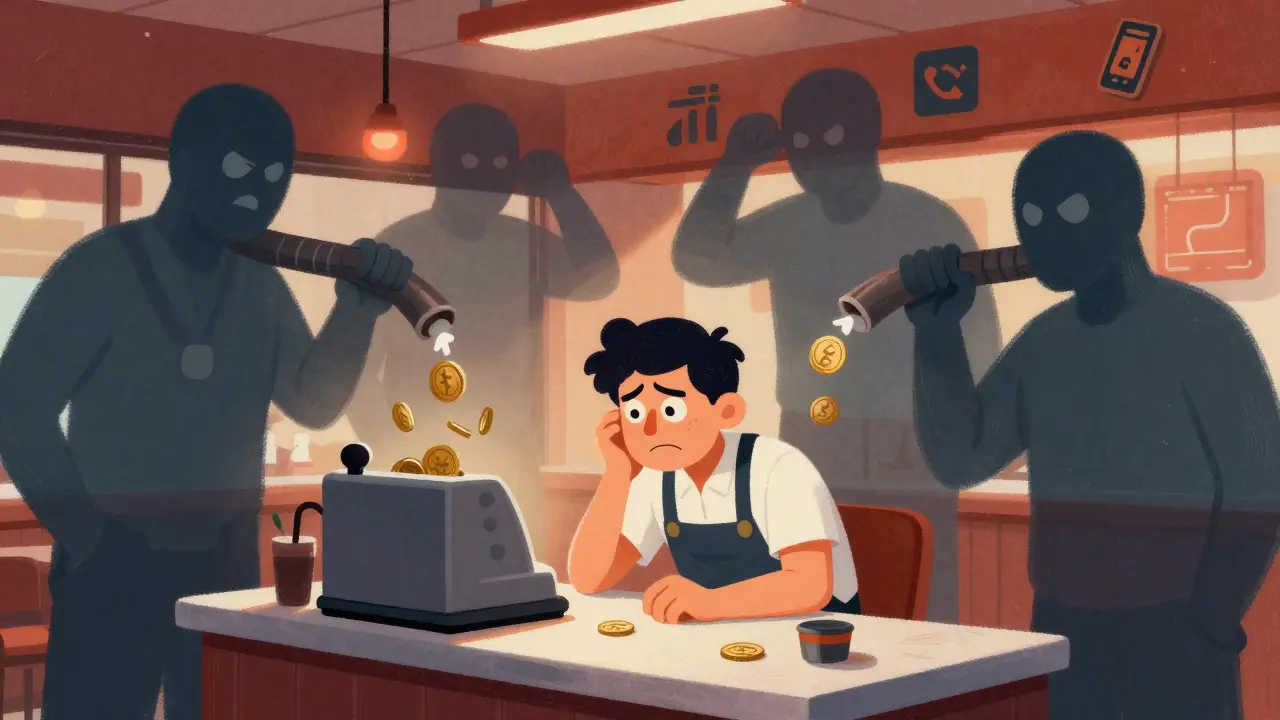
Imagine paying for your dinner without a middleman taking a huge cut. That’s the promise of Bistroo, also known as BIST. It is a cryptocurrency token designed to disrupt the traditional food delivery industry by eliminating high commission fees and returning control to restaurants. If you have ever wondered why your pizza costs more online than in-store, Bistroo claims to have the answer. But does this micro-cap token actually work, or is it just another buzzword-heavy project?
The Problem with Traditional Food Delivery
To understand what Bistroo is trying to do, we first need to look at the mess it wants to clean up. Right now, platforms like Uber Eats and Deliveroo charge restaurants between 15% and 30% commission on every order. That is a massive chunk of profit gone before the food even leaves the kitchen.
These platforms also control the customer data. The restaurant doesn’t really know who their loyal customers are; the app does. This creates a situation where restaurants are essentially renting their own clientele. Bistroo was founded to fix this "stitch-up," as they call it. The goal is simple: lower costs for consumers, keep more money in the pockets of restaurant owners, and give businesses back control over their relationships with diners.
How Bistroo Works: The DePIN Model
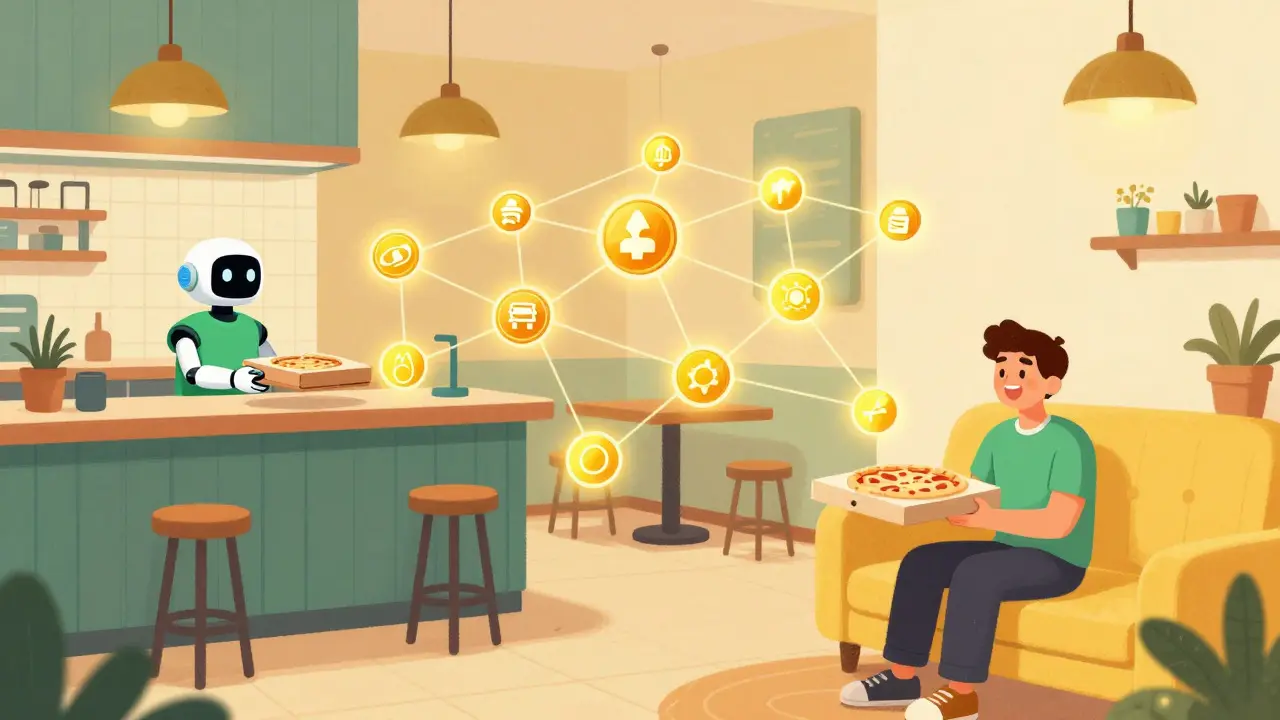
Bistroo isn't just a payment method; it operates as a Decentralized Physical Infrastructure Network (DePIN). In plain English, this means it uses blockchain technology to create a digital infrastructure that connects physical services-in this case, restaurants and delivery drivers-directly.
Here is how the value proposition breaks down:
- Lower Fees: Transaction costs are reportedly under 5%, compared to the 15-30% charged by giants like DoorDash.
- Instant Payments: Restaurants get paid immediately via blockchain transactions, improving cash flow.
- Data Ownership: Customer loyalty programs and contact details stay with the merchant, not a third-party app.
- Peer-to-Peer Relationships: The platform facilitates direct connections between diners and eateries, removing the algorithmic gatekeeper.
The BIST token acts as the fuel for this ecosystem. Users and merchants use it to access premium features, unlock lower fees, and participate in liquidity pools for lending or borrowing.
BIST Token Economics and Market Data
Let’s talk numbers. As of late 2025, Bistroo is a small player in a big market. According to data from CoinMarketCap, the token has a circulating supply of roughly 55.44 million BIST out of a total supply of 94.64 million. The market capitalization hovers around $338,000 USD, placing it outside the top 2,000 cryptocurrencies.
| Metric | Value |
|---|---|
| Token Symbol | BIST |
| Blockchain | Ethereum (ERC-20) |
| Total Supply | 94.64 Million |
| Circulating Supply | ~55.44 Million |
| Market Cap | ~$338,000 USD |
| Avg. Daily Volume | ~$100,000 USD |
| Holders | ~1,670 |
The token trades primarily on exchanges like MEXC and can be bought through platforms like Kriptomat. Because it is an ERC-20 token, it works with standard Ethereum wallets like MetaMask. However, the low trading volume means liquidity is thin. Trying to buy or sell large amounts could cause significant price slippage, meaning you might get a worse price than expected.
Is Bistroo a Good Investment? The Risks
If you are looking at BIST as an investment, you need to be realistic. This is a high-risk, speculative asset. Here is why analysts are cautious:
- Micro-Cap Status: With a market cap of less than half a million dollars, Bistroo is tiny. For context, the global food delivery market is worth over $154 billion. Bistroo represents less than 0.0002% of that industry. There is a massive gap between its current size and the problem it aims to solve.
- Adoption Challenges: The biggest hurdle is the "chicken-and-egg" problem. Restaurants won't adopt the system if customers don't use it. Customers won't use it if restaurants don't accept it. As of late 2025, there are no verified major restaurant chains using Bistroo.
- Technical Indicators: Tools like CoinCodex show bearish sentiment. The 50-day and 200-day moving averages are both above the current price, suggesting a long-term downward trend. The Relative Strength Index (RSI) often sits in neutral territory, indicating a lack of strong momentum.
- Limited Community: With only about 1,670 holders and minimal discussion on forums like Reddit, community engagement is weak. Strong crypto projects usually have active, vocal communities driving adoption.
Some models predict modest short-term gains, but these are speculative. Without a breakthrough partnership or a viral marketing push, the token struggles to gain traction against established competitors.

Bistroo vs. Traditional Platforms
How does Bistroo stack up against the giants? Let’s compare the core differences.
| Feature | Bistroo (BIST) | Uber Eats / Deliveroo |
|---|---|---|
| Commission Fee | Under 5% | 15% - 30% |
| Data Control | Restaurant owns customer data | Platform owns customer data |
| Payout Speed | Instant (Blockchain) | Weekly or Bi-weekly |
| User Base | Niche Crypto Users | Millions of Global Users |
| Payment Method | Crypto (BIST/USDT) | Credit Card / Apple Pay |
Bistroo wins on cost and control. Traditional apps win on convenience and reach. Most people will stick with Uber Eats because they can pay with a credit card and expect their food in 30 minutes. Bistroo requires users to understand crypto wallets and tokens, which is a high barrier to entry for the average diner.
Future Outlook and Verdict
Bistroo addresses a real pain point in the hospitality industry. Every restaurant owner hates paying 30% commissions. The idea of a decentralized alternative is compelling. However, ideas are cheap; execution is everything.
For Bistroo to succeed, it needs to solve the adoption loop. This likely requires partnerships with local restaurant groups willing to experiment with Web3 payments. Until then, it remains a speculative token for crypto enthusiasts rather than a practical tool for everyday dining.
If you are a restaurant owner, keep an eye on the space. The technology might mature enough to offer a viable alternative in the next few years. If you are an investor, treat BIST as a high-risk bet. Do your own research, check the latest charts on CoinGecko or CoinMarketCap, and never invest more than you can afford to lose.
What is the utility of the BIST token?
The BIST token is used within the Bistroo ecosystem to facilitate payments for food orders, unlock premium features for merchants and users, reduce transaction fees, and participate in liquidity pools for lending and borrowing.
Where can I buy Bistroo (BIST)?
You can purchase BIST tokens on cryptocurrency exchanges such as MEXC and Kriptomat. Since it is an ERC-20 token, you will need a compatible Ethereum wallet like MetaMask to store it securely.
Is Bistroo better than Uber Eats for restaurants?
Financially, yes. Bistroo charges under 5% in fees compared to Uber Eats' 15-30%. However, Uber Eats brings millions of customers to the door. Bistroo currently lacks a large user base, so restaurants may save money but lose visibility.
What is the current market cap of Bistroo?
As of late 2025, Bistroo has a market capitalization of approximately $338,000 USD, making it a micro-cap cryptocurrency with high volatility and limited liquidity.
Does Bistroo have any major restaurant partnerships?
As of the latest available data, there are no verified partnerships with major global restaurant chains. Adoption is currently limited to early adopters and niche crypto-friendly establishments.
another rug pull waiting to happen.
I must say, the concept is quite intriguing! It is wonderful to see innovation in the food sector. The fees are indeed too high currently. I hope this succeeds for everyone's benefit!
The DePIN narrative is merely a veneer for a classic pump-and-dump scheme designed to extract liquidity from retail investors who lack the sophistication to analyze on-chain data properly. The tokenomics are fundamentally flawed because there is no real utility driving demand, only speculative fervor fueled by shills and paid influencers. The centralization of the development team contradicts the very ethos of decentralization they claim to uphold, suggesting that the founders hold significant control over the protocol’s direction and token distribution. Furthermore, the lack of institutional interest indicates that smart money views this as a dead-end asset with negligible long-term value proposition in the broader macroeconomic landscape.
Hey there! :) Don't let the haters get you down. If you have a restaurant, this could actually save you cash on fees. Just check the contract yourself before buying anything though. Stay safe out there! :)
the paradigm shift here is not just economic but ontological. we are redefining the social contract between consumer and producer through decentralized ledgers. it is a subtle yet profound alteration of power dynamics. the jargon aside the core idea is valid.
it is what it is. most crypto projects fail. this one has a nice idea but zero traction. typical.
They are tracking your wallet addresses! 🕵️♂️ The government knows exactly who buys these tokens. It is all part of the CBDC rollout plan to monitor our spending habits. Do not fall for it! 👁️
I have been thinking about this for a while now, and honestly, the potential seems really promising if they can just figure out the adoption loop. It is interesting how they are trying to disrupt such a massive industry with such a small market cap, which makes me wonder if they are underestimating the inertia of traditional systems or if they have some secret partnerships up their sleeve that they haven't announced yet. I find myself curious about the technical implementation of the instant payments feature because blockchain transactions can sometimes be slow depending on network congestion, so I am wondering how they mitigate that without charging users extra gas fees which would defeat the purpose of lower costs overall.
You poor souls really think this changes anything? The elite will always find a way to skim off the top. But hey, enjoy your little digital coins while they last. It is adorable how you think technology can solve human greed. Truly a spectacle to behold.
moral decay is evident in the pursuit of profit over substance. the soul of commerce is lost. yet perhaps there is redemption in the code itself if written with integrity. unlikely but possible.
Lookin at the charts its super bearish rn. But if u hold tight maybe it bounces. Just dont put ur rent money in there lol. Gotta keep it chill and DYOR fam.
The RSI is clearly oversold! Buy the dip!!! It is a golden opportunity for early adopters to accumulate before the next bull run! Do not miss out on this gem!!!
i mean it sounds cool i guess. maybe ill try it if my local pizza place starts accepting it. prolly wont happen tho.
Oh wow, another token promising to 'disrupt' an industry that doesn't need disrupting. 🙄 Because what we really needed was more complexity in paying for a burger. Brilliant. Truly groundbreaking stuff right here. 😒
it is hard to judge without seeing actual user testimonials. the theory is sound but execution is key. let us wait and see.
lol yeah right. another scam. buy high sell low. same old story. typos everywhere but u get the point.
my life is ruined since i bought this. why did i listen to reddit. i hate everything now. nothing matters anymore.
This is American innovation gone wrong!!! Why do we need foreign tech ruining our local businesses??? Support USA made products only!!!!
The semantic implications of the term 'decentralized' in this context are profoundly misleading, serving primarily as a marketing gimmick rather than a structural reality. One must question the veracity of the claims regarding data ownership when the underlying infrastructure relies on centralized exchanges for liquidity provision. The juxtaposition of 'peer-to-peer' relationships with the necessity of third-party wallet interfaces creates a cognitive dissonance that undermines the project's foundational thesis. Furthermore, the lack of transparency in the vesting schedules for the founding team suggests a potential for insider manipulation that prudent investors should avoid at all costs.
LET US GOOOO!!! This is the future of dining!!! Who wants to pay 30% fees anymore??? Join the revolution now!!! Let us take back our money!!! #BISTtoMoon