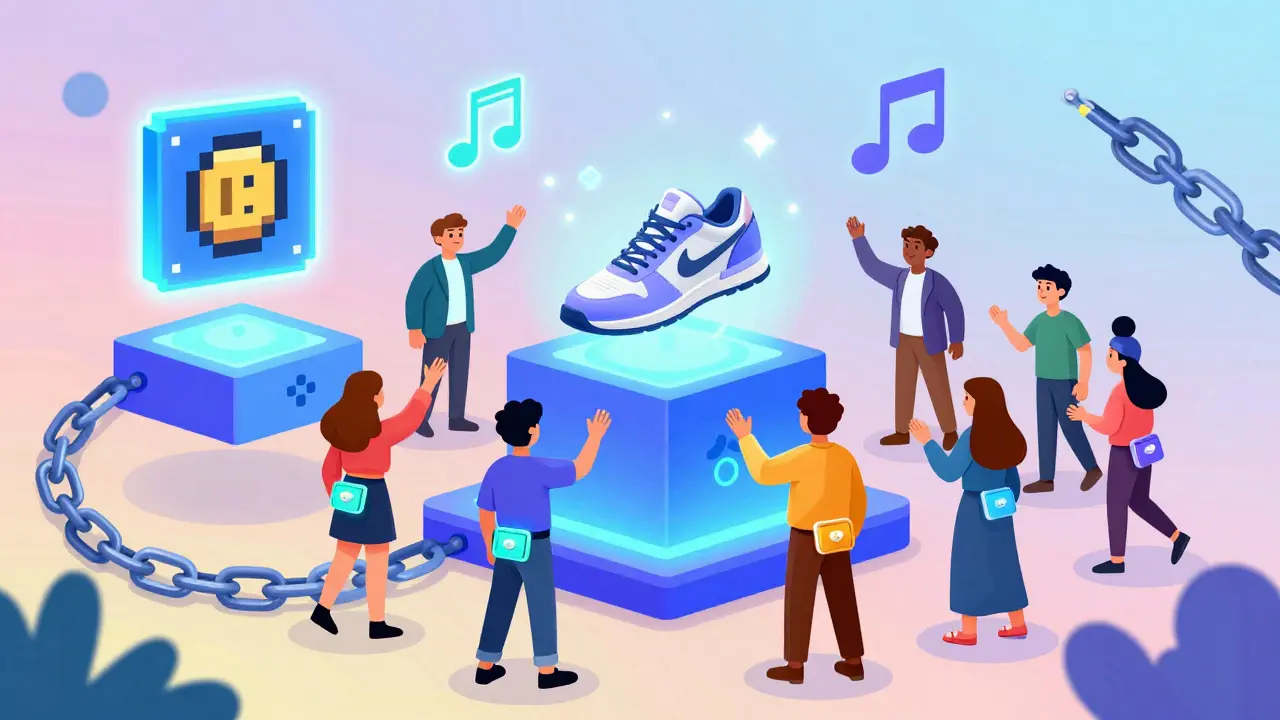
Imagine owning a digital artwork that no one else can copy - not because it’s hidden, but because the blockchain proves it’s yours. That’s what NFT marketplaces make possible. These platforms let you buy, sell, or trade one-of-a-kind digital items like art, music, virtual land, and even tweets. Unlike regular websites where you download a file, NFT marketplaces give you proof of ownership on the blockchain. This isn’t just about pixels - it’s about real, verifiable digital property.
How NFT Marketplaces Work
NFT marketplaces are like eBay or Etsy, but for unique digital things. Instead of listing a physical painting, you list a digital file tied to a token on the blockchain. That token - the NFT - doesn’t store the image or video itself. It holds metadata: who created it, when, and who owns it now. The actual file? Usually stored on decentralized networks like IPFS or Arweave, so it won’t disappear if the marketplace shuts down.
To use these platforms, you need a crypto wallet - like MetaMask or Coinbase Wallet. You connect it to the marketplace, fund it with cryptocurrency (usually ETH), and then you can browse, bid, or buy. Every transaction is recorded on the blockchain, so ownership changes are public and permanent. No middleman can erase your purchase or claim it wasn’t yours.
Most NFTs on major platforms follow the ERC-721 or ERC-1155 standards on Ethereum. These rules make sure each token is unique and can be tracked. In 2022, Ethereum switched from energy-heavy mining to a much greener system called proof-of-stake. That cut its energy use by 99.95%, making NFT trading far more sustainable than it was five years ago.
Types of NFT Marketplaces
Not all NFT platforms are the same. There are three main types based on who can join and what they sell.
- Open marketplaces - Anyone can list NFTs. OpenSea is the biggest example. You don’t need approval. Just connect your wallet and start minting.
- Closed marketplaces - You apply to join. Foundation and SuperRare are like exclusive galleries. They vet creators to keep quality high and reduce scams.
- Proprietary marketplaces - These sell NFTs tied to a brand. Nike’s .SWOOSH lets you buy digital sneakers linked to real shoes. NBA Top Shot sells highlight clips officially licensed by the league.
There are also niche platforms. KLKTN focuses on K-Pop and anime collectibles. Zora specializes in music NFTs. These attract fans who want to own something tied to their favorite artists or franchises.
Top NFT Marketplaces in 2025
OpenSea still leads the pack, handling about 60% of all NFT trading volume as of late 2023. But the landscape has changed. Here are the top players and what sets them apart.
| Platform | Market Share (2023) | Fees | Best For | Key Feature |
|---|---|---|---|---|
| OpenSea | 60% | 2.5% | Beginners, broad collections | Easy to use, huge inventory |
| Blur | 15% | 0% platform fee | Professional traders | Proactive market-making tools |
| Magic Eden | 12% | 2% | Solana NFTs | Fast, low-cost transactions |
| Rarible | 8% | 2.5-5% | Decentralized governance | Community-owned via RARI token |
| Foundation | Under 2% | 15% | Established artists | Invitation-only, high-quality curation |
Blur became popular fast because it gives traders tools to automate bids and track trends - something OpenSea didn’t offer until recently. Magic Eden dominates on Solana, a blockchain with lower fees and faster confirmations than Ethereum. If you’re buying low-cost NFTs or gaming assets, Solana platforms often make more sense.
How Much Does It Cost to Use Them?
There are two types of fees: platform fees and gas fees.
- Platform fees - Charged by the marketplace. OpenSea takes 2.5%. Rarible can take up to 5%. Some, like Blur, charge nothing at all.
- Gas fees - Paid to the blockchain network to process your transaction. On Ethereum, these used to hit $50 during peak times in 2021. Now, they average $1.20 per transaction thanks to the shift to proof-of-stake. On Solana, gas fees are often under $0.01.
Creators also earn royalties - a percentage of future sales. OpenSea used to enforce this automatically, but in 2023, it stopped enforcing royalties on secondary sales to compete with Blur. Now, whether you get paid when your NFT resells depends on the buyer’s wallet and the marketplace. Some platforms still honor royalties; others don’t. It’s a gray area.
Real User Experiences
Not everyone has a smooth ride. On Reddit’s r/NFT community, users split between OpenSea and Blur. Beginners love OpenSea’s simple layout. Traders say Blur’s tools help them win auctions faster and cheaper.
One artist, @NFTArtistJane, earned $12,000 from selling 50 NFTs on Foundation and another $3,200 in royalties from resales. That’s real income - not speculation.
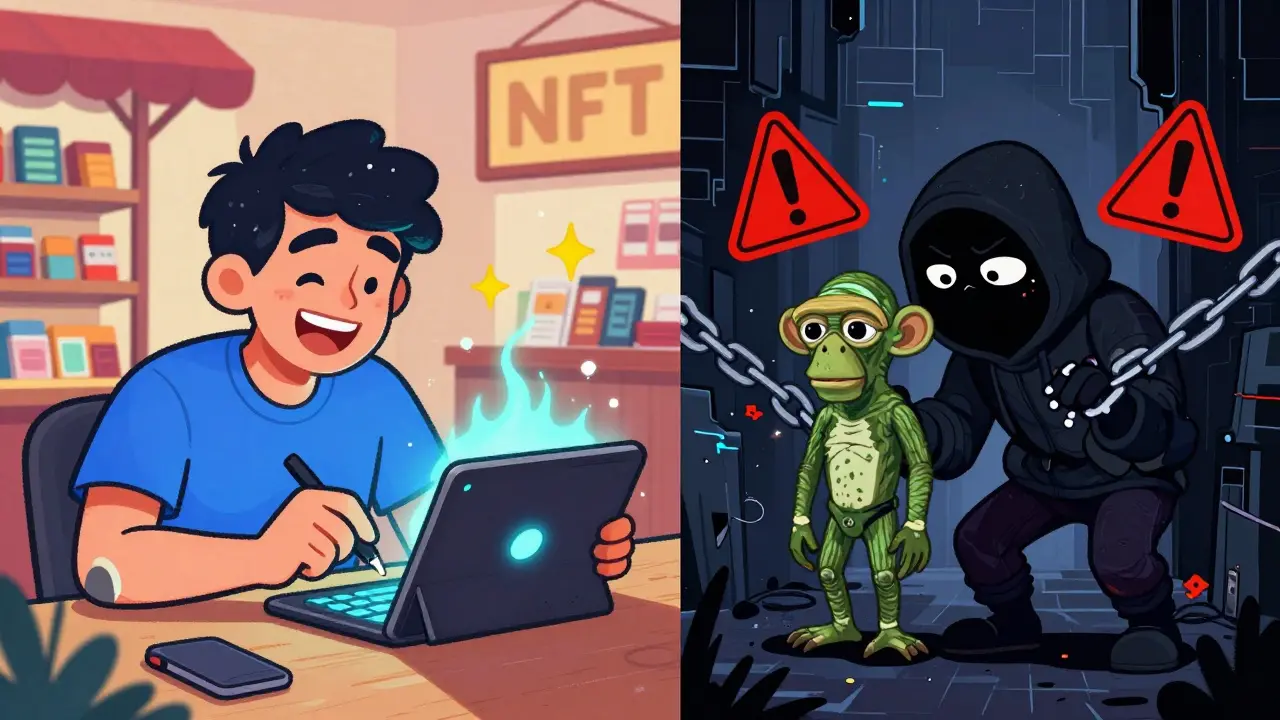
But there are horror stories too. A Reddit user lost $1,200 buying a fake Bored Ape copy on a sketchy marketplace. Scammers create lookalike NFTs with slightly different contract addresses. Always check the official contract address before buying. Don’t trust links from DMs or random tweets.
Trustpilot ratings reflect this mix: OpenSea has a 3.8/5 from over 1,800 reviews. People praise its variety but complain about slow customer support. Rarible’s 3.4/5 shows users like its community model but find the interface clunky.
Who’s Using These Platforms?
Most buyers are male (68%), with an average age of 34. But that’s changing. In 2023, 42% of Fortune 500 companies started experimenting with NFTs - for loyalty programs, digital tickets, or virtual merch. Nike, Starbucks, and Coca-Cola all launched their own NFT drops.
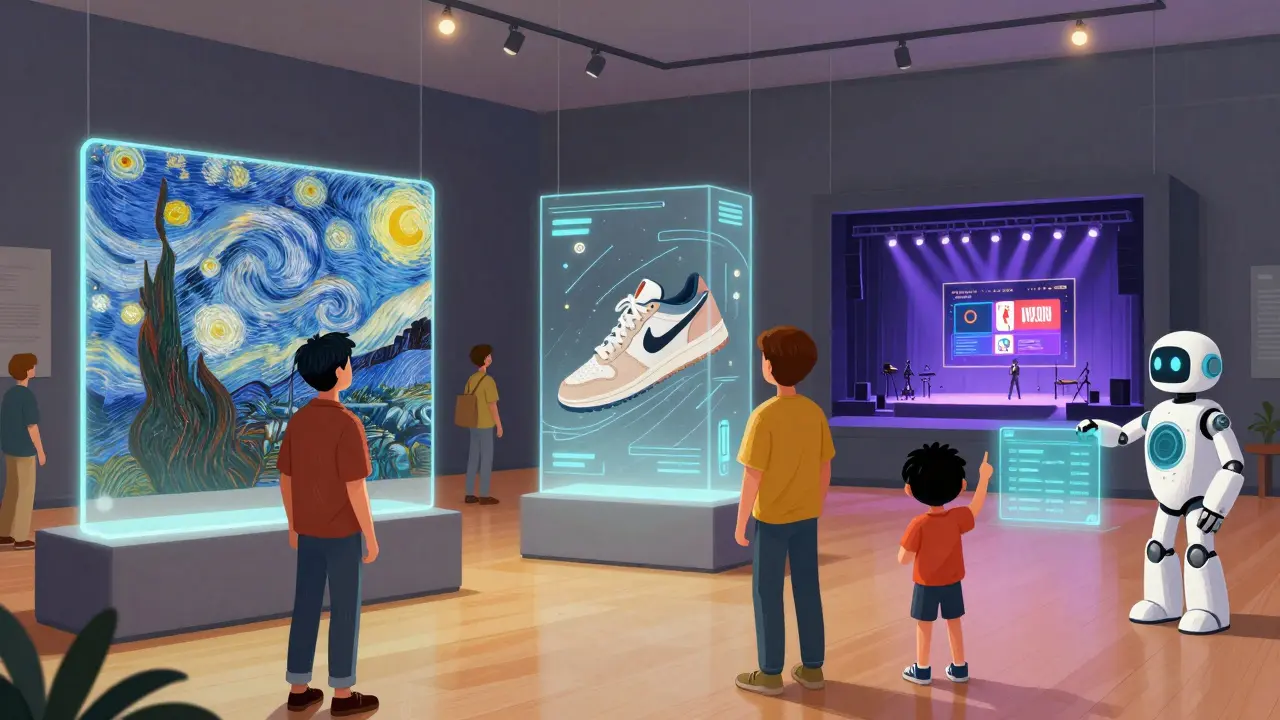
Art institutions are catching on too. A 2023 Deloitte report found 78% of museums and galleries now see NFT marketplaces as legitimate ways to distribute digital art. Gartner predicts that by 2026, 10% of global companies will run their own NFT marketplaces to engage customers.
And it’s not just art. Virtual land in Decentraland and The Sandbox is being bought by brands to host events. Musicians are dropping albums as NFTs with exclusive access. Even fashion designers are selling digital-only clothing.
What’s Next for NFT Marketplaces?
The market cooled after 2021’s hype, with trading volume dropping 61% in 2022. But that’s normal for emerging tech. The real growth now is in utility, not speculation.
OpenSea’s 2023 update - Collection Offers - lets buyers make one bid for an entire NFT collection. That’s huge for bulk buyers and gamers. Blur’s real-time trading tools are making professional-grade features accessible to regular users.
Regulation is coming. The EU’s MiCA law, active since 2024, requires NFT platforms to verify users’ identities. This will reduce scams but may drive away anonymous users. In the U.S., regulators are still deciding how to classify NFTs - as securities, commodities, or just digital goods.
Mobile use is rising. 63% of new users now access NFT platforms through phones. Platforms are racing to build better apps. Cross-chain marketplaces - that let you trade NFTs from Ethereum, Solana, and Polygon in one place - are also on the horizon.
Should You Use an NFT Marketplace?
If you’re an artist or creator: yes. You can sell directly to fans, keep royalties, and build a community without a gallery or label.
If you’re a collector: be careful. Only buy from verified collections. Check the contract address. Avoid hype-driven drops. Look for projects with active communities and clear roadmaps.
If you’re just curious: start small. Buy one $10 NFT on OpenSea. Learn how wallets work. See how the blockchain records your purchase. Don’t rush into big bets.
NFT marketplaces aren’t magic. They’re tools. Some are trustworthy. Some are risky. The blockchain gives you proof of ownership - but it doesn’t protect you from bad choices. Do your homework. Start slow. And remember: owning an NFT doesn’t mean you own the copyright. You own the token. The art? That’s still the creator’s.
What is an NFT marketplace?
An NFT marketplace is a digital platform where users can buy, sell, or trade non-fungible tokens - unique digital assets verified on a blockchain. These platforms let creators sell digital art, music, virtual land, and more, while buyers get proof of ownership through a tamper-proof record on the blockchain.
How do I start using an NFT marketplace?
First, get a crypto wallet like MetaMask or Coinbase Wallet. Fund it with Ethereum or another supported cryptocurrency. Then visit a marketplace like OpenSea, connect your wallet, and browse listings. You can buy instantly or place bids. To sell, upload your file, set a price, and mint the NFT - which costs a small gas fee.
Are NFT marketplaces safe?
The blockchain itself is secure, but scams are common. Fake NFTs, phishing links, and rug pulls happen. Always verify the official contract address. Never connect your wallet to random websites. Stick to well-known platforms like OpenSea, Magic Eden, or Rarible. Never share your private key.
Can I make money selling NFTs?
Yes, but it’s not guaranteed. Some artists earn thousands from primary sales and royalties. Others sell nothing. Success depends on your audience, quality, and marketing. Don’t treat it like a get-rich-quick scheme. Build a following, create value, and treat it like a creative business.
Why do NFTs cost so much gas?
Gas fees are network costs on Ethereum. They used to be very high during 2021’s boom, sometimes over $50. Since Ethereum switched to proof-of-stake in 2022, gas fees dropped to around $1.20 on average. On other blockchains like Solana, fees are under $0.01. Choose the right chain to save money.
What’s the difference between OpenSea and Blur?
OpenSea is beginner-friendly with the largest selection. Blur is built for active traders - it has zero platform fees and advanced tools like automated bidding and real-time analytics. OpenSea has more users; Blur has better tools. Many people use both.
Do I own the copyright if I buy an NFT?
No. Buying an NFT gives you proof that you own that specific token, not the copyright to the artwork. The creator usually keeps the rights to reproduce, license, or sell the image. Some NFT projects grant commercial rights - but you must read the terms. Never assume ownership means you can print and sell the art.
Man, I remember when NFTs were just weird internet art people threw money at. Now? I bought a digital hoodie last week and it actually unlocked a Discord channel with the designer. Wild how this shit evolved from memes to real utility. Still wouldn't spend big on hype drops though.
Blur is the only marketplace worth using if you're serious. OpenSea is like a flea market with 10,000 fake Bored Apes. Blur's tools let you snipe listings before the bots even blink. And zero fees? That's not a feature, that's a revolution. Stop paying 2.5% to a platform that doesn't earn it.
Anyone who thinks NFTs aren't a scam hasn't looked at the real numbers. The US government hasn't even classified them yet and you're buying digital JPEGs? This is the same energy as tulip mania. And don't get me started on Solana-half those chains are run by teenagers with Discord bots. If you're not in a regulated jurisdiction, you're just gambling with your crypto.
Hey, I'm just a guy who drew stick figures and sold 3 of them on OpenSea for $15 each. But I got a DM from a kid in Japan who said one of them helped him through depression. That's worth more than any gas fee. NFTs aren't about flipping-they're about connection. Keep it simple, folks.
Interesting how the shift to proof-of-stake fundamentally changed the environmental narrative around NFTs. The 99.95% reduction in energy consumption is a critical data point often ignored by critics. Blockchain technology, when properly implemented, can be both innovative and sustainable.
so i bought this nft of a cat wearing a hat and it was like… legit cool? but then i realized the artist had a whole series of cats with different hats and i got the one with the least popular hat 😅 like why did i spend 0.05 eth on the blue beret when the top hat was selling for 3x? dumb move. but hey, i got a cat with a hat and that’s what matters right?
you guys are all missing the point 😏 NFTs are just crypto’s way of saying ‘i’m rich’ without buying a yacht. also, why are we still using Ethereum? Solana’s faster, cheaper, and doesn’t make me feel guilty every time I mint. just saying… 🤷♂️
For anyone new: start with a $5 NFT. Don’t rush. Learn how wallets work. Watch how the blockchain logs your purchase. It’s not magic-it’s just code. And if someone DMs you a link to ‘claim your free NFT’? Block them. I’ve seen too many people lose their whole stash because they clicked ‘approve’ on a fake site. You’re not getting rich overnight. But you can learn something real.
why do people keep saying you don't own the art when you buy an NFT like that even matters what's the point of owning a token if you can't even post it on instagram or print it or make merch or whatever i mean come on
It is important to recognize that intellectual property rights remain with the creator unless explicitly transferred via a legally binding, transparent contractual agreement. Ownership of the token does not equate to ownership of the underlying copyright, and this distinction must be clearly communicated to all participants in the ecosystem to prevent misunderstanding and potential legal exposure.
...i just wish someone would explain why i feel so empty after buying my third NFT this week. like i spent 0.3 eth on a pixelated frog and now i just stare at it on my desktop and wonder if i'm the only one who thinks it's kinda sad.