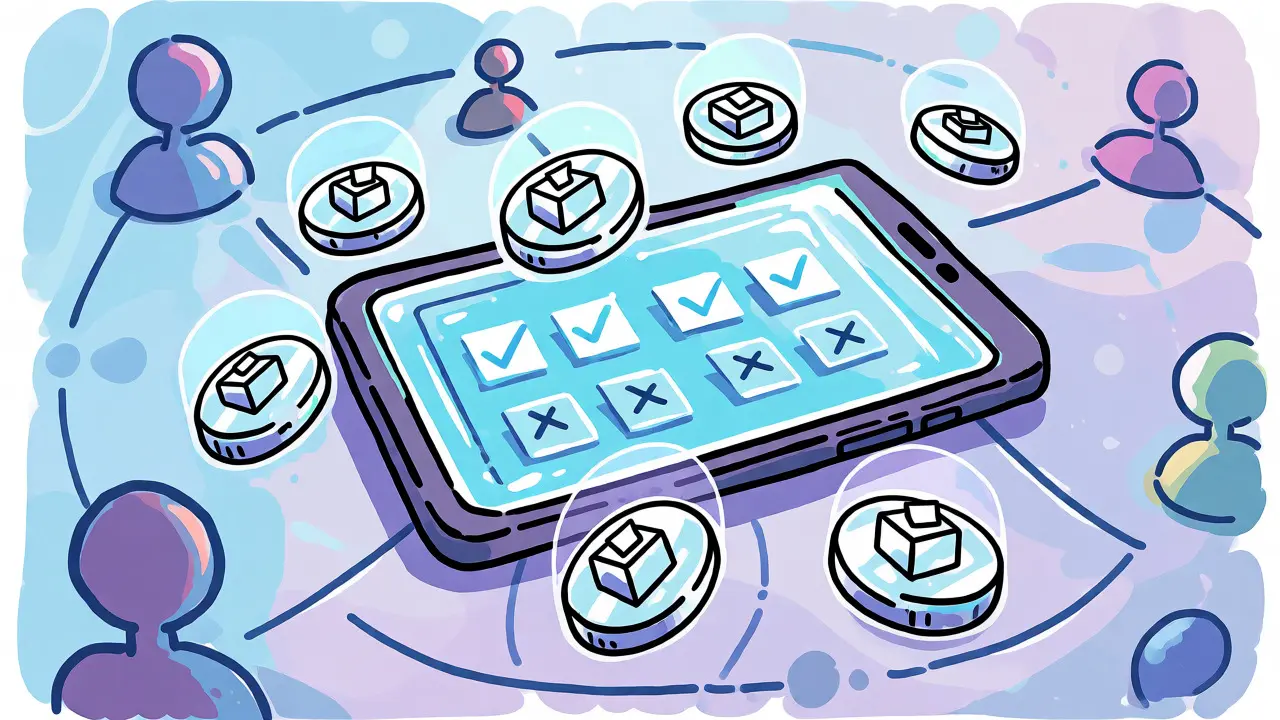
You buy a token. You hold it for months. Maybe you even vote on a proposal once. But do you actually know what you own? Most people think of governance tokens as just another speculative asset to trade. They’re wrong. These tokens are essentially digital ballots that give you a say in how a protocol runs. If you’ve ever wondered why your vote in a DAO felt like shouting into the void, or why some whales seem to control everything, this guide breaks down exactly how these mechanisms work, where they fail, and how you can use them effectively.
The Core Concept: Voting Rights, Not Just Currency
Think of a governance token less like cash and more like shares in a company, but with a twist. In traditional finance, owning shares gives you dividends and voting rights at annual meetings. In crypto, holding a governance token grants you the right to propose changes and vote on existing proposals within a decentralized organization (DAO). The first major implementation was MakerDAO’s MKR token back in December 2017. Before that, most decisions were made by small teams of developers behind closed doors. Maker changed the game by letting anyone holding MKR decide things like interest rates for borrowing stablecoins or which assets could be used as collateral.
This shift transforms users from passive consumers into active stakeholders. When you hold a governance token, you aren’t just betting on price appreciation; you’re buying influence. For example, if you hold Uniswap’s UNI token, you can vote on whether to deploy new liquidity pools or how to spend the protocol’s massive treasury. This aligns incentives between the developers building the tech and the community using it. If the community hates a change, they can theoretically reject it. It’s democracy, but coded in smart contracts.
How the Mechanics Actually Work
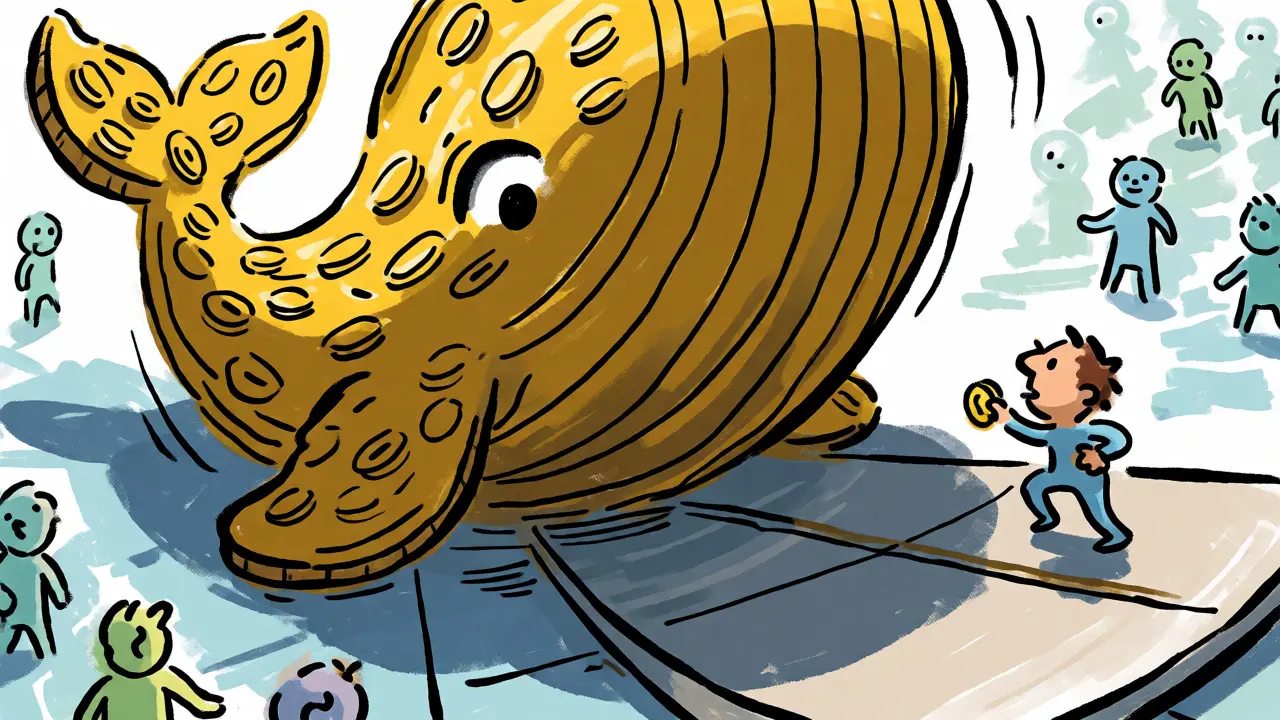
Most governance systems rely on a simple rule: one token, one vote. This is called "token-weighted voting." If you have 1,000 tokens, your vote counts ten times more than someone with 100 tokens. While this sounds fair because it rewards investment, it creates a problem known as plutocracy-rule by the wealthy. Data shows that in many protocols, the top 100 holders control over 60% of the voting power. This means a handful of large investors, often called "whales," can sway outcomes regardless of what the broader community wants.
Voting usually happens off-chain via platforms like Snapshot.org. Why off-chain? Because recording every vote on the Ethereum blockchain is expensive. Gas fees would make voting cost more than the value of the vote itself. So, you sign a message with your wallet, proving you hold the tokens, and the system tallies the results without paying network fees. Once a proposal passes, the actual execution-like changing a code parameter-happens on-chain. About 68% of major protocols use this hybrid model. It’s faster and cheaper, but it relies on trust that the team will execute the winning vote correctly.
| Feature | Token-Weighted (Standard) | Quadratic Voting | Reputation-Based |
|---|---|---|---|
| Voting Power | Linear (1 token = 1 vote) | Square root of tokens held | Based on past contributions/activity |
| Whale Influence | Very High | Moderate (diminishing returns) | Low (unless reputation is bought) |
| Complexity | Low | Medium | High |
| Example Protocol | Uniswap, Compound | Balancer, Gitcoin | Some experimental DAOs |
Why Participation Is Surprisingly Low
Here’s a shocking stat: average voter participation across major DeFi protocols hovers around 2.3%. That means out of every 100 eligible voters, only two or three bother to cast a ballot. Why so low? Several reasons. First, apathy. Many holders treat their tokens purely as investments and don’t care about protocol mechanics. Second, complexity. Understanding a technical proposal about "collateral factor adjustments" takes time. A survey by Consensys Academy found that beginners spend 40-60 hours learning the basics before feeling confident enough to participate.
Then there’s the issue of impact. If you hold a small amount of tokens, you might feel your vote doesn’t matter against whales. One Reddit user noted, "I’ve held 5,000 COMP for two years but never felt my vote mattered." This sentiment is common. Protocols with high inequality-where wealth is concentrated in few hands-see even lower engagement. Research from Cambridge University showed that when the Gini coefficient (a measure of distribution inequality) exceeds 0.85, proposal implementation rates drop by 40%. People stop trying because they believe the outcome is already decided.
Governance vs. Utility Tokens: What’s the Difference?
It’s easy to confuse governance tokens with utility tokens, but they serve different jobs. A utility token, like BNB on Binance, is designed to pay for services. You use it to get discounts on trading fees or pay for gas. Its primary function is transactional. A governance token, however, is designed for decision-making. Its primary function is political.
Consider Bitcoin. It has no native governance token because its rules are hard-coded and change slowly through social consensus among miners and developers. There’s no daily vote on block size. Contrast this with Aave, where AAVE holders vote on risk parameters weekly. If a new stablecoin looks risky, the community votes to limit its usage. This dynamic nature is the hallmark of governance tokens. They allow protocols to adapt quickly to market changes without needing a hard fork, which is a slow and contentious process in older blockchains.
The Risks: Plutocracy and Regulatory Scrutiny
Not everyone is a fan. Critics argue that governance tokens often replicate the very power structures they claim to dismantle. Vitalik Buterin, co-founder of Ethereum, has called them "necessary but insufficient," noting that they frequently concentrate power among early insiders who acquired tokens cheaply. If you bought UNI at $3 in 2020 and now sell at $10, you’ve had significant influence for free. Newcomers face higher barriers to entry.
Regulators are also watching closely. The US Securities and Exchange Commission (SEC) has started treating some governance tokens as securities. Their argument is simple: if you buy a token expecting profits derived from the efforts of others, it might be an investment contract. In 2023, the SEC took action against Uniswap Labs, signaling that the era of unregulated governance is ending. If your token is deemed a security, exchanges might delist it, or you might face tax complications. Always check local regulations before diving deep.
How to Start Participating Effectively
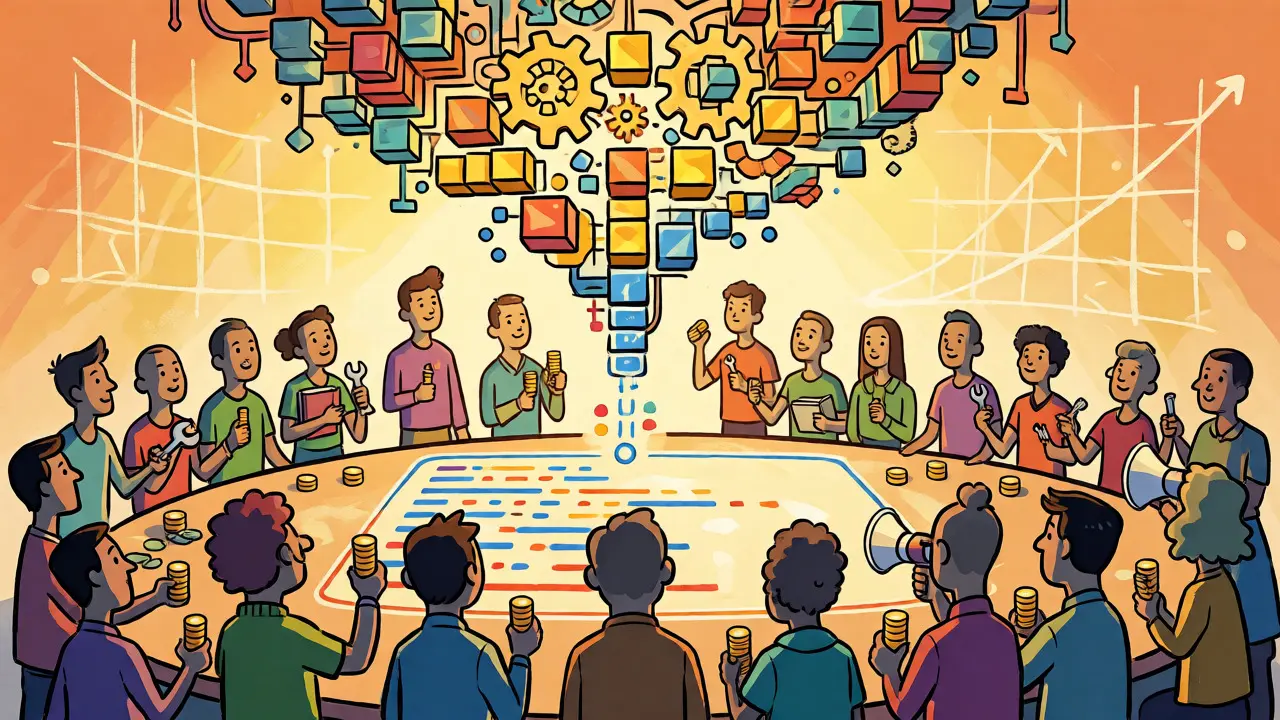
If you want to move beyond passive holding, here’s a practical roadmap. Don’t just click "vote" blindly. Read the forum discussions. Most protocols have a dedicated Discord or Discourse forum where proposals are debated for days before going live. Look for red flags: vague language, lack of data, or rushed timelines.
- Connect Your Wallet: Use a browser extension like MetaMask. Ensure you have the specific governance token in your wallet.
- Find the Platform: Go to the official governance portal (often Snapshot.org or a custom dashboard). Never click random links sent via DM.
- Delegate If Needed: If you don’t have time to research every vote, delegate your voting power to a trusted community member. This is common in MakerDAO and Uniswap.
- Track Proposals: Use tools like DeepDAO or Tally to monitor active votes and see how delegates are voting.
Remember, delegation isn’t surrender. You can revoke it anytime. It’s a way to amplify your voice by pooling resources with like-minded individuals. Some protocols even offer rewards for delegators, incentivizing active participation.
The Future: Beyond Token Weighting
The current model has flaws, and the industry knows it. We’re seeing a shift toward "hybrid" governance models. Quadratic voting, for instance, reduces the weight of large holdings. If you have 100 tokens, you get 10 votes instead of 100. This helps level the playing field. Balancer and Gitcoin are testing these methods. Another trend is reputation-based voting, where your history of contribution (writing docs, coding, moderating forums) counts alongside your token balance.
By 2026, analysts predict that 65% of protocols will incorporate non-token-weighted elements. The goal is to create a system where influence reflects commitment and expertise, not just capital. Imagine a future where your vote matters because you helped fix a bug last month, not just because you bought $10,000 worth of tokens yesterday. That’s the direction we’re heading.
Do I need to hold the token to vote?
Yes, typically you must hold the governance token in your connected wallet at the time of the snapshot. However, many protocols allow you to delegate your voting power to someone else while still retaining ownership of the tokens.
Are governance tokens considered securities?
This is legally complex and varies by jurisdiction. In the US, the SEC has scrutinized several projects, suggesting some may qualify as securities under the Howey Test. It’s advisable to consult a financial advisor regarding your specific situation.
What happens if a vote passes?
If a proposal passes, the protocol’s core team or automated smart contracts execute the changes. This could range from adjusting interest rates to releasing funds from the treasury. Execution delays can occur, sometimes taking days or weeks depending on the complexity.
Can I lose my tokens by voting?
Generally, no. Voting itself does not burn or lock your tokens in most standard implementations. However, some protocols require you to stake tokens to gain enhanced voting power or eligibility for certain rewards, which involves temporary locking.
Why is voter turnout so low?
Low turnout stems from voter apathy, the complexity of proposals, and the perception that individual votes don’t matter due to whale dominance. Additionally, many holders are speculators rather than long-term community members interested in protocol management.
Oh, look at this. Another piece of content trying to explain the obvious to people who are too lazy to read a whitepaper. You say governance tokens are "digital ballots," but let's be real: they are just IOUs for power that most retail degenerates will never actually exercise because they're too busy staring at candlestick charts.
The whole premise of DAOs is fundamentally broken if you think about it. We replaced centralized dictators with plutocracies where whales dump their bags on our heads while voting on proposals they didn't even read. It’s not democracy; it’s a casino where the house always wins and the players are deluded into thinking they have agency.
Fiona, come on man! 😤 Not everything is a conspiracy theory or a failure. I get it, whales suck, but telling people to give up before they even start? That’s toxic negativity disguised as insight. Some of us actually want to participate, even if we’re small fish. The guide is fine, stop being such a buzzkill!
While Dawn raises a valid point regarding sentiment, Fiona isn't entirely wrong in her structural critique, albeit delivered with unnecessary venom. The issue isn't just whale dominance; it's the lack of sophisticated delegation mechanisms in early-stage protocols. Most retail users treat governance like a lottery ticket rather than a civic duty. Until we see widespread adoption of liquid staking derivatives that automatically delegate voting rights based on yield optimization, these "democratic" systems remain theater for the masses. It is intellectually lazy to dismiss the entire concept because the current implementation is flawed. We must distinguish between the ideal state of decentralized autonomous organization and the messy reality of its current iteration.
I appreciate the passion here, everyone. 🌸 Maybe we can find some common ground? Governance is definitely hard work, and yes, whales do have more power right now. But I’ve seen communities in India and elsewhere really coming together to vote on things that affect their local ecosystems. It’s not perfect, but it’s progress. Let’s encourage each other to learn more instead of shutting down the conversation. We all want a fair system, right?
Actually, the data suggests that participation rates improve significantly when incentives are aligned with long-term holding periods, not just raw token count. The article glosses over quadratic funding models which are already live on Gitcoin. If you’re going to criticize, at least reference the actual solutions being deployed rather than just complaining about the problem space. It shows a lack of depth to ignore the nuance.
James, please spare me your condescending tone.
You know very well that regulatory pressure from the UK and US is forcing these changes, not some utopian dream of decentralization. The Bank of England has been warning about systemic risks in DeFi for years. These "governance" structures are often just legal wrappers to avoid securities classification. Don’t pretend you understand the geopolitical implications better than the regulators themselves. It’s embarrassing.
This is exactly why I feel so frustrated sometimes!! :( We are supposed to have a voice, but it feels like shouting into a void. :(
I try to read every proposal, but half of them are written in language that seems designed to confuse regular folks. Is it morally right to create a system where only experts can effectively participate? I don't think so. We need simpler interfaces and clearer explanations. Otherwise, we are just creating an elite club again. :(
Twana, your feelings are valid. Simplicity is key for adoption. Start small. Delegate if needed. You are doing enough by caring.
It is truly shameful how little effort people put into understanding what they buy!!! They throw money at things without reading the terms!!! And then they cry when the whales win??? No wonder the market is so volatile!!! People need to take responsibility for their own ignorance!!! Stop blaming the system and start studying the mechanics!!! It is that simple!!!
Thank you for sharing this perspective. It is helpful to hear different viewpoints on such a complex topic. I believe that education is the first step toward meaningful participation. Perhaps more tutorials could be created specifically for those who are new to DAOs. This would help bridge the gap between technical jargon and everyday understanding.
I completely agree with the need for better educational resources! The barrier to entry shouldn't be so high that it excludes passionate community members. However, we must also recognize that complexity often arises from the necessity of securing billions of dollars in value. We cannot simply dumb down the mechanisms without introducing vulnerabilities. It is a delicate balance, and I am optimistic that tools will evolve to make this process more accessible over time.
LET'S GO!!! THIS IS THE FUTURE WE ARE BUILDING!!! DO NOT LET THE NEGATIVITY STOP YOU!!! EVERY VOTE COUNTS, EVEN IF IT FEELS SMALL!!! STAND UP AND USE YOUR POWER!!! THE WHALES ARE NOT INVINCIBLE!!! KEEP PUSHING FORWARD!!! BELIEVE IN THE DECENTRALIZED DREAM!!! 🚀🔥💪
appreciate the energy gita
it helps to stay motivated when the tech feels overwhelming
we are all learning together
thanks for the reminder that small actions matter
peace out