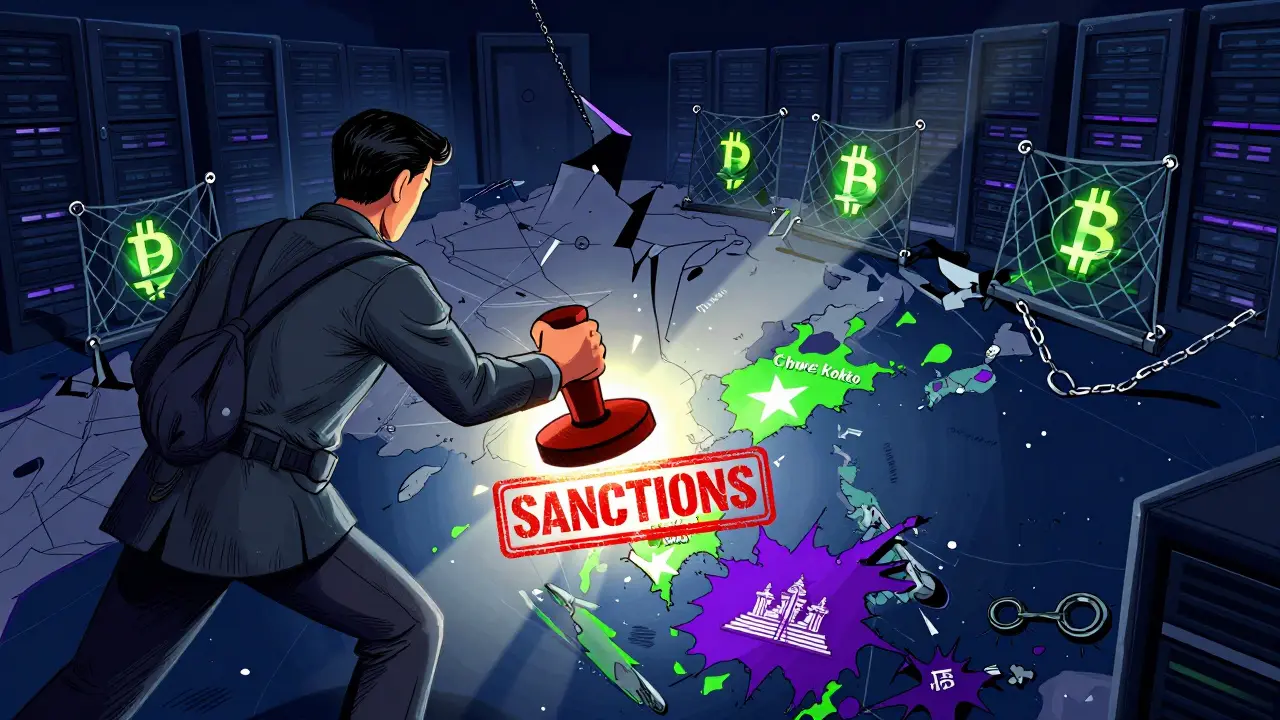
On September 8, 2025, the United States government pulled the plug on a massive underground economy. The Department of the Treasury’s Office of Foreign Assets Control (OFAC) announced sweeping sanctionstargeting cyber scam networks operating in Southeast Asia, specifically focusing on entities in Myanmar (Burma) and Cambodia that use cryptocurrency to defraud American citizens. This wasn't just a slap on the wrist. It was a coordinated strike against nine specific entities in the notorious hub of Shwe Kokko and ten others in Cambodia. For anyone involved in the crypto space, or anyone worried about their digital assets, this marks a significant shift in how Washington views cross-border financial crime. If you are wondering what this means for your wallet, your business, or the broader crypto landscape, the answer lies in understanding the mechanics of these operations and the legal tools being used to dismantle them.
The Shwe Kokko Nexus: Where Crypto Meets Coercion
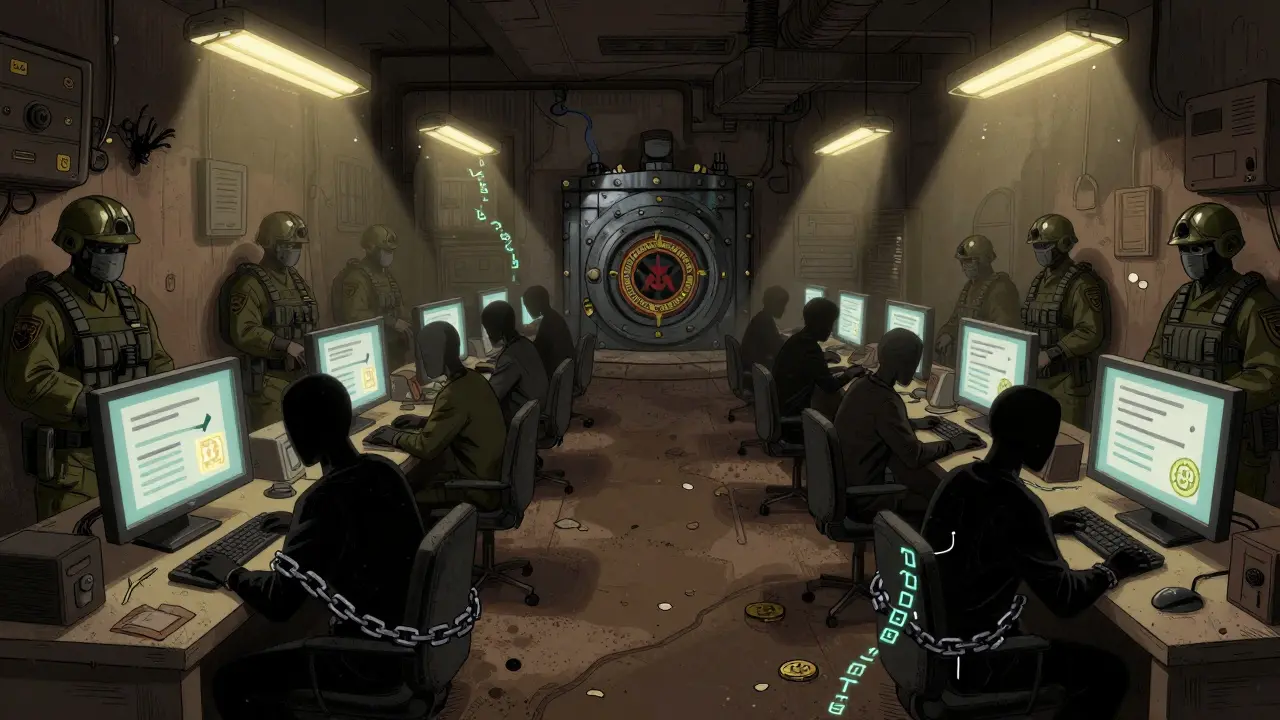
To understand why the US targeted these specific groups, you have to look at where they operate. Shwe Kokko is not your typical tech park. Located on the Thai-Burmese border, it is a semi-autonomous zone controlled by the Karen National Army (KNA)an ethnic armed group designated as a transnational criminal organization by the US Treasury. Think of it as a lawless enclave where physical security is provided by militia forces rather than police, and the "business" is forced labor.
The KNA, led by Saw Chit Thu and his sons Saw Htoo Eh Moo and Saw Chit Chit, provides protection to these scam centers. In exchange, they take a cut of the billions generated. These aren't just guys sending phishing emails from a basement. These are industrial-scale operations. Victims-often lured with fake job offers-are trapped in compounds. They are subjected to violence and modern slavery, forced to run sophisticated social engineering campaigns targeting Americans. The currency of choice? Cryptocurrency. Why? Because it allows them to move money across borders quickly, obscuring the trail behind layers of wallets and mixers. The US Treasury didn't just target the scammers; they targeted the entire ecosystem that enables them, including the ownership structures and the financial mechanisms that launder the stolen funds.
Why the US Government Cared Enough to Act
You might ask, why did this explode onto the global stage in late 2025? The numbers are staggering. According to Under Secretary of the Treasury for Terrorism and Financial Intelligence John K. Hurley, unsuspecting Americans lost over $10 billion to Southeast Asia-based scams in 2024 alone. That figure represents roughly 20% of the total estimated $50 billion in global cryptocurrency fraud losses reported by Chainalysis that same year. This isn't pocket change; it's a systemic threat to financial security.
The US government viewed this through two lenses: financial crime and human rights abuse. Deputy Secretary Michael Faulkender highlighted that these operations generate billions for criminal kingpins while depriving victims of their savings. But there's a darker side. The people running the scams are often victims themselves, trafficked into these compounds. By labeling the KNA a transnational criminal organization and linking its operations to Burma's military regime, the US created a powerful legal narrative. It’s no longer just about stolen Bitcoin; it’s about dismantling a network that thrives on coercion and instability. This dual focus allowed the Treasury to leverage multiple Executive Orders simultaneously, applying maximum pressure.
| Aspect | Detail |
|---|---|
| Date of Action | September 8, 2025 |
| Primary Agency | Office of Foreign Assets Control (OFAC), US Treasury |
| Targets in Myanmar | 9 entities in Shwe Kokko |
| Targets in Cambodia | 10 additional entities |
| Estimated US Losses (2024) | $10 Billion |
| Legal Basis | E.O. 13851, E.O. 13694, E.O. 13818, E.O. 14014 |
| Key Designated Group | Karen National Army (KNA) |
How the Sanctions Actually Work
When OFAC designates an entity, it doesn't mean they send a cease-and-desist letter. It means immediate asset freezes. Any US-based assets held by these nine Myanmar entities and ten Cambodian targets are locked up. More importantly, it prohibits any US person-including individuals, companies, and banks-from engaging in transactions with them. This cuts off their access to the US dollar system, which is still the backbone of global finance, even in the crypto world.
The Treasury used a combination of four Executive Orders to build this case:
- E.O. 13851: Targets transnational criminal organizations. This hit the KNA directly.
- E.O. 13694: Addresses malicious cyber-enabled activities. This covered the hacking and social engineering aspects.
- E.O. 13818: Focuses on serious human rights abuse. This addressed the forced labor component.
- E.O. 14014: Targets those threatening Burma's stability. This linked the criminal activity to geopolitical unrest.
Impact on the Crypto Industry and Compliance
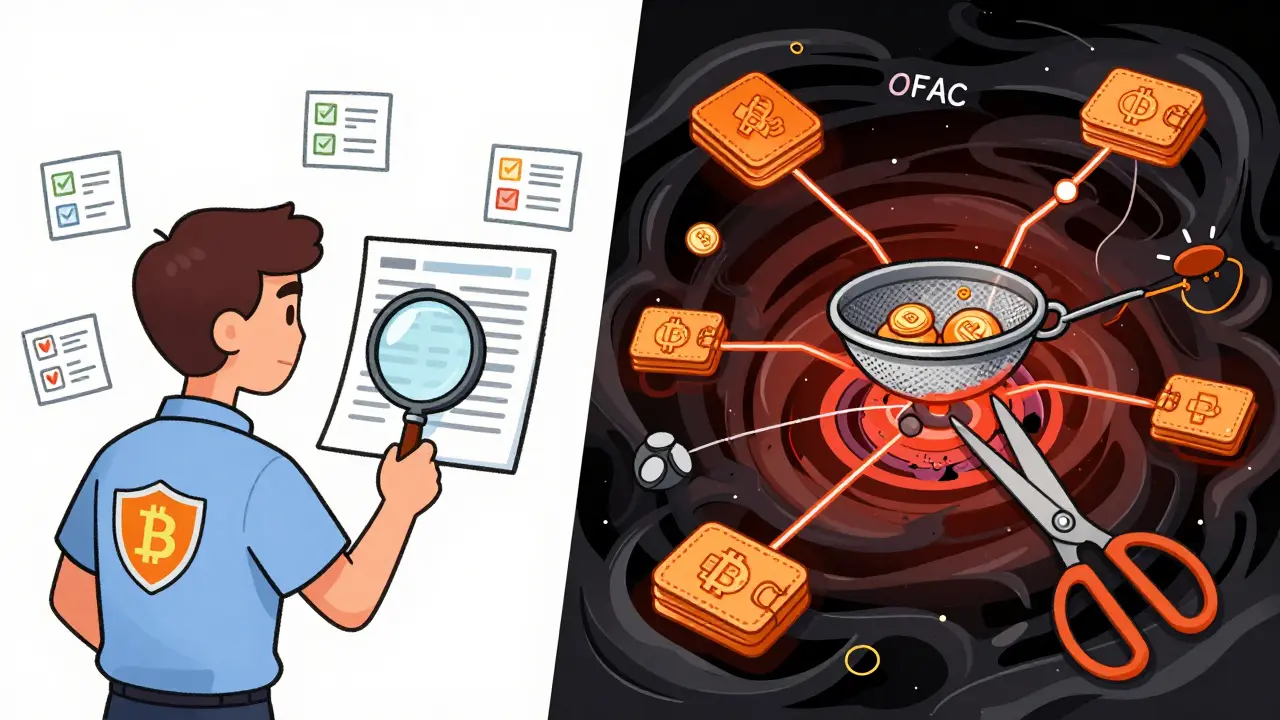
For legitimate cryptocurrency businesses, this news is both a warning and a roadmap. The era of "code is law" ignoring real-world consequences is ending. Exchanges, wallet providers, and payment processors must now scrutinize their counterparties more rigorously. If a transaction originates from a wallet linked to Shwe Kokko, or passes through a mixer known to service these scam centers, your platform could face secondary sanctions.
We are seeing a rapid evolution in compliance technology. Blockchain analytics firms like Chainalysis and Elliptic are updating their databases to flag addresses associated with these newly sanctioned entities. If you run a DeFi protocol or a centralized exchange, you need to ensure your KYC (Know Your Customer) and AML (Anti-Money Laundering) systems can detect these patterns. The sophistication of these scams means simple IP geolocation isn't enough. You need chain analysis that can trace funds through multiple hops.
Moreover, this action highlights the risk of jurisdictional arbitrage. Criminals moved to Myanmar and Cambodia because regulatory oversight was weak. Now that the US has explicitly named these hubs, other countries may follow suit. We could see a wave of similar sanctions from the EU, UK, or ASEAN nations. The message is clear: you cannot hide behind political instability to commit financial crimes.
What Comes Next?
This September 2025 action is likely just the beginning. The Treasury stated this builds on a series of recent actions, indicating an escalating campaign. With American losses quantified at $10 billion, the political will to continue enforcement is high. Future sanctions could expand to include elements of Burma's military regime that facilitate these enterprises, given the explicit connection drawn between the KNA and the military. For investors and users, the takeaway is caution. Be wary of investment opportunities that promise high returns via obscure crypto channels, especially if they involve intermediaries in Southeast Asia. For businesses, the takeaway is diligence. Update your screening lists immediately. Check your vendor partners. Ensure your compliance team understands the new OFAC designations related to Shwe Kokko and the KNA. The line between a decentralized transaction and a sanctioned crime scene is thinner than you think.
Who exactly was sanctioned in Myanmar?
The US Treasury sanctioned nine specific entities operating in Shwe Kokko, Myanmar. Additionally, they designated the Karen National Army (KNA) as a transnational criminal organization, along with its leader Saw Chit Thu and his two sons, Saw Htoo Eh Moo and Saw Chit Chit. Ten additional entities based in Cambodia were also targeted in the same action.
What does this mean for my cryptocurrency holdings?
If you hold standard cryptocurrencies like Bitcoin or Ethereum, your personal holdings are not directly affected unless you transact with the sanctioned entities. However, you should be cautious about any investments or platforms linked to Shwe Kokko or the KNA. Engaging in transactions with these designated parties is prohibited for US persons and can lead to severe penalties.
Why did the US target cryptocurrency scams specifically?
Cryptocurrency was the primary tool used by these scam networks to obfuscate fund flows and move billions of dollars globally. In 2024 alone, Americans lost over $10 billion to these Southeast Asia-based scams. The Treasury viewed this as a critical threat to financial security and a mechanism enabling human trafficking and forced labor.
Can I still do business with companies in Myanmar?
You can do business with legitimate entities in Myanmar, but you must ensure they are not on the OFAC Specially Designated Nationals (SDN) list. Transactions with the nine sanctioned entities in Shwe Kokko and the KNA are strictly prohibited for US persons. Due diligence is essential to avoid secondary sanctions.
Will these sanctions stop the scams?
While sanctions disrupt funding and operational capabilities, they rarely eliminate criminal networks overnight. However, they raise the cost of doing business for these syndicates and signal international cooperation. The US Treasury indicated this is part of an ongoing campaign, suggesting further actions and potential expansion of sanctions to other enablers in the region.