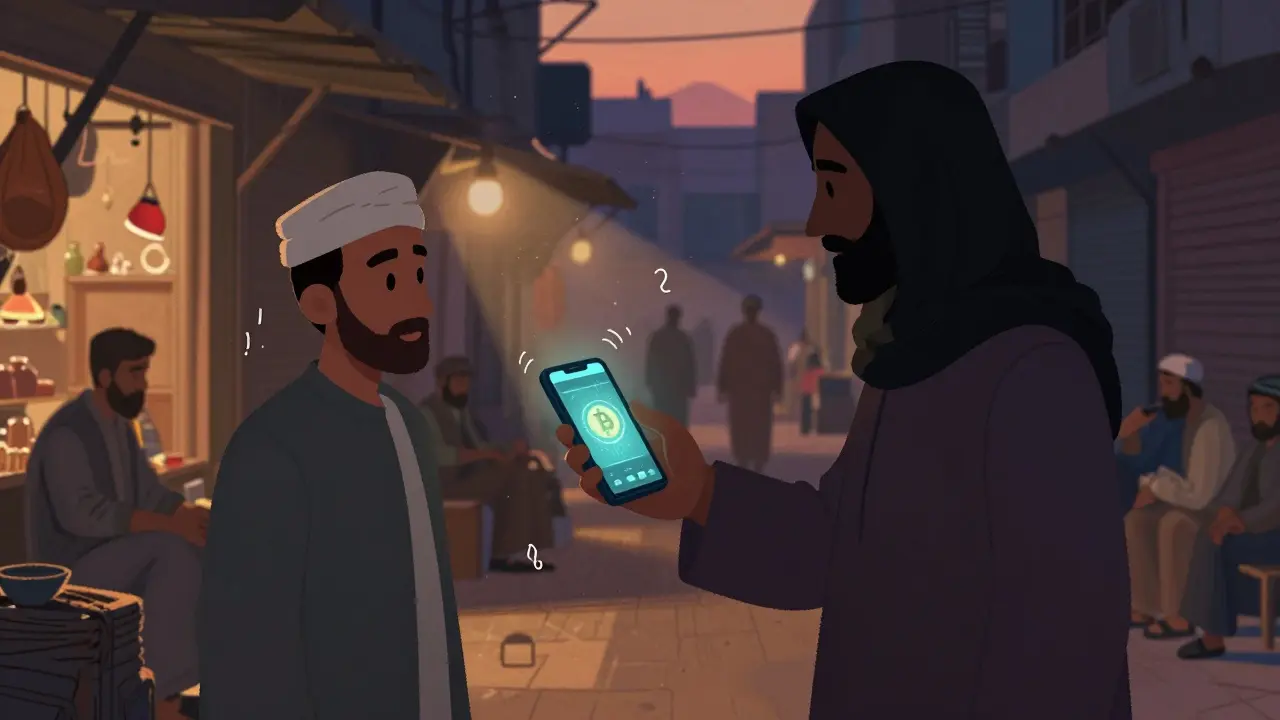
When the Taliban banned cryptocurrency in August 2022, they thought they’d shut down a digital rebellion. They were wrong. Two years later, Bitcoin and USDT still move through Afghanistan’s dark alleys, backrooms, and mobile networks-hidden in plain sight, carried by people who have no other choice.
Why Crypto Became a Lifeline
Before the Taliban returned to power in August 2021, Afghanistan’s banking system was fragile but functional. International aid flowed in, remittances from the diaspora kept families fed, and mobile money apps like HesabPay were gaining traction. Then the world froze Afghanistan’s $9 billion in foreign reserves. Banks stopped operating. ATMs ran dry. Salaries vanished. By early 2022, the World Bank estimated that 97% of Afghans would fall below the poverty line. That’s when crypto stepped in-not as a speculative investment, but as survival. Families abroad sent money via Bitcoin or Tether (USDT). Recipients in Kabul, Kandahar, or Mazar-i-Sharif exchanged it for cash through trusted dealers. No bank account needed. No paperwork. No permission. By late 2021, crypto transfers into Afghanistan had jumped 80%. HesabPay, a local app built for mobile-to-mobile transfers, hit 380,000 users in its first three months. People weren’t trading for profit. They were trading to eat.The Ban That Didn’t Stick
In August 2022, the Taliban declared cryptocurrency haram-forbidden under Islamic law. Their reasoning? Crypto had no intrinsic value. It was gambling. It was chaos. They shut down exchanges, revoked licenses, and arrested traders. By November 2022, recorded crypto transaction volumes had dropped to just $80,000 per month. But numbers don’t tell the whole story. The Taliban could close offices. They couldn’t shut down peer-to-peer networks. A trader in Herat could still meet a cousin in Peshawar, hand over a phone with a crypto wallet open, and receive cash in return. A mother in Kabul could receive USDT from her daughter in Toronto, then walk to a local shopkeeper who traded crypto for Afghanis. These weren’t transactions on apps-they were handshakes. And the Taliban had no way to track them all. Only 8.64 million of Afghanistan’s 40 million people had internet access. Most crypto trades happened offline, using SMS, voice calls, or in-person meetups. The government’s tools were built for centralized systems. Crypto was built to be decentralized.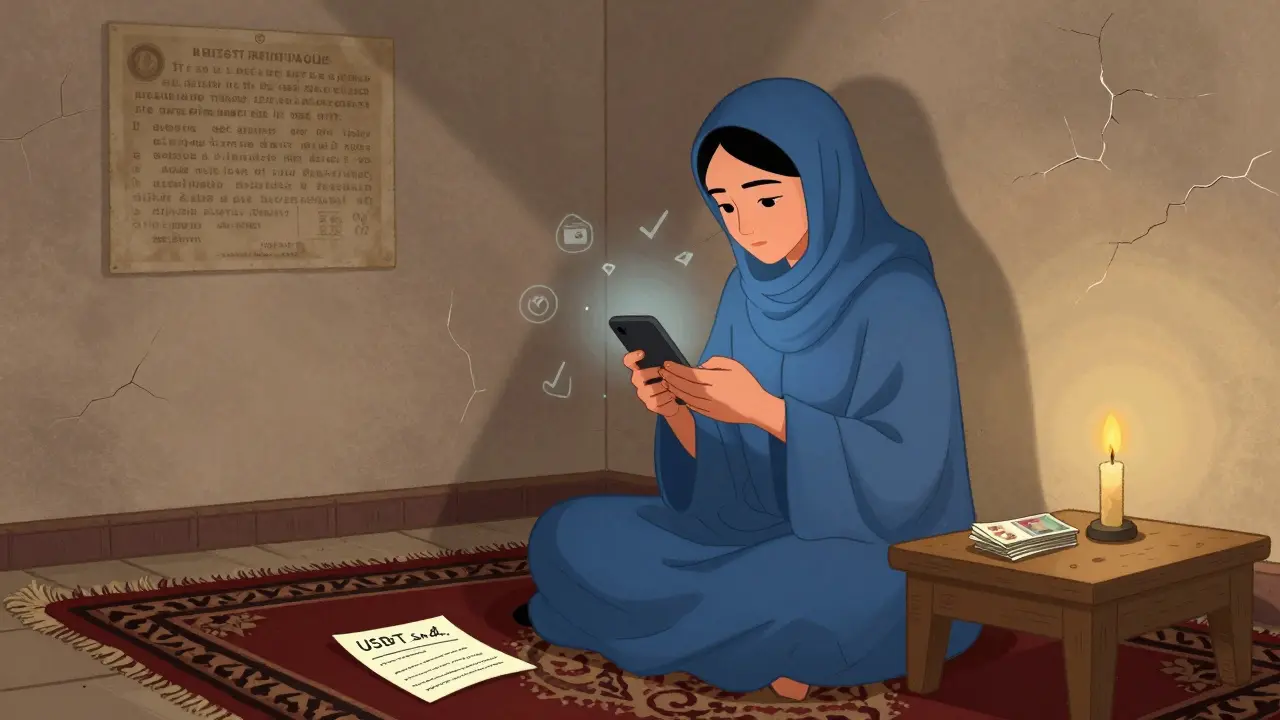
How It Works Now
Today, the underground crypto economy runs on three things: Bitcoin, USDT, and trust. Bitcoin is used for larger transfers from overseas. USDT, a stablecoin pegged to the U.S. dollar, is the local currency of choice. It’s easier to split, easier to verify, and easier to convert into cash. Traders operate through informal networks. A man in Jalalabad might receive a crypto payment from his brother in Germany. He calls his contact in Kabul-a former bank clerk turned crypto broker. They meet in a crowded market, under the noise of vendors. He hands over a phone showing the wallet balance. The broker counts out Afghanis. No receipt. No ID. No record. Forex dealers, once seen as relics of the old system, are now the backbone of this new economy. They buy crypto from locals and sell it to traders who need cash. Some even offer digital literacy lessons-how to set up a wallet, how to check transaction confirmations, how to avoid scams-all taught in secret.Internet Blackouts and the New Frontline
In September 2024, the Taliban ordered nationwide internet blackouts across five northern provinces: Kunduz, Badakhshan, Baghlan, Takhar, and Balkh. The official reason? To stop "immoral content." The real effect? Crippling the underground crypto economy. Without internet, traders can’t verify transactions. They can’t check blockchain confirmations. They can’t communicate with buyers across the border in Pakistan. Traders in Peshawar say they’ve lost 60% of their Afghan customers because they can’t send product photos before payment. No photos? No sale. No sale? No crypto. The blackouts haven’t stopped trading-they’ve made it slower, riskier, and more expensive. People now rely on physical flash drives, USB sticks, and even handwritten codes passed between couriers. Some use mesh networks built from old smartphones, creating tiny local crypto rings that operate without the internet. The Taliban’s crackdown on digital life doesn’t stop at crypto. They’ve purged books by women from universities. They’ve banned 18 courses on democracy and human rights. They’ve ordered women to stay home. And now they’re trying to erase the one tool that lets ordinary Afghans bypass their control.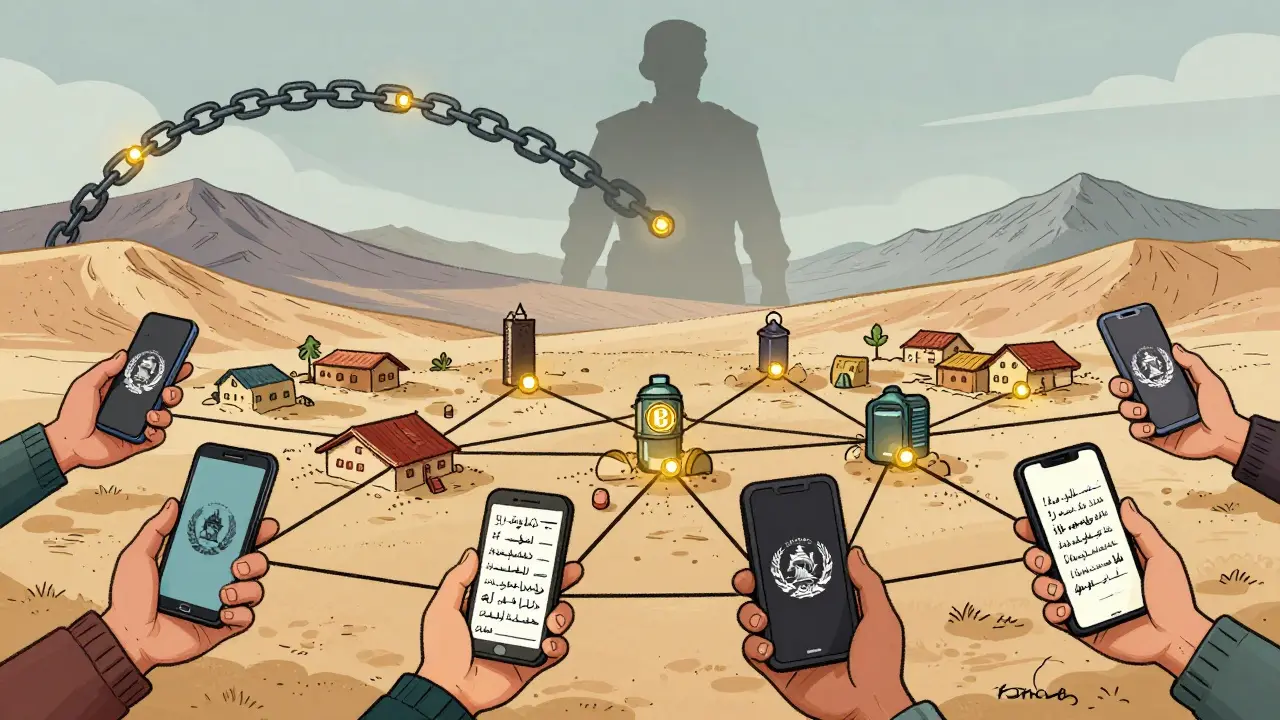
It’s Not Just Money-It’s Autonomy
This isn’t just about remittances or inflation. It’s about dignity. When the Taliban took over, they didn’t just take control of the government. They tried to take control of every aspect of life-how women dress, what books are taught, who you can talk to. Crypto is one of the few things left that can’t be controlled. You can’t ban a wallet. You can’t arrest a blockchain. You can’t jail a public key. For a mother sending her child’s school fees via USDT, for a farmer selling wheat to a buyer in Iran, for a nurse in Kandahar receiving wages from a relative in Australia-crypto isn’t a luxury. It’s the last open door. The Taliban may have the guns. But they don’t have the code.What’s Next?
The future of crypto in Afghanistan is uncertain. The Taliban are learning. They’re developing better surveillance tools. They’re partnering with telecom companies to monitor data traffic. They’re testing AI systems to detect suspicious patterns. But the need is growing faster than their control. International sanctions aren’t lifting. The banking system isn’t recovering. The economy is still collapsing. And as long as families abroad send money, and families at home need food, crypto will find a way. Some experts believe offline crypto networks-using Bluetooth, NFC, or SMS-based transfers-will become the norm. Others think Afghanistan could become the world’s first large-scale test of blockchain without the internet. One thing is clear: the Taliban didn’t kill crypto. They made it more necessary than ever.Is crypto legal in Afghanistan under Taliban rule?
No, cryptocurrency trading, mining, and usage are officially banned under Taliban rule as of August 2022. The government declared it haram under Sharia law, revoked all exchange licenses, and has arrested traders. However, enforcement is inconsistent, and peer-to-peer trading continues underground.
What cryptocurrencies are used in Afghanistan?
Bitcoin is used for international remittances, while USDT (Tether) is the dominant local currency for everyday transactions. USDT is preferred because it’s pegged to the U.S. dollar, making it stable and easy to convert into cash through local forex dealers.
How do people trade crypto without internet?
Afghans use SMS, voice calls, in-person meetings, and even physical USB drives to transfer crypto details. Some rely on mesh networks built from old smartphones. Others use trusted intermediaries-like shopkeepers or former bank workers-who hold crypto on behalf of clients and deliver cash in return.
Why hasn’t the Taliban shut down crypto completely?
The Taliban can’t shut down crypto because it doesn’t rely on central servers or banks. Transactions happen directly between users, often offline. With only 8.64 million internet users in a country of 40 million, surveillance is nearly impossible. Plus, the economic need is too great-millions depend on it for food and survival.
Can crypto help Afghanistan’s economy recover?
Crypto isn’t a solution to Afghanistan’s deeper problems-like sanctions, corruption, or lack of infrastructure-but it’s the only functioning financial system left. It keeps remittances flowing, allows small businesses to operate, and gives people control over their money. Without it, the humanitarian crisis would be far worse.
Are women involved in underground crypto trading?
Yes, but discreetly. With women banned from universities and most public jobs, many now run crypto trading from home, using mobile phones and encrypted messaging apps. Some act as intermediaries between overseas relatives and local cash dealers. Their involvement is often hidden to avoid punishment, but their role is critical to keeping the system alive.
This is pure nonsense. Crypto is a scam invented by western tech bros. Afghans should rely on real currency and real trade, not digital ghosts.
Actually, this is one of the most brilliant grassroots financial adaptations I've ever seen. USDT is the new Afghan rupee. Smart people making do with what they have.
Of course it's working-because the West refuses to accept reality. This isn't innovation. It's desperation dressed up as tech.
I'm in awe of these people. They're not just surviving-they're redefining finance with nothing but trust and phones. Humanity at its finest.
It's not about the technology. It's about the human need to be free-even if freedom means sending a text with a wallet address instead of walking to a bank.
The resilience displayed here is historically significant. This is not merely an economic workaround-it is a civilizational act of self-determination.
Lmao they're using USB sticks? That's so 2012. Also, USDT isn't even *really* stable-Tether's reserves are a black box. You people are trusting a company with no transparency. LOL.
You think the Taliban are stupid? They're watching. They're learning. And soon, they'll have AI tracking every SMS and Bluetooth ping. This is a house of cards.
So let me get this straight: women are running underground crypto networks from their homes while banned from universities... and you're all acting like this is some kind of tech blog? It's a revolution.
This is insane. I mean, seriously-USB drives? SMS? Are they seriously using *paper codes*? And the Taliban just sit there? They're not even trying to stop this properly! This is chaos! It's beautiful chaos!
i just can't believe people are using old phones to make little internet-free crypto nets. it's like a sci-fi movie but real. and the women? they're the real heroes. no cap.