Imagine writing a piece of code, deploying it to the blockchain, and then having the US government ban you from touching your own creation. That is exactly what happened with Tornado Cash, an open-source protocol that became the first software ever sanctioned by the United States. On August 8, 2022, the Office of Foreign Assets Control (OFAC) slapped sanctions on this Ethereum-based mixing service, citing its role in laundering billions in digital assets. This wasn't just about blocking a website; it was a test case for whether immutable smart contracts can be treated like traditional financial institutions.
If you are a developer, investor, or just someone curious about where crypto regulation is heading, understanding this case is non-negotiable. It reshaped how we think about liability in decentralized finance (DeFi). Did the developers commit a crime by writing code? Can you be punished for interacting with a contract that no one controls? Let's break down the legal chaos, the technical reality, and what it means for the future of privacy coins.
What Is Tornado Cash and Why Did It Matter?
To grasp the magnitude of the sanctions, you need to know what the tool actually did. Tornado Cash is a decentralized, non-custodial mixing protocol on the Ethereum blockchain designed to enhance transaction privacy. Launched in 2019, it allowed users to deposit ETH into a shared pool and later withdraw equivalent amounts to different addresses. By breaking the direct link between sender and receiver, it obscured the origin of funds. The protocol used zero-knowledge proofs-a cryptographic method that verifies a statement is true without revealing the underlying data-to ensure that while the network knew a valid withdrawal occurred, it didn't know who withdrew the specific coin.
The platform supported fixed denominations of 0.1, 1, 10, and 100 ETH. This standardization made it easier to mix funds because all deposits looked identical on-chain. Crucially, Tornado Cash was non-custodial. Users kept their private keys, and the smart contracts held the funds. There was no CEO, no headquarters, and no bank account to freeze. The code ran autonomously on the Ethereum network. This architectural choice is precisely why the sanctions were so controversial. How do you sanction code that has no human operator?
The Legal Hammer: OFAC’s Unprecedented Move
The Treasury Department’s decision to designate Tornado Cash as a Specially Designated National (SDN) was a shockwave through the industry. OFAC argued that the protocol facilitated the laundering of over $7 billion in digital assets since its inception. They pointed to specific high-profile crimes, including the laundering of $455 million stolen by North Korea’s Lazarus Group, $96 million from the Harmony Bridge Heist, and $7.8 million from the Nomad Heist.
Under Executive Order 13694, the sanctions prohibited all US persons from engaging in transactions with Tornado Cash addresses. This meant that if you were a US citizen and you sent ETH to a Tornado Cash contract, you technically violated federal law. Financial institutions and exchanges were forced to block these interactions. If your wallet had touched Tornado Cash, many centralized exchanges would freeze your account or refuse withdrawals until you proved you weren't a criminal.
It wasn't the first time OFAC targeted a mixer. In May 2022, they sanctioned Blender.io. But Blender.io was a centralized service run by humans. Tornado Cash was different. It was immutable. Once deployed, the smart contracts couldn't be changed, paused, or shut down by any single entity. Critics argued that OFAC was overstepping its statutory authority by targeting autonomous software rather than identifiable persons or entities.
The Criminal Trial: Developers on the Hook?
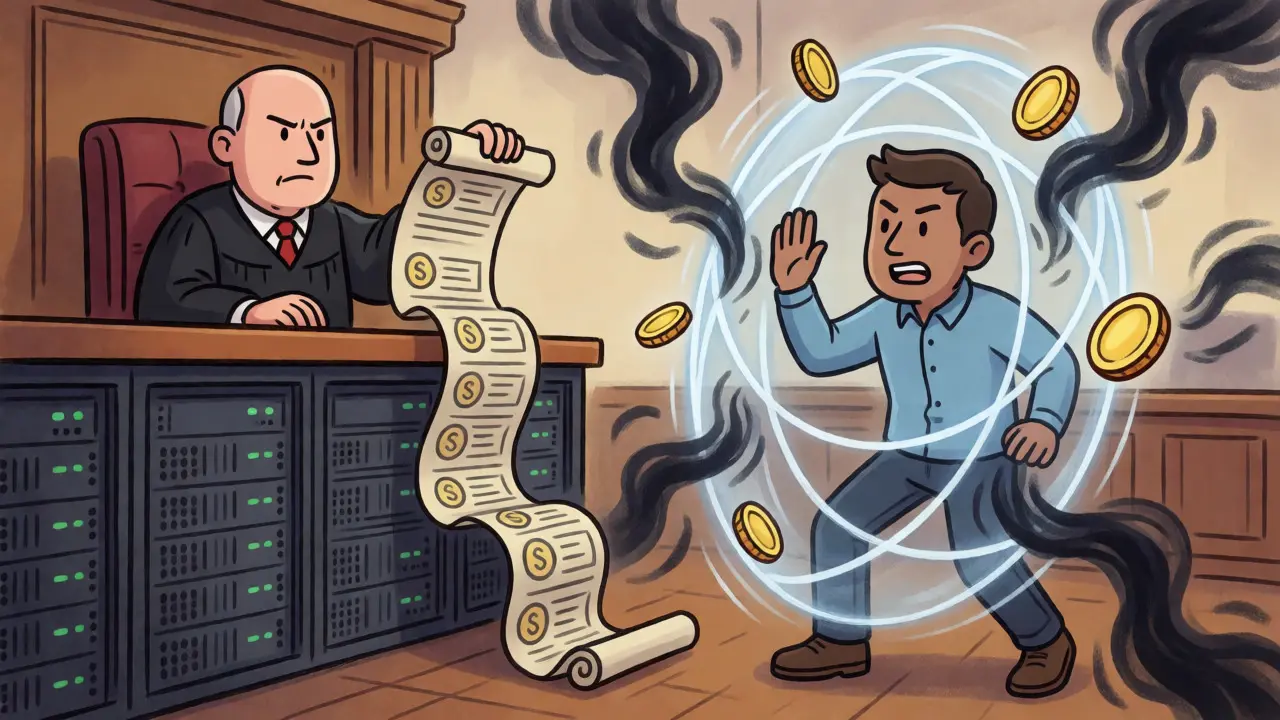
The sanctions sparked immediate backlash, leading to both civil lawsuits and criminal prosecutions. The most prominent case involved Roman Storm, a co-founder of Tornado Cash. In August 2025, after a four-week trial in the Southern District of New York, the jury reached a split verdict. Storm was convicted of conspiracy to operate an unlicensed money transmitting business but deadlocked on charges of conspiracy to commit money laundering and violating sanctions.
This outcome highlights the central tension in crypto law: intent versus impact. Prosecutors argued that Storm and his team knowingly built a tool primarily used for illicit activities. Defense attorneys countered that the software was neutral technology, akin to a hammer that could build a house or crack a skull depending on who swung it. The conviction on the money transmission charge suggests that courts may view DeFi protocols as functional equivalents of banks, regardless of their decentralized structure. However, the deadlock on money laundering indicates that proving criminal intent in a decentralized environment remains incredibly difficult.
Market Impact and User Experience
For regular users, the sanctions created a compliance nightmare. Centralized exchanges like Coinbase and Binance implemented strict screening processes. If your wallet history showed interaction with Tornado Cash, you risked being flagged as high-risk. Some users reported frozen accounts for months while compliance teams investigated. This chilling effect pushed many privacy-conscious users toward self-custody wallets and decentralized exchanges, further fragmenting the market.
Interestingly, the sanctions didn't kill the protocol. Because it lives on the Ethereum blockchain, the smart contracts continued to function globally. Non-US users could still interact with Tornado Cash freely. Data analysis shows that fluctuations in sanctions status had negligible influence on exploiters' use of the platform. Bad actors simply adapted, using relayers or moving to other jurisdictions. Meanwhile, the native governance token, TORN, experienced wild volatility. When reports emerged in March 2025 that sanctions might be lifted, the price surged from approximately $8 to $15, reflecting the market's hope for regulatory clarity.
| Feature | Tornado Cash (Sanctioned) | Blender.io (Sanctioned) | Traditional Bank Transfer |
|---|---|---|---|
| Control Structure | Decentralized Smart Contracts | Centralized Service | Centralized Institution |
| KYC Requirements | None (Non-custodial) | Required | Mandatory |
| Enforcement Method | Address Blacklisting | Service Shutdown | Account Freezing |
| User Liability | Criminal/Civil Risk for US Persons | Criminal/Civil Risk for US Persons | Compliance Check |
Broader Implications for DeFi and Privacy
The Tornado Cash case set a precedent that ripples far beyond one protocol. It signaled that regulators are willing to target the infrastructure layer of DeFi. For developers, this raises a scary question: If I write an open-source library that facilitates anonymity, am I liable for how others use it? The answer seems to be "it depends," but the risk is now real.
Privacy advocates argue that this approach threatens fundamental rights. Financial privacy isn't just for criminals; journalists, activists, and ordinary citizens often need confidentiality. By sanctioning a basic privacy tool, the US government effectively made it harder for law-abiding Americans to transact privately. Conversely, law enforcement officials maintain that unrestricted mixing services enable ransomware payments and state-sponsored theft, making sanctions a necessary blunt instrument.
Internationally, reactions have varied. While some countries followed the US lead with stricter AML (Anti-Money Laundering) rules, others took a more nuanced approach, focusing on regulating intermediaries like exchanges rather than banning protocols outright. This divergence creates a complex global landscape for crypto businesses operating across borders.
Current Status and Future Outlook
As of late 2025 and early 2026, the situation remains fluid. Reports indicate that sanctions on Tornado Cash were lifted in March 2025, triggering a market rally. However, the legal battles aren't fully over. Civil litigation continues, and the precedent set by the criminal trials lingers. Regulators are currently working on clearer guidelines for when privacy-enhancing technologies cross the line into facilitating criminal activity.
We are likely to see the emergence of "compliant" privacy solutions. These new protocols might incorporate optional KYC features or operate within multi-jurisdictional frameworks that satisfy regulators while preserving user choice. The era of purely anonymous, unregulated mixers may be ending, replaced by hybrid models that balance transparency with privacy.
Why was Tornado Cash sanctioned if it is decentralized?
The US Treasury's OFAC sanctioned Tornado Cash because they determined it facilitated significant money laundering, particularly for sanctioned entities like North Korea's Lazarus Group. Although the protocol is decentralized and controlled by smart contracts, regulators argued that the founders and operators exercised sufficient control over the project's development and promotion to warrant sanctions. The designation targets the addresses associated with the protocol, prohibiting US persons from interacting with them.
Can US citizens still use Tornado Cash today?
Technically, yes, because the smart contracts remain live on the Ethereum blockchain. However, legally, US persons face significant risks. Interacting with sanctioned addresses can lead to asset freezes by centralized exchanges and potential legal penalties. Most US-based exchanges block withdrawals to Tornado Cash addresses, and compliance algorithms flag wallets that have previously interacted with the protocol. Therefore, while the code works, the legal and practical barriers for US users remain high.
What is the difference between a mixer and a privacy coin?
A privacy coin, like Monero or Zcash, has privacy features built directly into its native blockchain protocol. Every transaction is private by default. A mixer, like Tornado Cash, is a separate application or smart contract that runs on top of an existing public blockchain (like Ethereum). It mixes user funds to obscure transaction trails. Privacy coins offer stronger, protocol-level anonymity, whereas mixers rely on statistical obfuscation and require users to actively participate in the mixing process.
Did the sanctions stop money laundering through Tornado Cash?
Not entirely. Data analysis suggests that bad actors adapted quickly. Since the protocol operates globally and cannot be shut down, international users continued to use it. Determined criminals found ways to bypass restrictions, such as using relayers or moving assets through multiple chains before mixing. While sanctions increased friction and cost for US-based launderers, they did not eliminate the utility of the protocol for non-US actors or sophisticated criminal networks.
Are developers liable for how their open-source crypto software is used?
This is a developing area of law. The Tornado Cash cases suggest that developers can face liability if they are deemed to have knowingly facilitated illegal activity or operated an unlicensed money transmitting business. The split verdict in Roman Storm's trial indicates that courts are still grappling with this issue. Generally, pure open-source publication offers some protection, but active management, promotion, or fee collection can increase legal exposure.