Yield farming isn’t just about chasing high returns anymore. In 2025, it’s a mature, complex, and often risky game where your strategy matters more than ever. If you’re still thinking of it as a quick way to make money from crypto, you’re already behind. The best yield farmers today aren’t gambling-they’re optimizing, diversifying, and understanding the mechanics behind every dollar they stake.
What Yield Farming Actually Is in 2025
Yield farming, or liquidity mining, means you lock up your crypto assets in a smart contract so others can trade or borrow them. In return, you earn rewards-usually in the form of the platform’s native token or a share of trading fees. It sounds simple, but the real work happens behind the scenes: compounding interest, managing impermanent loss, tracking gas fees, and hopping between chains to find the best returns. In 2020, people made 100% APYs just by depositing ETH and USDC. Today, those days are gone. The market normalized. High yields now come with higher risks. The smartest farmers don’t chase the highest APY. They chase the best risk-adjusted return.Curve Finance: The Safe Harbor for Stablecoin Farmers
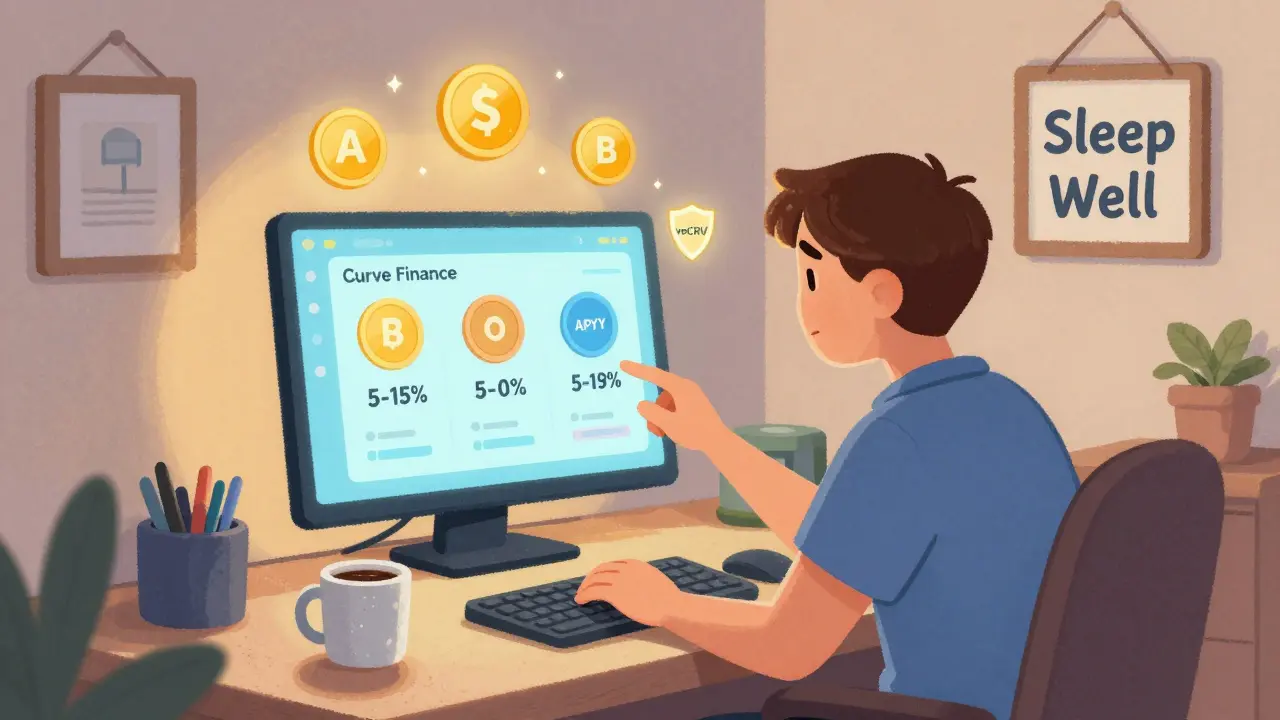
If you want sleep at night, Curve Finance is your go-to. Launched in 2020, it’s one of the oldest and most audited DeFi protocols still running strong. Curve specializes in stablecoin pools-think USDT, USDC, DAI, and FRAX. These assets don’t swing wildly in price, so the risk of losing value while farming (called impermanent loss) is minimal. In 2025, Curve’s APYs hover between 5% and 15%. That’s not flashy, but it’s steady. You won’t get rich quick, but you won’t lose everything either. Curve’s real power comes from veCRV, the locked version of its CRV token. Lock CRV for up to four years, and you earn boosted rewards, voting power, and extra fees. It’s a long-term play for serious farmers. Most people pair Curve with Convex Finance or Yearn to auto-compound rewards. That means you don’t have to manually claim and restake every week. Curve doesn’t do this itself, but the ecosystem makes it easy.Yearn Finance: The Set-and-Forget Option
Yearn Finance is like the Swiss Army knife of yield farming. Created by Andre Cronje, it doesn’t run its own pools. Instead, it scans dozens of protocols and automatically moves your money to wherever the best yield is right now. Think of it as a robo-advisor for DeFi. In 2025, Yearn’s vaults offer APYs between 4% and 20%. The platform auto-compounds daily, handles gas optimization, and even rebalances assets if one pool’s yield drops. It’s perfect for beginners who want to farm without learning every detail of AMMs, LP tokens, or bridge risks. The catch? Not all vaults perform equally. Some get buried under high Ethereum gas fees, especially if you’re staking small amounts. Stick to the top-tier vaults-those with over $100 million in TVL (total value locked). Avoid the ones with less than $10 million. They’re often experimental, underfunded, or risky.GMX: Farming from Trading Fees, Not Token Inflation
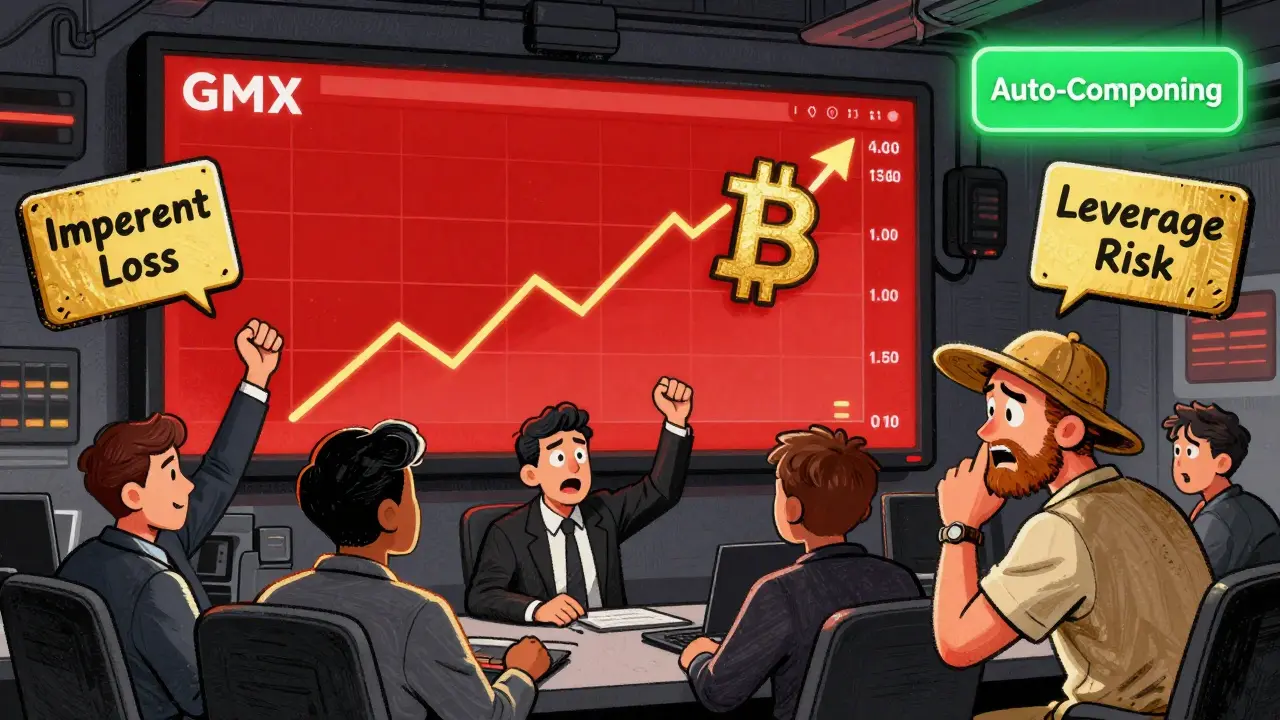
GMX flips the script. Instead of earning rewards from newly minted tokens (which can crash if the market turns), GMX pays you from real trading activity. How? You provide liquidity to its GLP pool-a basket of ETH, BTC, SOL, USDC, and other assets. Traders on GMX’s perpetual futures platform pay fees to open and close positions. A portion of those fees flows back to GLP holders. In 2025, GMX’s APY ranges from 10% to 20%. That’s sustainable because it’s not based on inflation. It’s based on actual demand for trading. The more traders use GMX, the more you earn. Rewards are paid in ETH and esGMX (a locked version of GMX token). But here’s the twist: if traders lose money on their leveraged positions, those losses go to liquidity providers. That means during wild market swings, your returns can dip-or even go negative. GMX isn’t for the faint of heart. It’s for those who understand derivatives and believe markets will keep growing.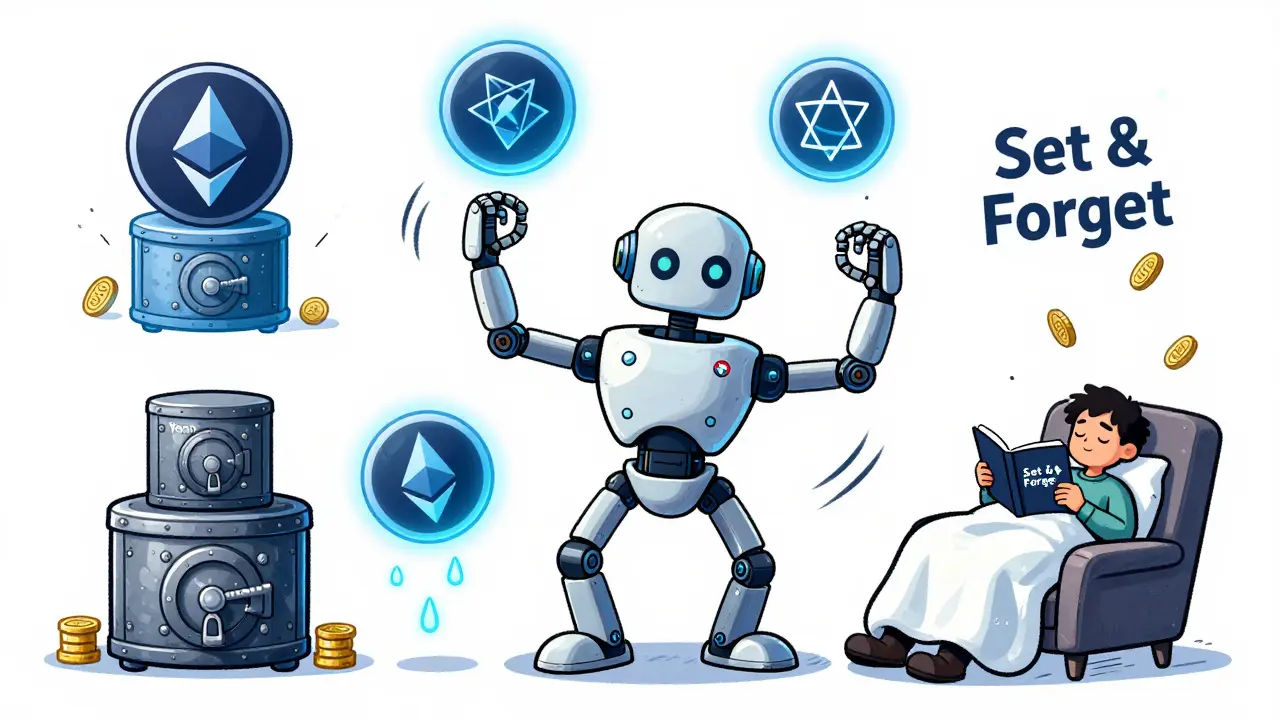
Beefy Finance: The Cross-Chain Powerhouse
Beefy Finance is where the real action is for aggressive farmers. It supports over 30 blockchains: BNB Chain, Polygon, Arbitrum, Avalanche, Fantom, TON, and more. Instead of being tied to one chain, Beefy hunts for the highest yields across the entire DeFi universe. Its vaults can offer anywhere from 5% to 80% APY. The high-end returns come from newer, less secure protocols on chains like BNB Chain or Base. That’s where the risk lives. Beefy doesn’t guarantee safety-it just gives you access. The platform auto-compounds daily, and its interface is clean enough for non-experts. But don’t be fooled. Behind every high-APY vault is a web of dependencies. If one underlying protocol gets hacked, your entire position could vanish. That’s why serious users only put 5-10% of their portfolio into Beefy’s top-tier vaults and spread the rest across Curve and Yearn.How to Choose the Right Platform for You
Your choice depends on three things: risk tolerance, time, and technical skill.- Low risk, low time: Use Curve + Convex. Deposit stablecoins. Let it run. Check quarterly.
- Moderate risk, low time: Use Yearn Finance. Pick a top vault. Deposit. Forget it.
- High risk, high reward: Use Beefy Finance. Spread small amounts across 3-5 high-APY vaults on different chains. Monitor monthly.
- Intermediate risk, market-savvy: Use GMX. Deposit ETH or USDC into GLP. Understand how perpetual trading works. Don’t panic during volatility.
What No One Tells You About Yield Farming in 2025
Most guides focus on APY numbers. But here’s what actually matters:- Gas fees eat your profits. If you’re farming on Ethereum, even a 20% APY can drop to 12% after fees. Switch to Layer-2 chains like Arbitrum or Polygon to save 80% on transaction costs.
- Impermanent loss isn’t theoretical. If you farm ETH/USDC pairs and ETH drops 30%, you lose value even if the pool’s APY is 15%. Use stablecoin pools if you’re new.
- Auto-compounding isn’t free. Every compounding cycle costs gas. Some platforms do it daily. Others do it weekly. Check the fee structure before depositing.
- Security audits don’t guarantee safety. Curve and Yearn have been audited multiple times. But audits catch bugs, not logic flaws. Always check the team’s history, community size, and how long the protocol has been live.
- Don’t go all-in. Never put more than 20% of your crypto portfolio into yield farming. Market crashes, rug pulls, and chain outages happen. Treat it like a high-yield bond, not a lottery ticket.
Tools You Need to Stay Ahead
You can’t manage yield farming with a wallet app alone. Use these:- DeBank or Zapper: Track all your positions across chains in one dashboard.
- DefiLlama: See real-time TVL and APY trends. Avoid protocols that are losing TVL fast.
- Revoke.cash: Revoke unnecessary token approvals. Many farmers lose funds because they gave platforms permission to drain their wallets.
What’s Next? RWA and AI Yield
The next big shift is real-world asset (RWA) tokenization. Platforms like Maple Finance and Centrifuge are bringing loans, real estate, and invoice financing on-chain. You’ll soon be able to farm yields from actual mortgages or corporate debt-not just crypto speculation. AI-driven yield optimizers are also emerging. Some protocols now use machine learning to predict which vaults will perform best in the next 24 hours. These aren’t mainstream yet, but they’re coming fast.Final Thought: Yield Farming Is a Marathon, Not a Sprint
The top yield farmers in 2025 aren’t the ones who found the 80% APY vault. They’re the ones who stayed consistent, diversified, and avoided panic. They know that the best return isn’t the highest number-it’s the one you can keep over time. Start small. Learn one platform. Master it. Then expand. Don’t chase trends. Build a system. The money will follow.Is yield farming safe in 2025?
Yield farming carries real risks: smart contract exploits, impermanent loss, and protocol collapse. But top platforms like Curve, Yearn, and GMX have been live for years, audited multiple times, and hold billions in locked value. They’re safer than early DeFi, but never risk more than you can afford to lose. Always use trusted wallets, avoid unknown tokens, and diversify across platforms.
Can I lose money even if the APY is high?
Yes. High APY often means high risk. If you farm ETH/USDC and ETH crashes 40%, you’ll lose more than you earn in rewards. This is called impermanent loss. Also, if the platform’s token crashes (like a newly launched farm), your rewards could become worthless. Always check the asset pair and token economics before depositing.
Which chain is best for yield farming in 2025?
For low fees and high activity, use Arbitrum, Polygon, or BNB Chain. Ethereum is too expensive for small farmers. TON and Solana are rising fast but have less stable liquidity. Avoid chains with low TVL or no major protocol support. Stick to networks with at least three top-tier yield platforms already live.
Do I need to claim rewards manually?
Not if you use auto-compounding platforms like Yearn or Beefy. They claim and reinvest your rewards automatically. But on platforms like Curve, you must claim rewards manually. Doing so every week adds up in gas fees. Consider using Convex or Euler to automate it for you.
What’s the minimum amount to start yield farming?
You can start with as little as $50 on most platforms. But gas fees on Ethereum can eat 20% of small deposits. For best results, start with $200-$500 on Arbitrum or Polygon. Avoid farming tiny amounts on high-fee chains unless you’re just testing.
Let me tell you something-this whole ‘yield farming is a marathon’ thing is such a cop-out. You say ‘don’t chase high APYs,’ but the only reason people even look at these platforms is because they want to make money, not ‘optimize risk-adjusted returns’-that’s just finance jargon for ‘I’m scared to lose.’ Curve? Sure, it’s safe. But if you’re only making 12% APY while your buddy on Beefy is hitting 68%, you’re not farming-you’re babysitting. And don’t even get me started on auto-compounding. Every time you compound, you pay gas. Every. Single. Time. So if you’re on Ethereum, you’re literally paying to lose. That’s not strategy. That’s financial masochism.
Hey everyone, just wanted to say you’re all doing amazing just by trying to learn this stuff. Yield farming can feel overwhelming, but the fact that you’re reading, researching, and asking questions? That’s the real win. Start small. Stick to one platform. Curve or Yearn are perfect first steps. You don’t need to jump into GMX or Beefy right away. Progress over perfection. And if you mess up? That’s how you learn. I’ve lost money before-I’m still here, and so will you. You’ve got this.
USA FOREVER!!! 🇺🇸 This whole crypto thing is just another way for the world to steal from hardworking Americans. Why are we letting some guy in India farm on BNB Chain? We got the best blockchain tech here! Stick to Ethereum! That’s where real money is made! And if you’re using Beefy? Bro, that’s like leaving your front door open in Detroit. Lock it. Stay safe. Stay American. 💪
Ugh. Another ‘guide’ that treats yield farming like a YouTube tutorial. The truth? Most of this is just repackaged 2021 nonsense with new acronyms. GMX? Cute. But if you think trading fees are ‘sustainable,’ you’ve never seen a 2022 bear market. And don’t even mention ‘RWA’-that’s just DeFi’s way of pretending it’s not all just gambling with a PowerPoint. I’ve seen 17 different ‘safe’ protocols collapse in the last 18 months. The only thing that’s ‘mature’ is the marketing.
Man, I love how chill this post is. Like, no hype, no FOMO, just straight facts. I started with $300 on Arbitrum using Yearn, and honestly? It’s been a breeze. No stress. No panic. Just checking in every few weeks. I didn’t even know what impermanent loss was until last month, and now I’m like… okay, I get it. This whole thing isn’t about getting rich. It’s about learning. And honestly? That’s kinda cool.
From India, I just want to say thank you for mentioning Polygon and BNB Chain! So many guides only talk about Ethereum, but for us, gas fees are a real barrier. I started with $50 on Polygon using Beefy, and even though it’s risky, the returns helped me pay for my sister’s medical bills last month. I’m not rich, but I’m learning. And yes, I check DeBank every day. Small steps, big impact. 🙏
From a protocol architecture standpoint, the real innovation isn’t the yield-it’s the composability. Curve’s veCRV mechanism creates a feedback loop where liquidity providers are incentivized to lock long-term, which reduces slippage, which increases fee generation, which reinforces stability. That’s a self-reinforcing economic design pattern rarely seen in DeFi. Meanwhile, GMX’s GLP model leverages asymmetric fee capture, which, when paired with ETH-denominated rewards, creates a hedge against token depreciation. The fact that Yearn’s vaults dynamically rebalance across Layer-2s is arguably more sophisticated than most centralized wealth managers.
I’ve been farming since 2021. Seen it all. The hype. The crashes. The rug pulls. The tears. But here’s the thing-no one talks about the loneliness. You sit there, staring at your dashboard, watching numbers go up and down. No one understands. Your friends think you’re gambling. Your family thinks you’re broke. But you? You’re just trying to build something real. I don’t care if it’s 5% or 80%. I care that I’m learning. That I’m not just waiting for the next moon. I’m building a system. And that? That’s worth something.
Agreed with Rachel-start small. But also, don’t ignore gas optimization. I used to farm on Ethereum. Wasted so much. Switched to Arbitrum, and my net APY jumped 18%. Also, always revoke approvals. I lost $120 once because I didn’t. Revoke.cash saved me. And if you’re new? Don’t touch GMX. It’s cool, but if you don’t understand perpetuals, you’ll get liquidated. Stick to stablecoins. Learn. Then level up.
Y’all are overthinking this. Just pick one. Curve. Yearn. Done. Don’t need 17 vaults. Don’t need to track 10 chains. Just set it, forget it, and let it grow. I started with $200. Now I’ve got $1,200. Not rich? No. But I didn’t lose anything either. And I sleep at night. That’s the win. Keep it simple. Stay consistent. You’ll be surprised how fast it adds up.
If yield farming is a marathon, then the people chasing 80% APYs are the ones sprinting uphill in flip-flops. And yet, we’re told they’re ‘aggressive farmers.’ No. They’re just impatient. The real farmers? They’re the ones who don’t tweet. Who don’t post screenshots. Who don’t say ‘to the moon.’ They’re the ones quietly compounding, rebalancing, and sleeping. The market doesn’t reward hustle. It rewards patience. And discipline. And the courage to do nothing when everyone else is panicking.
Best advice I got: never put more than 5% of your portfolio in one vault. Even if it’s 70% APY. I lost $800 on a BNB Chain farm last year. Learned fast. Now I use Curve, Yearn, and one Beefy vault. Diversified. Low stress. And I still make more than my savings account. Simple wins.
So like… I read this whole thing and I’m like wow. But honestly? I still don’t know what impermanent loss is. I think it’s when your tokens get sad? Or when the blockchain forgets to pay you? I just know that when I put in $100, sometimes I get back $95. And I’m like… cool. I guess? I use Beefy. It’s easy. And the website has a dog on it. So it’s trustworthy. 🐶
While the analysis presented is generally sound, one must acknowledge the inherent systemic vulnerabilities of non-custodial protocols. The absence of formal insurance mechanisms, coupled with the probabilistic nature of smart contract execution, renders even audited systems susceptible to unforeseen edge-case exploits. Furthermore, the reliance on third-party aggregators introduces additional attack surfaces. Prudent risk mitigation necessitates multi-signature governance, time-locked withdrawals, and cross-chain liquidity monitoring. I recommend employing only protocols with active bug bounty programs and >$500M TVL. Always verify contract addresses.
Yield farming in 2025? It’s not about money. It’s about identity. Every time you stake, you’re choosing a side. Are you with the old guard? The stablecoin purists? Or are you betting on the chaos? The wild, unpredictable, beautiful mess of DeFi? GMX isn’t a platform-it’s a philosophy. It says, ‘I believe in markets. I believe in traders. I believe in volatility.’ And if you lose? You didn’t lose money. You paid for the lesson. The real loss? Not trying. Not daring. Not risking. Because in the end, the only thing more dangerous than losing crypto… is never having cared enough to play.