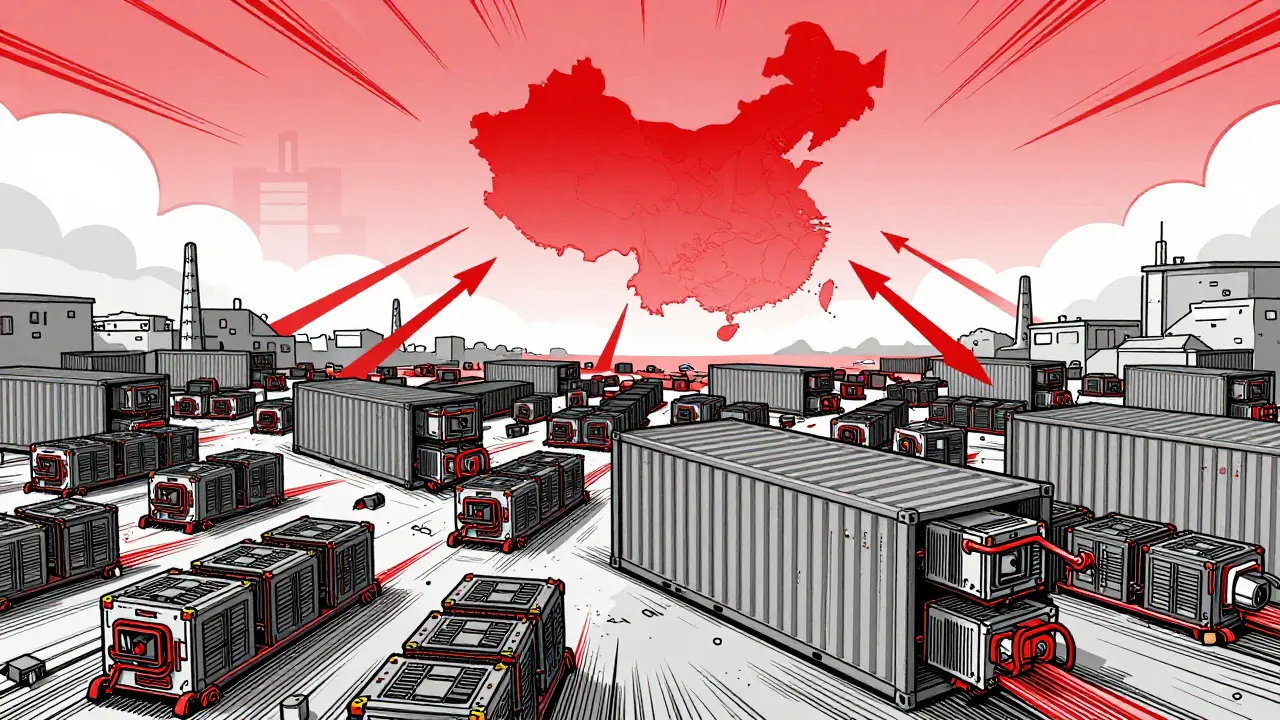
Imagine waking up to find that 75% of your industry's global infrastructure is suddenly illegal in the place it calls home. That is exactly what happened during the Chinese crypto mining exodus is the massive geographical shift of Bitcoin mining operations out of China following a 2021 regulatory crackdown. It wasn't just a few people moving their laptops; we are talking about thousands of industrial-grade machines and gigawatts of power shifting across oceans and borders in a matter of months.
For years, China was the undisputed king of the hashrate. But when the government decided that energy-intensive mining didn't align with their climate goals and financial stability, the industry faced an existential crisis. The result was the "Great Mining Migration," a chaotic yet fascinating scramble for new soil. But where did all those machines actually go, and why did some countries welcome them while others didn't?
The Breaking Point: Why China Said Goodbye
The exit didn't happen overnight, but it was swift. It started in provinces like Inner Mongolia, where local authorities began banning mining to curb coal consumption. By April 2021, the Cambridge Centre for Alternative Finance (CCAF) reported that China's share of global mining power had plummeted from 75.5% in late 2020 to just 46%.
Unlike previous warnings that targeted traders, this was a direct hit on the infrastructure. The Chinese government targeted the physical act of mining. Since Bitcoin mining requires immense amounts of electricity, it became an easy target for regulators wanting to reduce carbon footprints and stabilize the national power grid. For the miners, the choice was simple: move the gear or lose the investment.
The Logistics of a Digital Exodus
You might wonder how you move an entire industrial farm across the globe. The secret lies in the hardware. Bitcoin mining relies on ASIC (Application-Specific Integrated Circuit) machines. These are basically specialized computers designed for one task: solving complex math problems to secure the blockchain. Because they are modular, they can be unplugged, packed into shipping containers, and rebooted anywhere there is a power outlet and an internet connection.
This mobility is why the exodus was even possible. Miners had already practiced this internally for years, moving their rigs between Chinese provinces to chase cheap hydropower during the rainy seasons. Moving to a different country was just a larger version of a game they already knew how to play.
Kazakhstan: The Unexpected Powerhouse
If you want to see the most dramatic spike on a graph, look at Kazakhstan. Before the ban, they were a footnote in the mining world with about 1.4% of the global share. By April 2021, that jumped to 8.2%. For a brief moment in late 2021, Kazakhstan actually surpassed China in total capacity to become the world's second-largest mining hub.
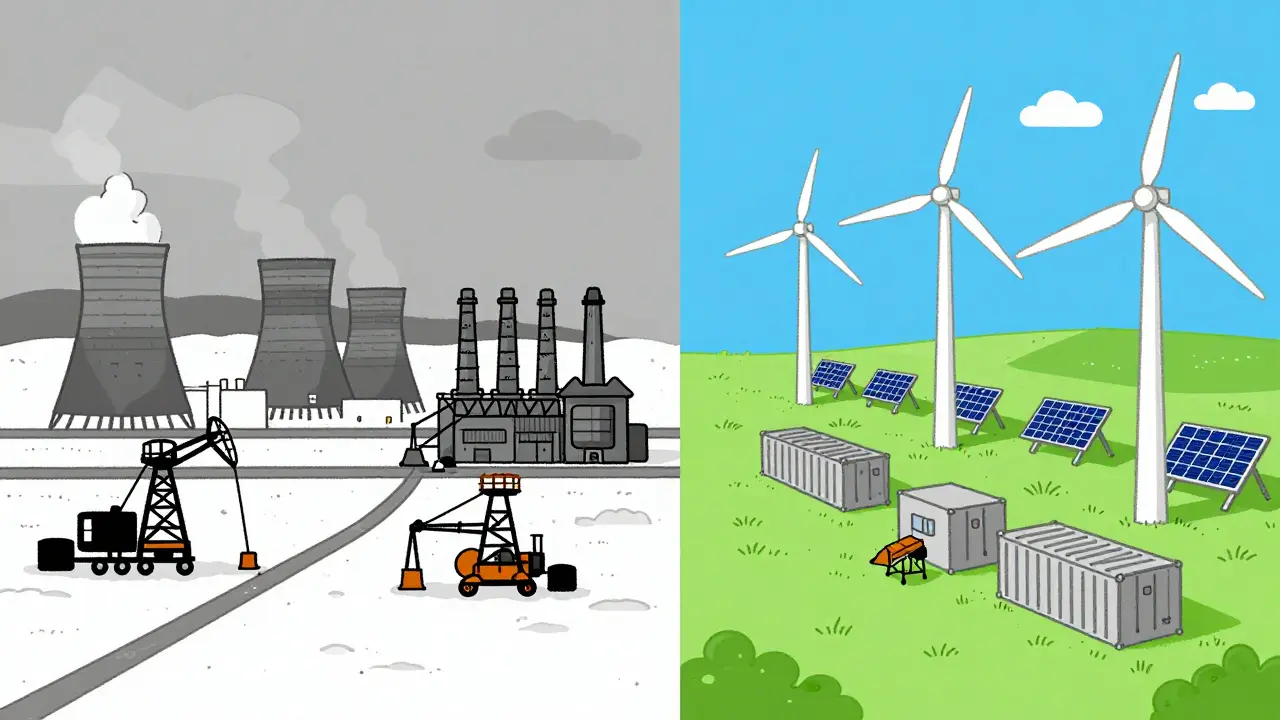
Why there? It came down to two things: cheap coal and a welcoming (at the time) regulatory environment. Kazakhstan had massive energy reserves and an infrastructure that could handle the surge in demand. However, this rapid growth came with a price. The sudden load on the electrical grid led to stability issues, and the reliance on coal-fired power drew criticism from environmentalists who argued that Bitcoin was simply moving its pollution from one place to another.
| Feature | Kazakhstan | United States (Texas) | Russia |
|---|---|---|---|
| Primary Energy Source | Coal | Wind, Solar, Gas | Hydro, Gas |
| Regulatory Vibe | Initially Open / Now Volatile | Pro-Mining / Deregulated | Cautious / Targeted |
| Key Attraction | Lowest Energy Costs | Grid Stability & Law | Cold Climate (Cooling) |
The Rise of the Lone Star State
While Kazakhstan took the bulk of the immediate volume, the United States-and specifically Texas-became the strategic winner. Texas didn't just offer power; it offered a deregulated energy market and a legislative environment that actually liked the idea of Bitcoin mining.
Texas became a magnet for the "big money" mining firms. They saw an opportunity to integrate mining with the state's massive wind and solar arrays. In a clever bit of engineering, miners can act as a "demand response" tool. When the Texas power grid is stressed (like during a heatwave), miners can flip a switch and shut down instantly, freeing up electricity for homes and hospitals. This symbiotic relationship made mining an asset to the grid rather than a burden.
Roughly half of the 5.2 gigawatts of mining capacity installed across the US is concentrated in Texas. For these operators, the slightly higher cost of electricity compared to Kazakhstan was a fair trade-off for political stability and legal certainty.
Other Destinations and the Global Spread
It wasn't just the US and Kazakhstan. The migration spread like a ripple effect. Russia and Pakistan saw increases in their hashrate as smaller operations looked for niches. The goal for every miner was the same: find a place where the electricity is cheap and the government won't seize your equipment on a whim.
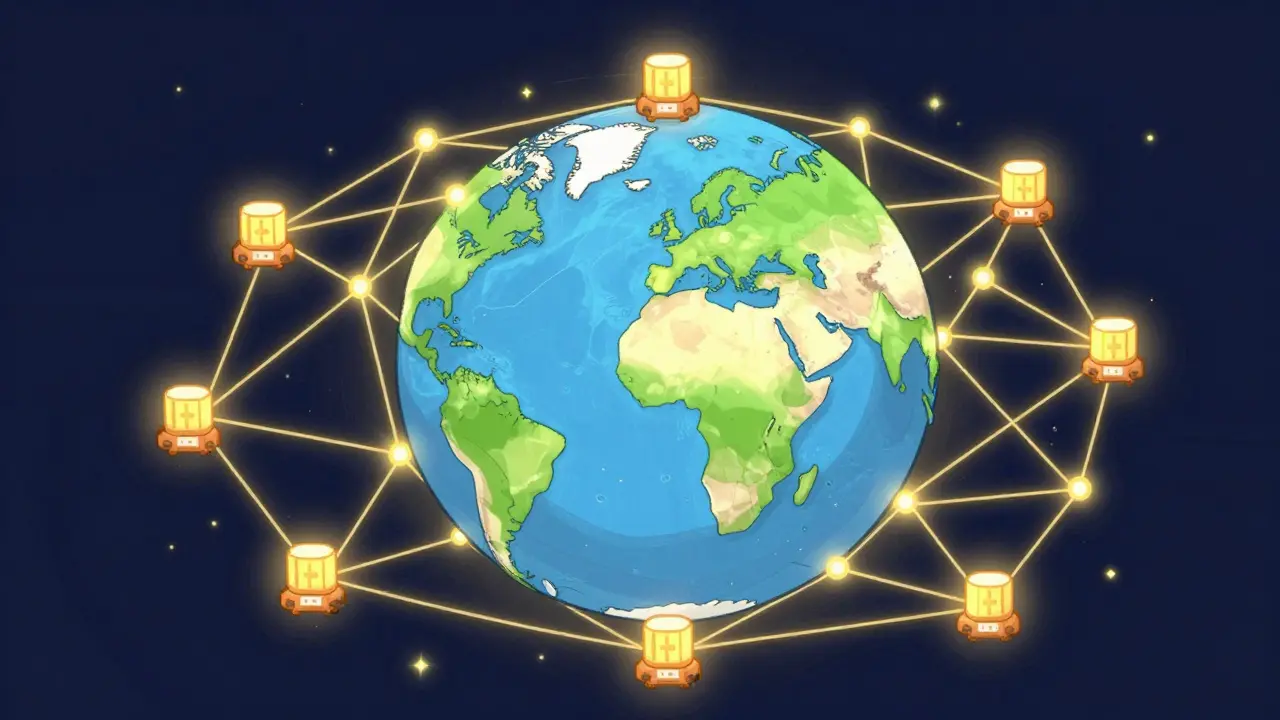
This redistribution actually did something Bitcoin desperately needed: it decentralized the network. When 75% of mining was in China, a single government decree could have theoretically crippled the network. Now, with the hashrate spread across North America, Central Asia, and other regions, the network is far more resilient. If one country bans mining, the machines just move again.
The Aftermath: A More Resilient Network
The Great Mining Migration proved that Bitcoin is not tied to any single geography. It showed that the network can survive the loss of its largest supporting nation and actually emerge stronger. The temporary dip in global hashrate during the move was a small price to pay for the security that comes with geographic diversity.
Today, the industry is moving toward "green mining," with a heavy focus on utilizing stranded energy-power that is produced (like at a remote wind farm) but cannot be easily transported to a city. By putting mining rigs right next to the source, operators turn wasted energy into digital gold.
Why did Bitcoin miners leave China?
The Chinese government implemented strict bans on cryptocurrency mining in 2021. They cited concerns over energy consumption, carbon emission goals, and financial instability, making it illegal for mining farms to operate within the country.
Which country benefited most from the exodus?
Kazakhstan saw the most immediate surge, jumping from 1.4% to over 8% of the global hashrate. However, the United States (particularly Texas) became the long-term strategic leader due to its stable regulatory environment and energy market.
Did the Chinese ban hurt the Bitcoin network?
In the short term, there was a temporary drop in the global hashrate as machines were physically moved. In the long term, it actually improved the network by decentralizing the mining power, making it less vulnerable to the laws of a single country.
What is an ASIC and why does it matter for relocation?
ASICs (Application-Specific Integrated Circuits) are specialized hardware designed solely for mining. Because they are modular and can be easily transported in containers, miners were able to ship their entire operations across borders relatively quickly.
Is Bitcoin mining in Texas actually green?
Many Texas miners use a mix of wind and solar power. More importantly, they participate in demand-response programs, shutting down during peak load times to help stabilize the state's energy grid.
It is honestly wild how fast the whole setup shifted from one side of the world to the other. The adaptability of these miners is pretty impressive if you think about it.
so crazy man imagine just packing up your whole life in a box lol
obviously the decentralization is the only part that actually matters here because reliance on a single state is a massive failure point for any network claiming to be trustless
Texas is def the place to be right now but people forget that the grid there can be super flaky sometimes. Its a gamble even with the deregulation policies
Omg the sheer scale of moving those ASIC machines sounds like a total nightmare!!
Imagine the shipping costs alone, just absolutley insane amounts of money and effort’s involved in a move like that!!
The point about demand response in Texas is very helpful. It shows that mining can actually support the electrical grid rather than just draining it, which is a great way to frame the industry's value.
i just feel like it's so sad for the people who lost evrything in the ban, like imagine just waking up and your biz is gone
The transition toward utilizing stranded energy represents a sophisticated evolution in the operational strategy of the industry. By leveraging power that would otherwise be wasted, these organizations are effectively reducing the marginal environmental cost of network security. This approach not only maximizes the efficiency of energy production but also mitigates the systemic risks associated with centralized energy dependencies. Furthermore, the integration of these facilities into regional power grids as balancing mechanisms provides a tangible benefit to local infrastructure. Such developments are essential for the long-term sustainability of the ecosystem. The shift from coal-heavy regions to diversified energy portfolios is a necessary progression. It ensures that the network remains robust against regulatory volatility. Moreover, the legal clarity provided by certain jurisdictions creates a more stable environment for capital investment. This stability attracts institutional players who require predictable regulatory frameworks. The geographical diversification mentioned is perhaps the most critical outcome of this migration. It reinforces the core tenet of censorship resistance. Ultimately, the ability of the network to reconfigure itself in real-time is a testament to its design. This level of resilience is rarely seen in traditional financial infrastructures. The industry is clearly maturing toward a more symbiotic relationship with global energy markets.
The pivot to stranded energy is basically optimizing the CAPEX by lowering the OPEX through energy arbitrage. It's a smart play to hedge against the volatility of the hash price.
It's kind of like a digital gold rush, just with way more cables and fans. It's a colorful way to see how money and power move across the map when the rules change.
One must acknowledge that the stability of the legal framework in the United States provides a significant advantage over the volatility seen in Central Asian markets.
It is interesting to see how different cultures react to this technology, from the strictness in China to the openness in Texas.
Who cares if they moved? They're just chasing the cheapest bill. It's a business, not a charity project!
Texas is just a tax haven for this stuff.
It is so wonderful to see the network becoming more resilient and spread out across the globe!