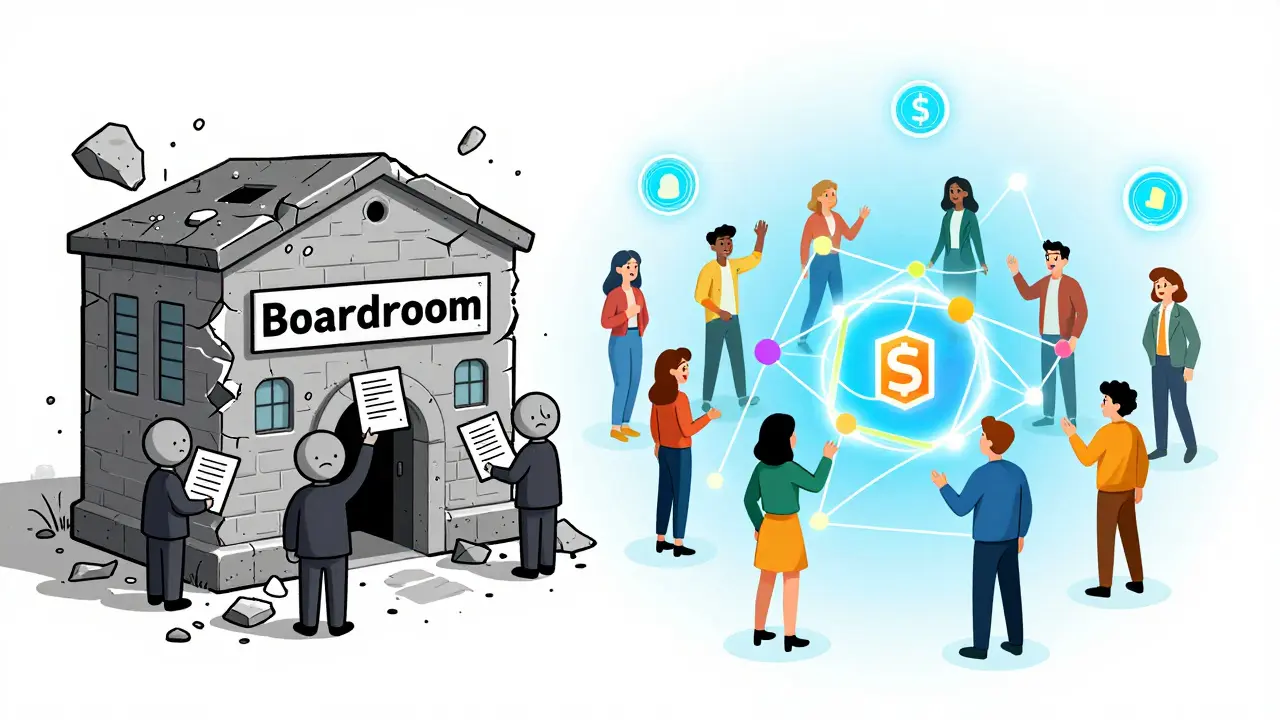
The Shift from Boardrooms to Blockchains
Remember when starting a business meant renting an office, hiring lawyers, and drawing up bylaws that nobody actually read? That model is crumbling. By mid-2026, the concept of the Decentralized Autonomous Organization (DAO) has moved far beyond crypto bros arguing in Discord channels. We are looking at over 13,000 active DAOs worldwide, entities that operate without traditional CEOs or middle management. Instead, they run on code.
This isn't just a tech trend; it's a structural revolution. The core promise of a DAO is simple but radical: replace trust in people with trust in mathematics. When you join a DAO, you aren't an employee signing an NDA. You are a stakeholder holding governance tokens that give you a literal vote on how the organization spends its money and sets its direction. The barrier to entry is no longer your resume; it's your willingness to participate.
How Governance Actually Works in 2026
If you think voting in a DAO is just "one token, one vote," you're already behind. The landscape of governance has matured significantly since the early days of Ethereum. While token-weighted voting remains common, it created oligarchies where whales controlled outcomes. To fix this, the industry has adopted more nuanced models.
Quadratic Voting has become a standard for fairness. In this system, the cost of casting votes increases quadratically. If you want to cast two votes, it costs four times as much as one vote. This mathematically limits the influence of large holders while empowering the broader community. It’s designed to reflect the intensity of preference rather than just wealth.
Then there is Reputation-Based Voting. Here, influence isn't bought; it's earned. Contributors gain reputation points through coding, writing documentation, or moderating communities. These points grant voting power, ensuring that those who do the work have a say in the direction. Projects like Gitcoin use this model effectively.
We also see Delegated Voting, similar to representative democracy. Members who don't have time to research every proposal can delegate their voting power to trusted experts or representatives. This solves the apathy problem where most members simply don't show up to vote.
| Model | Mechanism | Best For | Main Risk |
|---|---|---|---|
| Token Weighted | 1 Token = 1 Vote | Financial protocols | Whale dominance |
| Quadratic Voting | Cost scales with vote count | Community funds | Complexity for users |
| Reputation-Based | Influence via contribution | Open-source projects | Sybil attacks (fake identities) |
| Delegated Voting | Votes assigned to reps | Large organizations | Corruption of delegates |
The AI Integration: Smart Contracts Get Smarter
The biggest game-changer for DAOs in 2025 and 2026 hasn't been better wallets-it's Artificial Intelligence. Early DAOs were rigid. A smart contract would execute only if specific conditions were met exactly as coded. If the real world changed slightly, the contract failed.
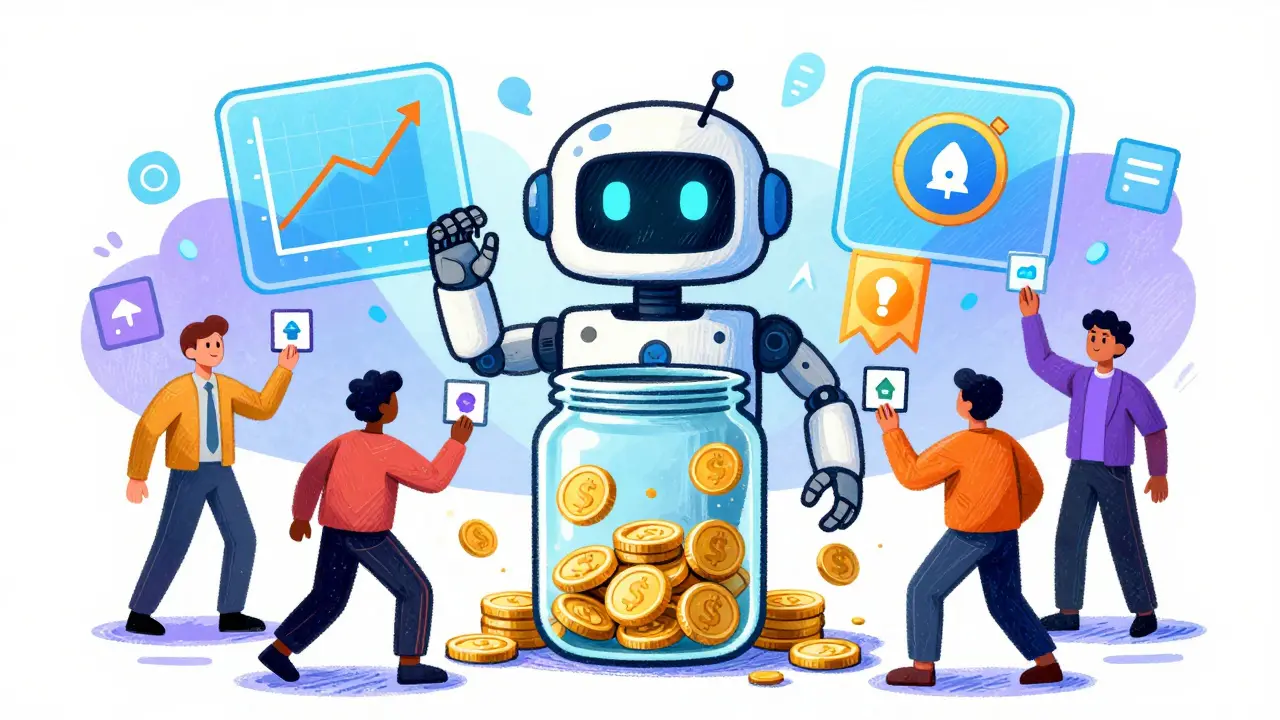
Now, we are seeing AI-powered smart contracts. These systems can interpret natural language proposals and predict outcomes based on historical data. Imagine a DAO treasury manager that uses predictive analytics to automatically rebalance assets during market volatility, within pre-approved risk parameters set by voters. This reduces the need for constant human intervention while maintaining democratic oversight.
AI also helps with fraud detection. In a decentralized environment, bad actors try to exploit loopholes. Machine learning algorithms monitor transaction patterns in real-time, flagging suspicious activities before funds move. This layer of security makes DAOs viable for handling millions of dollars in enterprise supply chains, not just speculative tokens.
Why Traditional Businesses Are Joining the Fold
You might assume DAOs are only for digital natives. Wrong. Enterprise adoption is accelerating. Companies are integrating DAO structures into supply chain management and healthcare systems. Why? Transparency and efficiency.
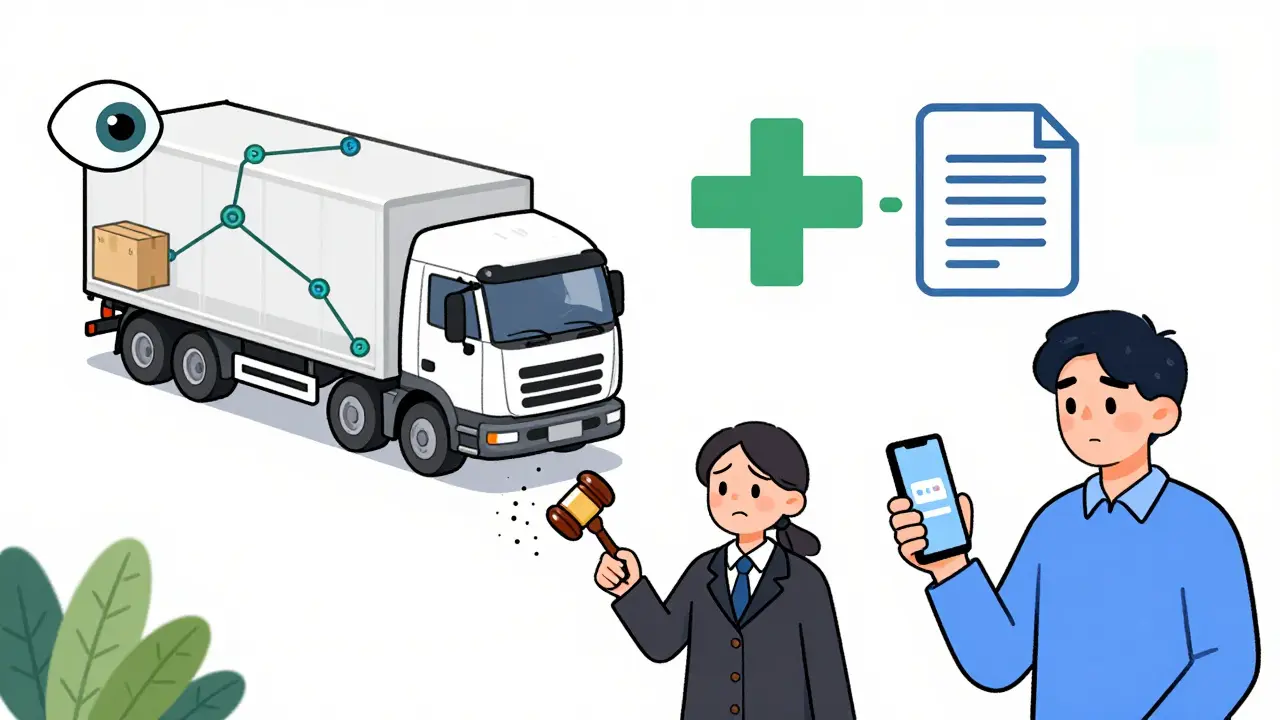
In a traditional supply chain, verifying that a product was ethically sourced involves paperwork, audits, and intermediaries. In a DAO-managed supply chain, every step is recorded on the blockchain. Smart contracts release payments automatically when goods arrive and pass quality checks verified by IoT sensors. No invoices lost in mailrooms. No delayed payments. Just code executing truth.
Healthcare networks are experimenting with patient data DAOs. Patients own their medical records and can grant temporary access to researchers in exchange for micro-payments. This creates a new revenue stream for individuals while providing researchers with vast, consented datasets. It’s a win-win that centralized hospitals struggle to replicate due to liability and privacy concerns.
The Hard Truths: Legal Gray Areas and Security Risks
Let’s not romanticize this. DAOs still face massive hurdles. The biggest is legal ambiguity. In many jurisdictions, a DAO isn't recognized as a legal entity. This means if a smart contract bug drains the treasury, who gets sued? The developers? The voters? The wallet providers?
While some countries like Wyoming and Switzerland have passed laws recognizing DAOs as LLCs, global consistency is nowhere in sight. This creates risk for participants. If you lose tokens in a hacked DAO, you likely have no legal recourse. The principle of "code is law" often translates to "you're on your own" when things go wrong.
Security remains critical. Smart contract bugs are not just glitches; they are existential threats. The infamous DAO hack of 2016 taught us hard lessons, but exploits continue. As DAOs integrate with AI and external APIs, the attack surface grows. A compromised oracle feeding false data to a smart contract can trigger catastrophic liquidations. Audits are mandatory, but even audited code can have edge-case vulnerabilities.
User Experience: Breaking Down the Tech Barrier
For years, joining a DAO required understanding private keys, gas fees, and multi-signature wallets. It was a nightmare for non-technicals. By 2026, this has improved dramatically. Abstracted accounts and social login integrations allow users to interact with DAOs using familiar interfaces.
However, the learning curve for governance itself remains steep. Understanding a proposal about "slashing rates" or "liquidity mining incentives" requires financial literacy. New platforms are introducing gamified education layers. Before you can vote, you must pass a quiz on the proposal's impact. This ensures informed participation and reduces the chance of malicious votes passing due to ignorance.
Community support varies wildly. Large, established DAOs like MakerDAO or Uniswap have dedicated staff and extensive documentation. Small, niche DAOs often rely on volunteer moderators who may disappear overnight. Always check the activity level of a DAO's communication channels before committing significant capital or time.
Sustainability and the Green Blockchain Movement
Critics long argued that blockchains were environmental disasters. With the shift away from Proof-of-Work (used by Bitcoin) to Proof-of-Stake and other energy-efficient consensus mechanisms, this argument has weakened. Most modern DAOs operate on networks that consume a fraction of the energy of traditional banking systems.
Furthermore, many DAOs are explicitly focused on sustainability. Climate DAOs fund carbon capture projects and reforestation efforts. They use blockchain to track the actual impact of these investments, preventing greenwashing. This transparency is something traditional NGOs struggle to provide.
What Comes Next? The Mainstream Horizon
The trajectory is clear. As regulatory frameworks mature and user interfaces become invisible, DAOs will cease to be a "crypto thing." They will become the default structure for online communities, creator cooperatives, and even local government initiatives. We are moving toward a hybrid economy where traditional corporations handle physical logistics, and DAOs manage digital governance and asset allocation.
The key to success in this future is adaptability. Whether you are a developer, investor, or consumer, understanding how decentralized governance works is becoming as essential as understanding email was in the 90s. The question is no longer if DAOs will survive, but how quickly they will reshape the institutions we take for granted.
What is a DAO and how does it differ from a traditional company?
A DAO (Decentralized Autonomous Organization) is a blockchain-based entity governed by smart contracts and member voting, rather than a central management team. Unlike traditional companies with hierarchies and boardrooms, DAOs operate transparently on public ledgers. Decisions are made collectively by token holders, and execution is automated by code, eliminating the need for intermediaries like lawyers or accountants for routine operations.
Are DAOs legally recognized in 2026?
Legal recognition varies by jurisdiction. Countries like the United States (specifically Wyoming), Switzerland, and Singapore have introduced laws allowing DAOs to register as legal entities, such as LLCs. However, many regions still lack clear frameworks, creating legal risks for participants regarding liability and tax obligations. It is crucial to consult local legal experts before engaging in high-stakes DAO activities.
How do I start participating in a DAO?
To join a DAO, you typically need a cryptocurrency wallet (like MetaMask) and the specific governance token used by that organization. You acquire these tokens through purchase or contribution. Once you hold tokens, you connect your wallet to the DAO's governance platform to view proposals and cast votes. Many DAOs also offer non-token roles for contributors who earn reputation through work.
What are the main risks of investing in or joining a DAO?
Key risks include smart contract vulnerabilities (bugs that can lead to fund loss), regulatory uncertainty (potential legal action against members), and low voter participation (which can lead to governance attacks). Additionally, token values can be highly volatile, and there is often no insurance or recourse if a DAO fails or is hacked.
How is AI changing the future of DAOs?
AI is enhancing DAOs by powering smarter smart contracts that can handle complex, real-world data inputs. AI-driven analytics help predict proposal outcomes and detect fraudulent transactions. Automated AI agents can manage treasuries and execute trades within predefined limits, increasing efficiency and reducing the burden on human voters.