
Imagine a world where your bank transaction takes milliseconds to settle, costs almost nothing, and leaves no carbon footprint. That is the promise of the next generation of consensus mechanisms in blockchain technology. For years, we accepted that speed, security, and decentralization were mutually exclusive. You could have two, but never all three. Today, that rule is breaking down. As we move through 2026, the industry is shifting from experimental prototypes to robust, real-world applications that demand efficiency and sustainability above all else.
The core job of a consensus mechanism is simple: it ensures every participant in a decentralized network agrees on the state of the ledger without needing a central boss. But the methods for achieving this agreement are evolving rapidly. We are moving away from energy-hungry mining rigs toward sophisticated, software-driven validation models that can handle millions of transactions per second. This shift isn't just about tech specs; it's about making blockchain viable for global finance, supply chains, and government services.
Key Takeaways
- Proof-of-Stake has become the dominant standard, reducing energy usage by over 99% compared to traditional mining.
- Hybrid models are emerging, blending different protocols to balance speed with extreme security.
- Modular architectures are separating data storage from execution, allowing networks to scale independently.
- Quantum computing is driving the development of new cryptographic standards to protect future ledgers.
- Regulatory clarity is pushing developers toward transparent yet private consensus designs.
From Energy Giants to Efficient Validators
For a long time, Proof-of-Work (PoW) was the gold standard. Bitcoin still relies on it, and for good reason: it offers unmatched security through sheer computational power. However, the environmental cost was undeniable. A single Bitcoin transaction once consumed more electricity than an average American household used in a day. This reality forced a pivot.
Proof-of-Stake (PoS) emerged as the logical successor. Instead of solving complex math puzzles, validators lock up a portion of their coins as collateral to secure the network. If they act dishonestly, they lose their stake. Ethereum’s transition to PoS in 2022 was the watershed moment. It cut energy consumption by roughly 99.95%, proving that high security doesn't require burning fossil fuels. Today, most new Layer 1 blockchains launch with PoS or a variation of it, like Delegated Proof-of-Stake (DPoS), which allows users to vote for a smaller group of validators to improve speed.
| Mechanism | Energy Efficiency | Security Model | Typical Use Case |
|---|---|---|---|
| Proof-of-Work | Low | Computational Power | Digital Gold, High Security |
| Proof-of-Stake | High | Economic Collateral | Smart Contracts, DeFi |
| Delegated PoS | Very High | Voting/Reputation | High Throughput Apps |
| Proof-of-History | High | Cryptographic Timestamping | Parallel Processing Chains |
The Rise of Hybrid and Modular Systems
Pure PoS is great, but it has its limits. What if you need the absolute security of PoW but the speed of PoS? This is where hybrid consensus models come in. Some networks are experimenting with combining these approaches, using PoW for finality and PoS for rapid transaction processing. This creates a layered defense against attacks while keeping fees low.
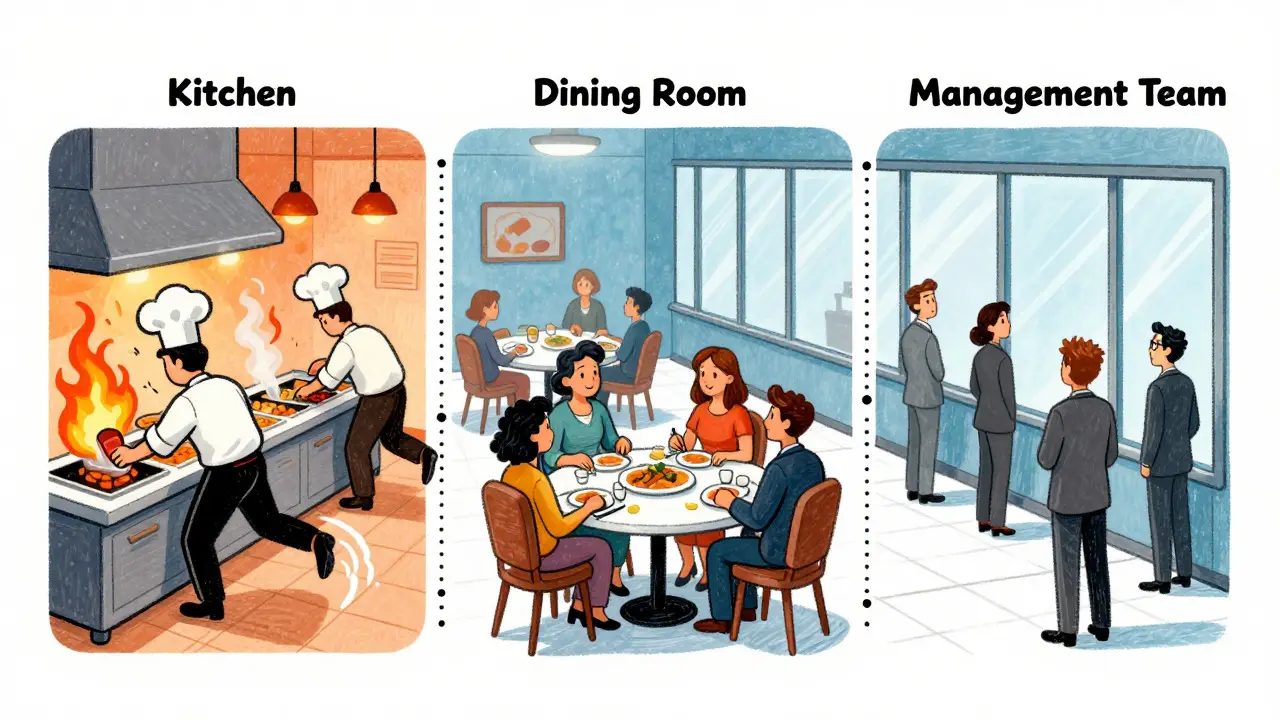
Even more significant is the shift toward modular blockchains. In the past, a single chain had to handle everything: consensus, execution, and data storage. This created bottlenecks. Now, architects are splitting these functions. Think of it like a restaurant: the kitchen (execution) works separately from the dining room (data availability) and the management team (consensus). Projects like Celestia focus solely on providing cheap, reliable data availability, while other chains handle the actual computation. This modularity allows startups to build specialized networks without reinventing the wheel, drastically lowering the barrier to entry.
Quantum Threats and Privacy Enhancements
As we look further ahead, one looming challenge is quantum computing. Current cryptography relies on mathematical problems that are hard for classical computers but easy for quantum ones. Once large-scale quantum computers arrive, today's public keys could be cracked in seconds. To prepare, developers are integrating post-quantum cryptographic algorithms into consensus layers. These new algorithms ensure that even if a quantum computer tries to forge a signature, it will fail.
Privacy is another critical front. While transparency is a feature of blockchains, not everyone wants their financial history public. Zero-Knowledge Proofs (ZKPs) allow a user to prove they have enough funds to make a transaction without revealing the exact amount or their identity. ZKPs are becoming integral to consensus, enabling "private" blocks that maintain network integrity while protecting user data. This is crucial for enterprise adoption, where companies fear data leaks as much as fraud.

Regulation and Enterprise Adoption
Technology rarely moves in a vacuum. Regulatory bodies, including the International Monetary Fund, are closely watching how consensus mechanisms operate. They want systems that are secure but also auditable. This tension is driving innovation. Developers are creating consensus protocols that offer "selective transparency," allowing regulators to verify compliance without exposing individual user data. This balance is essential for Central Bank Digital Currencies (CBDCs), which are being piloted in dozens of countries. CBDCs require a consensus model that is fast enough for retail payments but controlled enough to meet monetary policy goals.
Enterprises are also demanding more. Supply chain managers need immutable records, but they don't want to pay high gas fees for every box of coffee beans. This has led to the rise of permissioned side-chains and layer-2 solutions that use lighter consensus rules for specific business needs, settling back to the main chain only when necessary. The result is a fragmented but highly efficient ecosystem where different consensus types serve different purposes.
What This Means for Users and Developers
If you are building on blockchain, the choice of consensus mechanism is no longer just a technical detail-it's a strategic decision. Choosing PoS gives you sustainability and lower costs. Choosing a modular architecture gives you flexibility. Integrating ZKPs gives you privacy. The "best" mechanism depends entirely on your use case. There is no single winner anymore. The future is pluralistic, with specialized consensus engines powering specialized networks.
For everyday users, the impact will be invisible but profound. Transactions will feel instant. Fees will drop to fractions of a cent. And the environmental guilt associated with crypto will fade as the industry matures. The era of clunky, slow, and expensive blockchains is ending. What replaces it is a diverse, efficient, and secure infrastructure ready to support the next wave of digital innovation.
Is Proof-of-Work dead?
Not at all. Bitcoin remains the strongest example of PoW security. However, its role is narrowing. Most new general-purpose blockchains prefer PoS for efficiency, but PoW persists in niches where maximum censorship resistance and hardware-based security are prioritized over speed.
How do modular blockchains affect consensus?
They decouple consensus from execution. This means the consensus layer only needs to agree on the order of data, not process every smart contract. This simplifies the consensus task, allowing for faster finality and lower costs, while execution happens on separate, specialized layers.
Will quantum computers break current blockchains?
Potentially, if they reach sufficient scale before upgrades are made. However, the industry is proactively developing quantum-resistant algorithms. Most major networks plan to upgrade their cryptographic standards within the next decade to neutralize this threat.
Why are zero-knowledge proofs important for consensus?
ZKPs allow nodes to verify transactions without seeing the underlying data. This enables privacy-preserving consensus, where the network validates validity without compromising user confidentiality, a key requirement for enterprise and banking applications.
Which consensus mechanism is best for beginners?
If you are building a standard application, start with a mature PoS chain like Ethereum or Solana. They offer extensive tooling, liquidity, and community support. If you need high throughput for a specific app, consider a modular solution or a dedicated L2.