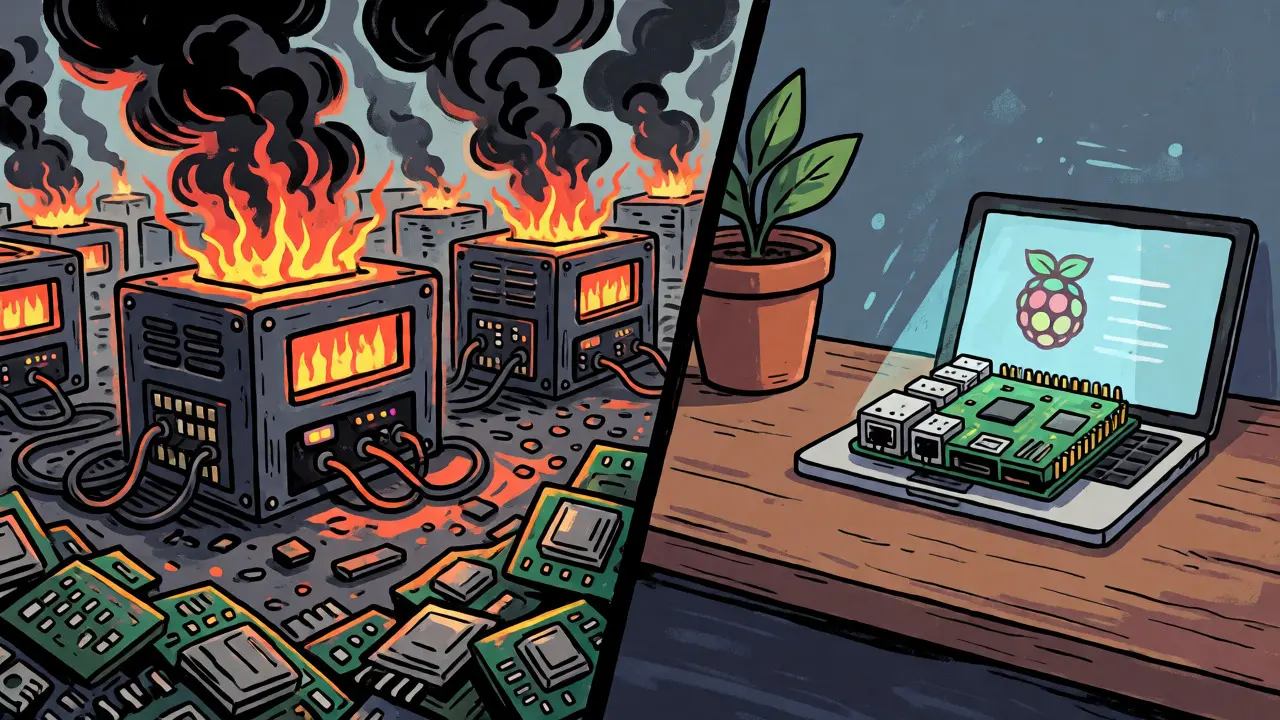
Did you know that a single Bitcoin transaction consumes enough electricity to power an average U.S. household for nearly a month? That’s roughly 830 kilowatt-hours (kWh) per swap. Now compare that to staking on networks like Cardano or Ethereum post-Merge, where the same action uses a fraction of a penny’s worth of power. If you’ve ever felt guilty about your crypto footprint while checking your portfolio, you’re not alone. The shift from Mining to staking is reshaping how we think about blockchain sustainability, moving us away from energy-hungry puzzles toward efficient validation.
| Metric | Proof-of-Work (Mining) | Proof-of-Stake (Staking) |
|---|---|---|
| Energy per Transaction | ~830 kWh (Bitcoin) | 0.5-50 kWh (PoS Chains) |
| Hardware Lifespan | 12-18 months (ASICs) | 3-5+ years (Standard PCs) |
| E-Waste Generation | High (34 kt/year for BTC) | Negligible |
| Setup Time | Weeks (Rig assembly) | Hours (Software config) |
The Energy Gap Is Massive
Let’s look at the raw numbers because they tell a stark story. As of late 2025, the Bitcoin network consumed approximately 150 terawatt-hours (TWh) annually. To put that in perspective, that’s more than the entire country of Argentina uses in a year. It rivals the Netherlands’ national grid load. In contrast, after Ethereum completed "The Merge" in September 2022, its energy usage dropped by 99.95%. Today, Ethereum runs on about 0.053 TWh annually. We aren’t talking about small savings; we are looking at orders of magnitude difference.
Why does this happen? Proof-of-Work requires miners to solve complex cryptographic puzzles using specialized hardware called ASICs. These machines run at full throttle, 24/7, burning electricity to guess random numbers until one matches the target hash. It’s essentially brute-force computation. Proof-of-Stake, however, selects validators based on the amount of cryptocurrency they lock up as collateral. No heavy lifting required. A validator node can run on a Raspberry Pi or a standard laptop, sipping power rather than gulping it.
Electronic Waste: The Hidden Cost of Mining
Energy use gets the headlines, but electronic waste (e-waste) is the silent killer in the mining industry. Bitcoin mining rigs have a short lifespan-typically 12 to 18 months. Why? Because competition drives efficiency so fast that older ASICs become obsolete almost immediately. Once a machine can no longer mine profitably, it’s often discarded. Digiconomist estimates that Bitcoin generates around 34 kilotons of e-waste yearly. That’s comparable to the annual e-waste output of small nations.
Staking flips this script entirely. Since PoS validators don’t need specialized, high-power chips, they can use general-purpose computing equipment. A server running a validator node today might still be useful for other tasks in five years. There’s no forced obsolescence driven by hash-rate wars. This means less plastic, fewer circuit boards, and significantly lower disposal costs. For anyone trying to build a sustainable tech stack, this reduction in hardware churn is a major win.
Carbon Footprint and Renewable Energy Realities
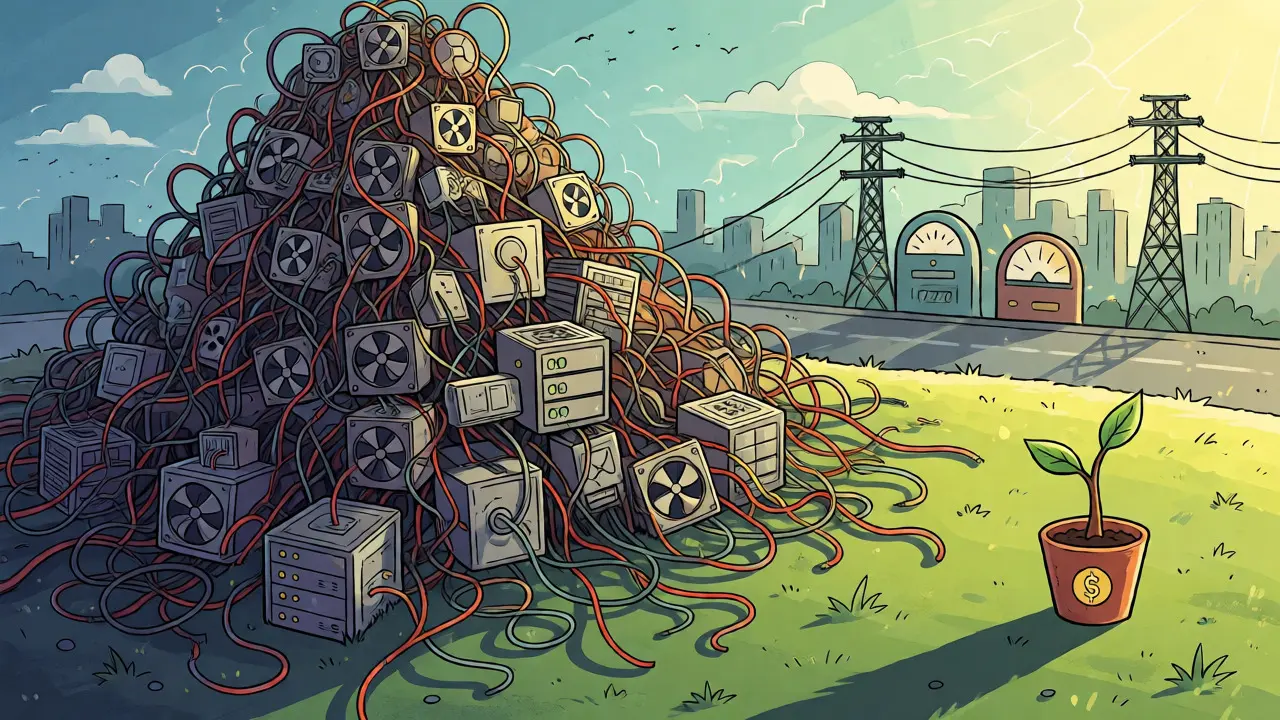
You might hear miners argue that they use renewable energy. And it’s true-some operations tap into stranded hydro or wind power. However, the International Energy Agency noted in 2025 that while 43% of Bitcoin mining used renewables, the absolute energy consumption still grew by 12% annually. More green energy doesn’t mean less total demand if the baseline consumption is skyrocketing.
With staking, the carbon footprint is inherently lower because the base demand is tiny. Ethereum’s post-Merge carbon emissions sit at just 0.01 million tons annually, compared to Bitcoin’s estimated 62.51 million tons. Even if a PoS network ran entirely on coal, its total emissions would likely remain below those of a moderately efficient PoW network running on mixed sources. The math simply favors efficiency.
Regulatory Pressure Favors Staking
Governments are starting to take notice. The European Union’s MiCA regulation imposes strict reporting requirements for digital asset service providers. Organizations seeking compliance find it much easier to justify the carbon footprint of a staking operation than a mining farm. In fact, some EU guidelines explicitly recommend PoS systems for regulated financial products.
In the United States, regulatory bodies like the SEC have signaled that PoS tokens may face less scrutiny under securities laws partly due to their decentralized economic model and reduced environmental impact. If you’re an institutional investor or a business integrating blockchain, choosing a PoS chain reduces regulatory risk. It aligns better with ESG (Environmental, Social, and Governance) goals, which are increasingly mandatory for corporate reporting.
Practical Benefits Beyond Sustainability
So, why should you care if you’re just an individual user? Well, the barriers to entry are dramatically different. Setting up a competitive mining rig takes weeks of research, assembly, and tuning. You need dedicated space, cooling solutions, and noise mitigation. Staking? You can start in a few hours using platforms like Coinbase or Binance, or even run a home validator on existing hardware.
Cost-wise, the difference is night and day. A typical home mining setup might add $150-$300 to your monthly electric bill. A home staking validator, running on efficient consumer hardware, might cost $10-$14. One Reddit user reported cutting their electricity bill from $280 to $14 simply by switching from mining to staking. That’s money back in your pocket, plus peace of mind knowing your hobby isn’t heating up the planet unnecessarily.

The Future Is Likely Proof-of-Stake
The trend line is clear. In 2025-2026, 87% of new blockchain projects launched using pure PoS or hybrid variants. Only 13% stuck with PoW. Major upgrades continue to optimize this further. Ethereum’s upcoming Prague upgrade aims to cut energy use another 15% via Verkle trees. Cardano’s Hydra scaling solution has already pushed per-transaction energy down to 0.02 kWh.
While Bitcoin will likely remain dominant as a store of value, its role as a daily transaction medium diminishes due to these environmental constraints. Meanwhile, chains like Solana, Tezos, and Polygon are attracting developers who prioritize speed and sustainability. If you’re building for the long term, betting on PoS ecosystems seems like the safer, greener bet.
Frequently Asked Questions
Is staking always more environmentally friendly than mining?
Generally, yes. Proof-of-Stake mechanisms consume 99%+ less energy than Proof-of-Work. However, the specific environmental impact depends on the energy source powering the validator nodes. But even with non-renewable grids, the sheer efficiency of PoS results in a smaller total carbon footprint.
Do I need special hardware to stake?
No. Unlike mining, which requires expensive ASICs or GPUs, staking can often be done on standard laptops, desktops, or even Raspberry Pi devices. Many users also choose delegated staking through exchanges, requiring no hardware at all.
What happens to old mining hardware?
Most obsolete mining hardware ends up as electronic waste. ASICs become inefficient quickly due to rising difficulty levels. While some are recycled, the rapid turnover rate contributes significantly to global e-waste problems, unlike the longer-lasting general-purpose computers used in staking.
Can Bitcoin switch to staking?
Technically, Bitcoin could transition to a PoS-like mechanism, but it faces significant social and technical hurdles. The community values Bitcoin’s simplicity and security derived from massive hash power. Any change would require broad consensus, making it unlikely in the near future.
Does staking reduce my electricity bill?
Yes, significantly. Running a validator node typically costs $10-$14 per month in electricity, whereas a comparable mining setup can cost $150-$300. If you use cloud-based staking services, the direct electricity cost to you is zero.