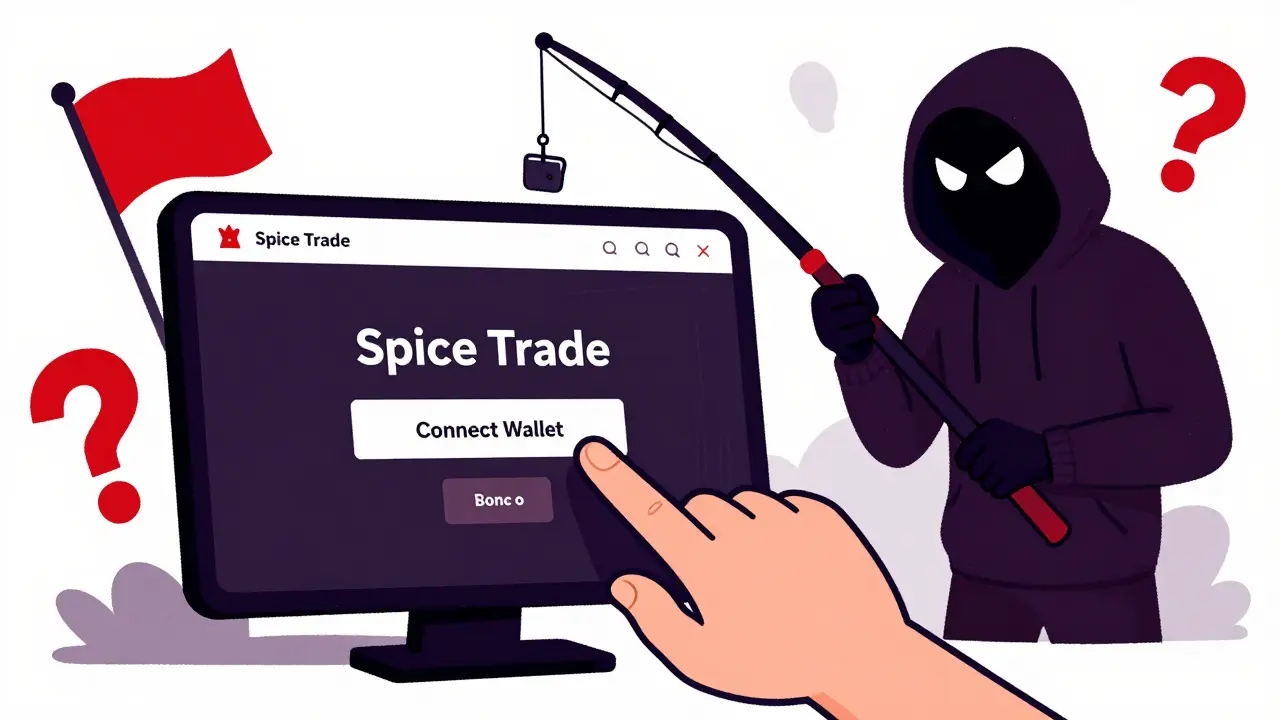
You’ve likely stumbled upon Spice Trade, a platform claiming to be a high-performance decentralized exchange on the Avalanche blockchain. The promise is tempting: lightning-fast swaps, near-zero fees, and access to the booming Avalanche ecosystem. But here is the hard truth you need to hear right now. After digging through authoritative sources, security databases, and industry reports as of mid-2026, there is no credible evidence that "Spice Trade" exists as a legitimate, established decentralized exchange.
This isn't just a case of obscurity. While new projects launch daily in Web3, "Spice Trade" does not appear in major aggregators like CoinGecko, CoinMarketCap, or DappRadar. It is not listed in reputable reviews from QuickNode or Messari. In fact, the name often gets confused with Spice.xyz, which is a data infrastructure tool for Web3 developers, not a trading venue. If you are looking at a website calling itself "Spice Trade" asking for your wallet connection or funds, proceed with extreme caution. You might be facing a phishing site, a honeypot, or a outright scam.
The Reality Check: Why "Spice Trade" Raises Red Flags
In the world of Decentralized Finance (DeFi), anonymity can sometimes mean innovation, but more often, it means risk. Legitimate exchanges, even small ones, leave digital footprints. They have open-source code repositories on GitHub, audited smart contracts by firms like CertiK or Trail of Bits, and active communities on Discord or Telegram that aren't just bots spamming links.
When we analyze "Spice Trade," these foundations are missing. There is no verified team behind it. There are no public audits. There is no liquidity pool depth visible on standard block explorers like Snowtrace. This silence is deafening. In contrast, real platforms on Avalanche boast about their security measures because they know users prioritize safety over hype. If a platform cannot prove its legitimacy through transparent metrics, assume it is unsafe until proven otherwise.
Furthermore, scammers frequently clone the names of existing tools or create generic-sounding brands to trick users into connecting their wallets. Once connected, malicious scripts can drain your assets instantly. The absence of "Spice Trade" in any reputable index is a massive warning sign. Do not connect your MetaMask or Coinbase Wallet to an unverified URL.
Understanding the Avalanche Ecosystem
To understand why you should stick to known entities, let's look at the ground beneath our feet. Avalanche is a powerhouse blockchain launched in 2020 by Ava Labs. It was designed to solve the "blockchain trilemma"-balancing scalability, security, and decentralization. Unlike Ethereum, which can get congested and expensive, Avalanche offers sub-second finality and transaction fees that often cost less than a penny.
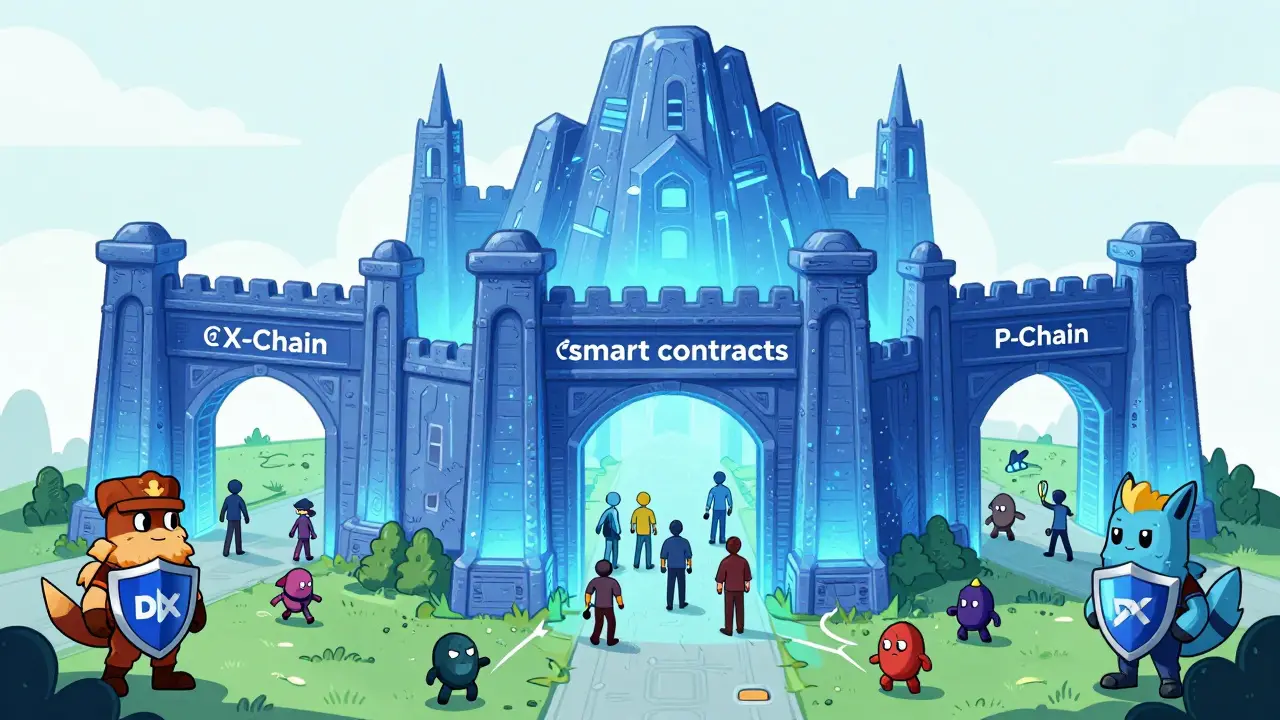
Avalanche’s architecture is unique. It uses three specialized chains:
- X-Chain (Exchange Chain): Used for creating and trading assets.
- C-Chain (Contract Chain): An EVM-compatible chain where most DeFi apps and DEXs live. This is where you’d interact with token swaps.
- P-Chain (Platform Chain): Manages staking and the creation of subnets.
This structure allows for incredible speed. As of Q2 2025, Avalanche saw a 210% increase in daily active addresses, according to Messari data. This growth is driven by institutional adoption, including partnerships with Franklin Templeton and FIFA. However, this popularity also makes it a target for bad actors. Just because the network is secure doesn't mean every app built on it is safe. The C-Chain is permissionless, meaning anyone can deploy a contract-including malicious ones.
Safe & Verified DEX Alternatives on Avalanche
If you want to trade on Avalanche safely, you don't need to gamble on unknown platforms. The ecosystem is rich with battle-tested, highly liquid, and audited decentralized exchanges. Here are the top contenders that actually exist and are trusted by millions of users.
| Exchange Name | Type | Key Feature | Security Status |
|---|---|---|---|
| Trader Joe | Hybrid AMM + Perpetuals | Liquidity Book technology for better pricing | Audited, High TVL |
| Pangolin | AMM | Community-governed, wide token support | Audited, Established |
| Curve.fi (Avalanche) | Stablecoin Swap | Low slippage for stable pairs | Industry Standard Security |
| 1inch (on Avalanche) | Aggregator | Finds best price across multiple DEXs | Highly Audited Protocol |
Trader Joe is arguably the king of Avalanche DeFi. It started as a simple swap interface but evolved into a full-service hub offering leveraged trading, lending, and NFTs. Its Liquidity Book mechanism mimics centralized order books, reducing slippage for large trades. With billions in total value locked (TVL), it has survived market crashes and upgrades, proving its resilience.
Pangolin is another veteran. It focuses on community governance and supports a vast array of tokens, including many smaller gems not found elsewhere. If you are looking for niche tokens, Pangolin is a safer bet than an unknown site because its smart contracts are publicly verifiable and widely used.
For those who primarily trade stablecoins or ETH/AVAX pairs, Curve remains the gold standard for efficiency. Its algorithm minimizes impermanent loss and slippage, making it ideal for large-volume traders who care about precision.
How to Verify Any Crypto Exchange Before Trading
Education is your best defense. Whether you encounter "Spice Trade" or the next shiny new DEX, follow this checklist before connecting your wallet.
- Check Aggregators: Does the project appear on CoinGecko, CoinMarketCap, or DefiLlama? If not, it lacks basic credibility.
- Verify the Contract Address: Never copy-paste contract addresses from social media posts. Go directly to the official website (verify the URL carefully) or check the token page on a block explorer like Snowtrace. Ensure the address matches exactly.
- Look for Audits: Reputable projects hire third-party firms to audit their code. Look for reports from CertiK, Hacken, or OpenZeppelin. If the site claims to be "secure" but shows no audit link, walk away.
- Inspect Social Presence: Join their Discord or Telegram. Are real humans discussing features and bugs? Or is it just bots posting "GM" and pump-and-dump signals? A healthy community asks tough questions; a scam community only praises.
- Test with Small Amounts: If you must try a new platform, start with an amount you can afford to lose completely. Use a burner wallet-a separate wallet with minimal funds-to isolate risk.

The Risks of Unverified Platforms
Why do scams like potential fake versions of "Spice Trade" persist? Because greed overrides caution. Scammers create websites that look professional, mimic the UI of popular DEXs, and use SEO tricks to rank for search terms like "best Avalanche exchange."
The danger lies in the mechanics. When you connect your wallet to a malicious site, you may inadvertently sign a transaction that grants unlimited approval to their contract. This allows them to drain any ERC-20 or SPL tokens in your wallet at any time, without further permission. Even if you disconnect later, the damage is done unless you revoke approvals manually using tools like Revoke.cash.
Additionally, some fake exchanges operate as "honeypots." You can buy the token, but the smart contract prevents you from selling it. The chart goes up, attracting more victims, while the creators slowly sell their holdings. This is common in meme coin ecosystems but can infect broader DEX interfaces.
Future Outlook for Avalanche DeFi
Despite the noise from scams, the future of Avalanche DeFi is bright. The platform’s focus on Subnets allows for customized blockchains tailored to specific industries, such as gaming or finance. Institutional players like VanEck and Centrifuge are tokenizing real-world assets on Avalanche, bringing deep liquidity and regulatory compliance to the table.
As the ecosystem matures, expect stricter standards for DEX listings and more integration between Subnets. Cross-chain bridges will become safer and more efficient, allowing seamless movement of assets between Avalanche, Ethereum, and other networks. However, this complexity also requires users to stay vigilant. The tools will get better, but the responsibility for verifying sources remains on you.
Stick to the giants like Trader Joe and Pangolin, or use aggregators like 1inch that route your trades through the safest paths available. Avoid the allure of obscure names promising secret advantages. In crypto, transparency is the ultimate feature. If a platform hides its details, it has something to hide.
Is Spice Trade a legitimate crypto exchange?
No, there is no verified evidence that "Spice Trade" is a legitimate decentralized exchange on Avalanche. It does not appear in major crypto databases, lacks security audits, and may be a phishing site or scam. Users should avoid connecting wallets to unverified platforms.
What is the best DEX on Avalanche?
Trader Joe is widely considered the leading DEX on Avalanche due to its high liquidity, advanced features like perpetuals, and strong security track record. Pangolin and Curve are also excellent alternatives depending on your trading needs.
How can I tell if a crypto exchange is a scam?
Red flags include missing information on CoinGecko/CoinMarketCap, lack of public smart contract audits, anonymous teams, and pressure to deposit funds quickly. Always verify contract addresses on block explorers like Snowtrace before interacting.
Is Avalanche safe for DeFi trading?
Yes, the Avalanche blockchain itself is highly secure and fast. However, individual applications built on it vary in quality. Stick to audited, well-known protocols like Trader Joe and Pangolin to minimize risk.
What is the difference between X-Chain, C-Chain, and P-Chain?
X-Chain is for asset creation and exchange, C-Chain runs smart contracts (where most DEXs operate), and P-Chain handles staking and subnet management. Most users interact primarily with the C-Chain for trading.
Listen up, you absolute normies! You are walking into a honeypot trap with your eyes wide open because you refuse to do basic due diligence. The liquidity depth on this so-called "Spice Trade" is practically non-existent, which means the smart contract devs can pull a rug pull at any second without breaking a sweat. I have seen this pattern a thousand times in the altcoin graveyard. They use high-frequency trading bots to create fake volume metrics that look impressive on superficial charts, but the order book is hollow. Do not connect your wallet unless you want to gift-wrap your entire portfolio for some anonymous dev in a basement. Stick to protocols with verified TVL and audited codebases like Trader Joe or Pangolin, otherwise, you are just donating to the scammer's yacht fund.
The analysis provided herein is both thorough and accurate regarding the absence of verifiable data points for the entity in question. It is imperative that retail investors prioritize platforms with established track records and transparent governance structures. The Avalanche ecosystem offers superior throughput and lower transaction costs compared to Ethereum mainnet, yet it does not grant immunity from malicious actors deploying unverified contracts. Users must exercise extreme caution when interacting with decentralized applications that lack public audit reports from reputable firms such as CertiK or Trail of Bits. Prudence is the highest form of self-interest in financial markets.
You guys are all sheep following the herd to Trader Joe like it’s some holy grail. Just because it has audits doesn’t mean it’s safe. Look at how many major DeFi protocols got hacked despite having multiple audits. Audits are just rubber stamps paid for by the projects themselves. I’ve made more money playing obscure gems on new chains than sticking to these "safe" DEXs where slippage eats my profits alive. Spice Trade might be risky sure but maybe they are just early stage and haven’t listed on CoinGecko yet because they don’t want to pay the listing fee. Stop being so conservative and actually take risks if you want alpha.
Oh wow, here comes the contrarian taking the bait. You are literally defending a potential phishing site because you think risk equals reward. That is not how crypto security works. An unlisted platform with no GitHub repo and no team disclosure is not "early stage," it is a ghost town designed to drain wallets. You talk about slippage on Trader Joe? Try losing 100% of your principal to a drainer script. I am telling you this because I see people lose life savings every week over ego. Wake up.
Typical fear-mongering from the safe-space crowd. You probably hold only stablecoins and complain about inflation while missing out on real gains. Let me keep my options open thanks.
I appreciate the detailed breakdown of the red flags associated with Spice Trade. It is quite concerning how easily newcomers can be misled by professional-looking websites that mimic legitimate interfaces. The suggestion to use a burner wallet for testing new platforms is excellent advice that should be standard practice for everyone. I have personally lost funds in the past by connecting my main wallet to unverified dApps, and it was a painful lesson. Thank you for reminding us to check Snowtrace and verify contract addresses manually. It seems the community needs more education on these basic verification steps rather than chasing hype.
This entire article is part of the narrative control machine. Why do you think CoinGecko and CoinMarketCap are the ultimate arbiters of truth? They are centralized gatekeepers who suppress independent projects that challenge the status quo. The fact that Spice Trade is not listed is proof that the establishment is protecting their own interests by burying competition. Avalanche itself is compromised by institutional partnerships with banks like Franklin Templeton, turning it into another tool for surveillance capitalism. Trust no one. Use local nodes and verify everything yourself because the media will always lie to keep you poor.
Oh my gosh, Lee, please stop with the conspiracy theories! 😱 This isn't about some grand evil plan; it's about basic safety. If a website asks for your wallet connection and has zero online presence, it is almost certainly a scam. I was terrified when I accidentally connected to a fake site last year, and my heart nearly stopped until I revoked the approvals. Please, everyone, just stick to the known platforms like Trader Joe or Pangolin. Your mental health and your assets will thank you. There is no need to live in fear of the government if you just follow simple security hygiene!
Wow. Just wow. The drama surrounding this non-existent exchange is absolutely hilarious. People are fighting over a ghost. Meanwhile, I’m just sitting here watching AVAX pump while you lot argue about whether a phishing site is a government plot or a missed opportunity. Can we focus on the actual tech? The C-Chain performance is insane right now. Sub-second finality is not a joke. But seriously, if you’re going to trade, use an aggregator like 1inch. It saves time and finds better prices. Stop reading too much into things and start trading.
Look, I get the excitement around new tokens, but let’s keep it real. I checked the block explorer myself, and there is literally nothing there. No transactions, no liquidity pools, nothing. It’s a blank slate. When I see sites like this, I immediately assume it’s a honeypot where you can buy but not sell. I’ve been burned before by similar setups on BSC, and I’m not making that mistake again on Avalanche. The jargon-heavy explanations about smart contracts are scary enough without adding mystery sites to the mix. Stick to the basics: if it’s not on DefiLlama, it doesn’t exist. Simple as that.
This post is incredibly helpful and timely. I had heard whispers about Spice Trade in a few Telegram groups, and seeing this detailed review confirms my suspicions that it was too good to be true. The explanation of the Avalanche architecture, specifically the roles of the X, C, and P chains, clarifies why most legitimate DEXs operate on the C-Chain. It makes sense that a platform claiming to be a major exchange would leave a digital footprint if it were real. I will definitely be using the checklist provided to verify any future platforms I encounter. Transparency is key, and this article promotes exactly that. Great job highlighting the importance of audits and community engagement.