
Have you seen the buzz about the Sonar Holiday airdrop? If you are looking for a list of tasks to complete so you can claim free tokens, stop right there. There is no official project called "Sonar Holiday" releasing an airdrop in mid-2026. In fact, digging into the details reveals something much more concerning: this appears to be a classic crypto scam designed to steal your private keys or drain your wallet.
The crypto space moves fast, and scammers know that. They latch onto popular names, holiday themes, or vague promises of "unknown details" to create urgency. When a project has zero verifiable information, it is not mysterious-it is dangerous. Let’s break down why this specific alert is red-flagged, how these scams work, and what you should actually be watching for in the legitimate Solana ecosystem right now.
The Truth About the Sonar Holiday Airdrop
First, let’s address the elephant in the room. You will not find a whitepaper, a verified Twitter account with blue checks from reputable exchanges, or a listing on CoinGecko or CoinMarketCap for a project named "Sonar Holiday." Legitimate airdrops, even those in early stages, have footprints. They have GitHub repositories, active Discord communities with real engagement, and clear tokenomics.
The phrase "Unknown details" in the title of rumors surrounding this drop is the biggest warning sign. In the world of decentralized finance (DeFi), ambiguity is a weapon used against you. Scammers use vagueness to avoid making false claims they can be sued for, while still enticing users with the hope of easy money. If the details are unknown, assume the intent is malicious until proven otherwise-and in this case, the lack of proof suggests it is indeed malicious.
Here is what typically happens with these fake alerts:
- Fake Websites: You click a link on social media that looks like an official portal but has a slightly misspelled URL.
- Wallet Drainers: The site asks you to connect your wallet to "check eligibility." Once connected, a malicious smart contract executes, draining your assets.
- Phishing: You are asked to enter your seed phrase or private key to "verify identity," which gives attackers full control over your funds.
I’ve seen too many people lose their life savings because they wanted to believe the hype. Don’t be one of them. If a project cannot tell you who they are, where the money comes from, and how the token works, it is not an opportunity; it is a trap.
Why Scammers Target the Solana Ecosystem
You might wonder why this rumor ties into Solana. The answer is simple: volume and speed. As of early 2026, Solana remains one of the most active blockchains for retail users. The low transaction fees and fast confirmation times make it attractive for both legitimate users and bad actors.
In late 2024 and throughout 2025, we saw massive, legitimate airdrops from projects like Magic Eden (ME) and Pudgy Penguins (PENGU). These events brought millions of new wallets into the ecosystem. Scammers monitor these trends. They know that users are excited, checking their dashboards daily, and clicking links eagerly. By creating a fake "Holiday" themed airdrop, they tap into that existing excitement.
Solana’s architecture allows for rapid deployment of smart contracts. While this enables innovation, it also means a scammer can deploy a drainer contract in minutes. Unlike Ethereum, where gas fees act as a slight barrier to entry for spam, Solana’s efficiency makes it easier for scammers to cast a wide net with minimal cost. This doesn’t mean Solana is unsafe-it means you need to be smarter about what you interact with.
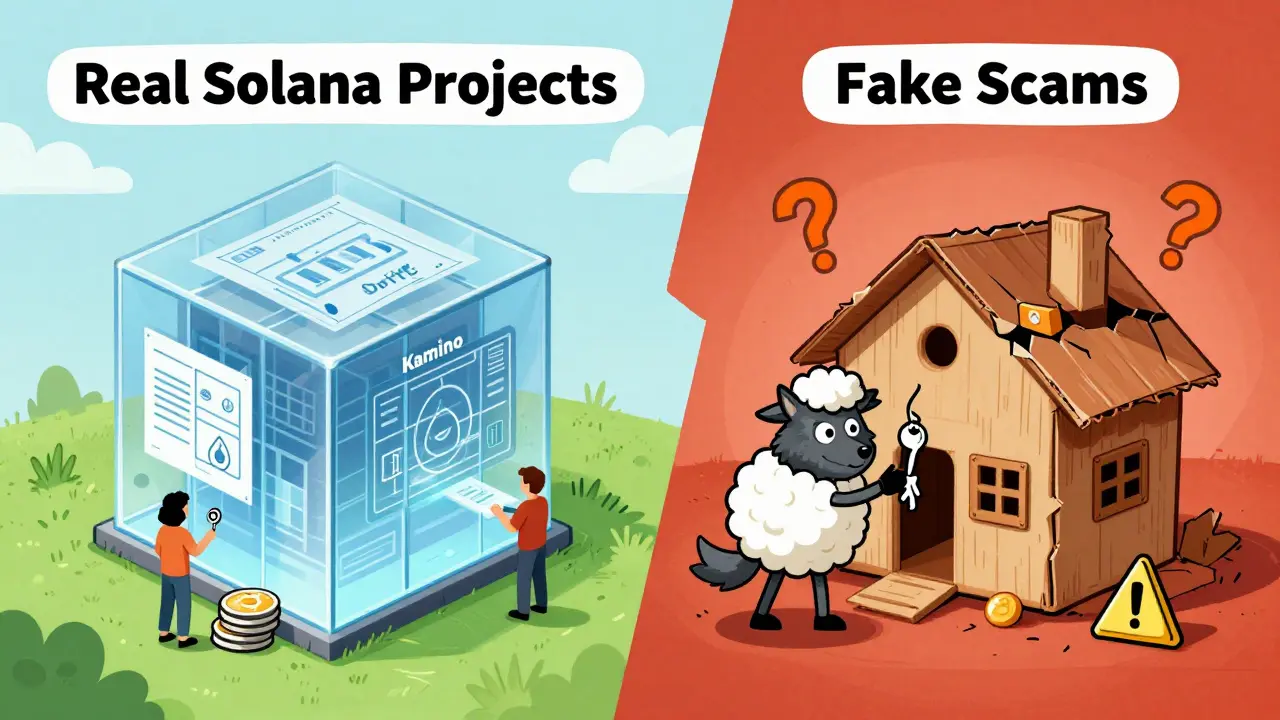
| Feature | Legitimate Project | Fake/Scam Project |
|---|---|---|
| Team Identity | Doxxed (publicly known) or highly respected anonymous team with track record | Completely anonymous, no history, or stolen identities |
| Website Domain | Clean, professional, often .com or .org, verified on socials | Misspellings, random domains (.xyz, .top), or temporary links |
| Tokenomics | Clear distribution plan, vesting schedules, utility defined | Vague promises, "100x guaranteed," no technical documentation |
| Community Engagement | Active devs answering questions, transparent roadmaps | Bots filling comments, admins banning skeptics, FOMO-driven posts |
| Connection Request | Never asks for seed phrase; uses read-only or limited write permissions | Asks for unlimited approval or seed phrase immediately |
Real Solana Airdrops to Watch in 2026
While you should ignore the Sonar Holiday rumor, that doesn’t mean the door is closed on legitimate rewards. The Solana ecosystem continues to mature, and several major projects have announced or hinted at future distributions based on past activity. Instead of chasing ghosts, focus your energy on protocols with real usage and transparent teams.
Projects like Kamino, a leading liquid staking protocol on Solana have already run multiple seasons of rewards. Season 3 and beyond often reward users who provide liquidity or stake SOL through their platform. Similarly, Drift Protocol, a perpetual futures exchange has historically rewarded traders and liquidity providers. If you were active during their earlier phases, keep an eye on their official Discord and Twitter for any retroactive snapshot announcements.
Another area to watch is cross-chain infrastructure. Projects like Wormhole, a universal data layer for cross-chain messaging and MarginFi, a decentralized lending protocol have large user bases and have teased potential token launches or reward programs. These are not guaranteed, but they are grounded in real product usage rather than empty promises.
The key difference? These projects require you to actually use their services-swap tokens, lend assets, or provide liquidity. If an airdrop requires zero effort and just a wallet connection, it is almost certainly a scam.
How to Protect Your Wallet from Airdrop Scams
Protecting yourself isn’t about being paranoid; it’s about being disciplined. Here are practical steps to ensure you never fall victim to a fake airdrop like the Sonar Holiday hoax.
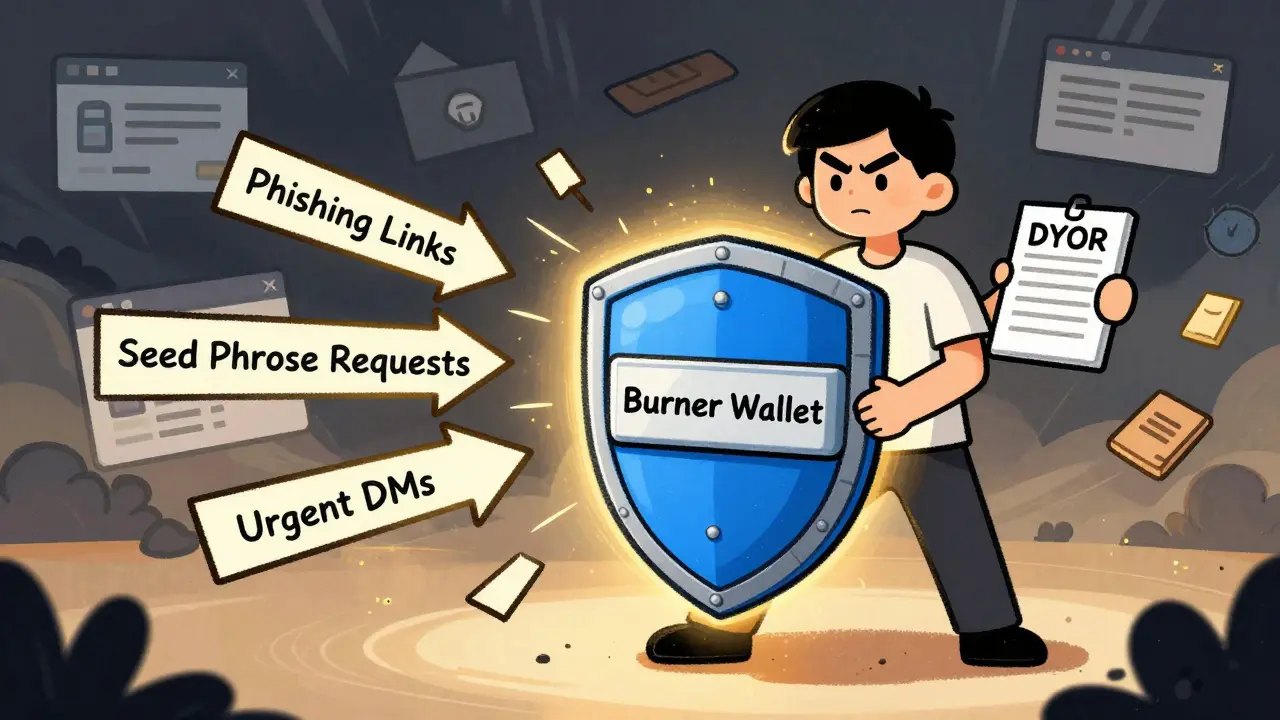
- Use a Burner Wallet: Never connect your main wallet-the one holding your long-term savings-to unverified websites. Create a separate wallet for interacting with new dApps. If it gets drained, your core holdings remain safe.
- Revoke Permissions Regularly: Use tools like Revoke.cash or Solana-specific revocation tools to check what contracts have access to your wallet. If you see an old or unknown app with unlimited approval, revoke it immediately.
- Verify Links Manually: Never click links from DMs, Telegram groups, or unsolicited emails. Go directly to the project’s official website by typing the URL yourself or using a trusted bookmark.
- Check Contract Addresses: Before buying or claiming any token, verify its contract address on a reliable explorer like Solscan. Compare it with the address listed on the project’s official documentation. One wrong character means you are buying a fake token.
- Ignore "Guaranteed" Rewards: No legitimate financial instrument guarantees returns. If a project promises fixed yields or guaranteed airdrop values, it is a Ponzi scheme or a scam.
I recommend setting up hardware wallet integration for any significant transactions. Even if your computer is compromised, a hardware device adds a critical layer of physical security that software alone cannot match.
The Psychology Behind Crypto Scams
Why do these scams work? Because they exploit human psychology. Scammers understand FOMO (Fear Of Missing Out) better than anyone. They create artificial scarcity-"only 1,000 spots left!"-and urgency-"claim ends in 2 hours!"-to bypass your logical thinking.
The "Sonar Holiday" name itself is designed to sound festive and harmless. It leverages the positive associations we have with holidays and gifts. Combine that with the allure of free money, and you have a recipe for disaster. Remember: if it sounds too good to be true, it is. In crypto, it usually is.
Also, consider the source. Did you hear about this airdrop from a friend who lost money last year? Or from an influencer with 100k followers who hasn’t posted original content in months? Influencer marketing is heavily regulated in some regions, but in crypto, it’s often a wild west. Many influencers are paid to promote scams without knowing it, or worse, they are part of the scheme. Always do your own research (DYOR), and treat every promotion with skepticism.
What to Do If You Already Connected Your Wallet
If you clicked a link related to the Sonar Holiday rumor and connected your wallet, don’t panic-but act fast. Here is your emergency checklist:
- Disconnect Immediately: Close the browser tab and disconnect the wallet from the site via your wallet interface.
- Move Funds: Transfer all assets from that wallet to a new, secure wallet. Do not leave anything behind, including small amounts of SOL or stablecoins.
- Revoke Access: Use a revocation tool to remove any permissions granted to the malicious contract.
- Monitor Activity: Check your transaction history on Solscan for any outgoing transfers you didn’t initiate. If you see unauthorized transactions, note the recipient addresses for reporting.
- Change Passwords: If you entered any passwords or seed phrases on the site, change them immediately on all platforms where you use them. Consider your old credentials compromised.
Reporting the incident to the platform where you saw the ad (Twitter, Telegram, etc.) helps protect others. While you may not recover lost funds, you can help shut down the scam operation.
Building Long-Term Value in Web3
Airdrops are just one piece of the crypto puzzle. Real wealth in Web3 comes from understanding technology, participating in governance, and providing value to networks. Instead of hunting for free tokens, consider learning how to use DeFi protocols responsibly. Provide liquidity to established pools, stake your assets securely, and engage with communities that prioritize transparency.
The Solana ecosystem offers incredible opportunities for builders and users alike. From NFT marketplaces to decentralized exchanges, there are countless ways to participate meaningfully. Focus on projects with strong fundamentals, active development, and clear communication. The rewards will follow-not as a handout, but as a result of your informed participation.
Stay skeptical, stay safe, and never let greed override your judgment. The crypto journey is a marathon, not a sprint. Protect your keys, and you protect your future.
Is the Sonar Holiday airdrop real?
No, the Sonar Holiday airdrop is not real. There is no official project by this name, no verified team, and no legitimate token launch associated with it. It is widely considered a scam designed to steal wallet funds.
How can I tell if an airdrop is a scam?
Look for red flags like anonymous teams, vague tokenomics, pressure to act quickly, requests for seed phrases, and unofficial social media links. Legitimate projects always have verifiable information, active developers, and clear documentation.
What are some legitimate Solana airdrops to watch in 2026?
While nothing is guaranteed, projects like Kamino, Drift Protocol, MarginFi, and Wormhole have histories of rewarding users. Always verify announcements through their official channels and focus on actual usage rather than just claiming tokens.
Should I connect my main wallet to check airdrop eligibility?
Never connect your main wallet to unverified sites. Use a burner wallet for testing new dApps. If a site asks for unlimited approval or your seed phrase, disconnect immediately and move your funds to a new wallet.
What should I do if I fell for a fake airdrop?
Act quickly: disconnect your wallet, transfer remaining funds to a new secure wallet, revoke all permissions using a tool like Revoke.cash, and change any passwords that may have been exposed. Report the scam to relevant platforms to help prevent further victims.
It is genuinely disheartening to see how many individuals fall for these elaborate traps, yet it is crucial that we maintain a collective vigilance against such malicious actors. The detailed breakdown provided in this article serves as an excellent reminder of the importance due diligence in our digital interactions. I appreciate the clear distinction between legitimate protocols and those designed solely for exploitation.
Wait, hold up. You're telling me Kamino and Drift are safe? I've seen some wild stuff on Solana lately. Are you sure they aren't just bigger fish in the same pond? I need more proof before I trust any 'legitimate' project. This feels like fear-mongering to keep us away from potential gains. Don't let them gatekeep your alpha!
Oh please, everyone knows there's money to be made if you're brave enough. These 'experts' always talk about risk but never mention the 100x opportunities hiding in plain sight. I connected my wallet to three different sites last week and I'm still here. Maybe you're just too scared to participate in the real economy. Stop coddling people with safety tips when the real game is about speed and guts.
lol u guys r so gullible 😂 i already claimed mine n got 50k tokens worth millions 💰🚀 why u listen to this boring guy instead of making money? smart people know how to spot the real gems 🤫💎
Typical plebeian mindset. Only the elite understand true value. The masses follow sheep-like while the wise accumulate. My portfolio is diversified across 50 new meme coins. You peasants worry about scams while I build generational wealth through sheer audacity. Keep your pennies.
Perhaps we should consider the philosophical implications of trust in a decentralized system. If no one can be trusted, does value even exist? Or is it merely a consensus hallucination? We must look deeper than just code and contracts to find truth.
Hey guys lets just stay calm ok. No need to fight. I think the author makes good points about burner wallets. It really helps to keep things separate. Hope everyone stays safe and happy out there.
I have been in crypto since 2017 and I can tell you that most of you are walking into traps. The lack of basic security hygiene is appalling. Connect a hardware wallet or go home. It is not rocket science.
You are absolutely right! Education is key. Let us support each other in learning these skills rather than judging those who are new. We can all grow together by sharing knowledge and experiences safely.
i totally agree with that. its scary how easy it is to lose everything. i almost fell for a fake twitter link yesterday. glad i double checked the url. thanks for the heads up everyone!
why do you care about their feelings anyway? life is harsh. if you cant handle losing money then maybe crypto isnt for you. stop being so soft. the market doesnt care about your emotions. wake up.
hey folks just a quick tip use revoke.cash regularly 👍 its super helpful for checking permissions. dont forget to check your contract addresses too! stay safe out there 🛡️✨