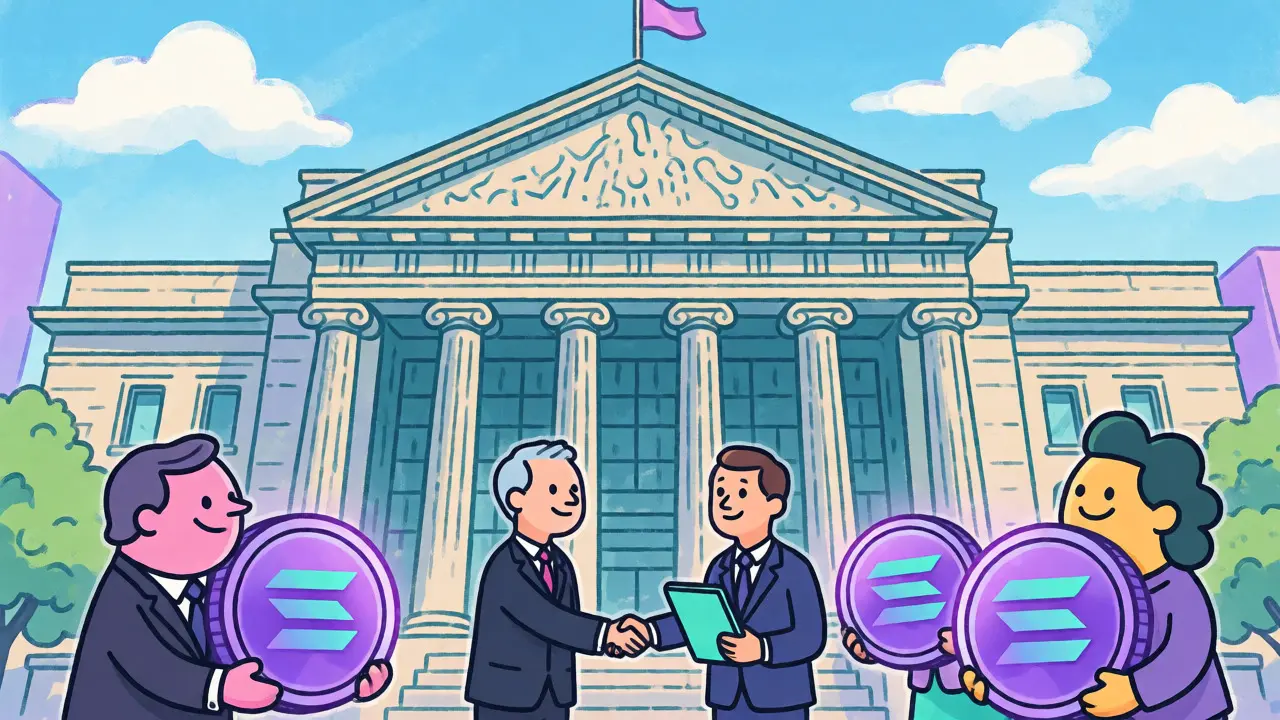
Imagine holding Solana (SOL) without ever touching a private key, worrying about exchange hacks, or paying high fees for cold storage. For years, this was the holy grail for traditional investors who wanted crypto exposure but hated the technical hassle. On April 16, 2025, that dream became reality in Canada. The Ontario Securities Commission (OSC) gave the green light to four major asset managers-Purpose Investments, Evolve Funds Group, CI Financial, and 3iQ Corp-to launch spot Solana ETFs on the Toronto Stock Exchange (TSX). This wasn't just another product launch; it marked North America's first publicly traded investment vehicle offering direct exposure to Solana. While the United States still debates altcoin regulations, Canada has once again positioned itself as the global pioneer for regulated crypto products.
Why Canada Beat the US to the Punch
You might wonder why these products launched in Toronto before New York. It comes down to regulatory philosophy. The SEC in the US has been cautious, approving only Bitcoin and Ethereum spot ETFs by late 2025, with altcoins stuck in review limbo. In contrast, Canada’s OSC revised its rules for publicly traded cryptocurrency funds in January 2025, creating a clearer, more permissive framework. This allowed Canadian regulators to approve Solana-backed ETFs swiftly. Bloomberg senior ETF analyst Eric Balchunas called this "our first look at the alt coin race" in institutional crypto products. It’s a significant win for retail and institutional investors who want access to high-growth alternative cryptocurrencies beyond the big two.
Canada isn’t new to this game. They launched the world’s first Bitcoin ETF back in February 2021 via Purpose Investments. By extending this leadership to Solana, they are solidifying their status as a hub for crypto innovation. If you’re an investor looking for regulated, accessible entry points into the blockchain economy, Canada is currently setting the standard.
The Staking Advantage: A Key Differentiator
Here is where things get really interesting for yield hunters. Unlike US crypto ETFs, which generally prohibit staking due to concerns over commingling customer assets, Canadian regulators permitted these new Solana ETFs to stake a portion of their holdings. Solana uses a Proof-of-Stake consensus mechanism, meaning validators secure the network and earn rewards in return. By allowing staking, these ETFs can generate additional yield on top of price appreciation.
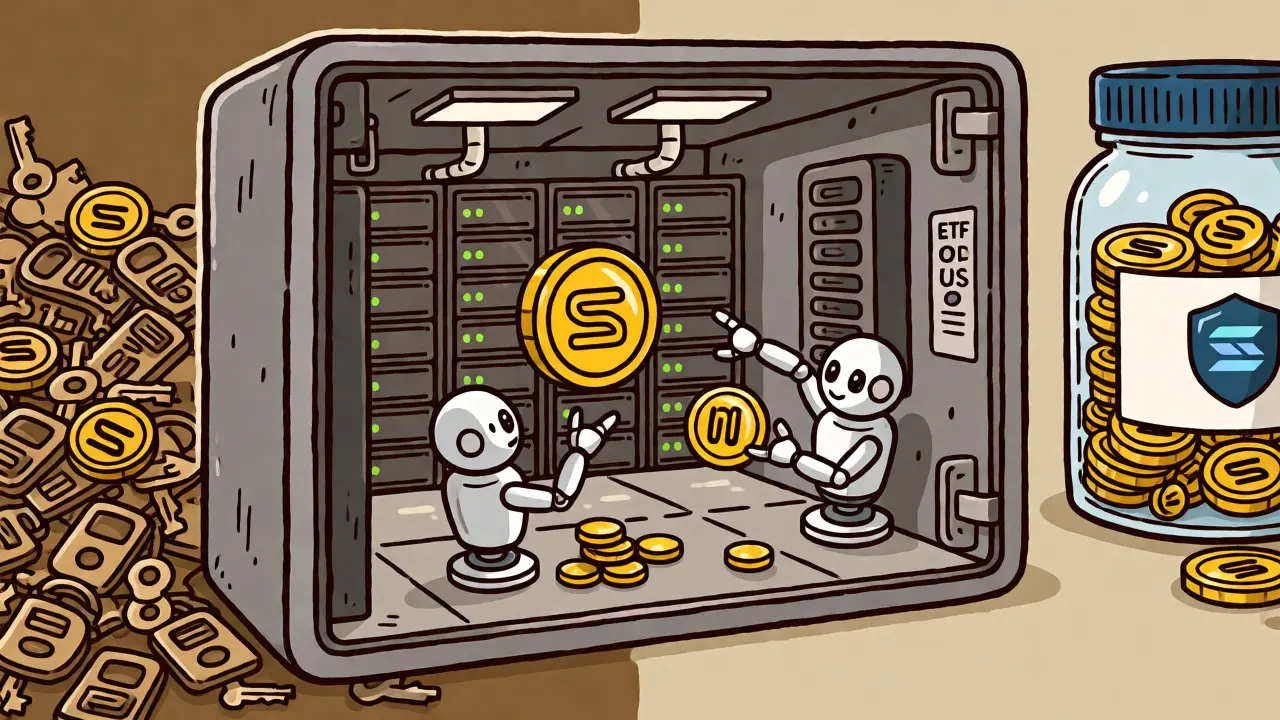
Let’s look at the specifics. The 3iQ Solana Staking ETF (ticker: QSLN) explicitly highlights features like "experienced validator operators," "segregated cold-storage custody," and "daily yield accretion." This means if you hold shares in QSLN, the fund earns staking rewards from the underlying SOL tokens, and those rewards are reflected in the Net Asset Value (NAV). According to TD Securities’ analysis, Solana staking involves an unbonding period of roughly one epoch (2-3 days), which is significantly faster than Ethereum’s variable 2-14 day period. This liquidity feature makes staking more attractive and manageable for fund managers.
| Feature | 3iQ Solana Staking ETF (QSLN) | Purpose Solana ETF (PSOL) | Evolve Solana ETF (ESOL) |
|---|---|---|---|
| Management Fee | 0% for first 12 months | Standard fee applies | Standard fee applies |
| Staking Enabled | Yes | Yes | Yes |
| Exchange Listing | TSX | TSX | TSX |
| Custody Model | Segregated Cold Storage | Institutional Custody | Institutional Custody |
| Account Eligibility | TFSA / RRSP | TFSA / RRSP | TFSA / RRSP |
How to Buy and Hold Solana ETFs in Registered Accounts
For many Canadians, the biggest barrier to buying crypto directly is tax complexity. You can’t hold raw Bitcoin or Solana in a Tax-Free Savings Account (TFSA) or Registered Retirement Savings Plan (RRSP). But because these ETFs are structured as conventional securities under Canadian law, they fit perfectly into these registered accounts. This is a massive advantage. You get the upside potential of Solana’s price movements plus staking yields, all while keeping your gains tax-free (in a TFSA) or tax-deferred (in an RRSP).
Buying them is straightforward. If you have a brokerage account that allows trading on the Toronto Stock Exchange, you can purchase shares just like you would buy Apple or Shopify stock. There’s no need to set up a digital wallet, manage seed phrases, or navigate clunky crypto exchanges. The learning curve is minimal for anyone familiar with standard ETF investing. However, remember that while the wrapper is familiar, the underlying asset is volatile. Solana’s market cap sat at $69 billion in April 2025, positioning it as the seventh-largest cryptocurrency. It processes up to 65,000 transactions per second, far outstripping Ethereum’s capacity, but it carries the risks inherent to any high-beta tech asset.
Risks and Realities: Volatility and Infrastructure
Don’t let the convenience blind you to the risks. Crypto markets are notoriously volatile. Following the launch, Solana’s price fluctuated between $194 and $203 in late October 2025. Analysts at OneSafe Blog noted that this volatility serves as a sharp reminder for traders. If you’re expecting steady returns, this isn’t it. These products track the price of SOL, so when SOL drops, your ETF share price drops too.
There’s also infrastructure risk to consider. Solana experienced a notable 11-hour network outage in December 2024. While the network has improved reliability, critics on social media platforms like X (formerly Twitter) have pointed out that such events remind us that blockchain technology is still maturing. An ETF doesn’t protect you from fundamental protocol failures; it simply provides a regulated way to own the token. If the network halts, the value proposition takes a hit. Always assess your risk tolerance before allocating significant capital.

The Bigger Picture: Institutional Adoption and Future Outlook
The success of these Solana ETFs signals a broader trend. Institutional money is increasingly comfortable with crypto, provided it comes wrapped in familiar regulatory packages. Data shows strong early adoption, with 3iQ’s QSLN growing its assets under management from $10 million at inception to over $258 million CAD within six months. This rapid growth suggests that both retail and institutional investors are hungry for diversified crypto exposure.
Looking ahead, experts predict similar trajectories for other altcoins. With increased clarity regarding XRP’s regulatory status in the US, analysts suggest XRP ETFs could follow suit. Furthermore, Bloomberg’s James Seyffart hinted that US regulators might eventually allow staking in Ethereum ETFs, potentially narrowing the feature gap between Canadian and US products. For now, though, Canada remains the leader. If you’re outside Canada, keep an eye on developments from the SEC, but don’t expect immediate parity. The Canadian model proves that clear regulation accelerates adoption.
Frequently Asked Questions
Can I buy Solana ETFs in my TFSA?
Yes, absolutely. Because these Solana ETFs are listed on the Toronto Stock Exchange and structured as conventional securities, they are eligible for inclusion in Tax-Free Savings Accounts (TFSAs) and Registered Retirement Savings Plans (RRSPs). This allows you to gain exposure to Solana's price and staking yields without triggering immediate tax liabilities on gains within these registered accounts.
Do Canadian Solana ETFs offer staking rewards?
Yes, unlike most US-based crypto ETFs, Canadian regulators have permitted these Solana ETFs to stake a portion of their underlying SOL holdings. This generates additional yield through Solana's Proof-of-Stake mechanism. Funds like the 3iQ Solana Staking ETF report daily yield accretion, which is reflected in the fund's Net Asset Value (NAV).
Which asset managers launched Solana ETFs in Canada?
Four major asset managers received approval from the Ontario Securities Commission (OSC) to launch Solana ETFs in April 2025. These firms are Purpose Investments, Evolve Funds Group, CI Financial, and 3iQ Corp. Each offers slightly different fee structures and operational models, but all trade on the TSX.
Is there a minimum investment amount for Solana ETFs?
There is no specific minimum investment set by the fund itself; you simply need enough cash in your brokerage account to buy at least one share. Share prices vary by fund-for example, 3iQ's QSLN had an inception price around $10 USD/$13.97 CAD. Most brokerages allow fractional share purchases, making it accessible even with small amounts of capital.
What are the main risks of investing in a Solana ETF?
The primary risks include market volatility, as Solana's price can swing dramatically; infrastructure risks, such as network outages (Solana experienced an 11-hour outage in Dec 2024); and regulatory changes. Additionally, while staking adds yield, it introduces slight liquidity constraints during unbonding periods, though these are managed by the fund operators.