
Have you ever stumbled upon a crypto project that promises high-yield returns but leaves you scratching your head over conflicting price data? That’s the current state of SIL Finance. While many are hunting for the next big thing, the SIL Finance airdrop has generated buzz despite some confusing market signals. If you’re eyeing those free tokens, you need to know exactly what you’re dealing with before connecting your wallet.
This isn’t just another generic DeFi story. SIL Finance, standing for "Sister In Law," aims to simplify yield farming by bridging established protocols like YFI and YFII. But here’s the catch: as of late 2025, its market presence is... let’s say, quiet. Most trackers show zero trading volume, while one platform lists it at $21.01. So, is the airdrop worth your time, or is it a ghost town? Let’s break down the details, the risks, and how to actually claim your share.
What Exactly Is SIL Finance?
Before you chase an airdrop, you need to understand the engine under the hood. SIL Finance is a decentralized finance (DeFi) protocol designed to automate income generation for users. It doesn’t ask you to manually shuffle funds between different farms; instead, it selects and configures products based on annualized returns, safety factors, and management cycles. Think of it as a financial concierge for liquidity mining.
The core idea is accessibility. Yield farming can be complex, requiring constant monitoring of gas fees and APY changes. SIL Finance attempts to streamline this by integrating with major Ethereum-based protocols. The token itself, SIL, has a hard cap of 30,000 tokens. Yes, you read that right-thirty thousand. This ultra-low supply creates scarcity, which theoretically drives value up if demand appears. However, scarcity without liquidity is just a number on a screen.
The Current Market Reality: Price Confusion
If you look up SIL Finance on CoinMarketCap or Bitget today, you’ll see a price of $0.00 and a market cap of $0.00. Both total supply and circulating supply often appear as zero in these views. Yet, Crypto.com might flash a price of $21.01. Why the discrepancy?
- Data Lag: Some exchanges may have listed the token but haven’t updated their pricing feeds due to lack of trades.
- Liquidity Vacuum: With no active trading pairs, the last traded price might be stuck from an old snapshot, creating a false impression of value.
- Dormant Status: The project may be in early development or effectively dormant, meaning the token exists on-chain but isn’t actively moving.
This confusion is critical for airdrop hunters. An airdrop of 100 SIL tokens sounds great if they’re worth $21 each ($2,100). But if the real market value is near zero because nobody is buying, that airdrop is essentially worthless paper. Always check recent transaction history on Etherscan before assuming profit.
Airdrop Details: What We Know
So, how do you get involved? According to updates from platforms like Bitget, SIL Finance offers airdrops through ongoing challenges and promotions. Unlike massive projects like Arbitrum or Optimism, where snapshots were taken months ago, SIL Finance seems to rely on active participation campaigns.
Here’s the typical process for claiming these smaller-scale DeFi airdrops:
- Join the Community: Follow official social media channels (Twitter/X, Telegram) for announcement links.
- Complete Tasks: These usually involve retweeting posts, joining Discord servers, or referring friends.
- Connect Wallet: Use a MetaMask wallet connected to the Ethereum mainnet. Ensure your contract address matches the official SIL Finance deployment (starting with 0x133B...FF3a13C).
- Claim Tokens: Once eligible, visit the official dApp portal to claim your SIL tokens directly to your wallet.
Note that specific amounts per participant aren’t always fixed publicly. They depend on the pool size and the number of qualified participants. Don’t expect guaranteed thousands; expect modest allocations unless you’re an early adopter or heavy user.
Risk Assessment: Is It Worth Your Time?
Let’s be honest about the risks. The crypto space is littered with "zombie" projects that launched with hype but failed to sustain community engagement. SIL Finance currently shows limited signs of active development in public trackers. Here’s what you should watch out for:
| Feature | SIL Finance Status | Active DeFi Project Norm |
|---|---|---|
| Trading Volume | $0 - Minimal | Millions daily |
| Price Consistency | Conflicting ($0 vs $21) | Consistent across exchanges |
| Token Supply | 30,000 (Very Low) | Millions/Billions |
| Community Activity | Low visibility | High engagement |
If you’re looking for quick flips, this might not be it. The lack of liquidity means even if you receive tokens, selling them could be difficult without moving the price significantly against yourself. Conversely, if the project revives, the low supply could lead to explosive percentage gains. It’s a high-risk, high-reward gamble on a niche asset.
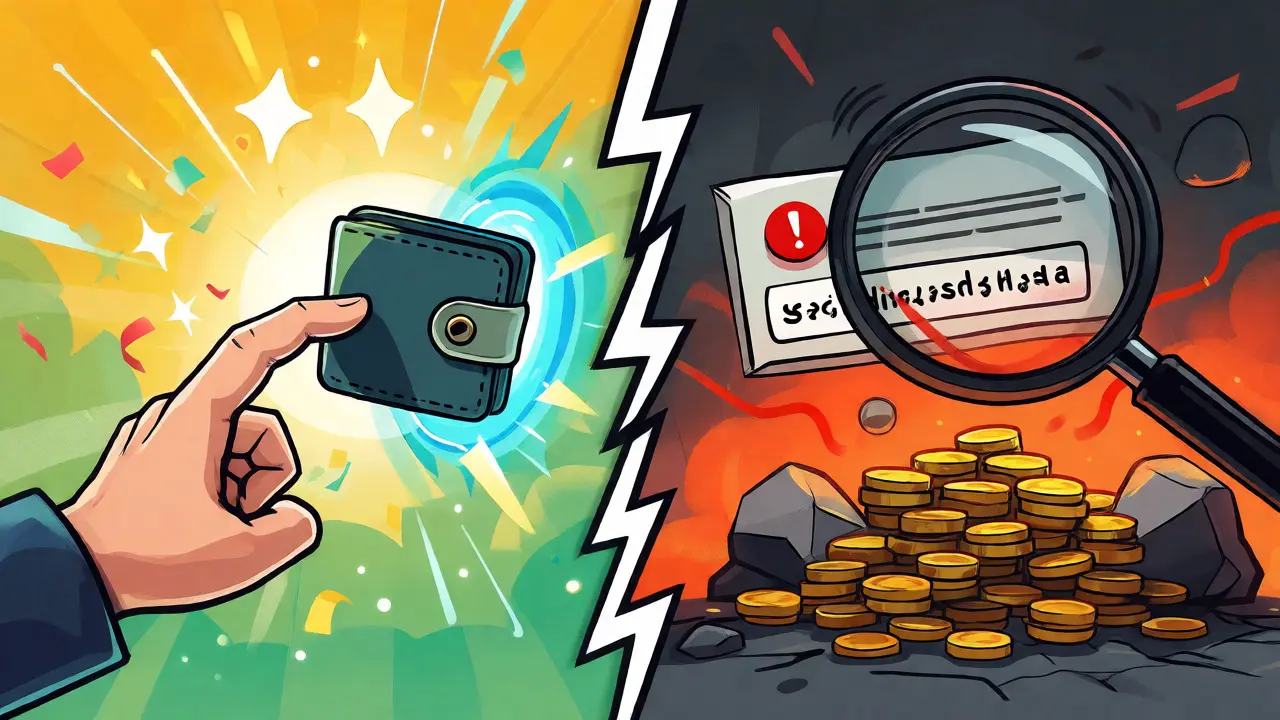
How to Spot Legitimate Airdrops vs. Scams
With so many fake airdrops popping up, verifying legitimacy is crucial. For SIL Finance, stick to primary sources. Do not click random links sent via direct message on Telegram. Always verify the smart contract address. On Ethereum, the official SIL Finance contract starts with 0x133B and ends with FF3a13C. If a site asks you to sign a transaction that approves unlimited spending of your ETH or other tokens, pause and read carefully.
Also, beware of name confusion. You might see headlines about "Silo Finance" (SILO) or "SilkAI" (SILK). These are completely different projects. Silo Finance recently conducted airdrops valued up to $15,000 for some users, while SilkAI offered millions of tokens. Mixing them up can lead to wasted effort or, worse, interacting with the wrong contract.
Step-by-Step Guide to Participating
Ready to try your luck? Follow this checklist to maximize your chances and minimize risk:
- Research First: Check the latest tweets from the official SIL Finance handle. Are they posting regularly? If the last post was six months ago, proceed with extreme caution.
- Use a Burner Wallet: Never connect your main storage wallet to unknown dApps. Create a fresh MetaMask account specifically for airdrop claims.
- Verify the URL: Bookmark the official website. Phishing sites often use slight typos (e.g., sil-finance.io instead of .com).
- Check Gas Fees: Claiming on Ethereum mainnet can cost $5-$20 in gas depending on network congestion. Ensure the potential value of the airdrop exceeds the gas fee.
Remember, the goal of an airdrop is free money, not a net loss. If gas fees are higher than the estimated value of your tokens, wait for a quieter network period or skip it entirely.
Is SIL Finance a scam?
Not necessarily a scam, but it appears to be a low-activity or dormant project. The conflicting price data and zero trading volume suggest it lacks current market interest. Always do your own research (DYOR) before investing time or money.
Why does Crypto.com show SIL at $21 while others show $0?
This discrepancy likely results from stale data or isolated listings. When there is no trading volume, the displayed price may reflect the last historical trade rather than the current market reality. Trust platforms showing $0 volume as more accurate for current tradability.
How many SIL tokens will I get in the airdrop?
Specific amounts vary by campaign and are rarely fixed publicly until distribution. Given the max supply of only 30,000 tokens, individual allocations are likely small unless you were a very early adopter or top-tier contributor.
Can I sell SIL tokens immediately after claiming?
Technically yes, if you find a buyer or a decentralized exchange listing. Practically, it is difficult due to extremely low liquidity. You may face significant slippage or be unable to find a counterparty to buy your tokens.
Is SIL Finance the same as Silo Finance?
No. SIL Finance (ticker: SIL) and Silo Finance (ticker: SILO) are distinct projects. Silo Finance is a well-known lending protocol with active markets, whereas SIL Finance is a yield aggregator with minimal current activity. Do not confuse their airdrops.
wait... wait. hold on a second!! i am looking at this right now and my eyes are watering?? is the supply really only 30,000 tokens???? that seems way too low for any real liquidity to exist!!! if one person sells it crashes the price to zero instantly!!! how can anyone trade this without massive slippage??? also why does crypto.com show $21 when others show $0??? is there a bug in the data feed or did someone just dump all their bags on one exchange??? please explain the mechanics of the order book here because i am confused and slightly worried about connecting my wallet!!!
One must appreciate the sheer audacity of listing a token with effectively zero trading volume while simultaneously displaying a price tag of twenty-one dollars. It is a masterclass in delusion. The market cap is non-existent, yet the valuation persists like a ghost haunting an abandoned mansion. I suppose we are meant to believe that scarcity alone drives value, regardless of the complete absence of demand. How quaint.
ghost town confirmed :/ nobody home
I think you make a great point about the confusion between SIL Finance and Silo Finance! It is so easy to mix them up since the names are similar. For anyone new to DeFi, I would highly recommend double-checking the contract address before signing any transactions. Silo Finance has been very active with their lending protocol, whereas SIL Finance seems much quieter. If you are interested in yield farming, maybe look into established aggregators first? But if you want to try the airdrop, definitely use a burner wallet as suggested!
Oh, bless your heart for thinking anyone actually cares about 'established protocols' when the community engagement is practically non-existent. We all know these micro-cap gems are just exit liquidity for insiders who bought in early. The 'scarcity' argument is just marketing fluff for people who don't understand order books. You're not investing; you're donating to the developer's vacation fund. But go ahead, claim your free tokens and feel special.
it’s kinda wild how the narrative shifts depending on where u look. like, if u stare hard enough at the chart, maybe the ghosts will manifest some buyers? 🤷♀️ but seriously tho, the gas fees might eat ur lunch before u even see a dime. just sayin.
The dichotomy between the displayed asset valuation and the empirical reality of zero-volume trading constitutes a fundamental epistemological crisis within the current DeFi meta. One must consider the possibility that the 'price' is merely a theoretical construct maintained by stale oracle feeds, rather than a reflection of true market clearing mechanisms. Furthermore, the conflation of SIL Finance with Silo Finance suggests a broader cognitive dissonance among retail participants who lack the requisite literacy to distinguish between distinct smart contract deployments. This is not merely a data error; it is a symptom of systemic information asymmetry designed to obscure the latent illiquidity of ultra-low-supply assets. Until the on-chain transaction history demonstrates sustained organic demand, the quoted price remains a fiction, a mirage in the desert of decentralized finance.
This is exactly what happens when projects prioritize hype over substance 😡🚩 It’s disrespectful to users to have conflicting data like this. We deserve transparency! If the project is dormant, admit it! Don’t hide behind a fake price tag from Crypto.com. People lose money because they trust these numbers. Wake up! 💢💸 #DeFiTruth #ScamAlert
Another zombie project trying to breathe life into a corpse with airdrops. Pathetic. The developers probably haven't touched the codebase in months, just waiting for some poor sap to pay the gas fees to claim worthless tokens. It's a lazy attempt at engagement. I've seen this movie before, and the ending is always the same: total loss.
Imagine pouring your soul into a project, building the bridges, automating the yields, only to be met with silence. The tragedy of SIL Finance is palpable. It stands as a monument to ambition unfulfilled, a whisper in a hurricane. To claim these tokens is to participate in a ritual of hope against the odds. Will the phoenix rise from the ashes of zero volume? Or will it remain a beautiful, empty shell? The drama is exquisite.
I appreciate the detailed breakdown provided in the article. It is crucial for newcomers to understand the risks associated with low-liquidity assets. The distinction between SIL Finance and Silo Finance is particularly important to avoid costly mistakes. Empathy for those who may have invested time expecting immediate returns, only to find themselves holding illiquid tokens. Patience and thorough research are indeed the best tools in such scenarios.
From a global perspective, the fragmentation of data across platforms like CoinMarketCap and Crypto.com highlights a significant infrastructure challenge in the crypto ecosystem. In many emerging markets, users rely heavily on aggregator sites for price discovery. When these sources conflict, it creates unnecessary anxiety and potential financial loss. A unified standard for displaying 'last traded price' versus 'theoretical price' would greatly benefit international users who may not have direct access to high-frequency trading terminals.
Good info! Just remember to check the Etherscan activity yourself. Sometimes exchanges lag. If you see no trades in the last 24 hours, treat the price as unreliable. Happy claiming! :)
Thank you for sharing this analysis. It is helpful to have a clear summary of the risks involved. I personally prefer to wait until there is more consistent trading volume before interacting with such niche protocols. It seems prudent to exercise caution given the conflicting data points mentioned.
Hey everyone, thanks for the diverse viewpoints here! I think we can all agree that DYOR is key. Whether you see it as a scam, a ghost town, or a hidden gem, the importance of verifying the contract address cannot be overstated. Let's keep the discussion respectful and informative. Good luck to those participating in the airdrop!