Remember the summer of 2021? It was the peak of DeFi mania, and every protocol seemed to be launching something new. Amidst the noise of yield farming and NFTs, a quieter but technically ambitious project called Shield (formerly known as ShieldEX) distributed its native utility token for its decentralized derivatives protocol, the SLD token. If you were active in the crypto space back then, you might have heard rumors about this distribution. But what exactly was it, who got it, and does it still matter today?
This isn't just another "how to claim" guide for a live event. The main claiming window closed years ago. Instead, this article breaks down the historical facts, the technical requirements that defined eligibility, and the current state of the project. Whether you missed out and want to know why, or you're analyzing DeFi history, here is the full picture.
The Core Facts: What Was the Shield DAO Airdrop?
Let’s clear up the confusion first. The term "DAO" is often used loosely in crypto marketing. In this specific case, we are talking about the token launch event for the Shield Protocol, which later rebranded. The core entity here is the SLD Token, which serves as the governance and utility asset for the Shield ecosystem.
The distribution was a one-time event designed to bootstrap liquidity and community engagement for their derivatives platform. Here are the hard numbers:
- Total Distributed: 4,085,754 SLD tokens.
- Claiming Window: August 5, 2021, to September 12, 2021.
- Network: Primarily associated with Ethereum, but claims required switching to Binance Smart Chain (BSC).
- Wallet Requirement: MetaMask (or compatible EVM wallet).
Unlike modern airdrops that use complex points systems or on-chain activity trackers from third-party platforms, Shield’s approach was direct. You had to prove you interacted with their testnets or contributed to their security. This targeted method ensured the tokens went to users who actually understood the product, not just bots looking for free money.
Who Was Actually Eligible?
Many people search for "Shield airdrop eligibility" hoping to find a loophole. The reality is stricter than most. You didn't just need to hold ETH or BNB. You needed specific interaction history. The project identified four main groups of eligible participants:
- Testnet Users: Anyone who deployed transactions on the Shield Kovan (Ethereum testnet) or Shield BSC testnet.
- ITO Applicants: Users who submitted applications for the Initial Token Offering (even if they weren't selected, the application itself counted).
- Bug Bounty Participants: Developers or auditors who participated in the 1st and 2nd Bug Bounty Programs. This was a key differentiator, rewarding security contributions.
- Campaign Participants: Users who completed tasks in the Shield Gleam Series Campaigns, typically involving social media engagement and referrals.
If you were just watching the news but didn't click "Connect Wallet" on their testnet, you likely weren't on the list. The system relied on on-chain signatures during these specific periods. There was no manual whitelist submission form for the general public; it was automated based on your transaction history.
The Claiming Process: Why It Was Tricky
Even if you were eligible, claiming the SLD tokens wasn't always smooth sailing. The process required a specific sequence of actions that tripped up many users, leading to a second claiming round on August 12, 2021, at 12 PM UTC.
Here is why so many people struggled:
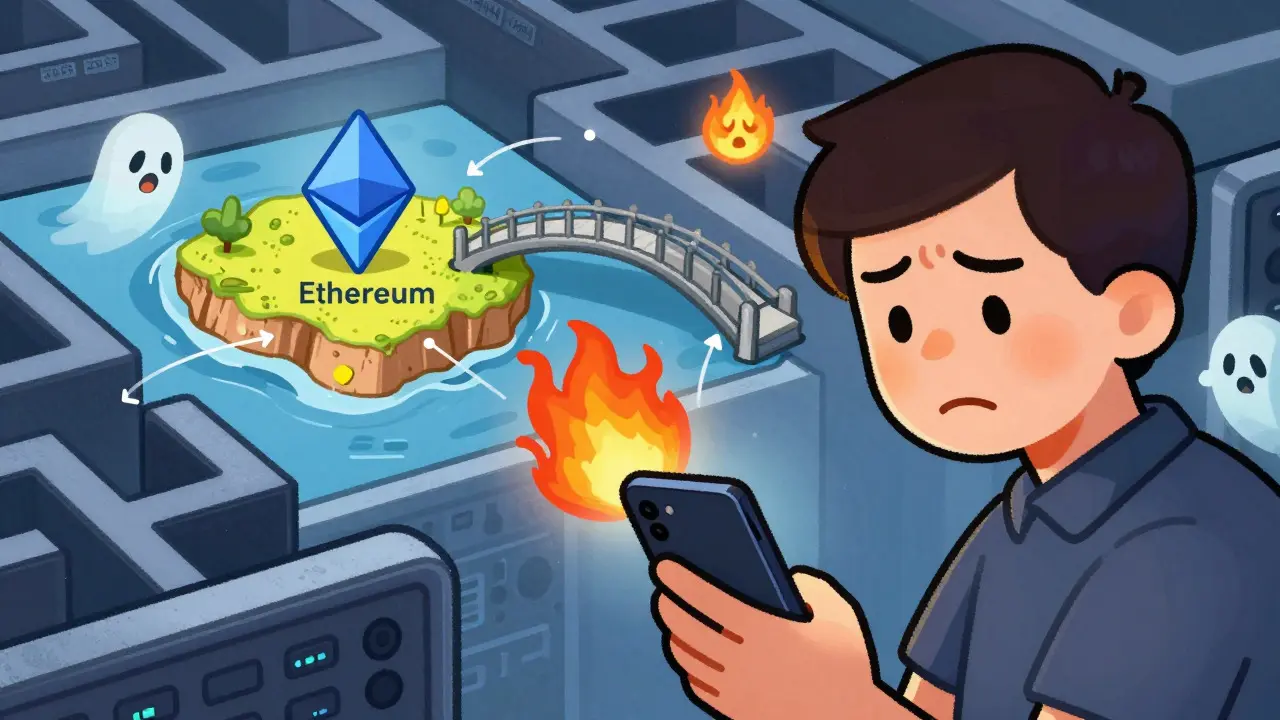
- Network Switching: Although the project roots were in Ethereum, the claim contract was deployed on Binance Smart Chain. Users had to manually add the BSC network to their MetaMask settings. For beginners, finding the correct RPC URL and chain ID was a major hurdle.
- Gas Fees: You needed BNB in your wallet to pay for the gas fee to execute the claim transaction. Many users had ETH but no BNB, forcing them to bridge funds or buy BNB separately.
- Interface Complexity: The UI at the time was part of the rebranding phase from ShieldEX to Shield. Some users reported bugs where the "Claim" button remained disabled even after connecting the correct wallet.
The deadline was firm: September 12, 2021. Any unclaimed tokens after this date were redistributed to a community pool. This meant that being eligible wasn't enough; you had to act within the five-week window.
SLD Tokenomics and Current Status
Now that the dust has settled, what happened to the SLD token? According to data aggregators like CoinMarketCap, the maximum supply was set at 1 billion SLD. However, current circulation data shows significant discrepancies, with some sources listing total supply as zero or negligible.
This doesn't necessarily mean the token died, but it suggests a shift in focus or reporting issues. The original Shield Protocol focused on Perpetual Options, a derivative instrument that allows traders to hold long-term positions without the hassle of rolling contracts. This was their unique selling point compared to standard perpetual futures found on platforms like dYdX or GMX.
However, there is a critical distinction to make. In recent years (2024-2025), another project named "Shield Protocol" has emerged, focusing on cross-blockchain 2FA security. This is not the same entity as the 2021 derivatives platform. Confusion between these two projects is common because they share the name "Shield." When researching SLD, ensure you are looking at the contract address 0x1ef6...95a084 on Ethereum/BSC to avoid mixing up the old derivatives project with the new security-focused one.
Comparison: Shield vs. Modern Airdrop Strategies
To understand where Shield fits in the broader crypto landscape, it helps to compare its 2021 strategy with how airdrops work today. The industry has shifted dramatically toward "points-based" farming and multi-chain complexity.
| Feature | Shield SLD (2021) | Modern DeFi Airdrops (e.g., Skyren, Layer 2s) |
|---|---|---|
| Eligibility Basis | Direct testnet usage & bug bounties | On-chain volume, TVL duration, points accumulation |
| Claiming Network | Binance Smart Chain (BSC) | Often native L2 (Arbitrum, Base) or Ethereum Mainnet |
| Token Utility | Derivatives trading fees & governance | Governance, staking, ecosystem incentives |
| Duration | ~5 weeks | Often indefinite until TGE (Token Generation Event) |
| Complexity | Medium (requires network switching) | High (multi-chain bridging, multiple protocols) |
The Shield model was simpler in concept but harder in execution due to the network switch. Modern airdrops are often easier to start but require sustained capital commitment over months. Shield rewarded early adopters who were willing to tinker with code and testnets, a demographic that is now largely professionalized into "airdrop farmers."
Common Pitfalls and Lessons Learned
If you are studying this case to prepare for future opportunities, here are the key takeaways from the Shield experience:
- Read the Fine Print on Networks: Always check which chain the claim contract lives on. Assuming it's the same as the project's main development chain is a dangerous guess.
- Keep Gas Ready: Having the right token for gas (BNB for BSC, MATIC for Polygon, etc.) is non-negotiable. Bridge assets before the claim window opens.
- Verify Contract Addresses: With naming collisions like "Shield," always verify the token contract via official documentation, not just social media posts.
- Don't Miss Deadlines: Unlike ongoing points programs, one-shot airdrops have hard stop dates. Set calendar reminders for the final day.
The redistribution of unclaimed tokens to a community pool also serves as a reminder that airdrops are not guaranteed income. They are incentives for action. If you don't act, the value goes to those who do.
Frequently Asked Questions
Can I still claim the Shield DAO SLD airdrop in 2026?
No, the primary claiming period ended on September 12, 2021. Any unclaimed tokens were redistributed to the community pool. Unless you have access to an internal admin key or a specific legal dispute resolution, the claim page is no longer functional for new users.
What is the difference between Shield Protocol (2021) and Shield Protocol (2024)?
The 2021 Shield (formerly ShieldEX) was a decentralized derivatives platform focusing on Perpetual Options. The 2024 Shield Protocol is a separate entity focused on blockchain-based 2FA security. They share a name but have different teams, technologies, and token structures. Do not confuse their airdrops or token utilities.
Why did the Shield airdrop require Binance Smart Chain?
While the project had Ethereum roots, deploying the claim contract on BSC allowed for lower transaction fees for users. This made it more accessible for smaller holders to claim their rewards without paying high Ethereum gas fees, though it required users to manage BNB for gas costs.
Is the SLD token still actively traded?
Trading activity for the original SLD token has significantly decreased since its 2021 launch. Liquidity is sparse, and price discovery can be volatile. Before attempting to trade, check real-time volume on major exchanges or DEXs to ensure sufficient liquidity exists for your position size.
How did bug bounty participation qualify for the airdrop?
Shield integrated security contributions into their incentive structure. Users who submitted valid bug reports during the 1st and 2nd Bug Bounty Programs were automatically whitelisted for the SLD distribution. This encouraged developers to audit the codebase, improving the protocol's security before mainnet launch.
One must observe with a discerning eye the peculiarities of this historical artifact. The distribution mechanism, while ostensibly transparent, reveals a layer of operational friction that suggests either incompetence or deliberate obfuscation. To require a network switch from Ethereum to BSC for a claim is a logistical hurdle that serves no purpose other than to filter out the uninitiated, a tactic often employed by projects seeking to insulate their early adopters from the general public. Furthermore, the ambiguity surrounding the token's current utility raises questions about the long-term viability of such governance assets. It is highly probable that the redistribution of unclaimed tokens was not merely an economic adjustment but a strategic move to consolidate power among those who remained engaged during the initial window. We must remain vigilant against the narrative of 'community' which often masks the interests of a select few. The correlation between bug bounty participation and eligibility is noteworthy, as it implies a meritocratic ideal that rarely survives contact with market realities. One cannot ignore the potential conflict of interest inherent in rewarding security contributions without a clear audit trail of the vulnerabilities found. The silence on the matter of the 2024 rebranding further compounds the suspicion that these entities are distinct yet deliberately conflated to leverage brand recognition. In the end, the lesson is clear: trust, but verify, and never assume that a closed window signifies a dead project.
It’s interesting how they handled the gas fees back then. I remember trying to bridge funds just to claim something small and feeling like I was fighting the system. It really does show how much has changed in terms of user experience since 2021. The fact that they had to do a second round because so many people got stuck is kind of sad but also makes sense given the tech at the time.
Oh, the audacity! To think we were all supposed to be 'decentralized' yet here we are, begging a centralized UI to let us click a button. It’s a moral failing of the industry, isn’t it? We preach freedom but build mazes. The fact that you needed BNB when you had ETH is just plain lazy design. Who even thought that was a good idea? Probably someone who didn't test it themselves. It’s a disgrace to the very concept of open finance. We should be ashamed of how convoluted these processes have become, even if they claim to be simpler now. The 'community pool' for unclaimed tokens? That’s just theft with a friendly name. If you don’t act fast enough, your rights are stripped away. How very Victorian of them. I suppose we can thank them for teaching us humility, though. 🙄
Honestly, the whole thing feels like a relic from a different era of crypto. 😅 Back then, if you weren't on Discord 24/7 and manually adding RPCs, you just missed out. It wasn't about the token, it was about the suffering. Now everyone complains about points farming, but at least you knew what you were doing. The comparison table in the post is spot on; modern airdrops are easier to start but harder to finish. I still wonder if anyone actually made money off SLD or if it was just a vanity metric for the team. 🤷♀️ But hey, history is history, right?
Wow, this is so cool! I love learning about the old days of DeFi. It shows how far we've come! Even though the airdrop is over, it's great to see the details laid out like this. It helps us understand why things work the way they do now. Let's keep exploring and learning together! 🚀✨
You’re missing the point entirely. This wasn't just a 'tricky' process, it was a stress test. If you couldn't handle switching networks and managing BNB gas in 2021, you weren't ready for the real derivatives market anyway. The fact that the token liquidity is low now doesn't invalidate the engineering behind the Perpetual Options model. Stop whining about the past and look at the technical architecture. They solved a problem that dYdX still struggles with regarding contract rolling. Read the whitepaper again before you judge the UX. The barrier to entry was intentional. It filtered out the tourists. Now you have professionals. Isn't that progress? Or are you too busy complaining about the gas fees to notice the innovation? Wake up and pay attention to the code, not the buttons.
Great breakdown. For anyone looking at the bug bounty angle, it's worth noting that many of those early auditors went on to become core contributors to other major protocols. The Shield ecosystem acted as a talent incubator in a way that pure financial incentives rarely achieve. It’s a nice reminder that sometimes the value of a project lies less in its token price and more in the human capital it attracts and retains. Well done on the detailed timeline.
The naming collision is a disaster.
Two projects, same name, zero communication.
Classic.
Misinformation is rampant.
Always check the contract address.
Don't trust the logo.
Trust the code.
Or better yet, trust nothing.
But definitely check the contract.
It’s the only safe harbor.
In this sea of confusion.
Stay sharp.
Stay skeptical.
And for God’s sake, read the docs.
This piece offers a fascinating lens through which to view the evolution of decentralized finance incentives. The transition from direct on-chain interaction requirements to points-based accumulation systems reflects a broader cultural shift within the crypto community, moving from a hacker ethos toward a more institutionalized approach to engagement. The Shield protocol's reliance on testnet usage and bug bounties was, in essence, a bet on the intrinsic value of technical contribution over mere capital deployment. While this model may appear archaic today, it underscores a fundamental truth: sustainable ecosystems require active stewardship, not just passive holding. The confusion arising from the subsequent rebranding and the emergence of a similarly named security protocol highlights the fragility of brand identity in a permissionless environment. Without robust naming conventions or registry standards, users are left to navigate a landscape riddled with homonyms and false friends. This case study, therefore, serves not only as a historical record but as a cautionary tale for future projects seeking to establish durable identities in the blockchain space. The redistribution of unclaimed tokens to a community pool, while economically efficient, arguably diluted the signal of genuine commitment from the original cohort. It is a complex interplay of game theory, social dynamics, and technical constraints that defines such events. Ultimately, the legacy of Shield SLD lies in its demonstration that accessibility and exclusivity are not mutually exclusive, but rather exist on a spectrum that projects must carefully calibrate.
So basically, if you didn't have a PhD in blockchain logistics and a spare hour to debug your MetaMask settings, you were out. Classic 2021. I remember spending three hours just getting the BSC RPC URL right. My wallet looked like a crime scene after that. Still, I respect the simplicity of the eligibility criteria compared to the 'farm 14 chains for 6 months' nonsense we get now. At least back then, if you did the work, you got paid. No points, no vesting schedules, no 'airdrop soon™'. Just tokens. Simple. Elegant. And probably why half the supply ended up in a black hole. Who wants to trade a token with zero volume and a confusing name? Nobody. It's a ghost town. But hey, at least we learned our lesson about checking the network tab before clicking claim. Right? ...Right?
One might argue that the friction inherent in the claiming process served as a necessary crucible for the community. By demanding a degree of technical proficiency, the protocol effectively curated its user base, ensuring that those who received the SLD token possessed a foundational understanding of cross-chain mechanics. This stands in stark contrast to the modern trend of abstracting away complexity, which often results in a populace ill-equipped to manage the risks associated with derivative instruments. The decision to deploy the claim contract on Binance Smart Chain, despite the project's Ethereum origins, was a pragmatic choice that prioritized accessibility for smaller holders over ideological purity. However, this very pragmatism introduced a layer of cognitive dissonance for users accustomed to the Ethereum mainnet's dominance. The subsequent rebranding and the emergence of a separate 'Shield Protocol' in the security sector further complicates the narrative, creating a semantic fog that obscures the true lineage of the original derivatives platform. It is a testament to the chaotic nature of the crypto space, where names are cheap and identities are fluid. Yet, amidst this turbulence, the core lesson remains: clarity in communication is paramount. A project that fails to distinguish itself from its eponymous counterparts invites confusion and, ultimately, disillusionment. The historical record of Shield SLD is thus not merely a footnote in DeFi history, but a critical case study in the challenges of building and maintaining a coherent brand in a rapidly evolving digital landscape.
thats a load of bullshitt. the real reason they switched to bsc was to hide the txns from eth explorers. you know the ones who dont want you to see the insider trading. i saw the logs. the claim contract was deployed by a whale wallet that held 40% of the supply. they dumped on the rest of us after the airdrop. classic rug pull. the 'community pool' is just a slush fund for the devs. wake up sheeple. the token is dead because they killed it. check the contract address 0x1ef6...95a084 and see who holds the most. its the same guy who runs the new shield security thing. its all one big con. stop believing the hype. the airdrop was a trap to get your wallets connected so they could phish you later. i got phished in 2022. lost my whole portfolio. thanks shield. lol. 📉📉📉
Nice summary, but let's be real, the 'bug bounty' part was the only legit way to get in. If you were just clicking around the testnet, you were probably competing with bots anyway. I remember submitting a minor UI bug and getting 500 SLD. Wasn't life-changing, but it felt good to know the devs actually read the reports. The rest of the crowd was just farming points for the Gleam campaigns. Typical. But yeah, the network switch was a pain. Who puts a claim on BSC when the dev chain is Eth? Makes no sense unless you're trying to save on gas for the claim itself, which is ironic since you need BNB to claim. Anyway, good write-up. Helps me remember why I stopped using that DEX.
This is super helpful for anyone researching DeFi history! 📚💡 I always get confused between the different 'Shield' projects, so having the contract address clearly stated is a lifesaver. It’s amazing how much detail you can find about these older protocols if you dig deep. Thanks for putting this together! It really helps to see the timeline and the specific eligibility groups listed out. Keep up the great work! 🌟🔍
Let us dissect the economic implications of this event with the rigor it deserves. The allocation of 4,085,754 SLD tokens represents a mere fraction of the total supply, suggesting a strategy focused on bootstrapping liquidity rather than broad-based adoption. This targeted approach, while effective in attracting high-quality users, inevitably limits the token's initial market depth. The requirement for BNB to execute claims introduces a secondary market dependency, forcing users to engage with the Binance ecosystem regardless of their preference for Ethereum-centric infrastructure. This friction point, while seemingly minor, acts as a significant barrier to entry for purists and newcomers alike. Furthermore, the short five-week claiming window creates artificial urgency, a psychological tactic that maximizes immediate engagement but risks alienating potential users who require more time to assess risk. The subsequent redistribution of unclaimed tokens to a community pool mitigates the inflationary pressure of abandoned assets but dilutes the value proposition for early adopters who claimed promptly. It is a delicate balance between incentive and exclusion, a balance that Shield Protocol appears to have struck with reasonable success, albeit with notable execution flaws. The legacy of this airdrop is thus twofold: a functional bootstrap mechanism and a cautionary tale regarding user experience design in decentralized systems. As we look forward, the lessons from Shield SLD remind us that technical excellence must be paired with intuitive interface design to achieve true mass adoption. The gap between these two elements remains the primary obstacle facing the DeFi sector today.
I feel for everyone who missed out on this. It’s tough when you realize the window was so short and the technical barriers were high. It’s not your fault if you got stuck on the network settings; that stuff is genuinely confusing for a lot of people. It’s just a reminder that crypto moves fast and sometimes you have to be in the right place at the right time. But hey, there’s always another opportunity coming up. Don’t let this one discourage you. The community is still here, and the tech keeps improving. So take a breath, learn from the past, and keep an eye out for the next wave. You’ve got this. 💪😊
Another American company (or whatever) messing up the UX! 🇺🇸🤦♀️ Why do they always make it so hard? I’m sure if we just used our heads, we’d figure it out, but nah, they want us to struggle. It’s all about control, am I right? The BSC thing was a ploy to keep us dependent on Binance. We should stick to Ethereum, the real home of DeFi. Anything else is a compromise. But sure, enjoy your low gas fees while your privacy gets sold to the highest bidder. #EthereumForever 🏛️🔥
quietly reading this thread and realizing i was never eligible. guess i was just watching from the sidelines. makes sense tho. the bug bounty part sounds like the only real way in. otherwise it was just social media spam. glad i checked the contract address before assuming it was the new security thing. would have been awkward to buy the wrong token. silent nod to the complexity of crypto naming conventions. 🤐