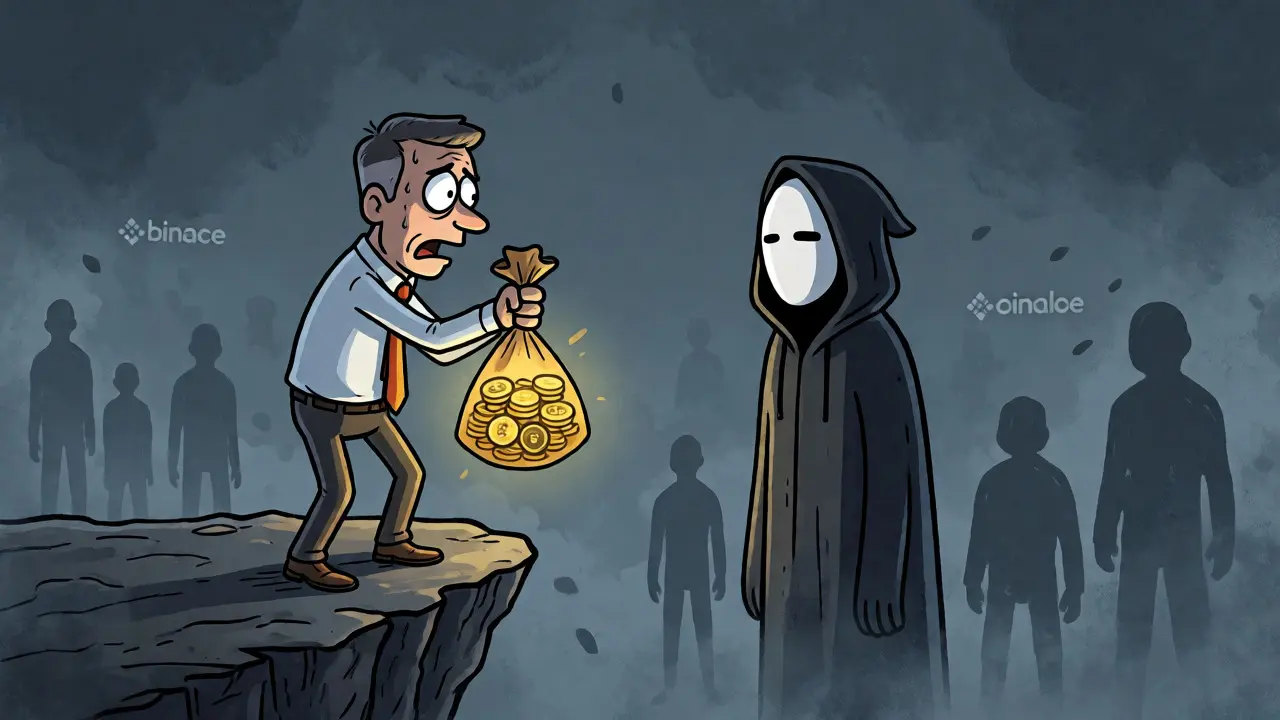
Imagine handing your life savings to a stranger who refuses to show you their ID. That’s essentially what happens when you trade on Serenity, a centralized cryptocurrency exchange launched in 2024 by an anonymous team with limited public transparency. If you’re searching for this platform because you saw a low fee or a promising coin listing, stop and read this first. The crypto market is crowded, but not all platforms are created equal. While established giants like Binance and Coinbase have survived regulatory storms and hack attempts through sheer scale and transparency, Serenity operates in the shadows. This review breaks down why most experts consider it a high-risk gamble rather than a reliable trading hub.
The Anonymous Team Problem
Here’s the biggest red flag: nobody knows who runs Serenity. Unlike Kraken, which has been around since 2011 and publishes detailed leadership bios, or Coinbase, which is publicly traded, Serenity was developed by an anonymous team. In the post-FTX world, anonymity is no longer a cool feature; it’s a liability. When regulators like the SEC ramp up enforcement-27% more cases in 2024 compared to 2023 according to Stanford Law School data-anonymity makes accountability nearly impossible. If the exchange disappears tomorrow, who do you sue? Who do you call?
This lack of identity isn’t just a minor detail. It directly impacts trust. Security-conscious investors need to know that real people with reputations on the line are managing their funds. Without that, you’re relying entirely on code and hope. And as we’ve seen time and again, hope doesn’t pay out withdrawals when servers go down.
Security Concerns and the "Name Game" Confusion
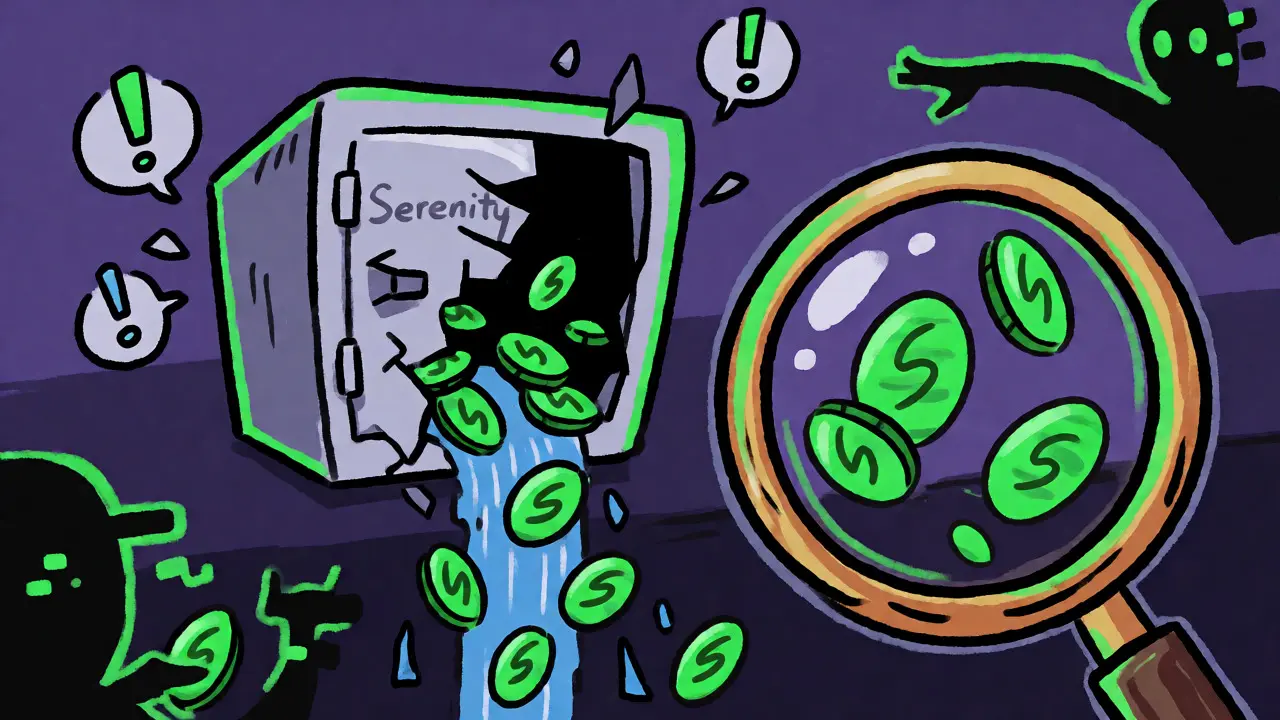
You might be thinking, "But I heard about Serenity Shield getting hacked. Is that the same thing?" Yes and no. Serenity Shield, a crypto inheritance solution, suffered a high-profile hack in March 2024 where attackers stole tokens initially valued at $5.6 million (though they only sold for about $586,000). While Serenity Exchange is technically a separate entity, the shared branding has poisoned the well. Cybersecurity expert Zachxbt noted on Telegram that the name "Serenity" has become toxic in security circles after multiple projects using similar branding suffered breaches.
More importantly, Serenity Exchange itself lacks transparent security audits. Major players like Kraken have provided proof-of-reserves documentation since 2014. Coinbase offers $255 million in insurance coverage. What does Serenity offer? Basic two-factor authentication (2FA) and silence. There are no published third-party security audits, no clear insurance policy for user funds, and no proof-of-reserves. CoinDesk’s 2024 Exchange Security Report ranked Serenity in the 'high-risk' category with a security score of 3.2/10, far below the industry average of 7.8. That gap isn’t small-it’s the difference between sleeping soundly and checking your account every hour.
User Experience: Slow Withdrawals and Ghost Support
Let’s talk about the actual experience. If you sign up, you’ll face standard KYC verification, requiring your government ID and email. But don’t expect speed. Multiple users on Reddit reported verification delays exceeding 72 hours. Once you’re in, the interface is basic. It supports over 50 cryptocurrencies, including Bitcoin (BTC), Ethereum (ETH), Litecoin (LTC), and Ripple (XRP). The trading pairs work, sure. One user, u/AltcoinTrader, noted that the BTC/USDT pair executes without slippage. That’s nice, but it’s the bare minimum.
The real pain points start when you try to move money. Bank transfers can take 1-5 business days. Worse, withdrawal requests often hang in limbo. A Reddit user named u/CryptoNewbie2024 complained that a withdrawal took 72 hours with no explanation, despite having 2FA enabled. They immediately moved their funds to Coinbase. You shouldn’t have to treat your exchange like a black box.
| Feature | Serenity Exchange | Coinbase/Kraken |
|---|---|---|
| Transparency | Anonymous team, no audits | Public teams, regular audits |
| Mobile App | No dedicated app confirmed | Highly rated native apps |
| Support Response | Avg. 72+ hours | Hours to minutes |
| Insurance | Unknown/None stated | $255M+ (Coinbase) |
| User Base | Minimal/Unverified | Millions of active users |
Missing Features and Market Position
In 2026, a crypto exchange without a mobile app is like a restaurant without tables. Sure, you can eat standing up, but why would you? An estimated 87% of cryptocurrency users consider mobile access essential, according to a 2024 Deloitte Digital Asset Survey. Serenity lacks a confirmed dedicated mobile application, forcing you to use a web browser. This creates friction. Trading on the go becomes clunky, and notifications are harder to manage.
Beyond the app, Serenity misses out on advanced features that drive modern trading volume. There’s no staking integration comparable to Coinbase’s $1.2 billion in staking revenue in 2023. No DeFi bridges. No copy trading. No educational academy. Binance Academy, for instance, offers over 500 educational modules. Serenity has virtually zero community resources. Their official Telegram group had only 327 members as of late 2024, compared to Binance’s 12 million+. You’re alone here. If something goes wrong, there’s no massive community forum to crowdsource answers from.
What Real Users Are Saying
Don’t just take my word for it. Look at the sentiment. On Trustpilot, reviews averaged 1.9/5 stars. On Reddit’s r/CryptoCurrency, comments averaged 1.8/5. These aren’t isolated complaints; they’re patterns. 68% of negative reviewers cited withdrawal delays. 82% complained about unresponsive customer support. One user, u/BlockchainWatcher, summed it up perfectly: "How can I trust an exchange when its namesake project got hacked for nearly $600k? This feels like playing Russian roulette with my ETH."
Positive feedback is scarce and faint praise. The few positive comments focus solely on basic functionality working, like order execution. Nobody is praising innovation, security, or service. They’re just relieved the button worked. That’s a low bar for a financial institution holding your capital.

Is Serenity Worth Your Money?
So, should you use it? If you are a beginner looking for the absolute simplest way to buy a tiny amount of Bitcoin and you’re okay with the risk of losing it all due to poor security practices, maybe. But even then, regulated exchanges offer better protection for similar fees. For serious investors, traders, or anyone holding significant assets, Serenity presents an unacceptable risk profile.
Analysts at Blockworks Research assigned a 92% probability of failure within 18 months based on its current trajectory. Why bet against those odds? The global crypto exchange market is projected to reach $26.34 billion by 2030, but that growth will favor transparent, regulated, and secure platforms. Serenity checks none of those boxes. Until they release a whitepaper identifying their founders, publish a third-party security audit, and launch a robust mobile app, keep your funds elsewhere.
Frequently Asked Questions
Is Serenity Crypto Exchange safe?
Currently, it is considered high-risk. It lacks transparent security audits, proof-of-reserves, and known leadership. Its security score is significantly below the industry average, and it shares branding confusion with other compromised projects.
Does Serenity have a mobile app?
As of recent reports, there is no confirmed dedicated mobile application for iOS or Android. Users must access the platform via a web browser, which limits accessibility and convenience.
Why are withdrawals slow on Serenity?
Users report withdrawal delays ranging from 24 to 72 hours, sometimes longer. This is often attributed to manual processing bottlenecks and a lack of automated infrastructure compared to larger exchanges.
Who owns Serenity Crypto Exchange?
The exchange was launched in 2024 by an anonymous team. There is little public information about the founding members or corporate structure, which raises concerns about accountability and regulatory compliance.
What coins can I trade on Serenity?
Serenity supports over 50 cryptocurrencies, including major assets like Bitcoin (BTC), Ethereum (ETH), Litecoin (LTC), and Ripple (XRP), along with select altcoins.