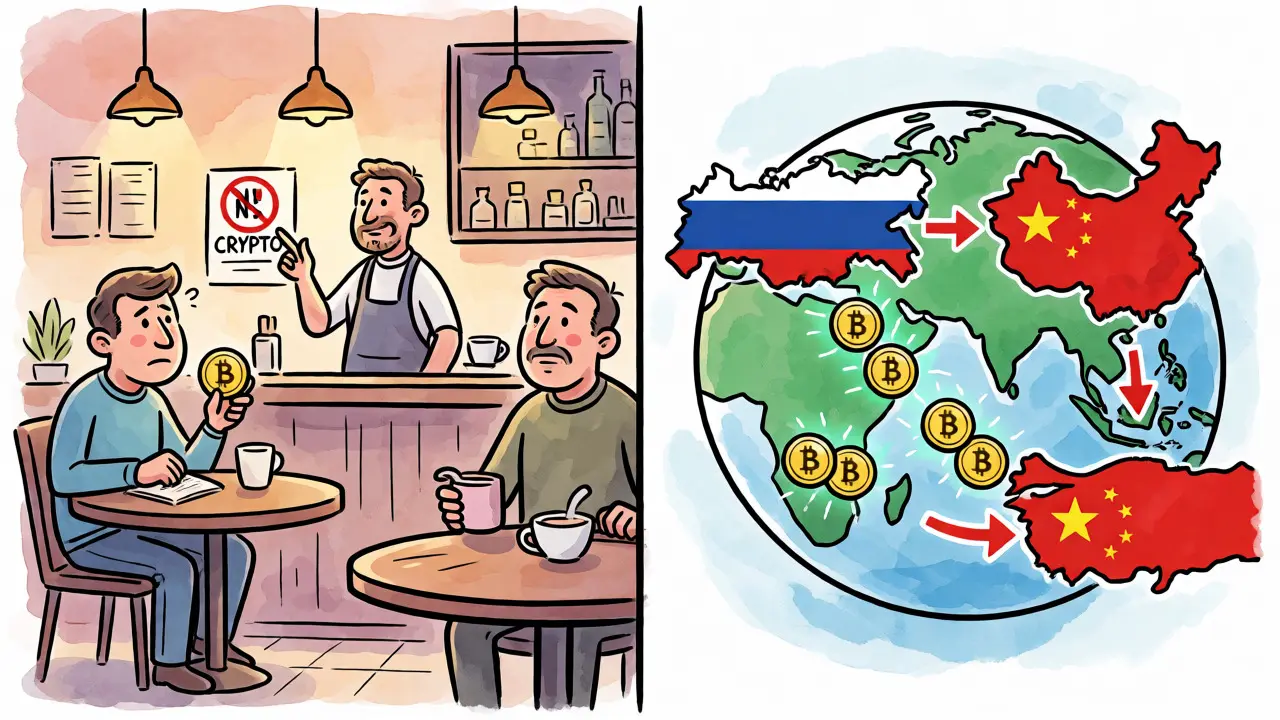
Imagine trying to buy coffee in Moscow with Bitcoin. In most countries, that’s just a transaction fee issue. In Russia, it’s practically illegal for the average person. But here’s the twist: Russian companies are quietly using those same digital assets to pay for imports abroad. This paradox sits at the heart of the Russian Central Bank (CBR)'s evolving approach to cryptocurrency oversight. As we move through late 2025 and into 2026, the regulatory landscape isn't just tightening; it's bifurcating into two distinct worlds-one for domestic consumers who face strict bans, and another for international trade where crypto is becoming a sanctioned-survival tool.
If you're an investor, a business owner, or just someone watching global finance, understanding these rules is no longer optional. The CBR has shifted from its old stance of outright hostility to a complex "dual-track" strategy. They aren't banning everything anymore, but they are building walls so high that only qualified investors and specific corporate use cases can climb over them. Let's break down exactly what these new rules mean for you, why the banks are nervous, and how the government plans to watch every single ruble moving through the digital ether.
The Dual-Track Strategy: Domestic Ban vs. International Loophole
The core of the current policy rests on a simple distinction: who is paying whom, and for what? For regular residents living within Russia, the door to using cryptocurrency as a payment method remains firmly shut. You cannot legally pay your neighbor for groceries with USDT, nor can you easily settle a salary in Bitcoin without navigating a maze of legal gray areas. The CBR argues that allowing widespread domestic crypto payments would undermine the stability of the ruble and complicate monetary policy. It’s a protectionist move designed to keep the national currency dominant in daily life.
However, look outside those borders, and the picture changes dramatically. Following the economic sanctions imposed by Western nations, Russia needed a way to conduct international trade when traditional SWIFT transfers became difficult or blocked. Enter the legislative change from summer 2024, which permitted digital currency payments specifically for international trade settlements. This created what experts call a "critical loophole." Companies can now use stablecoins or other digital assets to pay suppliers in China, Turkey, or India, bypassing some of the friction caused by geopolitical tensions. This isn't about embracing crypto for the sake of innovation; it's about survival and continuity of business flows.
Banks Face the "CryptoBasel": Stricter Capital Requirements
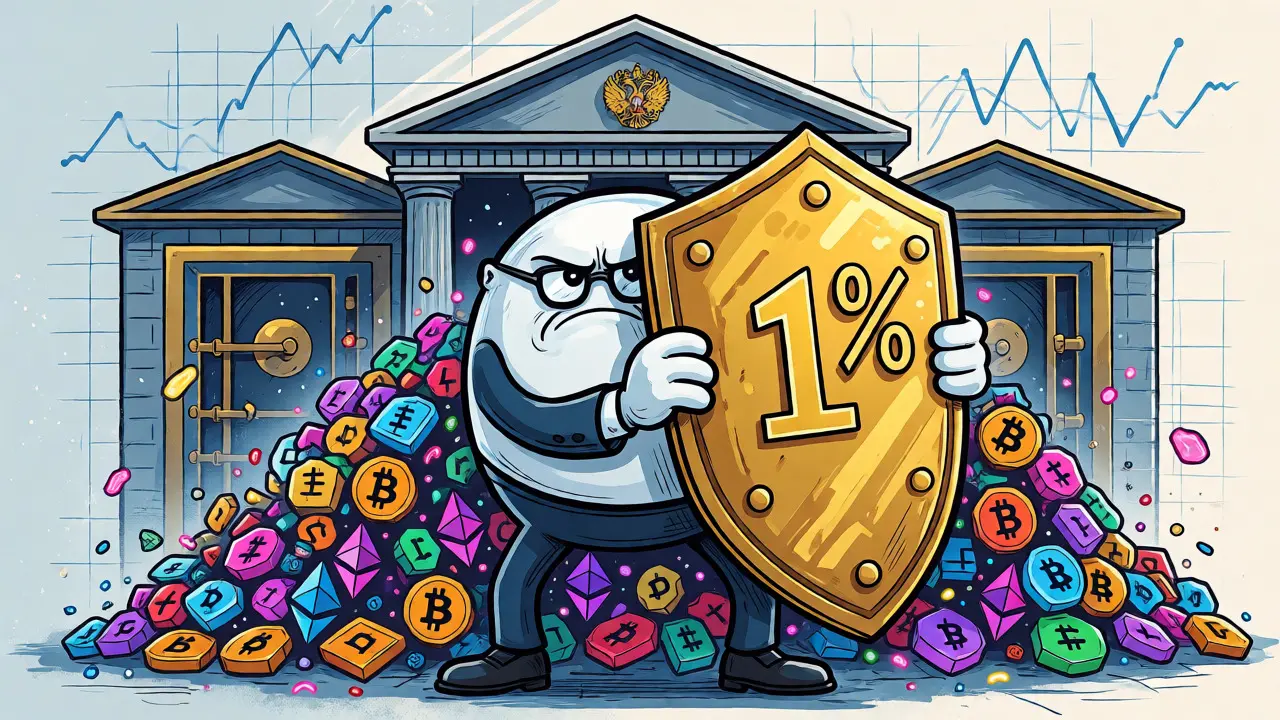
If you think this affects only traders, think again. The banking sector is feeling the heat more than anyone. Starting in 2026, Russian banks dealing with any cryptocurrency-related activities will face significantly tighter capital requirements. Think of it as a safety net that has been pulled much higher. The regulator has capped digital asset transactions at no more than 1% of a bank's total capital. That sounds small, right? It is. And that’s the point. By limiting exposure to such a tiny fraction, the CBR ensures that if the crypto market crashes, no major Russian bank goes under because of it.
This approach has been dubbed "CryptoBasel" by legal experts like Andrey Tugarin of GMT Legal. It aligns with the international Basel II/III/IV principles but applies them with a heavy hand against digital assets. The logic is straightforward: cryptocurrencies are classified as highly risky assets. Therefore, banks must back every ruble of investor funds involved in crypto with their own hard cash reserves. If a bank wants to lend to a crypto firm, it needs to hold even more capital aside. This makes lending to crypto businesses expensive and less attractive for traditional lenders, effectively slowing down institutional adoption while keeping the broader financial system safe from volatility.
| Entity Type | Allowed Activities | Key Restrictions | Compliance Burden |
|---|---|---|---|
| Domestic Residents | Holding, Trading (via ELR) | No payments allowed; Qualified Investor status required for broad access | KYC mandatory; Transaction reporting >600k RUB |
| Commercial Banks | Custody, Limited Lending | Max 1% of capital exposure; High reserve requirements | Strict AML/KYC; Full audit trails |
| International Trade Firms | Cross-border settlements | Must prove trade link; Restricted to approved corridors | Documentation of trade contracts; Anti-sanctions compliance |
| VASPs (Exchanges/Brokers) | Operating within Russia | Mandatory registration; No unregistered intermediaries | Integration with state de-anonymization platform |
The Experimental Legal Regime (ELR): A Walled Garden for Investors
You might wonder, "If I'm not a bank, can I still invest?" Yes, but you need a ticket to enter the club. This ticket is called the Experimental Legal Regime (ELR). Launched to test how digital assets can function within a regulated framework, the ELR restricts participation to "especially qualified" investors. These aren't just people with a few thousand dollars; they meet high financial thresholds set by the CBR. This vetting process ensures that only those who understand the risks-and can afford to lose money-are playing in this sandbox.
Inside the ELR, trading is permitted, but it’s watched closely. Outside of this regime, however, the CBR has proposed banning cryptocurrency settlements between residents entirely. This creates a binary reality: either you operate within the strict boundaries of the ELR, or you risk penalties for violating settlement prohibitions. The goal here is controlled experimentation. The government wants to see how digital assets behave in a real market without letting them spill over into the general economy where they could cause inflationary pressure or confusion.
Stablecoins and the Push for Standardization
While Bitcoin gets the headlines, stablecoins are where the regulatory action is heating up. Deputy Finance Minister Ivan Chebeskov confirmed that new rules for stablecoins would be finalized by the end of 2025. Why the urgency? Because stablecoins are the backbone of the international trade exception mentioned earlier. Without clear rules on what constitutes a valid stablecoin (is it backed by USD? Rubles? Gold?), the entire cross-border payment system becomes fragile.
The Ministry of Finance and the Central Bank are working jointly to align these definitions with international standards. They want to create a framework that benefits businesses by reducing uncertainty, yet maintains strict oversight. There is a tension here, though. The Ministry often speaks of improving Russia's position in the global crypto market, suggesting a desire for competitiveness. The Central Bank, conversely, focuses on risk mitigation. The final rules will likely reflect a compromise: stablecoins will be allowed, but issuers must prove their reserves are solid and accessible. Any issuer failing to meet these transparency standards will find themselves blocked from the Russian market.

Surveillance State: De-Anonymization and AML Compliance
Forget the idea of crypto being anonymous in Russia. The CBR, in collaboration with the Ministry of Digital Development, has developed a digital platform specifically for de-anonymizing cryptocurrency users. Every significant transaction leaves a trace that authorities can follow. Financial institutions are required to implement robust Anti-Money Laundering (AML) measures, with particular focus on peer-to-peer (P2P) transactions. P2P trading, often used to bypass exchange fees or restrictions, is now under a microscope.
Know Your Customer (KYC) requirements are non-negotiable. If you’re a qualified investor, you’ve already gone through this. But for Virtual Asset Service Providers (VASPs)-exchanges, brokers, and even mining pools-the bar is rising. Rosfinmonitoring has openly discussed regulating all VASPs, including those operating in the "grey market." The message is clear: integrate into the state-regulated system or get blocked. There is no middle ground. Platforms that fail to report suspicious activities or identify their users will simply stop working for Russian clients. This comprehensive surveillance capability positions Russia as one of the most transparent, albeit restrictive, jurisdictions for digital assets.
What This Means for You: Practical Implications
So, how do you navigate this landscape? If you are an individual investor, ensure you are trading through platforms that comply with the ELR and KYC norms. Avoid informal P2P deals that lack documentation, as these are prime targets for tax audits and potential fines. Remember, transactions exceeding 600,000 rubles must be reported to tax authorities. Keeping meticulous records is your best defense.
For businesses, the international trade route offers a lifeline, but it requires careful paperwork. You must demonstrate that the crypto payment is linked to a genuine trade contract. Misusing this channel for speculative purposes could attract scrutiny. And for banks, the 2026 capital rules mean re-evaluating any existing crypto partnerships. The era of casual exposure to digital assets is over; it’s now a matter of precise balance sheet management.
The Russian Central Bank’s approach is neither purely innovative nor purely prohibitive. It is pragmatic, driven by the need to stabilize the ruble while adapting to a world where sanctions have changed the rules of engagement. By creating walled gardens for investors and specialized channels for trade, the CBR aims to harness the utility of blockchain technology without surrendering control over the monetary system. Whether this model succeeds depends on how well the enforcement mechanisms work and whether businesses find the compliance costs worth the benefit of accessing alternative payment rails.
Can Russians legally buy Bitcoin?
Yes, buying and holding Bitcoin is legal, especially for qualified investors under the Experimental Legal Regime (ELR). However, using it as a direct payment method for goods and services domestically is prohibited. Most retail investors participate through compliant exchanges that enforce KYC procedures.
What is the 1% cap on bank crypto exposure?
Starting in 2026, Russian banks are restricted from having cryptocurrency-related assets exceed 1% of their total capital. This rule is designed to limit systemic risk, ensuring that volatility in the crypto market does not threaten the stability of the traditional banking sector.
Are stablecoins banned in Russia?
No, stablecoins are not banned. In fact, they are central to the new regulations for international trade. New rules finalized around late 2025 aim to standardize stablecoin usage, requiring issuers to prove adequate reserves and comply with strict AML/KYC standards.
Do I have to pay taxes on crypto profits in Russia?
Yes. Profits from selling digital assets are subject to personal income tax. Additionally, transactions exceeding 600,000 rubles must be reported to the tax authorities. Failure to report can result in fines and increased scrutiny from Rosfinmonitoring.
What happens if I use crypto for domestic payments?
Using cryptocurrency for domestic settlements between residents is generally prohibited outside the experimental regimes. Violations can lead to fines and potential blocking of accounts by financial institutions enforcing the Central Bank's guidelines on monetary stability.