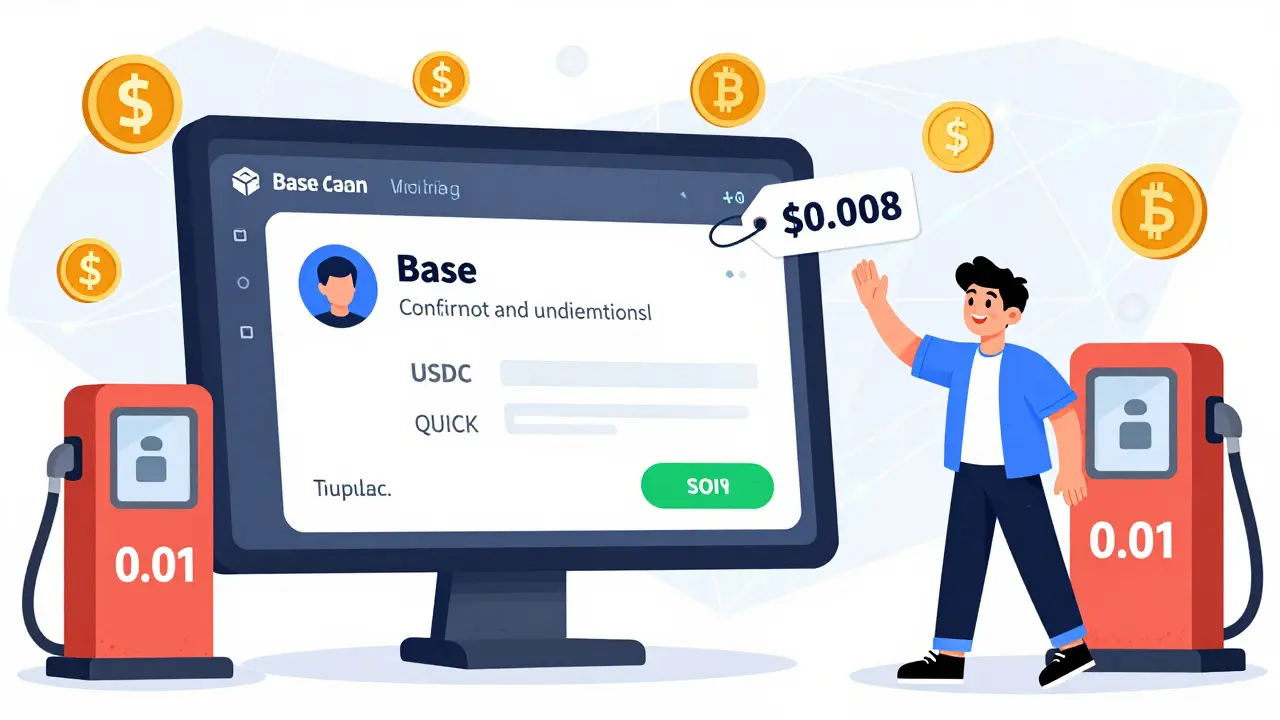
When you trade crypto on a decentralized exchange, speed and cost matter more than you think. Most people assume all DEXs are the same - connect your wallet, swap tokens, done. But on Quickswap v2 on Base, the difference isn’t just small. It’s game-changing. If you’ve ever waited 10 seconds for a transaction to confirm or paid $5 in gas fees to swap USDC for WBTC, you’re already feeling the pain. Quickswap v2 on Base fixes that. Not with hype. Not with flashy ads. But with real numbers: transactions under 2 seconds, fees under $0.01, and $28.6 million in daily volume on just one chain.
What Quickswap v2 on Base Actually Is
Quickswap isn’t a new name in crypto. It started on Polygon as a faster, cheaper version of Uniswap. But in August 2025, it launched v2 on Coinbase’s Base chain - and that’s when things got serious. This isn’t just another fork. It’s a full rebuild optimized for Base’s infrastructure. It uses concentrated liquidity (like Uniswap v3) so liquidity providers can earn more from less capital. It supports over 80,000 trading pairs across 10 chains, but on Base, it’s focused, fast, and cheap.
Unlike centralized exchanges, Quickswap doesn’t hold your funds. You keep control. No KYC. No account freeze. Just direct wallet-to-wallet trades using smart contracts. The whole system runs on automated market-making (AMM), meaning there’s no order book. Instead, liquidity pools - funded by users like you - match trades. And because it’s on Base, which uses Ethereum’s security but with Layer 2 scaling, you get the safety of Ethereum without the chaos of its gas fees.
How Fast and Cheap Is It Really?
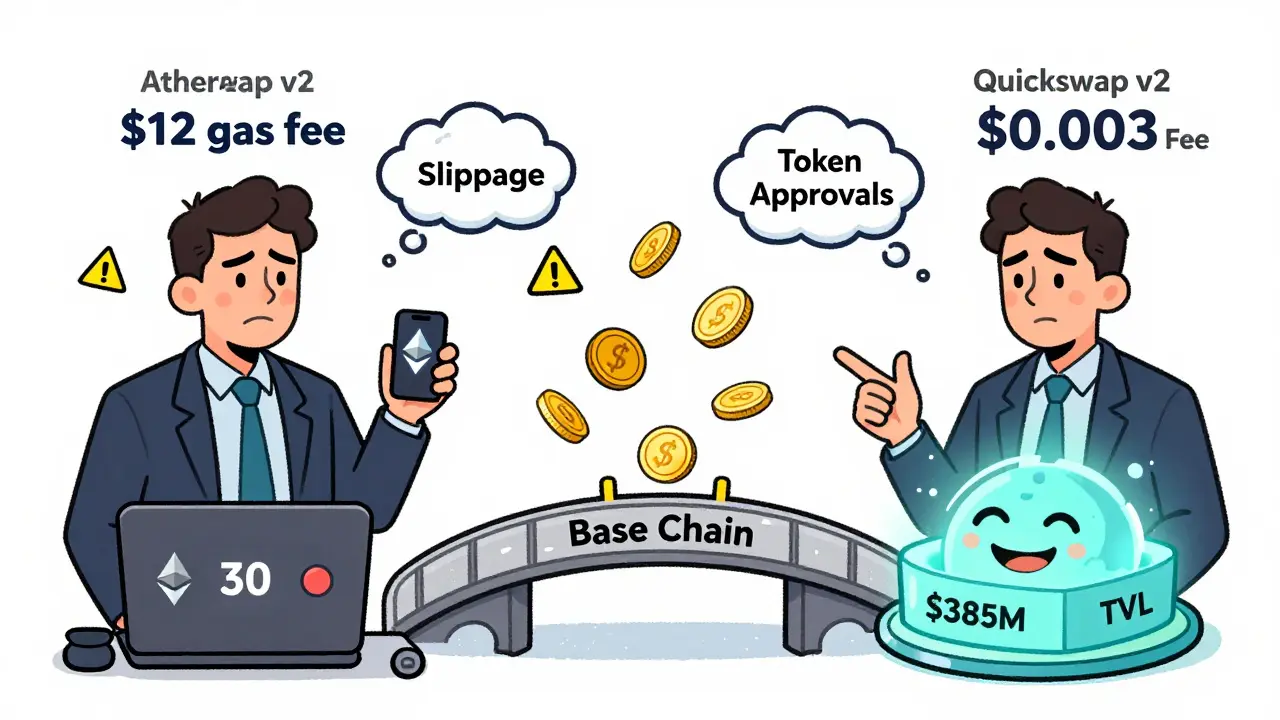
Let’s cut through the noise. On Ethereum, swapping tokens can cost $1.50 to $15. On Uniswap v3, you’re lucky if it’s under $5 during normal traffic. On Quickswap v2 on Base? It’s consistently under $0.01. That’s not a typo. That’s $0.008. $0.009. Sometimes even $0.003. You can do 100 swaps for less than a coffee.
Speed? Transactions confirm in about 2 seconds. That’s faster than most credit card approvals. Compare that to Ethereum’s average 15-30 seconds. On Base, the network is clean. No congestion. No bidding wars. Just smooth, predictable processing.
Here’s what that means in practice: If you’re a trader doing multiple small swaps daily - say, switching between stablecoins, wrapping ETH, or entering yield farms - Quickswap saves you hundreds of dollars a month. One Reddit user, CryptoDragon42, reported getting 0.8% better rates on WBTC/USDC than Uniswap on Base. That’s not just cheaper. That’s profitable.
Who Is This For? Traders, Not Beginners
Quickswap v2 on Base is not for someone who just bought their first Bitcoin. If you don’t know what slippage is, or why you need to approve a token before swapping, you’ll be lost. The interface doesn’t hold your hand. There’s no “easy mode.”
You need to understand:
- Slippage tolerance (set it too low, your trade fails. Too high, you get ripped off)
- Impermanent loss (the risk of losing value when prices swing in a liquidity pool)
- Gas fee estimation (yes, even on Base, you still need to know what you’re paying)
- Token approvals (you approve a contract once - never again unless you reset)
According to Quickswap’s internal support data, 28% of beginner errors come from misconfigured slippage. Another 19% are from incorrect token approvals. That’s almost half of new user issues. The platform has 147 help articles - but they’re written for people who already know DeFi basics. If you’re new, expect a 3-5 hour learning curve. It’s not impossible. But it’s not effortless.
Liquidity, Fees, and Rewards
If you’re not just trading - but providing liquidity - Quickswap v2 on Base is one of the best places to do it. Liquidity providers earn 0.25% of every trade that goes through their pool. That’s standard. But here’s the twist: you also earn QUICK tokens on top.
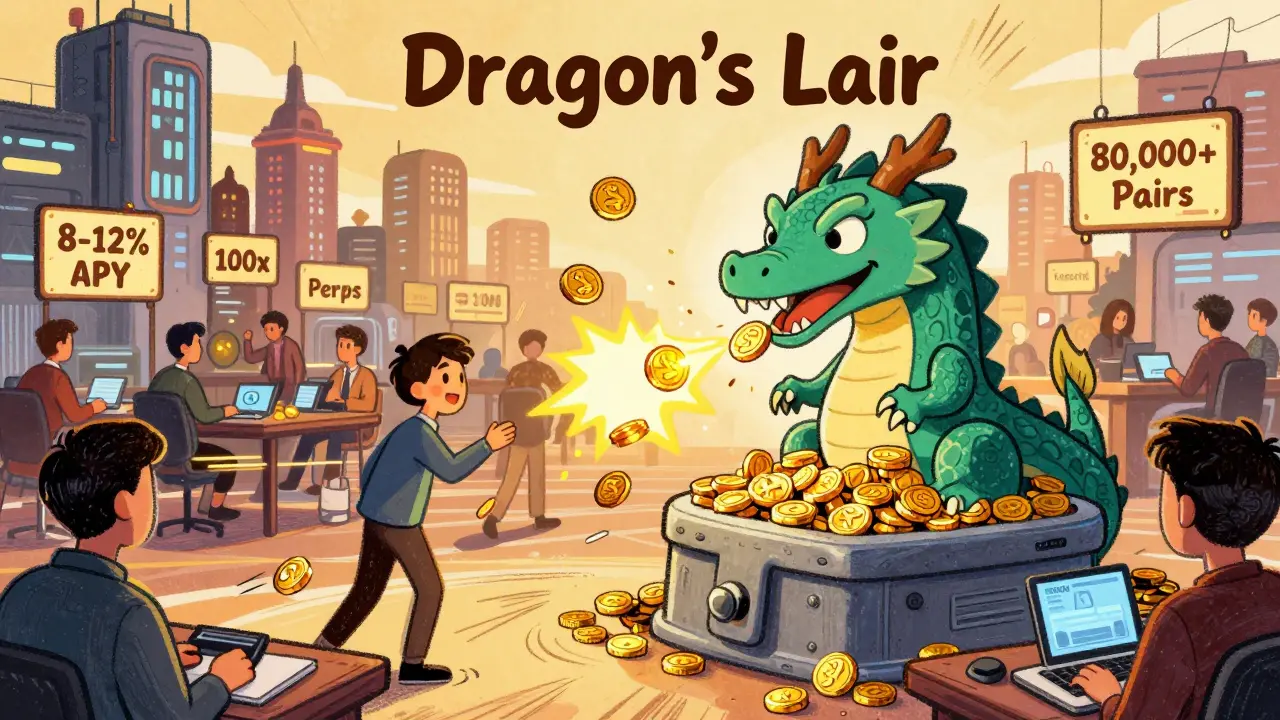
Quickswap’s Dragon’s Lair staking program gives stakers 50% of all protocol fees. That means if you stake your QUICK tokens, you’re not just holding - you’re getting paid for helping the network run. As of October 2025, QUICK was trading at $0.01884. Staking rewards alone can yield 8-12% APY depending on pool activity.
On Base, the platform has $385 million in TVL (Total Value Locked), making it the second-largest DEX on the chain behind Aerodrome Finance. That’s solid. Not dominant, but growing fast. The 18% month-over-month user growth since its August launch tells you people are migrating.
But here’s the catch: liquidity depth for exotic tokens is thin. If you want to trade a new meme coin or obscure DeFi token, you might not find enough liquidity. That’s where Uniswap on Ethereum still wins - it’s the biggest pool. But for mainstream pairs like USDC/ETH, WBTC/USDT, or DAI/QUICK? Quickswap on Base is smoother, cheaper, and faster.
How It Compares to the Competition
Let’s break it down against the main players:
| Feature | Quickswap v2 (Base) | Uniswap v3 (Ethereum) | Aerodrome (Base) | Binance (CEX) |
|---|---|---|---|---|
| Transaction Fee | Under $0.01 | $1.50-$15 | Under $0.01 | $0 (but custody risk) |
| Speed (Avg) | 2 seconds | 15-30 seconds | 2 seconds | Instant |
| TVL on Base | $385M | N/A | $1.2B | N/A |
| Trading Pairs | 80,000+ (multi-chain) | 10,000+ (Ethereum only) | 50,000+ | 500+ |
| Non-Custodial | Yes | Yes | Yes | No |
| Fiat On-Ramps | Moonpay only | None | Moonpay + others | 30+ methods |
| Perpetual Trading | Yes (up to 100x) | No | Yes | Yes |
Quickswap beats Uniswap on Ethereum on cost and speed. It loses to Aerodrome on liquidity depth and user experience. It loses to Binance on fiat access and order book depth. But it wins on one thing: freedom. You’re not locked into a company. You’re not trusting a CEO. You’re trading directly on open code.
Real User Feedback: What People Actually Say
On Reddit, users praise the speed. One wrote: “I’ve done 47 swaps today. Total gas? $0.38.” On SourceForge, 78% of positive reviews mention “near-zero gas fees.” Another 63% say customer support on Telegram responds fast - usually within 15 minutes.
But the complaints are real. The interface is cluttered. Concentrated liquidity settings look like a stock trading terminal. One user said it took 20 minutes to figure out how to set a price range. Another said the staking dashboard felt like “a maze with no map.”
And there’s no easy way to learn. Quickswap’s educational resources are rated 3.7/5 - “moderate.” They assume you know what an LP token is. If you don’t, you’re on your own. No YouTube tutorials. No beginner guides. Just GitHub docs and a 42,000-member Telegram group.
Future Roadmap: What’s Coming
Quickswap isn’t resting. The roadmap is aggressive:
- Q1 2026: AI-powered routing that finds the best price across 1,000+ tokens automatically
- Q2 2026: Institutional API with FIX protocol support - meaning hedge funds and trading bots can plug in directly
- Q4 2026: Cross-chain perpetual futures - allowing you to trade derivatives across multiple Layer 2s
If they pull this off, they could capture 22-25% of Base’s DEX market by the end of 2026. That’s a big deal. Base has 12.4 million monthly wallets. Even 5% of that is 600,000 users.
Is Quickswap v2 on Base Right for You?
Yes - if you:
- Trade frequently (daily or weekly)
- Want to avoid Ethereum’s gas fees
- Are comfortable with DeFi basics
- Want to earn rewards by providing liquidity
- Use trading bots or automated strategies
No - if you:
- Just want to buy Bitcoin and hold
- Need to deposit fiat directly
- Don’t want to learn slippage or token approvals
- Plan to trade large amounts ($500k+)
It’s not the easiest DEX. But it’s one of the most powerful for active traders. If you’re serious about DeFi on Base, you owe it to yourself to try it. Start with a small swap. See how fast it is. See how little it costs. Then decide.
Getting Started in 4 Steps
- Connect your wallet: Use MetaMask, Coinbase Wallet, or WalletConnect. Make sure it’s set to the Base network.
- Bridge your funds: Go to the official Coinbase Bridge and move ETH or USDC from Ethereum to Base. Takes 2-15 minutes.
- Approve tokens: Before swapping, click “Approve” on the token you’re trading. Do this once per token.
- Swap and track: Enter the amount, set slippage to 0.5-1%, confirm. Done in 2 seconds.
Tip: Always check the token contract address. Scammers clone tokens. Use Quickswap’s official list or verify on Etherscan.
Is Quickswap v2 on Base safe?
Yes, but with caveats. Quickswap is non-custodial - your funds stay in your wallet. The smart contracts have been audited by reputable firms. However, multi-chain expansion introduces cross-chain risks. Always verify token addresses, avoid unknown pools, and never share your seed phrase. No platform is 100% immune to exploits.
Can I use Quickswap without a crypto wallet?
No. Quickswap is a decentralized exchange. You need a Web3 wallet like MetaMask or Coinbase Wallet to connect. You can’t sign up with an email or phone number. This is by design - it’s what makes it trustless.
Why is my transaction stuck or failing?
Most often, it’s because slippage is set too low. Try raising it to 1-2%. Other causes: insufficient gas (even on Base, you need ETH for fees), or unapproved tokens. Check your wallet’s transaction history. If it’s stuck, cancel and retry with higher slippage.
How do I earn rewards on Quickswap?
Two ways: 1) Provide liquidity to a trading pair - you earn 0.25% of all trades in that pool plus QUICK tokens. 2) Stake your QUICK tokens in Dragon’s Lair - you earn 50% of protocol fees. Both require active participation. Rewards are distributed daily.
Does Quickswap support fiat deposits?
Only through Moonpay. You can buy ETH or USDC with a credit card and bridge it to Base. That’s it. No bank transfers, no PayPal, no Apple Pay. If you need more options, use a centralized exchange first, then move funds over.
Is Quickswap better than Uniswap on Base?
For most users, yes. Quickswap has lower fees, better routing, and more advanced tools like concentrated liquidity and staking. Uniswap on Base is simpler but slower and more expensive. Unless you’re trading very niche tokens, Quickswap gives you more value.
Quickswap v2 on Base isn’t perfect. But it’s one of the few DeFi platforms that actually delivers on its promises: speed, low cost, and real utility. If you’re tired of paying $10 to swap two tokens, this is your upgrade.
Speed and fees don't mean anything if the interface is a nightmare. I've spent more time debugging slippage settings than actually trading. This isn't innovation. It's complexity for complexity's sake.
Honestly the fee difference is insane. I did 12 swaps yesterday and paid less than a cent total. On Ethereum that would've been over $60. This is why Layer 2s matter.
If you're new to DeFi, just start small. Pick one stablecoin pair, set slippage to 1%, and do one trade. Don't overthink it. The interface gets easier after you've done it once.
You guys are missing the real story here. This isn't about gas fees. It's about freedom from centralized control. When you hold your own keys and trade directly, you're not just saving money-you're rejecting the entire financial system as it exists. That's power.
80k trading pairs? That's a red flag. Most are垃圾 tokens with zero volume. Liquidity depth on anything not USDC/ETH is practically nonexistent. You think you're getting a good rate until your swap slippage hits 5%.
I started with just $10 to test it out. Took me 3 tries to get the approval right, but once I did, the speed was mind-blowing. If you're scared, start tiny. You'll see why this matters.
I love how this platform empowers everyday people. No gatekeepers. No middlemen. Just pure peer-to-peer value exchange. The future is here, and it's built on open code. Let's keep pushing this forward!
The claim of 'under $0.01 fees' is misleading. You still need ETH for gas. And if you're bridging from Ethereum, you're paying $5+ upfront. This isn't cheap-it's just shifting the cost.
Let me guess-Coinbase quietly funded this to push Base adoption. The 'real numbers' are cherry-picked. The audit reports? Never published. The '2-second transactions'? Only during low traffic. Wait until a meme coin pump hits and see how fast it really is.
I've been using this for 3 months now. Started with 0 knowledge, now I'm staking QUICK and making more than my part-time job. It's not perfect, but it works. Just give it a shot with a small amount.
The comparison table is accurate. Aerodrome does have higher TVL, but Quickswap offers more advanced features for active traders. It's a trade-off between UX and functionality.
You're telling people to 'try it with a small swap' like it's a game. This isn't a toy. One misconfigured approval and you lose your entire balance. This platform is a minefield for the untrained.
Oh wow, another 'revolutionary' DEX. Let me guess-no one's audited the new smart contracts? And the 'AI routing' in 2026? Yeah right. This is just another pump disguised as innovation.
I've tried Uniswap, Aerodrome, and this. Quickswap v2 on Base is the only one that actually feels responsive. The slippage is predictable, the interface is clunky but functional, and the rewards add up. I'm not saying it's perfect-but it's the best on Base.
This isn't a platform. It's a psychological experiment. They know beginners will panic when they see 147 help articles and 42,000 Telegram members. They want you to feel overwhelmed. And once you're stuck? You're hooked. Brilliant manipulation.
The real magic isn't in the 2-second trades or the $0.008 fees. It's in the quiet rebellion. Every swap is a tiny act of defiance against Wall Street's chokehold on finance. This isn't DeFi. This is digital sovereignty. And it's beautiful.
They say 'no KYC' like it's a feature. Bro, that's the whole point of DeFi. If you need KYC, go use Binance. Stop acting like this is some breakthrough.
I just use it to swap USDC for ETH when I want to move money. Never bothered with staking or complicated settings. It works. Fast. Cheap. No drama. Why overthink it? Sometimes simple is better.
They say '2 seconds' but what about MEV? What about frontrunning bots? What about the 10% of trades that fail because of slippage? They're selling a fantasy. The reality is a mess of failed transactions and hidden costs.
I love how clean it feels. No ads. No popups. Just the trade. And the rewards add up slowly but surely. I've earned more in staking than I lost on bad swaps. Worth the learning curve.