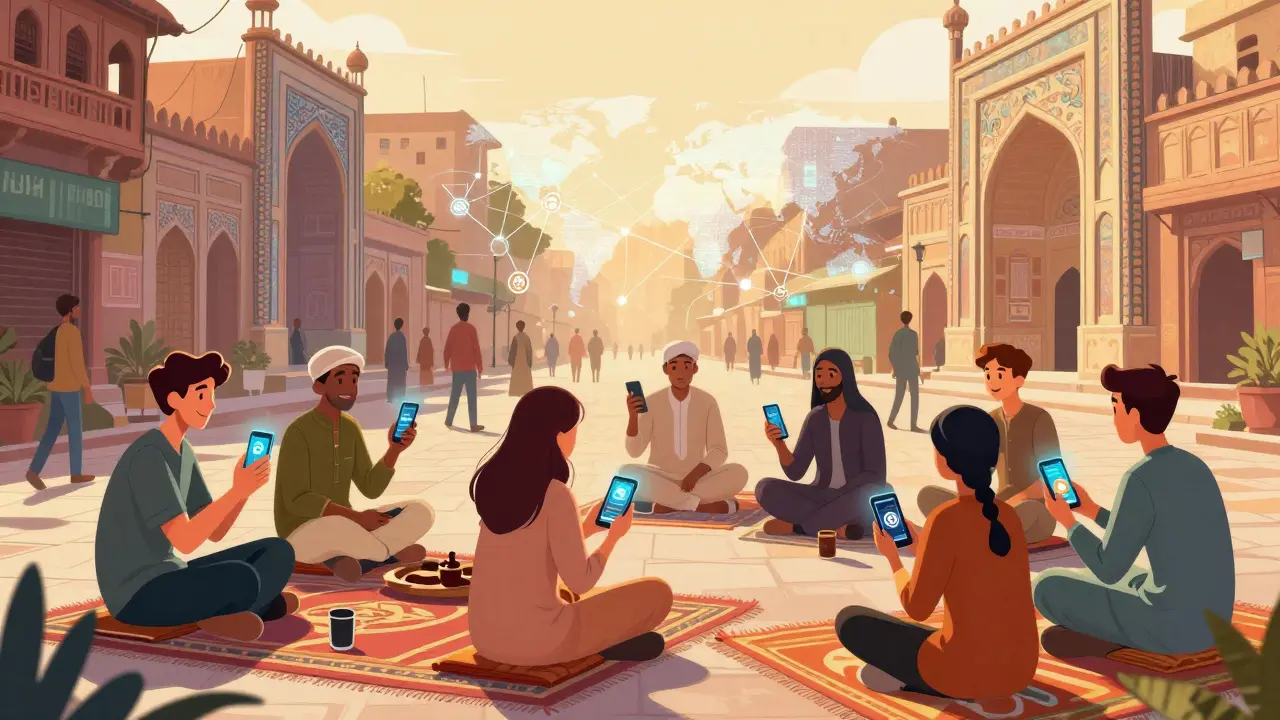
It sounds counterintuitive. For years, the State Bank of Pakistan was one of the strictest voices against digital assets, banning exchanges and warning citizens away from what it called illegal currency. Yet, by late 2025, Pakistan had climbed to the 3rd or 4th spot globally in cryptocurrency adoption, trailing only giants like India and the United States in major indices.
This isn't a glitch in the data. It’s a story of necessity overriding prohibition. While regulators were busy writing warnings, millions of ordinary Pakistanis were using crypto to survive economic volatility, send money home, and protect their savings from inflation. The recent shift from hostility to structured regulation marks a pivotal moment for the nation's financial future.
The Numbers Behind the Rise
To understand how Pakistan jumped six spots to secure 3rd place in the Chainalysis 2025 Global Adoption Index, we have to look at what "adoption" actually means here. It’s not just about how many people own Bitcoin; it’s about transaction volume, frequency, and utility.
As of 2025, approximately 20 million citizens in Pakistan hold digital currencies. That’s roughly 8.7% of the population, significantly higher than the global average of 6.9%. These users collectively hold assets valued between $20 billion and $25 billion. When you adjust for purchasing power parity (PPP), which accounts for the lower cost of living in emerging markets, these numbers look even more impressive on a global stage.
| Ranking Source | Pakistan Rank | Key Metric |
|---|---|---|
| Chainalysis Global Adoption Index | 3rd | Transaction volume & value received (PPP adjusted) |
| Alternative Ownership Studies | 9th | Ownership rates & wallet addresses |
Why the discrepancy? Chainalysis measures activity-how much money is moving through centralized and decentralized services. Other studies might focus solely on how many wallets exist. Pakistan scores high because its users aren’t just holding coins; they’re actively using them for daily transactions, remittances, and trading. This active usage drives the country up the leaderboard despite varying methodologies.
From Ban to Boardroom: The Regulatory Flip
For a long time, doing crypto in Pakistan meant operating in the shadows. In 2018, the central bank declared that digital currencies were not legal tender and instructed banks to block transactions related to crypto exchanges. If you tried to deposit fiat currency into an exchange account, your bank account could be frozen.
But pressure mounts when reality hits. With inflation soaring and the local currency depreciating, the ban became unenforceable. People needed a way to preserve wealth. By 2024 and 2025, the government realized it couldn't stop the tide, so it decided to build a dam.
In July 2025, a major milestone was reached with the establishment of the Pakistan Virtual Assets Regulatory Authority (PVARA). This body was created to provide the legal clarity that had been missing for nearly a decade. Alongside this, the Pakistan Crypto Council was formed, led by CEO Bin Saqib, to coordinate industry efforts and engage with international partners.
This shift didn't happen overnight. It was a gradual realization that regulating crypto could bring foreign investment, tax revenue, and technological innovation, rather than losing capital to offshore black markets. The new framework aims to balance consumer protection with the freedom to use modern financial tools.

Why Pakistanis Choose Crypto: Utility Over Speculation
If you ask a trader in New York why they buy Bitcoin, they might talk about decentralization or hedge funds. If you ask a freelancer in Lahore, the answer is usually simpler: "How do I get paid without my bank fees eating my profit?"
Kim Grauer, chief economist at Chainalysis, noted that adoption in emerging markets is driven by practical utility, specifically stablecoins. For Pakistan, three main factors drive this usage:
- Remittances: Pakistan receives billions in remittances annually. Traditional banking channels involve high fees and slow processing times. Crypto allows diaspora communities to send money instantly with minimal cost.
- Inflation Hedge: With the Pakistani Rupee fluctuating against the US Dollar, citizens turn to stablecoins (like USDT or USDC) to store value. It’s a way to keep purchasing power intact when local currency loses value.
- Freelancer Payments: Pakistan has a massive freelance workforce. Platforms like Upwork and Fiverr often face restrictions on withdrawing funds to local banks. Crypto provides a seamless bridge between global earnings and local needs.
This isn't speculative gambling; it's financial survival. The growth is sustainable because it solves real problems. As long as traditional banking remains cumbersome or expensive for cross-border transactions, crypto will remain relevant in Pakistan.
Geopolitics and High-Stakes Partnerships
Pakistan’s crypto journey isn't just domestic; it's deeply tied to global politics. In 2025, the country made headlines for engaging with high-profile international figures to accelerate its blockchain infrastructure.
One notable development was the discussion between Finance Minister Muhammad Aurangzeb, Crypto Council CEO Bin Saqib, and Michael Saylor, the Bitcoin advocate behind MicroStrategy. Saylor’s firm holds over $62 billion in Bitcoin reserves. Their talks focused on how Pakistan could leverage crypto for financial resilience, potentially attracting institutional investment.
More controversially, in August 2025, the Pakistan Crypto Council signed an agreement with World Liberty Financial, a venture linked to the Trump family. This partnership aimed to boost blockchain adoption but raised eyebrows due to the geopolitical connections involved. Zach Witkoff, co-founder of World Liberty Financial and son of Steve Witkoff (Trump’s Special Envoy to the Middle East), had secured access to top Pakistani officials, including Army Chief Asim Munir and Prime Minister Shehbaz Sharif.
While these moves demonstrate Pakistan's ambition to position itself as a crypto-friendly hub, they also introduce risks. Relying on external private sector partners with political ties can create dependencies. If those political winds shift, Pakistan’s crypto ecosystem could face instability. The key challenge now is ensuring that national policy remains independent of volatile international interests.

Challenges Ahead: Balancing Growth and Control
Despite the rankings, significant hurdles remain. The transition from a banned asset to a regulated one is complex. Here are the primary challenges facing Pakistan’s crypto sector in 2026:
- Taxation Clarity: Investors need clear guidelines on capital gains tax and reporting requirements. Ambiguity leads to underreporting or avoidance, which undermines regulatory goals.
- Consumer Protection: With new entrants comes fraud. The PVARA must establish robust mechanisms to protect retail investors from scams, rug pulls, and unregulated exchanges.
- Banking Integration: Banks are still cautious. Until there is full confidence in the regulatory framework, fiat on-ramps and off-ramps may remain limited, forcing users to rely on peer-to-peer (P2P) markets.
- Public Education: Many users are self-taught. Misunderstandings about security, private keys, and volatility lead to losses. Government-led education campaigns are essential for sustainable growth.
Furthermore, the global crypto market is cyclical. A bear market could reduce trading volumes and temporarily drop Pakistan’s ranking. However, the underlying utility-remittances and savings-should provide a floor for adoption regardless of price fluctuations.
What This Means for the Future
Pakistan’s rise to the top 5 in global crypto adoption is a testament to human ingenuity in the face of restriction. When traditional systems fail to meet basic financial needs, people find alternatives. Now, the government is catching up, trying to harness that energy for national development.
By 2030, projections suggest Bitcoin users alone could reach 1.1 billion globally. Pakistan, with its young, tech-savvy population and established regulatory groundwork, is well-positioned to capture a significant share of this growth. The success of this experiment will depend on maintaining a focus on utility and transparency. If Pakistan can avoid becoming a playground for speculative bubbles and instead build a robust, compliant ecosystem, it could become a model for other emerging economies.
For now, the message is clear: restrictions haven't stopped crypto in Pakistan; they've only shaped how it grows. And that growth is undeniable.
Is cryptocurrency legal in Pakistan in 2026?
Yes, the landscape has shifted significantly. While the State Bank of Pakistan previously prohibited crypto transactions, the establishment of the Pakistan Virtual Assets Regulatory Authority (PVARA) in July 2025 introduced a formal regulatory framework. This means crypto is no longer explicitly banned, but it is subject to new compliance rules, licensing requirements for exchanges, and potential taxation.
Why does Pakistan rank so high in crypto adoption?
Pakistan ranks highly due to high transaction volumes driven by practical needs. Approximately 20 million citizens use crypto for remittances, protecting savings from inflation via stablecoins, and receiving payments for freelance work. The Chainalysis index adjusts for purchasing power parity, highlighting the significant economic activity relative to the country's GDP.
What is the role of the Pakistan Crypto Council?
The Pakistan Crypto Council, led by CEO Bin Saqib, acts as an industry coordination body. It facilitates dialogue between the government, private sector companies, and international partners. Its goal is to promote blockchain technology, attract foreign investment, and ensure that regulatory policies support innovation while protecting consumers.
How do stablecoins help Pakistani users?
Stablecoins like USDT and USDC are pegged to the US Dollar, providing a stable store of value. In an economy with high inflation and currency volatility, Pakistanis use stablecoins to preserve their purchasing power. They also enable low-cost, fast cross-border transfers, making them ideal for remittances from overseas workers.
Are there risks associated with Pakistan's crypto partnerships?
Yes. Partnerships with politically connected entities, such as the agreement with World Liberty Financial, raise concerns about conflicts of interest and dependency on external political agendas. If international relations shift, these partnerships could become liabilities. Additionally, rapid growth without adequate consumer education increases the risk of fraud and investment losses.