Imagine trying to run a global bank without any central headquarters. No CEO, no main server room, and no single point of failure. Sounds impossible for traditional finance, right? Yet, this is exactly how blockchain technology operates every second of the day. The secret lies in its underlying network structure. While most of the internet you use daily relies on a centralized client-server architecture, blockchain runs on a peer-to-peer (P2P) network. Understanding why this shift happened-and what it means for security, speed, and control-is key to grasping the future of digital infrastructure.
The difference isn't just technical jargon; it’s a fundamental clash between two ways of organizing trust. One model demands you trust a central authority. The other allows strangers to verify each other directly. Let’s break down these architectures and see why blockchain had no choice but to pick the P2P route.
How Client-Server Architecture Works
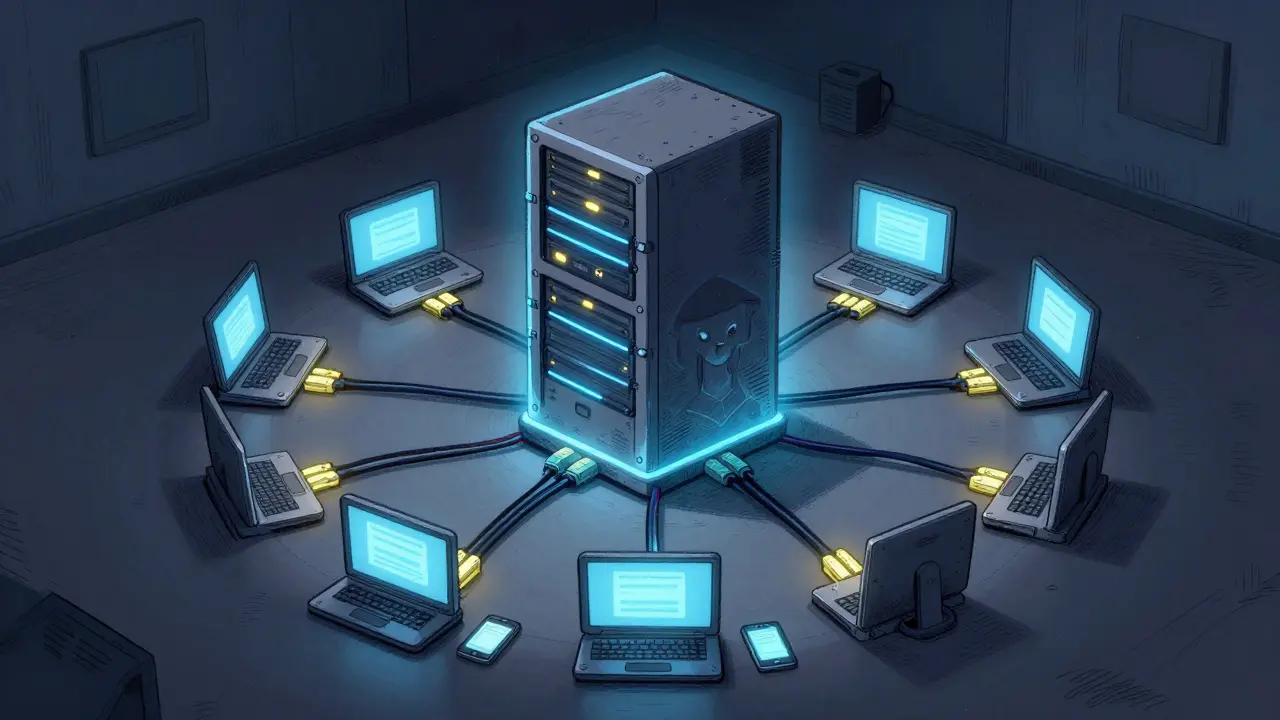
To understand why blockchain rejected the status quo, we first need to look at the standard model that powers most of the web. In a client-server model, there are two distinct roles: the client and the server. You, using your browser or app, are the client. The company hosting the website or service-like Amazon, Google, or your bank-is the server.
Here’s how the interaction typically flows:
- You send a request from your device (the client).
- The request travels to a central computer (the server).
- The server processes the data, checks permissions, and retrieves information.
- The server sends the response back to you.
This setup is efficient for many tasks. If you’re streaming a movie or checking your email, you want a powerful, dedicated machine handling the heavy lifting. Companies like Netflix invest billions in server farms because they can optimize performance, enforce strict security protocols, and maintain full control over the user experience. However, this efficiency comes with a major trade-off: centralization. All data passes through a chokepoint controlled by one entity. If that entity goes offline, gets hacked, or decides to censor content, the entire service stops working for everyone connected to it.
The Peer-to-Peer Alternative
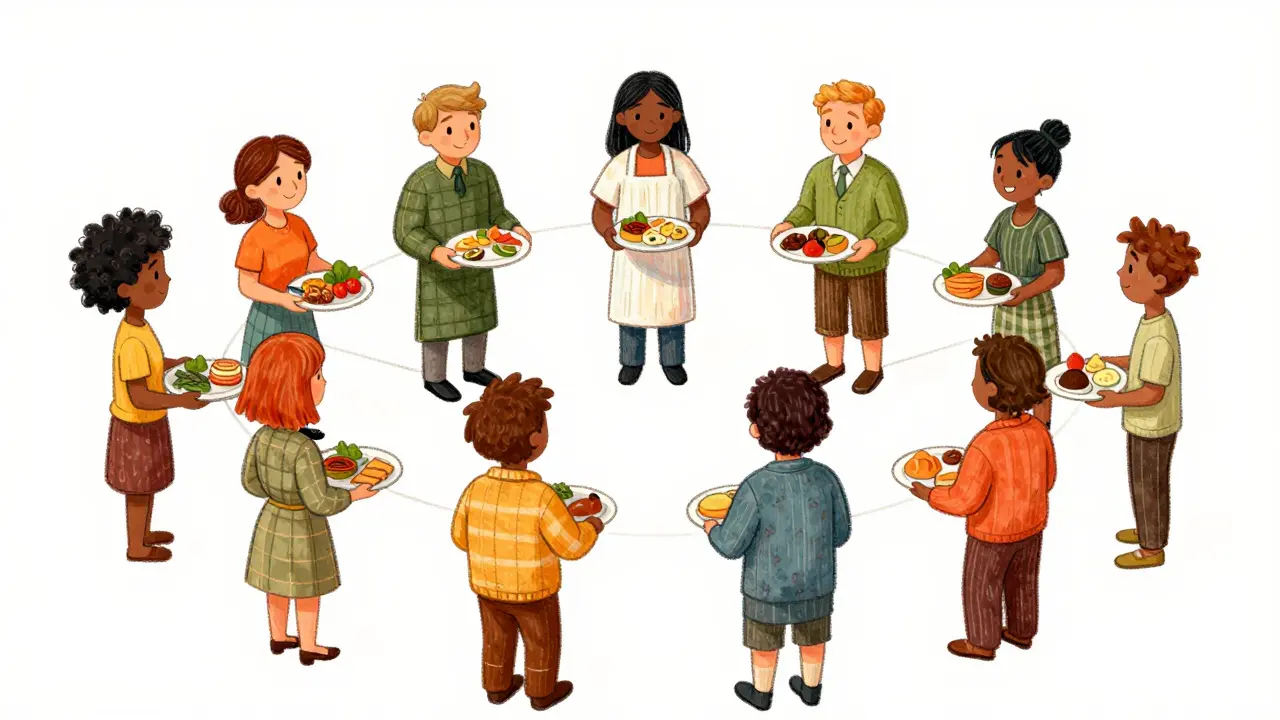
Peer-to-peer (P2P) networks flip this hierarchy on its head. In a P2P system, there is no central server. Every participant in the network acts as both a client and a server. These participants are called "nodes" or "peers." Each node stores a copy of the data and can share resources like bandwidth, storage, and processing power directly with other nodes.
Think of it like a potluck dinner versus a restaurant. In a restaurant (client-server), the kitchen prepares everything, and you wait for them to serve you. If the kitchen closes, you go hungry. At a potluck (P2P), everyone brings a dish and shares it directly with others. If one person leaves, the meal continues because everyone else still has food to offer. This decentralization creates inherent redundancy. There is no single point of failure because the network itself is distributed across thousands of independent computers worldwide.
Historically, P2P was popularized by file-sharing services like BitTorrent. But early P2P networks struggled with stability and security. Without a central authority to police bad actors, malicious files could spread easily, and networks often became unstable as they grew larger. Blockchain solved these problems not by abandoning P2P, but by adding layers of cryptographic verification and economic incentives to make the network secure and reliable.
Why Blockchain Demands Decentralization
So, why didn’t Bitcoin or Ethereum just use a robust client-server setup? It would have been easier to build, faster to scale initially, and simpler to manage. The answer lies in the core philosophy of blockchain: trustlessness.
In traditional finance, you trust your bank to keep your records accurate. You trust Visa to process payments correctly. In blockchain, you don’t trust anyone. Instead, you trust code and mathematics. To achieve this, the network must be permissionless and censorship-resistant. A central server owner could theoretically alter transaction histories, block users, or shut down the network under government pressure. A P2P network prevents this because no single entity controls the ledger.
Every node in a blockchain network maintains a complete copy of the distributed ledger. When a new transaction occurs, it is broadcast to all peers. They independently validate it against predefined rules. Only when the majority agrees does the transaction become permanent. This process eliminates the need for intermediaries and ensures that the history of transactions cannot be retroactively altered without controlling more than half of the network’s computing power-a feat known as a 51% attack, which is economically impractical for large networks like Bitcoin.
Comparing the Architectures: Key Differences
To visualize the trade-offs, let’s compare the two models across critical dimensions relevant to digital systems.
| Feature | Client-Server | Peer-to-Peer (P2P) |
|---|---|---|
| Control | Centralized (one entity manages) | Decentralized (shared among peers) |
| Data Storage | Stored on central servers | Duplicated across all nodes |
| Failure Point | Single point of failure (server crash) | No single point of failure (resilient) |
| Scalability | Easy to scale vertically (add better hardware) | Harder to scale horizontally (network congestion) |
| Censorship Resistance | Low (admin can block access) | High (no admin to block) |
| Cost Structure | High upfront server costs | Distributed costs among users |
As the table shows, client-server wins on simplicity and raw speed for read-heavy operations. P2P wins on resilience, privacy, and freedom from central control. For applications where trust is the primary commodity-like money or identity-P2P is the only viable option.
The Role of Consensus Mechanisms
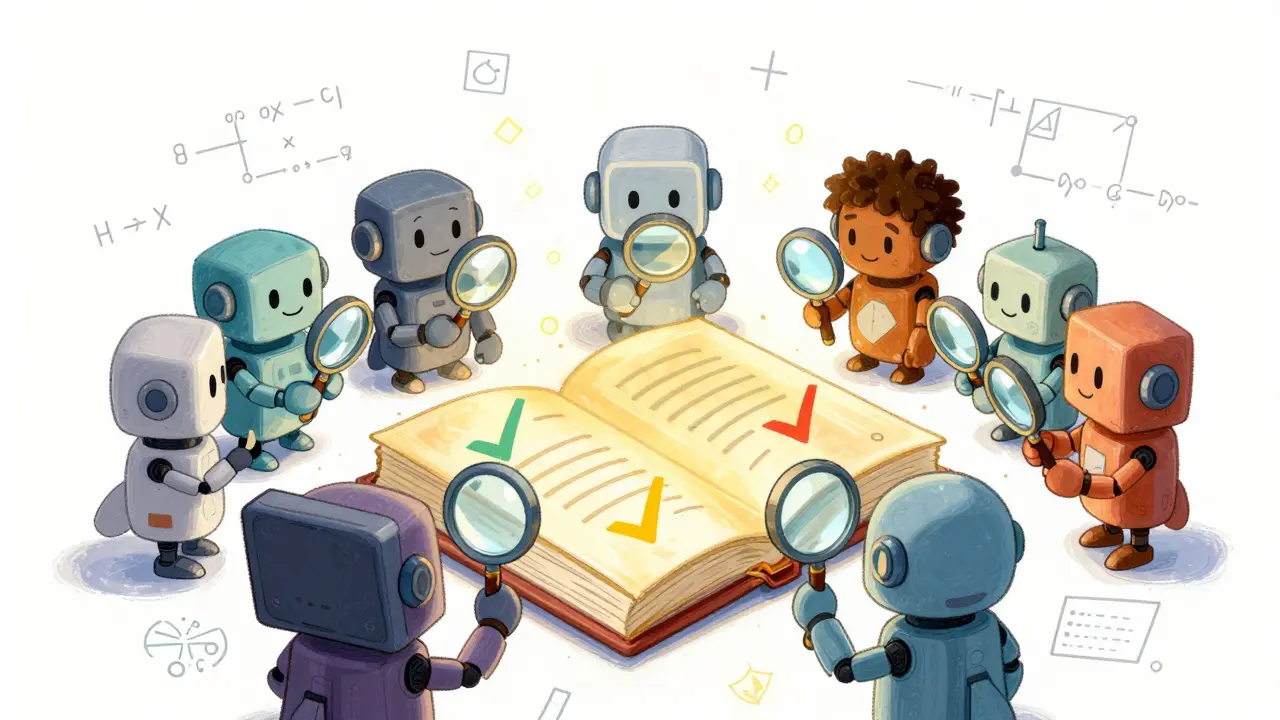
A pure P2P network without additional rules would be chaotic. How do peers agree on which version of the ledger is correct if everyone is broadcasting different data? This is where consensus mechanisms come into play. They are the glue that holds the P2P network together.
In a client-server model, the server simply dictates the truth. In P2P, peers must reach an agreement through algorithms. The most famous example is Proof of Work (PoW), used by Bitcoin. Miners compete to solve complex mathematical puzzles. The first to solve it gets to add the next block to the chain and is rewarded with cryptocurrency. This process requires significant energy but makes attacking the network prohibitively expensive.
Newer networks like Ethereum have moved to Proof of Stake (PoS), where validators lock up their own coins as collateral to propose blocks. If they act maliciously, they lose their stake. These mechanisms ensure that even though the network is decentralized, it remains consistent and secure. They transform a loose collection of computers into a coordinated, trustworthy system.
Challenges and Future Evolution
P2P architecture is not without its flaws. The biggest challenge is scalability. Because every node must process and store every transaction, the network slows down as usage increases. Bitcoin handles about seven transactions per second, while Visa handles tens of thousands. This limitation has spurred innovation in layer-2 solutions, such as the Lightning Network, which allows fast, cheap transactions off-chain while settling final balances on the main P2P blockchain.
Another issue is energy consumption, particularly with Proof of Work. However, the industry is shifting toward more efficient consensus models and hybrid approaches. We are also seeing the rise of sharding, where the blockchain is split into smaller pieces (shards) that can be processed in parallel, increasing throughput without sacrificing decentralization.
Despite these hurdles, the trend is clear. As demand for transparent, tamper-proof, and user-owned digital systems grows, P2P architecture is becoming the backbone of Web3. From decentralized finance (DeFi) to non-fungible tokens (NFTs), the underlying principle remains the same: remove the middleman, distribute the power, and let the network self-regulate.
Conclusion
Choosing between P2P and client-server isn't about which is objectively "better." It's about what problem you're solving. If you need high-speed, centralized control, client-server is ideal. But if you need a system that survives censorship, resists hacking, and operates without trust in a central authority, P2P is the only path forward. Blockchain didn't just adopt P2P architecture; it perfected it by combining decentralization with cryptographic consensus. This combination has created a new paradigm for digital interaction-one where users, not corporations, hold the keys.
Is P2P faster than client-server?
Generally, no. Client-server architectures are optimized for speed because requests go to a powerful, dedicated machine. P2P networks involve multiple nodes verifying data, which adds latency. However, P2P offers better reliability and uptime since there is no single point of failure.
Can a blockchain use client-server architecture?
Technically, yes, but it would defeat the purpose of blockchain. A client-server blockchain would be centralized, meaning a single entity could control or censor the network. Most public blockchains rely on P2P to ensure decentralization and trustlessness.
What is a node in a P2P network?
A node is any computer or device connected to the P2P network. In blockchain, each node stores a copy of the ledger and helps validate transactions. Nodes can be full nodes (storing the entire history) or light nodes (storing only essential data).
Why is decentralization important for blockchain?
Decentralization ensures that no single party can manipulate the data or shut down the network. It provides censorship resistance, enhances security through redundancy, and aligns with the philosophical goal of creating trustless, open financial systems.
How do consensus mechanisms work in P2P?
Consensus mechanisms are algorithms that allow distributed nodes to agree on the state of the ledger. Examples include Proof of Work (mining) and Proof of Stake (staking). They prevent double-spending and ensure that all honest nodes see the same transaction history.