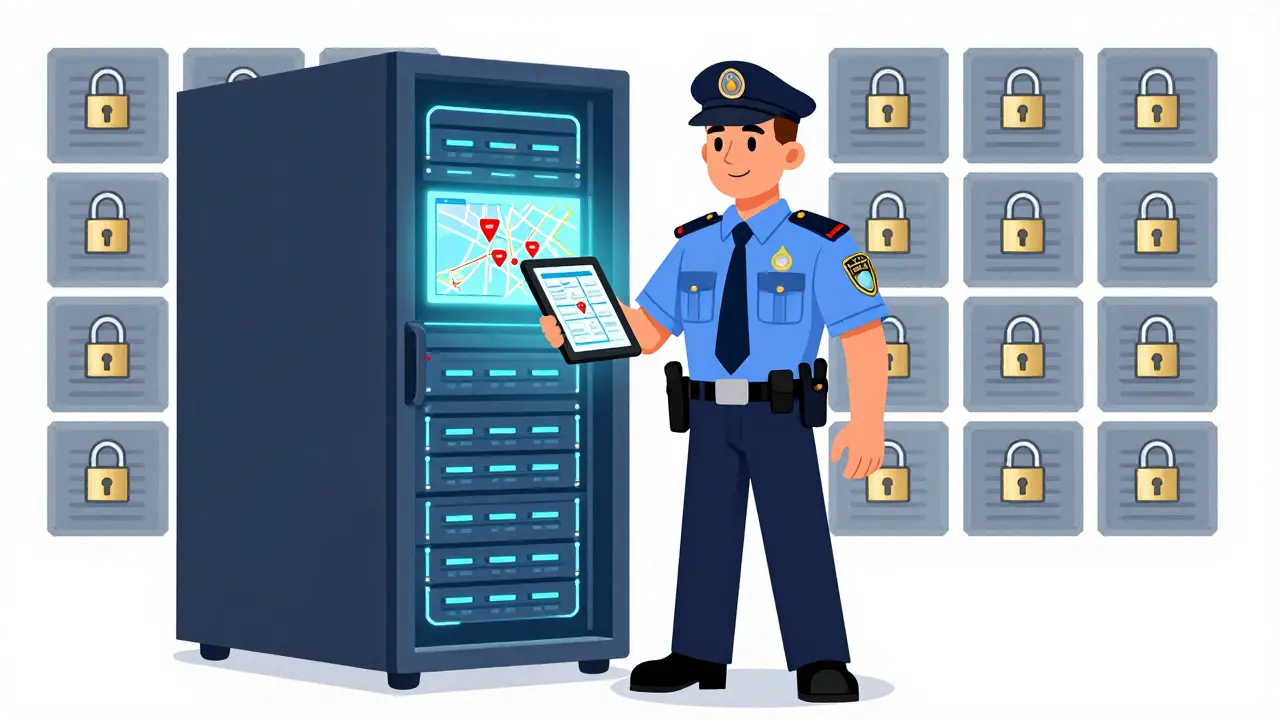
Imagine logging into your favorite cryptocurrency exchange to swap some Bitcoin for cash, only to be greeted by a chilling message from the German Federal Criminal Police (BKA). It wasn’t a glitch. It was Operation Final Exchange. On September 19, 2024, German authorities executed one of the most aggressive and comprehensive takedowns in crypto history, seizing the servers of 47 Russian-language exchanges. This wasn't just about shutting down websites; it was about grabbing every byte of data-transactions, IP addresses, and user records-to dismantle networks facilitating sanctions evasion and money laundering.
If you’ve been following the crypto space, you know that anonymity has always been a double-edged sword. For privacy advocates, it’s a right. For law enforcement, it’s a shield for criminals. Operation Final Exchange marks a turning point where that shield was ripped away, exposing the fragile nature of "untraceable" crypto services. But what exactly did the BKA seize? Why target these specific platforms? And what does this mean for the future of decentralized finance and privacy?
The Anatomy of a Digital Raid
To understand the scale of Operation Final Exchange, you have to look at the technical precision behind it. The BKA didn’t just pull the plug on a few web servers. They went after the entire infrastructure. We’re talking about development servers, production environments, and backup systems. By hitting all three simultaneously, they prevented operators from simply migrating their services to a new host-a common tactic used to evade previous shutdowns.
The Seized Infrastructure included over 8 terabytes of critical data containing user registration information, transaction records, and IP addresses from 47 targeted exchanges.
This mass seizure allowed investigators to reconstruct the financial lives of users who thought they were invisible. The exchanges targeted were primarily "instant-swap" style services catering to Russian-speaking users. These platforms operated without Know Your Customer (KYC) protocols. That means no name, no phone number, no email verification. You could walk up, deposit crypto, and withdraw fiat currency directly to sanctioned Russian bank accounts. For cybercriminals running ransomware gangs or selling drugs on darknet markets, these were essential tools. For the BKA, they were crime scenes waiting to be processed.
Why No-KYC Exchanges Were the Target
You might wonder why the BKA focused so heavily on no-KYC exchanges rather than major regulated platforms like Binance or Coinbase. The answer lies in the flow of illicit funds. Regulated exchanges are under intense scrutiny from global regulators like FinCEN and the EU’s Financial Action Task Force (FATF). They flag suspicious transactions and freeze accounts. Criminals quickly adapted by moving to unregulated, anonymous swaps.
These no-KYC platforms became the preferred on-ramps and off-ramps for sanctioned entities. During the ongoing geopolitical tensions involving Russia, these exchanges provided a systematic channel for circumventing international sanctions. Chainalysis, a leading blockchain analytics firm, noted that instant-swap services play a central role in facilitating on-chain cybercrime. By targeting these specific nodes, the BKA aimed to choke off the liquidity that criminal enterprises rely on.
| Feature | Regulated Exchanges (e.g., Coinbase) | No-KYC Exchanges (Targeted) |
|---|---|---|
| Identity Verification | Required (KYC/AML) | None |
| Sanctions Compliance | Strict blocking of sanctioned IPs/accounts | Often ignored or bypassed |
| User Privacy | Low (data shared with authorities if requested) | High (until seized) |
| Primary User Base | Retail investors, institutions | Cybercriminals, sanctions evaders |
The Psychological Warfare of Enforcement
One of the most striking aspects of Operation Final Exchange was the messaging. The BKA didn’t just shut down the sites silently. They replaced the homepages with a direct threat: "We have found their servers and seized them... We have their data - and therefore we have your data. Transactions, registration data, IP addresses. Our search for traces begins. See you soon."
This approach is significant because it shifts the dynamic from reactive policing to proactive deterrence. In past raids, users often felt safe as long as the platform remained offline. Here, the BKA made it clear that the data was preserved and actively being analyzed. This created immediate panic within Russian-language crypto communities. Telegram channels dedicated to privacy saw a spike in anxiety as users realized their anonymity was compromised. It’s a powerful reminder that in the digital age, your data can be seized even if you never gave your name.
Impact on Crypto Crime Networks
The immediate impact was severe disruption. Darknet market vendors reported an inability to access reliable laundering services. Ransomware groups, which often demand payment in crypto and need to convert it to fiat, lost key exit ramps. However, the crypto underworld is resilient. History shows that when one door closes, another opens. Following similar operations like the ChipMixer seizure, new mixing services and peer-to-peer trading networks often emerge to fill the void.
Yet, Operation Final Exchange differs in its comprehensiveness. By seizing 8+ terabytes of data, the BKA isn’t just stopping current transactions; they are building a case file for future prosecutions. This data allows them to trace funds back through multiple hops, identifying not just the end-users but the middlemen and service providers who facilitated the crimes. Legal analysts from Duane Morris pointed out that this dual focus on financial crimes and sanctions enforcement represents an evolved priority, addressing both traditional criminal activity and broader geopolitical concerns.
Challenges and Limitations of Global Enforcement
While impressive, Operation Final Exchange also highlights the challenges of enforcing laws in a borderless digital economy. The targeted exchanges likely had servers hosted in various jurisdictions, requiring complex international cooperation. The BKA worked closely with Frankfurt’s Public Prosecutor’s Office and other international partners to coordinate the timing. Any delay could have allowed operators to wipe data or move assets.
Furthermore, the focus on Russian-language exchanges limits the operation’s global reach. While it disrupts a significant portion of sanctions-related flows, it doesn’t address the broader ecosystem of non-Russian no-KYC services. Cybercriminals are already adapting, shifting towards more decentralized protocols like Lightning Network sats swaps or atomic swaps that leave fewer centralized server footprints to seize. Law enforcement agencies must now evolve their technical expertise to track these more advanced, distributed methods.
What This Means for the Future of Crypto
For the average crypto user, Operation Final Exchange serves as a stark warning. The era of assuming that "no KYC" equals "safe from prying eyes" is over. If you use these services, your IP address and transaction history are potentially in the hands of foreign intelligence agencies. As regulatory pressure mounts across the EU and beyond, expect more coordinated strikes like this one. The global cryptocurrency compliance market, which reached $1.2 billion in 2024, is growing rapidly as governments invest in better tracking tools.
We are likely to see increased collaboration between blockchain analytics firms like Chainalysis and law enforcement. These companies provide the "digital forensics" needed to make sense of the massive datasets seized in operations like Final Exchange. Their ability to cluster addresses and identify patterns is becoming indispensable. For legitimate businesses, this means stricter compliance requirements. For criminals, it means the net is tightening.
Ultimately, Operation Final Exchange demonstrates that while cryptography can protect data, it cannot hide intent forever. When combined with traditional investigative techniques and international cooperation, the illusion of total anonymity in crypto is crumbling. Whether this leads to a safer, more legitimate financial system or drives crime further underground remains to be seen. But one thing is certain: the days of easy, untraceable crypto swaps are numbered.
What exactly was Operation Final Exchange?
Operation Final Exchange was a coordinated enforcement action by the German Federal Criminal Police (BKA) on September 19, 2024. It involved the seizure of servers and data from 47 Russian-language no-KYC cryptocurrency exchanges to disrupt money laundering and sanctions evasion networks.
How much data did the BKA seize?
Authorities seized over 8 terabytes of data, including user registration details, transaction histories, IP addresses, and complete operational databases from the targeted exchanges.
Why were no-KYC exchanges targeted specifically?
No-KYC exchanges do not require identity verification, making them attractive for criminals seeking anonymity. These platforms were identified as key facilitators for sanctions evasion, particularly for Russian users looking to bypass international financial restrictions.
Does this mean my crypto transactions are no longer private?
If you use centralized no-KYC exchanges, your privacy is significantly compromised. Even without personal ID, metadata like IP addresses and transaction patterns can link you to your activity. Regulated exchanges share data with authorities upon request, while seized no-KYC data is now in the hands of law enforcement.
Will there be arrests resulting from this operation?
As of late 2024, no specific arrest numbers were publicly announced. However, the BKA stated that the seized data would lead to substantive financial intelligence and further enforcement actions, implying ongoing investigations and potential future prosecutions.
How does this compare to previous crypto raids?
Unlike previous raids that often targeted single services, Operation Final Exchange simultaneously took down 47 platforms and seized all server types (development, production, backup). This comprehensive approach prevented rapid migration and preserved vast amounts of historical data for analysis.
You think this is about privacy? It's about control. The BKA didn't just seize servers; they seized the narrative. They want you to believe that anonymity is a crime, but really, it's just inconvenient for their surveillance state. Every time they take down one exchange, three more pop up because the demand for untraceable money isn't going away. It's human nature. People don't like being watched by governments who can't even manage their own budgets. This operation is a band-aid on a bullet hole. They have the data now, sure, but do they have the manpower to process 8 terabytes of noise? I doubt it. Most of those transactions are probably just people trying to buy coffee without getting flagged for buying too much sugar. The real criminals use mixers and tumblers that don't rely on centralized servers in Germany. This is theater. Big, expensive, loud theater designed to make regular folks feel safe while the actual bad guys laugh all the way to the bank. You're celebrating a PR stunt.
It makes me wonder if we have lost the concept of true freedom in our digital lives because we trade it for safety which is an illusion anyway since no system is ever truly secure or private when there are humans involved in the equation who can be bribed or forced to reveal secrets under pressure from authorities who claim to act in the public interest but often serve political agendas instead of moral ones. The idea that your financial movements should be tracked by every government agency on earth is a slippery slope towards total authoritarianism where dissent is funded out of existence and only those with access to the banking system can participate in society. We used to carry cash in our pockets and nobody knew what we bought unless we told them, but now every transaction leaves a breadcrumb trail that leads back to your front door. Is that progress? Or is it just a more efficient cage?
The technical execution was actually quite impressive despite the political motivations. Hitting dev, prod, and backup simultaneously is standard procedure for any competent red team, yet most exchanges still fail to implement proper air-gapped backups or decentralized node structures. If these operators had been using federated protocols rather than centralized databases, the seizure would have been largely symbolic. The fact that they relied on traditional SQL databases hosted on AWS or similar providers shows a fundamental lack of understanding of blockchain principles among the very people claiming to innovate. Furthermore, the assumption that IP addresses alone constitute sufficient evidence for prosecution ignores the reality of proxy chains and VPN usage which are ubiquitous in these circles. The BKA likely has millions of false positives to sift through before they can pin anything on anyone, and even then, jurisdictional issues will render most cases moot. It’s a resource sink disguised as a victory.
I suppose it is important to remember that while some may use these platforms for illicit activities, others simply wish to maintain a degree of personal autonomy over their finances, and perhaps we should strive for a solution that protects both societal safety and individual rights, rather than resorting to such heavy-handed tactics which may inadvertently harm innocent users who are merely seeking alternative financial options due to legitimate concerns about banking fees or accessibility issues. It would be wonderful if law enforcement could work collaboratively with the crypto community to develop better compliance tools that respect privacy, instead of treating everyone like a criminal suspect. Communication and understanding might go a long way here.
Ah, yes, another triumph of the German bureaucracy. How quaint. The masses cheer as their digital footprints are meticulously cataloged by men in suits who couldn't code their way out of a paper bag. The notion that 'no-KYC' equals 'criminal' is a lazy heuristic employed by those who cannot grasp the nuance of cryptographic sovereignty. These exchanges were not merely 'crime scenes'; they were experiments in economic liberty. That the BKA felt the need to replace homepages with threats suggests a profound insecurity regarding their own legitimacy. They are not protecting citizens; they are curating a panopticon. And let us not pretend this is about Russian sanctions specifically. It is about establishing precedent for global capital controls. Once they normalize the seizure of private keys and transaction histories, the rest is just paperwork. Enjoy your monitored wallets, peasants.
its so sad that ppl cant just trust each other anymore without needing the gov to watch every penny. i mean yeah some bad apples exist but why punish everyone? its like saying u cant drive a car because some ppl speed. the whole point of crypto was to get away from this kind of control. now its just becoming another tool for the rich and powerful to track us all. its morally wrong to invade someone's privacy just because they chose not to give their name to a website. where does it end? next theyll want ur biometric data just to buy a loaf of bread. its a slippery slope and we r sliding fast. shame on them for enabling this surveillance culture.
Oh my gosh, this sounds really scary!! But maybe... just maybe... there is a silver lining? Like, maybe this will push everyone to use safer, more regulated platforms where their money is actually protected?? I know it feels like an invasion of privacy, but imagine if your funds were stolen by hackers instead! Regulated exchanges have insurance and customer support, right? So perhaps this is a wake-up call for us to prioritize security over anonymity? I hope everyone stays safe and doesn't panic too much! Let's try to see the positive side, okay? Maybe it will lead to better laws that protect us all in the future? Fingers crossed!
Look, I get the frustration with the heavy hand approach, but we gotta face facts: these platforms were essentially open doors for ransomware gangs and dark web markets. It’s not just about privacy; it’s about stopping real-world harm. When families lose savings to hackers who launder money through these swaps, the 'privacy' argument starts to ring hollow. I’m not saying we should abandon civil liberties, but there’s a balance to be struck. The BKA moved fast, sure, but they also coordinated internationally, which is huge. It sends a message that borders don’t matter when it comes to cybercrime. Still, the collateral damage to innocent users is a real concern. We need clearer guidelines, not just raids. But hey, at least they’re trying to clean up the streets, even if the methods are messy.
Data analysis will take years. Most records are corrupted or encrypted anyway.
Boom! Just like that, the illusion shatters! The BKA didn't just knock on the door; they kicked it down and took the furniture! Imagine thinking your little swap site was a fortress of solitude, only to find out it was made of cardboard. This is the wild west coming to an abrupt, bureaucratic halt. The drama is palpable-users panicking, Telegram groups exploding, the sheer chaos of realizing your 'anonymous' identity is now a spreadsheet row in Frankfurt. It’s poetic justice, really. You wanted to hide in the shadows? Well, the lights are on, and the inspectors are here with clipboards. The net tightens, the fish jump, and the water gets murky. What a spectacle!