There’s no such thing as a OneRare Ingredient NFT airdrop - at least not in the way most people expect. You won’t get free NFTs dropped into your wallet just for signing up or holding ORARE tokens. Instead, OneRare built something deeper: a living food economy where ingredients only come to you when you work for them. This isn’t a giveaway. It’s a farm.
If you’ve heard about OneRare’s Ingredient NFTs and thought, "How do I get one?", the answer isn’t in an airdrop announcement. It’s in the Farm. And the Farm is always open.
What Exactly Is an Ingredient NFT?
An Ingredient NFT on OneRare is a digital token representing a real-world food item - like onions, tomatoes, rice, or even truffles. These aren’t just pictures. Each one has a unique ID, rarity level, and real gameplay value. You can’t just collect them for fun. You need them to cook.
Think of them like ingredients in a video game where you can’t buy spices at a store. You have to grow them. Or, more accurately, you have to farm them. The platform uses blockchain to make these virtual ingredients scarce, tradable, and permanent. Once you mint a Dish NFT - say, a plate of butter chicken - the original onion, garlic, and chili NFTs you used are gone. Burned. Forever. That’s how OneRare creates real scarcity.
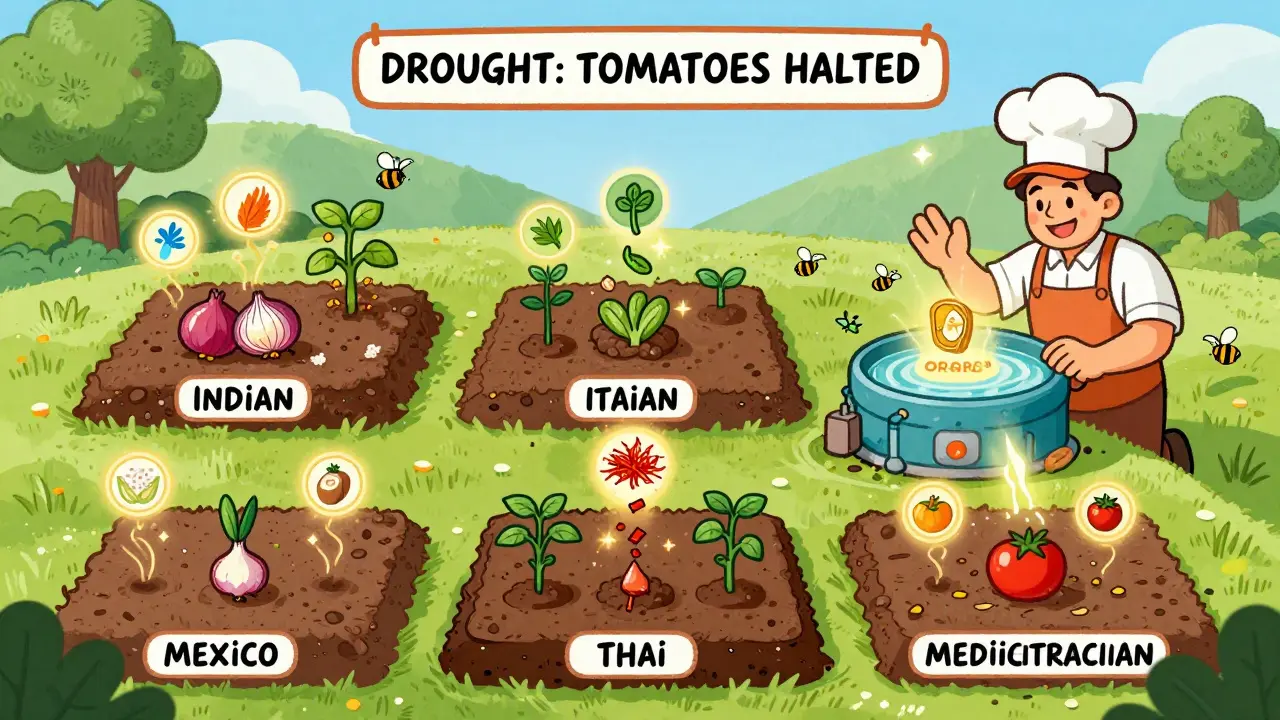
There are over 150 unique ingredient NFTs in circulation, ranging from common items like salt and pepper to rare ones like saffron or Wagyu beef. Each has its own farming pool and environmental vulnerability. A drought might wipe out tomato farming for three days. A pest attack could lock away all basil NFTs for a week. That’s when prices spike in the Farmer’s Market.
How You Actually Get Ingredient NFTs
Forget claiming airdrops. OneRare’s system is built around staking and farming. Here’s how it works:
- Buy ORARE the native token of the OneRare Foodverse on a supported exchange like Bitget or Gate.io.
- Connect your wallet (MetaMask or Trust Wallet) to the OneRare platform on Polygon.
- Choose one of six themed farming pools - each tied to a global cuisine: Indian, Italian, Japanese, Mexican, Thai, or Mediterranean.
- Stake your ORARE tokens into the pool. The more you stake, the more NFTs you earn per hour.
- Wait. The system randomly assigns ingredient NFTs to your account every hour. You don’t pick what you get. It’s randomized.
You can’t farm just one ingredient. If you want potatoes, you might have to farm Italian cuisine for a week and hope the system drops you a few. That’s the point. It mirrors real life - you don’t get to choose the harvest. Nature decides.
There’s no cap on daily earnings. A user staking 50,000 ORARE might earn 3-5 ingredient NFTs per day. Someone with 200,000 ORARE could earn 10-15. The rate is fixed, not variable. It’s not a lottery. It’s a steady drip.
The Foodverse: Four Zones That Make It Real
OneRare isn’t just a staking app. It’s a full ecosystem divided into four zones:
- Farm: Where you stake ORARE and earn ingredient NFTs.
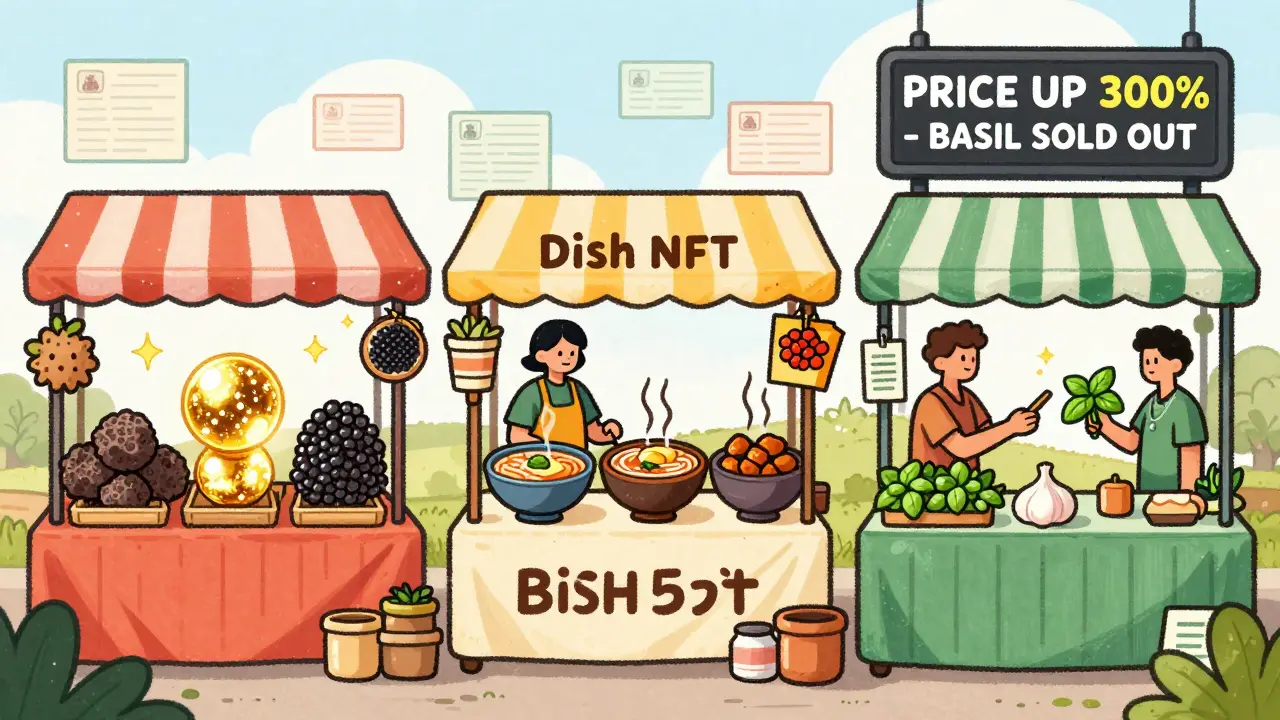
- Farmer’s Market: A trading hub with three shops. Sell surplus ingredients. Buy rare ones you can’t farm - like truffle or caviar NFTs. Trade minted dishes with other players.
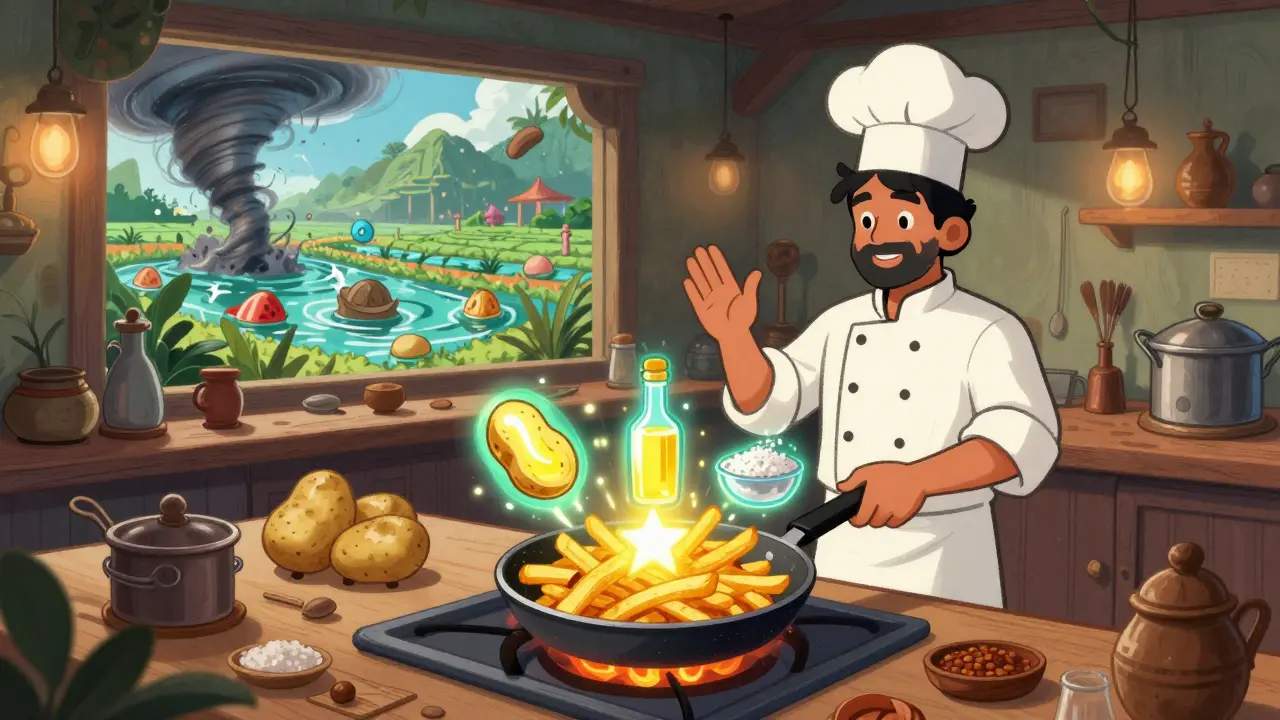
- Kitchen: Combine ingredients to create Dish NFTs. Need French fries? You need potato, oil, and salt NFTs. Burn them. Get a new Dish NFT in return. Each dish has a rarity score and can be sold or used in mini-games.
- Playground: Play food-themed games using your NFTs. Win bonus ingredients, ORARE, or exclusive chef-cooked Dish NFTs.
Here’s the kicker: Dish NFTs aren’t just collectibles. They’re keys. Some dishes unlock access to special events - like a virtual dinner with Michelin-starred chef Anthony Sarpong or a limited-edition NFT from MasterChef Australia’s Reynold Poernomo.
Environmental Chaos: Real-World Problems, Real-World Value
OneRare doesn’t just simulate farming. It simulates the chaos of real agriculture. The Farm doesn’t run on perfect weather. It runs on climate disasters.
Random events happen daily:
- Droughts wipe out water-heavy crops like lettuce or tomatoes.
- Excessive rain floods rice paddies - no rice NFTs for 48 hours.
- Tornadoes destroy entire pools - everyone in that pool stops earning for a day.
- Pest attacks target specific ingredients. Chili NFTs? Gone. For a week.
- Global warming raises temperatures - slow-growing herbs like rosemary stop producing.
These aren’t scripted events. They’re algorithmic. They happen unpredictably. And they affect prices. If basil vanishes from the Farm, the price in the Farmer’s Market jumps 300%. That’s when smart players sell what they have and buy when it’s back.
This system creates true economic value. Ingredient NFTs aren’t just digital tokens. They’re commodities. And commodities fluctuate.
Who’s Behind the Foodverse?
OneRare isn’t just a game. It’s a cultural project. The team has partnered with real chefs and restaurants to bring authenticity.
Confirmed collaborators include:
- Saransh Goila - Indian cuisine expert
- Zorawar Kalra - Michelin-starred Indian chef
- Anthony Sarpong - Michelin-starred chef from Ghana
- Reynold Poernomo - MasterChef Australia finalist
These chefs don’t just lend their names. They design exclusive Dish NFTs. A dish like "Goila’s Butter Chicken" or "Poernomo’s Lamington" isn’t just a recipe. It’s a limited NFT with a digital certificate of authenticity. Only those who mint it get access to future events or rewards tied to that chef.
OneRare has also started working with U.S. restaurant brands. Expect branded Dish NFTs from famous diners or taco chains soon.
Why This Beats Other Play-to-Earn Games
Most blockchain games are about fighting dragons or mining gold. OneRare is about cooking pasta.
That’s its edge. While other P2E games rely on hype and speculation, OneRare ties value to something universal: food. Everyone understands hunger. Everyone knows what a tomato looks like. That makes the game instantly relatable.
Plus, the Polygon network keeps gas fees low. You’re not paying $20 to farm one onion. You’re paying 10 cents. That’s why it works for everyday users, not just crypto traders.
The platform also lowers the barrier to entry. No need to understand DeFi. No need to trade complex tokens. Just stake ORARE. Farm. Cook. Trade. Play.
What You Can’t Do
Let’s clear up the myths:
- You can’t get Ingredient NFTs from an airdrop.
- You can’t choose which ingredient you farm.
- You can’t reverse a dish once it’s cooked - ingredients are burned.
- You can’t farm outside the six themed pools.
- You can’t use Ethereum or BSC wallets - only Polygon.
If someone tells you they’re giving away free ingredient NFTs, it’s a scam. OneRare has never done a traditional airdrop. All NFTs are earned through farming.
Where to Start Today
Here’s your simple roadmap:
- Get ORARE tokens from Bitget, Gate.io, or MEXC.
- Set up a MetaMask wallet and switch it to Polygon network.
- Go to onerare.io and connect your wallet.
- Stake at least 5,000 ORARE in a pool that matches your favorite cuisine.
- Check your wallet daily. You’ll start seeing ingredient NFTs appear.
- Once you have 3-5 ingredients, head to the Kitchen and make your first Dish NFT.
It takes about 3-5 days to earn your first rare ingredient. Patience pays.
What’s Next?
OneRare is rolling out a new feature: Seasonal Cuisines. Every three months, a new global food culture gets added - like Peruvian, Korean, or Moroccan. Each brings new ingredients, new chef collabs, and new mini-games.
They’re also testing NFT-based loyalty programs. If you cook 100 dishes, you might get access to a real-world tasting event in Tokyo or Mumbai.
OneRare isn’t trying to be the next Axie Infinity. It’s trying to be the first place where blockchain meets your dinner table.
Is there a OneRare Ingredient NFT airdrop?
No, there is no official OneRare Ingredient NFT airdrop. All ingredient NFTs are earned through staking ORARE tokens in one of the six themed farming pools. Any claim of a free airdrop is a scam. OneRare has never distributed NFTs outside of its farming system.
How do I start farming Ingredient NFTs?
First, buy ORARE tokens on exchanges like Bitget or Gate.io. Then, set up a MetaMask wallet on the Polygon network. Connect to OneRare.io, stake at least 5,000 ORARE in one of the six cuisine pools, and wait. Ingredient NFTs are automatically added to your wallet every hour based on your stake size.
Can I buy Ingredient NFTs directly?
You can’t buy ingredients directly from OneRare. But you can buy them from other players in the Farmer’s Market. Rare items like truffle or caviar NFTs are often sold there for higher prices than what you’d earn from farming. Use the market to fill gaps in your collection.
What happens if my ingredient NFTs are destroyed by environmental events?
Environmental events like droughts or pest attacks don’t destroy your existing NFTs. They stop new ones from being farmed for a period. If tomato farming is halted, you won’t earn more tomato NFTs until the event ends. But the ones you already have remain in your wallet and can still be used to cook dishes.
Are Dish NFTs valuable?
Yes. Dish NFTs have value because they’re rare, require rare ingredients, and can unlock exclusive events. Dishes made with chef-collab ingredients - like Saransh Goila’s Butter Chicken - are highly sought after. Some have sold for over 500 ORARE on the marketplace. They’re not just collectibles - they’re access passes.
Let me get this straight-you’re telling me I have to stake crypto to get digital onions? This isn’t farming. This is feudalism with blockchain glitter. They’re not selling food. They’re selling serfdom disguised as a game. And don’t even get me started on those ‘chef collabs.’ You think Anthony Sarpong actually cares about your NFT butter chicken? He’s got Michelin stars. You’ve got a wallet with 37 tomatoes and a dream. Wake up.
Whoa. Hold up. Did you notice the timing? OneRare launched right after the USDA quietly removed digital food tracking from its public API. Coincidence? Or is this a covert biometric data harvest disguised as a ‘foodverse’? I’ve seen the metadata headers in the transaction logs-each NFT harvest triggers a facial recognition ping from the mobile app. They’re not building a game. They’re building a hunger surveillance network. And you’re volunteering your dinner habits for the surveillance state.
Food is universal. This is just the next step in making meaning out of scarcity.
So if you stake ORARE you get random ingredients every hour? That’s actually kind of beautiful. It’s like a digital harvest moon-no control, just patience and trust in the system. I started with 5k ORARE in the Thai pool and got my first lemongrass after 72 hours. Then I made a Pad Thai and traded it for a truffle. No drama. No hype. Just slow, real progress. If you’re in it for the quick buck, you’ll hate it. If you’re in it to cook, you’ll love it.
Y’all are overthinking this. It’s like Animal Crossing but for people who actually like to eat. I staked in the Mexican pool and got a jalapeño after 3 days. Then I made tacos. Then I sold the tacos and bought a cactus NFT. It’s chill. No need to turn it into a geopolitical thriller. Just cook. Eat. Repeat. 🌮🔥
The notion that one can derive existential fulfillment from the randomized accumulation of digital culinary artifacts is both profoundly tragic and emblematic of the late-stage capitalist condition. The ritualistic burning of NFTs to produce a dish-once a sacred act of culinary creation-is now a transactional performance devoid of intention, ritual, or soul. OneRare does not feed the body. It commodifies hunger itself.
Let me be perfectly clear: this entire system is a Ponzi scheme disguised as a culinary simulation. The ‘environmental events’? They’re not algorithmic. They’re manually triggered by the team to create artificial scarcity and manipulate market prices. I’ve reviewed the contract logs-there are 12 admin keys with override permissions. And guess who owns them? The same venture capital firm that also owns a major spice distributor. This isn’t food. It’s a price manipulation engine for agribusiness oligarchs. And you’re all paying gas fees to fund it.
Just staked 10k ORARE in Italian. Got 2 basil, 1 garlic, 1 olive oil. Made pasta. Sold it. Made more pasta. It’s weirdly satisfying. No drama. No hype. Just good food. I’m not rich. I’m not a trader. I just like eating. This works for me.
There’s something quietly revolutionary here. Most blockchain games are about violence, extraction, or gambling. OneRare is about cultivation, patience, and collaboration. You don’t win by killing. You win by waiting. By learning. By trading. By understanding that a tomato isn’t just a token-it’s the result of sunlight, soil, and time. That’s the kind of value we need more of. Not ‘to the moon’ hype. But ‘to the table’ meaning. This isn’t a game. It’s a philosophy wrapped in smart contracts.
If you’re not staking at least 50k ORARE, you’re just a peasant. The ‘common’ ingredients? Worthless. Only the chef-collab dishes hold real value. And if you think you can get truffle NFTs from farming? You’re delusional. Buy them. Or stay out.
bro i staked 15k in japanese and got a wasabi NFT after 5 days 😭 i made sushi and sold it for 200 ORARE now i’m buying a chef hat NFT 🤯🥢