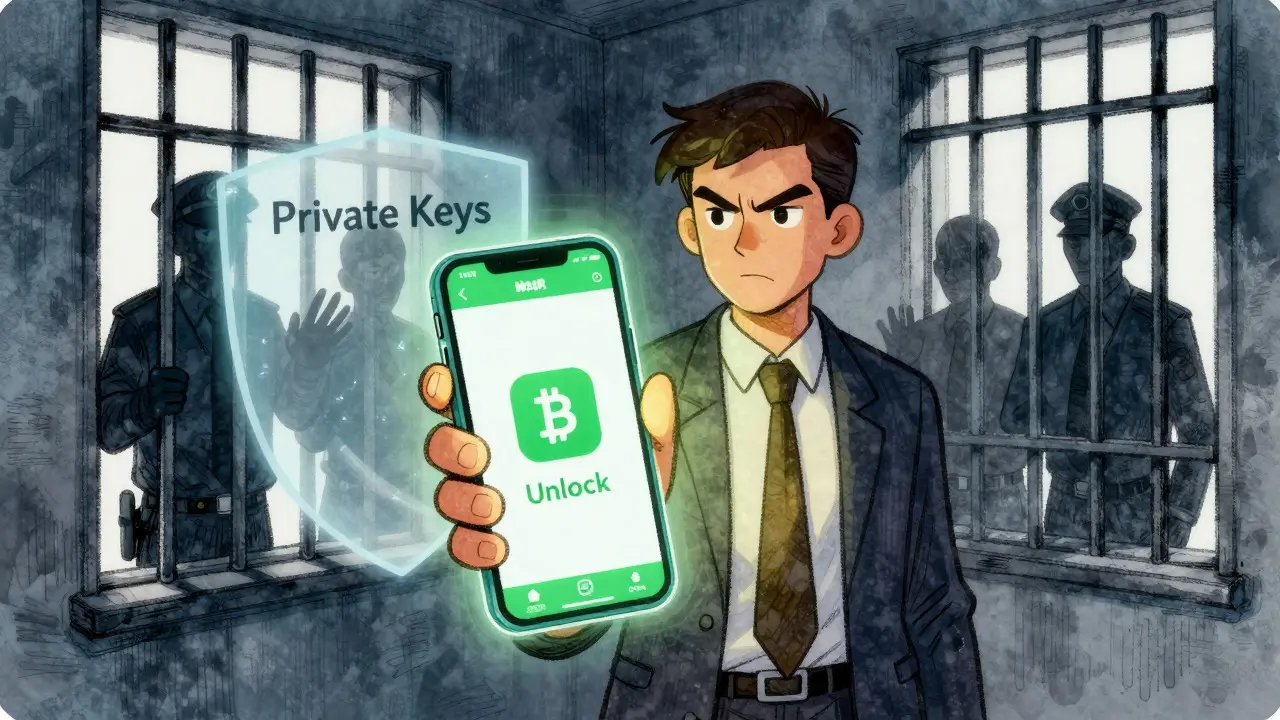
Imagine trying to send money to a friend, but your bank account has been frozen because the government decided you weren't supposed to own that currency. For millions of people living in countries with strict financial controls or outright cryptocurrency bans, this isn't a hypothetical nightmare-it's daily life. When centralized exchanges get shut down or blocked by internet censorship, traditional banking rails often fail those seeking financial freedom. This is where non-custodial crypto wallets become more than just a tech trend; they are essential tools for survival and sovereignty.
In restricted environments, the phrase "not your keys, not your crypto" takes on a literal meaning. If you rely on a third party-a centralized exchange like Binance or Coinbase-you are at the mercy of their compliance with local laws. They can freeze your assets, demand excessive identification, or simply cease operations in your region. Non-custodial wallets change the dynamic entirely. By keeping your private keys offline or encrypted on your device, you remove the middleman. You hold the only key to your digital vault, making it nearly impossible for authorities to seize your funds directly from the blockchain.
How Non-Custodial Wallets Bypass Regulatory Walls
To understand why these wallets work where others fail, you have to look at how they interact with the network. A non-custodial wallet is a software or hardware tool that allows users to store cryptocurrencies without relying on a third-party custodian. Unlike a bank account, which is essentially an IOU from a financial institution, a non-custodial wallet gives you direct access to the ledger. When you send Bitcoin or Ethereum from a MetaMask wallet, you are signing a transaction locally. That signature proves ownership. The blockchain nodes verify it and update the public record. No server in London or New York needs to approve it.
This architecture creates several critical advantages for users in restricted countries:
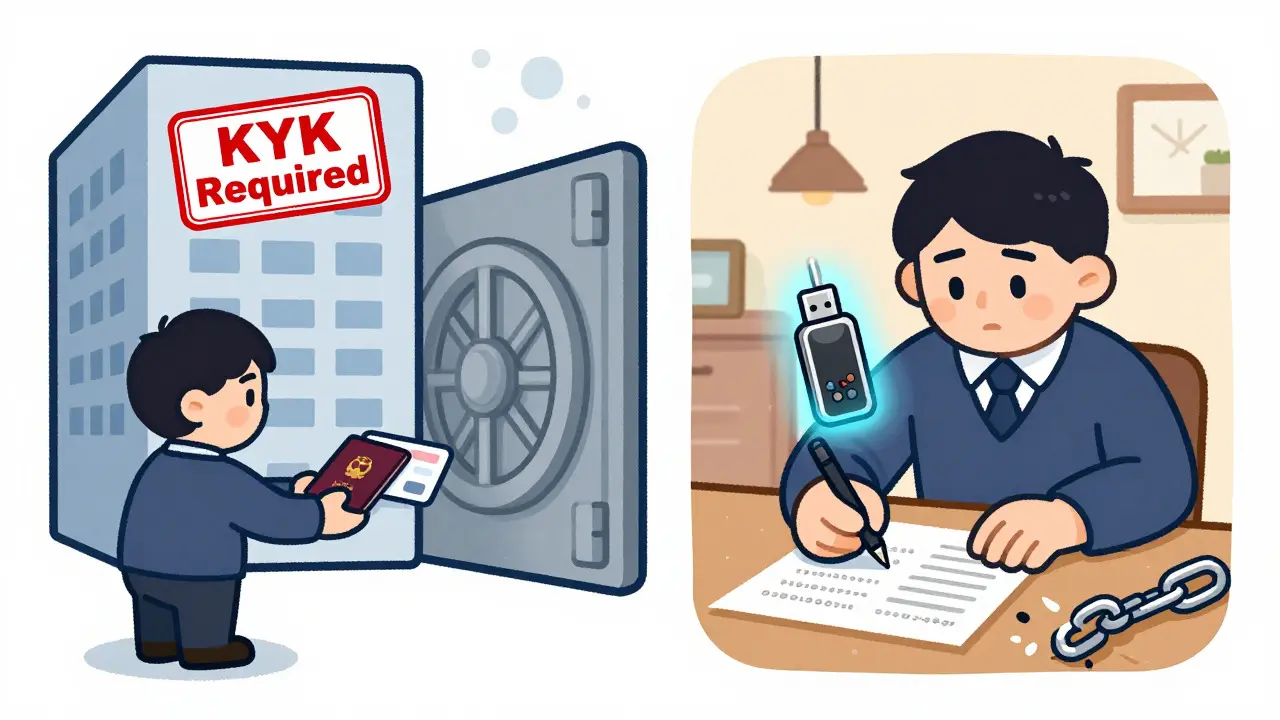
- No KYC Requirements: Most centralized platforms require Know Your Customer (KYC) checks-passports, proof of address, and facial recognition. Non-custodial wallets like Trust Wallet or Exodus ask for nothing. You download the app, generate a seed phrase, and start using it. There is no central database holding your personal data linked to your holdings.
- Censorship Resistance: Since transactions are peer-to-peer, there is no single point of failure. Even if a government blocks the website where you downloaded the wallet, the underlying protocol remains open. As long as you have an internet connection (often via VPN), you can broadcast transactions.
- Asset Portability: Your wealth lives on the blockchain, not on a company’s hard drive. If you flee a country, you don’t need to transfer funds through slow, monitored banking channels. You just take your device-and your seed phrase-with you.
The Wilson Center’s July 2024 report highlighted this shift, noting that after high-profile collapses like FTX, users increasingly view self-custody as the "only true and verifiable ownership" model. In regions where trust in institutions is low, this technical feature becomes a political necessity.
Choosing the Right Tool: Software vs. Hardware
Not all non-custodial wallets are created equal, especially when security is paramount. In restricted countries, the stakes are higher. A hack or a lost password doesn't just mean inconvenience; it could mean losing your entire livelihood. You generally have two paths: hot wallets (software-based) and cold wallets (hardware-based).
| Feature | Software Wallets (e.g., MetaMask, Trust Wallet) | Hardware Wallets (e.g., Ledger Nano S/X) |
|---|---|---|
| Cost | Free | $79 - $149 USD |
| Security Level | Moderate (vulnerable to malware/phishing) | High (offline storage) |
| KYC Required | No | No |
| Best For | Daily spending, small amounts, DeFi interaction | Long-term storage, large holdings |
| Recovery | 12-24 word seed phrase | 12-24 word seed phrase + optional passphrase |
MetaMask is a popular browser extension and mobile wallet primarily used for Ethereum and EVM-compatible chains. It is excellent for interacting with decentralized applications (dApps). However, because it runs on your computer or phone, it is connected to the internet. If your device has spyware installed-which is a real risk in some surveillance-heavy states-your keys could be compromised.
For significant savings, a Ledger Nano S is a USB-sized hardware wallet that stores private keys offline. When you sign a transaction, the private key never leaves the device. The device displays the details, you press physical buttons to confirm, and only the signed transaction goes online. This "air-gapped" approach is crucial. According to Ledger Academy’s 2024 specifications, this method ensures that even if your computer is infected, your funds remain safe. The Ledger Nano X offers Bluetooth connectivity for mobile use, adding convenience without sacrificing the core security model.
The Critical Role of the Seed Phrase
If you decide to go non-custodial, you must accept one harsh truth: you are now your own bank. And banks have customer support; you do not. The most important component of your wallet is not the app itself, but the recovery phrase-a sequence of 12 to 24 random words generated during setup. This phrase is the master key to your assets.
In restricted countries, protecting this phrase is a physical security challenge. Here is how to handle it correctly:
- Write it Down Physically: Never store your seed phrase digitally. No screenshots, no text files, no cloud notes. Printers and phones can be hacked. Use pen and paper, or better yet, metal backup plates that resist fire and water damage.
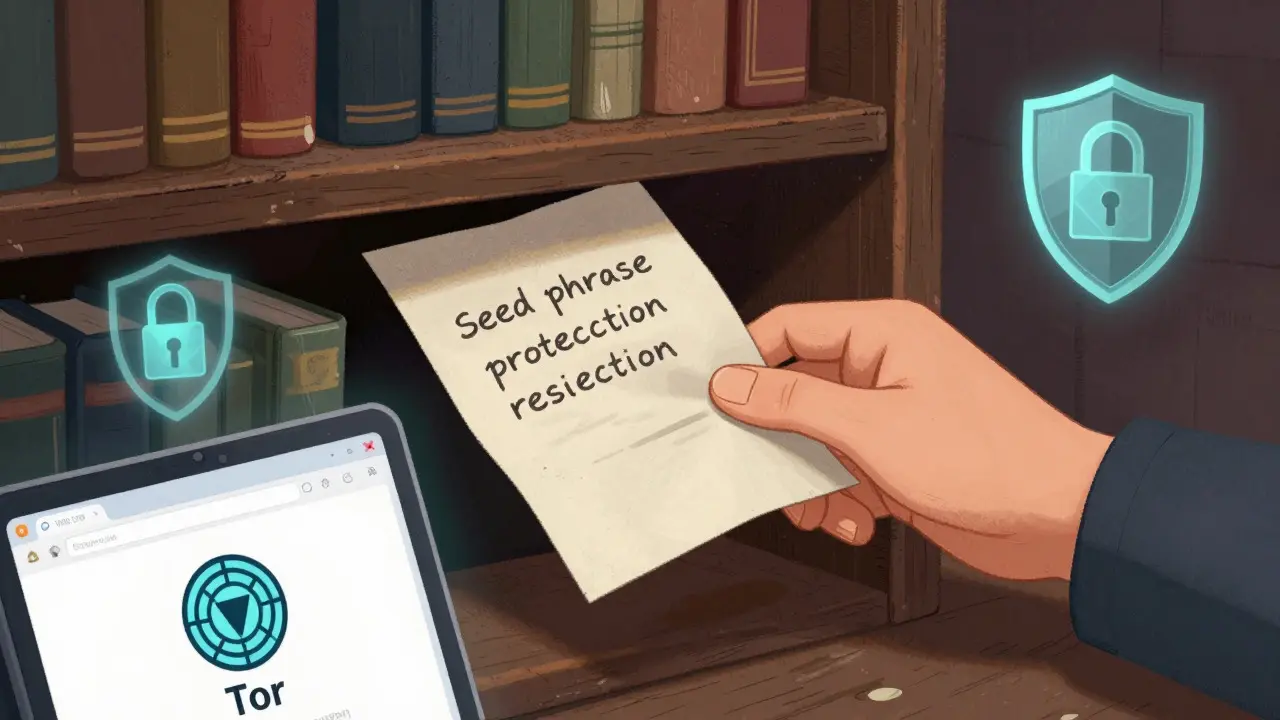
- Hide it Well: Authorities in restrictive regimes may search homes or confiscate devices. Keep your seed phrase in a location separate from your hardware wallet. A safety deposit box (if accessible), a hidden compartment in a book, or buried in a garden are common strategies.
- Consider Shamir Backup: Advanced users might look into Shamir’s Secret Sharing, a method that splits the seed phrase into multiple parts. You need a certain number of parts (e.g., 3 out of 5) to reconstruct the key. This prevents total loss if one part is destroyed or stolen.
A Reddit user known as u/KeyLoser2024 shared a cautionary tale in August 2024: "Lost my seed phrase while moving countries, $3,200 gone forever." This underscores the finality of self-custody. There is no "Forgot Password" button. If you lose the phrase, the math of cryptography ensures your funds are inaccessible to everyone, including you, forever.
Navigating Censorship and Connectivity
Owning the wallet is only half the battle. In many restricted nations, accessing the blockchain itself is difficult. Governments often employ Deep Packet Inspection (DPI) to block traffic to known cryptocurrency nodes or websites. To maintain access, you need robust circumvention tools.
Virtual Private Networks (VPNs) are the standard solution. However, not all VPNs are equal. Free VPNs often log your data and sell it, defeating the purpose of privacy. You need a reputable, no-logs VPN provider based in a privacy-friendly jurisdiction. Furthermore, some advanced censorship systems can detect and block standard VPN protocols. In these cases, users turn to obfuscation techniques or Tor networks.
Tor (The Onion Router) adds layers of encryption and routes your traffic through multiple relays worldwide. While slower, it makes it extremely difficult for ISPs to see what you are doing. Many non-custodial wallets, including MetaMask, have integrations or guides for connecting via Tor. Combining a hardware wallet with a Tor-connected browser provides a strong layer of operational security (OpSec).
Risks and Pitfalls to Avoid
While non-custodial wallets offer freedom, they introduce new risks that are amplified in restricted environments. Without the safety net of insurance or customer service, mistakes are costly.
Phishing Attacks: Scammers know that users in restricted areas are desperate for access. They create fake websites mimicking popular wallets or DEXs (Decentralized Exchanges) like Uniswap. Always bookmark the official URLs and check them carefully. If a site asks you to enter your seed phrase, close it immediately. Legitimate sites never ask for your seed phrase.
Smart Contract Risks: When you swap tokens or provide liquidity, you interact with smart contracts. Some of these code sets contain bugs or malicious functions that can drain your wallet. Stick to well-audited protocols. Tools like Revoke.cash can help you manage permissions, ensuring that old apps don't retain access to your funds indefinitely.
Network Fees: Remember that every transaction costs gas fees. On congested networks like Ethereum, fees can spike to $50 or more. In countries with weak local currencies, this volatility can eat into small balances. Layer-2 solutions like Arbitrum or Optimism, or alternative chains like Solana, offer cheaper alternatives, but ensure your wallet supports them and you understand the bridge risks involved in moving assets between chains.
Building a Sustainable Strategy
Using non-custodial wallets in a restricted country is not a one-time setup; it is an ongoing practice. Start small. Before moving your life savings, test the system. Send a small amount of Bitcoin or ETH to your new wallet. Verify you can receive it. Then, try sending a tiny fraction back to an exchange or another address. Master the process of signing transactions, checking addresses, and managing gas limits.
Educate yourself continuously. The landscape changes fast. New regulations emerge, new scams appear, and new technologies arise. Follow trusted sources like Cointracker’s documentation or independent security researchers. Join communities, but beware of sharing too much personal information. In the world of crypto privacy, silence is golden.
Ultimately, non-custodial wallets empower you to take control of your financial destiny. They strip away the power of intermediaries and place it squarely in your hands. Yes, the responsibility is heavy. Yes, the learning curve is steep. But for those living under financial restriction, the ability to hold, send, and grow wealth without permission is worth the effort. Just remember: guard your keys, verify your links, and never trust blindly.
Are non-custodial wallets legal in restricted countries?
Legality varies by country. In many places, owning a wallet is not explicitly illegal, but buying or selling crypto through unlicensed entities might be. Non-custodial wallets themselves are just software tools. However, using them to bypass capital controls could technically violate local financial regulations. Always research your specific local laws, though enforcement against individual wallet holders is often rare due to the difficulty of tracking anonymous blockchain activity.
What happens if I lose my hardware wallet device?
If you lose your hardware wallet (like a Ledger or Trezor), you do not lose your funds. As long as you have your 12-24 word seed phrase written down securely, you can buy a new device and restore your wallet. The device is merely a tool to sign transactions; the keys live in your seed phrase.
Can governments track my non-custodial wallet?
Blockchains are public ledgers, meaning all transactions are visible. Anyone can see the balance and movement of any address. However, the identity behind the address is pseudonymous. If you never link your real-world identity (via KYC) to that wallet address, it is very difficult for authorities to know who owns the funds. Using privacy-enhancing techniques like coin joins or mixing services can further obscure trails, though these carry their own risks.
Do I need a VPN to use a non-custodial wallet?
Not always, but highly recommended in restricted countries. If your internet service provider (ISP) blocks access to blockchain nodes or wallet websites, a VPN will allow you to connect. Additionally, a VPN hides your IP address from the nodes you connect to, adding a layer of privacy so they cannot easily associate your transaction broadcasts with your physical location.
Is it safer to keep crypto on an exchange or in a non-custodial wallet?
For long-term holding, non-custodial wallets are significantly safer. Centralized exchanges are frequent targets for hackers and can face regulatory freezes or bankruptcy (as seen with FTX). In a non-custodial wallet, only you have access to your funds. While you bear the responsibility of securing your seed phrase, you eliminate counterparty risk-the risk that the company holding your money fails or acts against your interest.