Imagine waking up to find your bank account frozen. No warning, no explanation-just a digital lock on your life savings. For millions of people living in countries with strict cryptocurrency bans or capital controls, this isn't a hypothetical nightmare; it is their daily reality. When governments clamp down on traditional finance and centralized exchanges shut down local operations, where do you go? The answer lies in non-custodial crypto wallets. These tools are not just convenient storage solutions; they are instruments of financial sovereignty that allow you to hold assets without asking anyone for permission.
In nations where access to the global economy is throttled by regulation, non-custodial wallets offer a lifeline. But with great power comes great responsibility-and significant risk. Unlike an exchange that holds your hands (and your keys), these wallets demand that you become your own bank. If you lose your password, there is no customer support hotline to call. If you make a mistake, the money is gone forever. This guide breaks down how these wallets work, why they matter in restricted environments, and how to use them safely without getting burned.
The Core Difference: Who Holds the Keys?
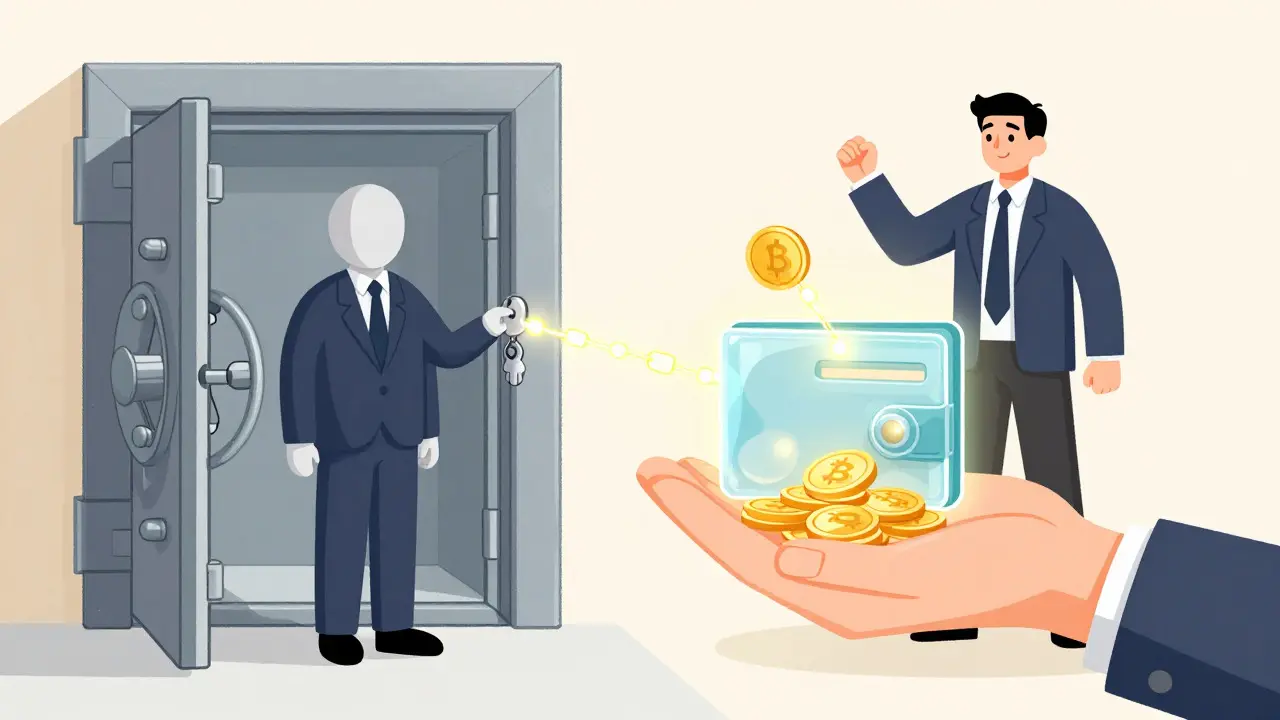
To understand why non-custodial wallets are critical in restricted countries, you first need to grasp the fundamental difference between custodial and non-custodial systems. Think of a custodial wallet like a traditional bank account. You have a username and a password, but the bank actually holds your money. They control the ledger. If the bank decides to freeze your account because of new regulations, or if they go bankrupt (remember the FTX collapse in November 2022?), your access to funds is severed. According to analysis from the Wilson Center, the FTX disaster highlighted a harsh truth: when a third party holds your assets, you are subject to their risks and regulatory pressures.
A non-custodial wallet is a digital tool that grants users complete control over their private keys and cryptocurrency assets without third-party intermediaries. In this model, you are the bank. Your "account" exists on the blockchain, accessible only through a unique set of cryptographic codes known as private keys. The mantra in the crypto world is simple: "Not your keys, not your crypto."
| Feature | Custodial Wallet (e.g., Binance, Coinbase) | Non-Custodial Wallet (e.g., MetaMask, Ledger) |
|---|---|---|
| Private Key Control | Held by the exchange/company | Held exclusively by the user |
| KYC Requirements | Mandatory (ID, proof of address) | None required |
| Account Recovery | Customer support can reset passwords | Impossible without recovery phrase |
| Regulatory Vulnerability | High (can be frozen/blocked) | Low (censorship-resistant) |
| User Responsibility | Low | Very High |
In restricted countries, the lack of Know Your Customer (KYC) requirements is often the deciding factor. Centralized exchanges often pull out of markets or block IP addresses from sanctioned regions. A non-custodial wallet requires no ID, no passport scan, and no approval from a central authority. It simply connects to the blockchain network directly.
Types of Non-Custodial Wallets for High-Risk Environments
Not all non-custodial wallets are created equal. Depending on your technical skill level and the value of your assets, different types offer varying degrees of security and convenience. Understanding these options is crucial for choosing the right tool.
Hardware Wallets: The Gold Standard
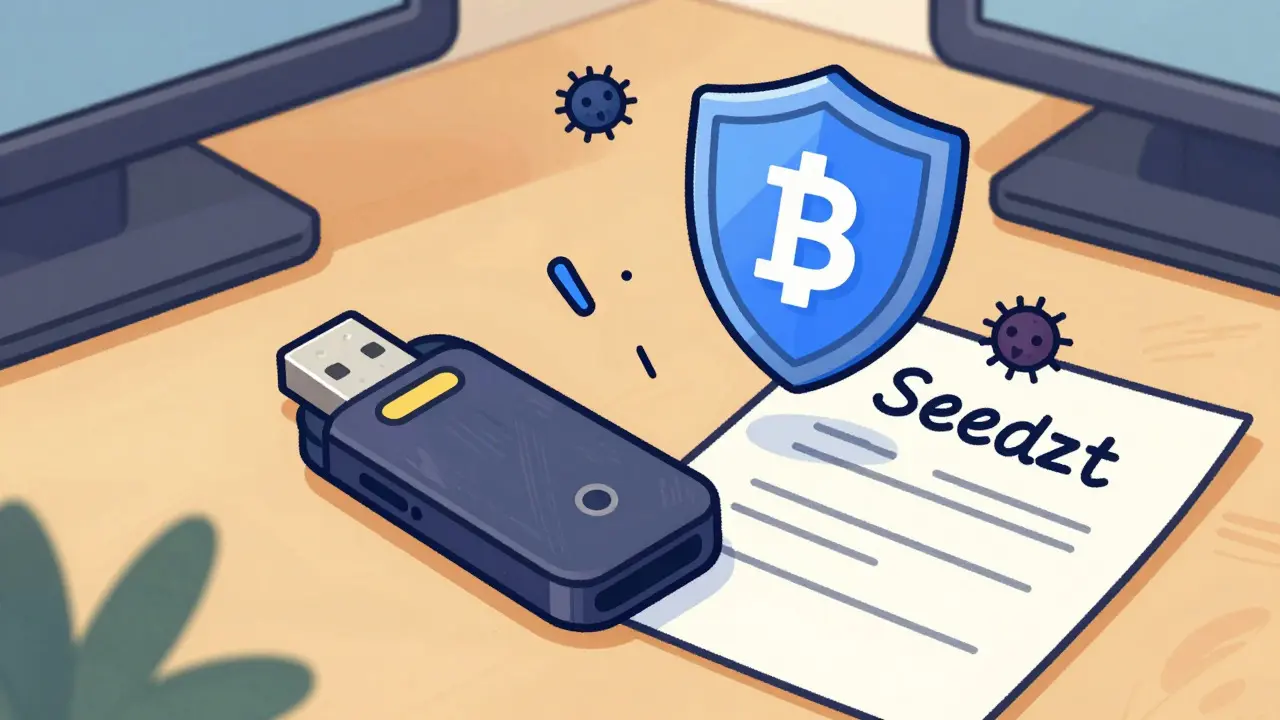
For significant holdings, hardware wallets are the safest option. Devices like the Ledger Nano S ($79 USD) and Ledger Nano X ($149 USD) store your private keys offline. This means even if your computer is infected with malware, hackers cannot steal your keys because they never touch the internet. Ledger Academy notes that transaction signing happens entirely within the device before being sent to the blockchain. This "air-gapped" security is vital in countries where cyber-surveillance is prevalent.
Software Wallets: Convenience Meets Risk
Software wallets run on your phone or computer. Popular examples include MetaMask (browser extension) and Trust Wallet (mobile app). These are free and easy to set up, making them ideal for beginners or those with smaller amounts. However, because they live on internet-connected devices, they are more vulnerable to phishing attacks and malware. If you use a software wallet in a restricted country, ensure your device is clean and always verify URLs carefully.
Multi-Signature Wallets: Added Security Layers
For advanced users or families, multi-signature (multisig) wallets require multiple keys to authorize a transaction. For instance, a 2-of-3 setup might mean you need two out of three specific keys to move funds. This prevents loss if one key is compromised or lost. While more complex to set up, multisig wallets are gaining traction as a robust security measure against both external hacks and internal errors.
Navigating Restrictions: Access and Anonymity
Living in a restricted country adds layers of complexity beyond just holding the wallet. You must also manage how you access the network and fund your wallet without triggering alerts from authorities.
Internet Censorship: Many restrictive regimes block access to popular crypto websites, blockchain explorers, or even the apps themselves. To bypass these blocks, using a reputable Virtual Private Network (VPN) is often necessary. However, choose wisely. Free VPNs often log your data, which defeats the purpose of privacy. Paid, no-log VPN services based in privacy-friendly jurisdictions are safer bets.
Funding the Wallet: Getting crypto into a non-custodial wallet without using a regulated exchange can be tricky. Peer-to-Peer (P2P) platforms like Bisq or HodlHodl allow you to buy crypto directly from other users using cash, mobile money, or local bank transfers without KYC. LocalBitcoins and Paxful are other options, though they vary in availability by region. Always meet in safe public places for cash trades and use escrow services provided by the P2P platform to protect against scams.
Network Selection: Not all blockchains are equally accessible. Ethereum is widely supported but can have high transaction fees during congestion. Networks like Solana or Binance Smart Chain offer lower fees but may face specific scrutiny depending on the jurisdiction. Ensure your wallet supports the networks you intend to use. MetaMask, for example, allows you to manually add network parameters for various chains, giving you flexibility.
The Heavy Burden: Security Best Practices
With non-custodial wallets, there is no "Forgot Password" button. The responsibility for security falls entirely on you. A report by Forvis Mazars emphasizes that users must implement rigorous security practices, a challenge magnified in regions with limited educational resources. Here is how to stay safe:
- Protect Your Seed Phrase: During setup, your wallet generates a 12-24 word recovery phrase (seed phrase). This is the master key to your funds. Write it down on paper or metal. Never store it digitally (no photos, no cloud docs, no text files). If someone steals this phrase, they steal your money. If you lose it, your money is gone forever.
- Beware of Phishing: Scammers create fake websites that look exactly like legitimate wallets or DeFi protocols. Always bookmark official sites and double-check URLs. Never click links from emails or social media DMs claiming to be from wallet support.
- Verify Transactions: Before confirming any transaction, especially on hardware wallets, check every detail. Is the recipient address correct? Is the amount right? Is the network correct? One wrong character can send your funds to a void.
- Keep Software Updated: Whether it's your wallet app, browser, or operating system, updates often patch security vulnerabilities. Outdated software is an open door for attackers.
- Use Passphrases: Advanced hardware wallets like Ledger offer an optional 25th word passphrase. This creates a hidden wallet distinct from your main one. If forced to reveal your seed phrase under duress, you can show the empty hidden wallet instead.
Real-World Challenges and User Experiences
The theory sounds empowering, but the reality can be frustrating. Users in restricted countries often face a steep learning curve. Reddit discussions reveal common pain points. One user, u/PrivacySeeker99, noted, "In my country where exchanges are banned, MetaMask is my only gateway to DeFi." This highlights the wallet's role as a vital bridge to the global economy. However, another user, u/KeyLoser2024, shared a cautionary tale: "Lost my seed phrase while moving countries, $3,200 gone forever."
This irrecoverable nature is the biggest psychological barrier. In traditional banking, mistakes are corrected. In crypto, they are final. For beginners, the technical complexity of interacting with decentralized applications (dApps) like Uniswap or PancakeSwap can be intimidating. Gas fees, network confirmations, and smart contract interactions require a basic understanding of blockchain mechanics. Taking the time to learn these concepts before depositing significant funds is essential.
The Future of Self-Custody in Restricted Regions
As regulatory landscapes shift globally, the demand for non-custodial solutions continues to grow. Following high-profile exchange failures, more users are realizing that true ownership means direct control. Innovations like multi-party computation (MPC) wallets aim to reduce the burden of seed phrase management while maintaining decentralization, potentially making self-custody more accessible to less tech-savvy users.
However, governments are also adapting. Some are exploring ways to monitor blockchain transactions more closely. Despite this, the fundamental architecture of blockchain remains censorship-resistant. As long as you have an internet connection and your keys, you have access to your wealth. Non-custodial wallets are not just a niche crypto feature; for many, they are a fundamental tool for preserving financial freedom in an increasingly controlled world.
Is it legal to use a non-custodial wallet in a restricted country?
Legality varies significantly by country. In some nations, owning crypto is legal but trading via exchanges is banned. In others, all crypto activity is prohibited. Non-custodial wallets operate on a peer-to-peer basis, making them harder to regulate than centralized entities. However, using them may still carry legal risks depending on local laws. Always research your specific jurisdiction's regulations. Note that this article provides information, not legal advice.
What happens if I lose my seed phrase?
If you lose your seed phrase (recovery phrase) and your device is lost or broken, your funds are permanently inaccessible. There is no customer support, no backdoor, and no way to recover them. This is why writing down the phrase securely on physical media (like paper or metal) is the most critical step in using a non-custodial wallet.
Can the government freeze my non-custodial wallet?
Directly freezing a non-custodial wallet is technically difficult because there is no central server to shut down. However, governments can restrict internet access, block IP addresses, or pressure fiat on-ramps (banks) to flag suspicious transactions. While your crypto remains yours, converting it back to local currency might become challenging if banks cooperate with authorities.
Which is better: MetaMask or a Hardware Wallet?
It depends on your needs. MetaMask is excellent for frequent interaction with dApps and small amounts due to its convenience. A hardware wallet (like Ledger or Trezor) is superior for long-term storage of larger values because it keeps private keys offline. Many users combine both: using a hardware wallet connected to MetaMask for enhanced security during transactions.
How do I buy crypto without KYC in a restricted country?
You can use Peer-to-Peer (P2P) platforms like Bisq, HodlHodl, or LocalMonero (where available). These platforms connect buyers and sellers directly, allowing payment via cash, mobile money, or bank transfer without mandatory identity verification. Always use the platform's escrow service to protect against fraud.