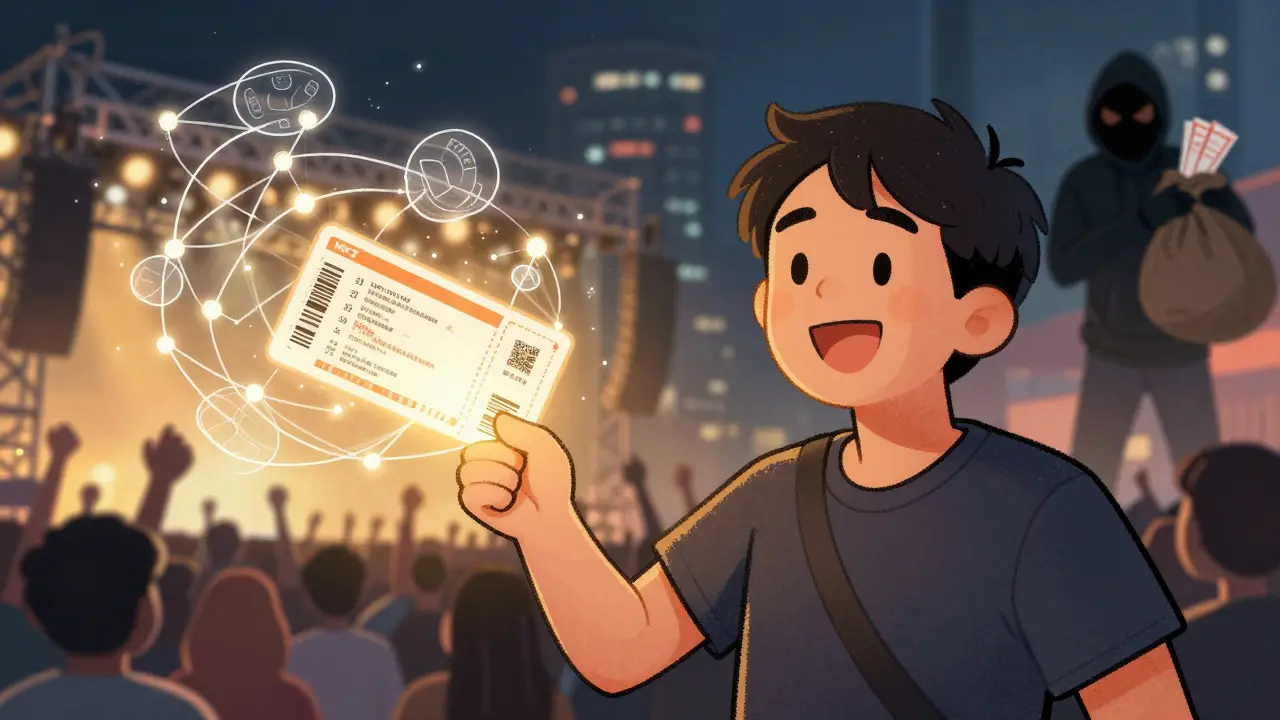
Imagine buying a concert ticket and knowing, for sure, it’s real. No fake tickets. No resellers marking it up to $500 when it was $80. No last-minute cancellations because someone else sold your ticket twice. That’s not a dream anymore-it’s what NFT ticketing delivers in 2025.
Traditional ticketing has been broken for years. Scalpers use bots to buy up tickets the second they go on sale. Fans get stuck paying inflated prices on shady resale sites. Event organizers lose out on money they could’ve made from resales. And worst of all? You never know if the QR code on your phone will even work when you get to the gate.
NFT ticketing fixes all of this. Instead of a digital file you can screenshot and share, your ticket becomes a unique, blockchain-backed digital asset-like a collectible card, but for events. Each one is coded to prove who owns it, when it was bought, and who can sell it next. And because it’s on the blockchain, no one can copy or forge it.
How NFT Tickets Actually Work
NFT tickets aren’t magic. They’re built using smart contracts on blockchains like NEAR, Ethereum, or the GET Protocol. When you buy a ticket, you’re not just getting access-you’re receiving a one-of-a-kind token stored in your digital wallet. This token contains all the info: event name, date, seat number, even the original price.
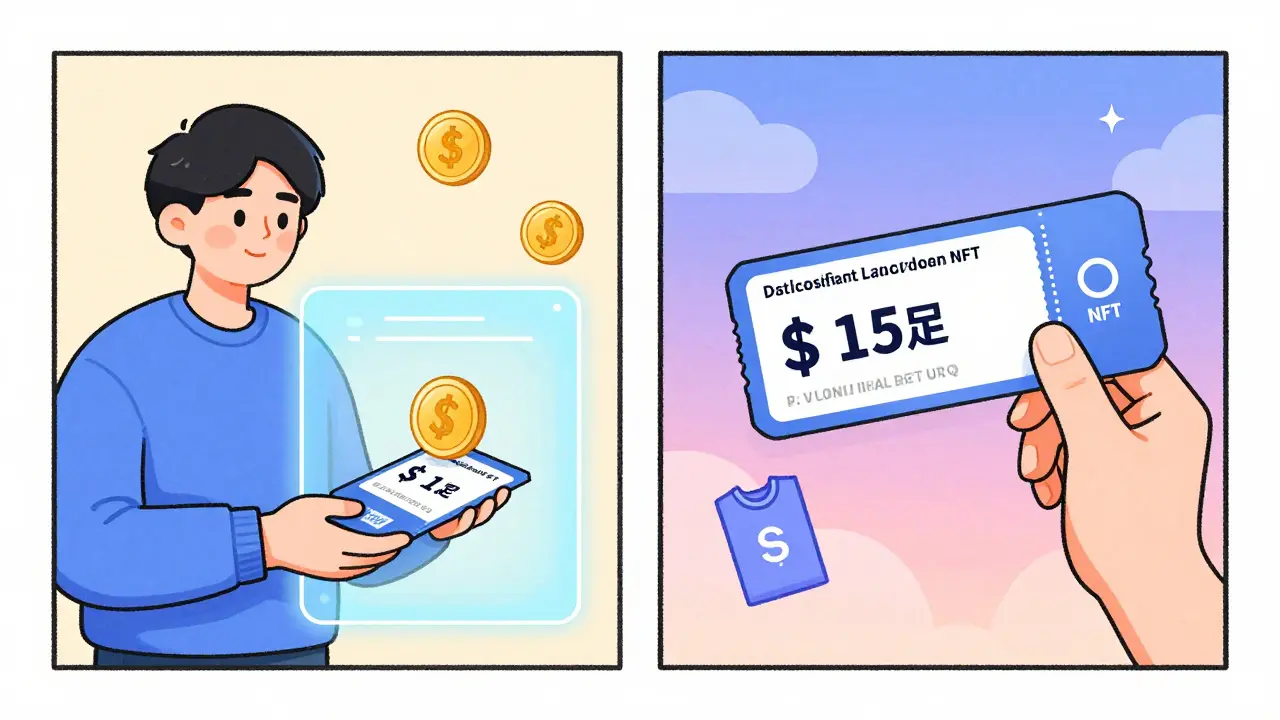
Here’s the key difference: if you sell your ticket, the smart contract automatically gives a cut back to the original organizer. Say you bought a $100 ticket for a band’s show. You resell it for $150. The artist gets 10% of that resale-$15-without lifting a finger. That’s royalty tracking built into the ticket itself.
Some platforms go further. SeatLabNFT, for example, gives you $SEAT tokens just for holding the ticket. Those tokens unlock exclusive merch drops, early access to future shows, or even voting rights on setlists. Your ticket isn’t just a pass-it’s a membership card to something bigger.
Top NFT Ticketing Platforms in 2025
Not all NFT ticketing platforms are the same. Some are built for big festivals. Others are made for indie artists who want to connect directly with fans. Here’s what’s working in 2025:
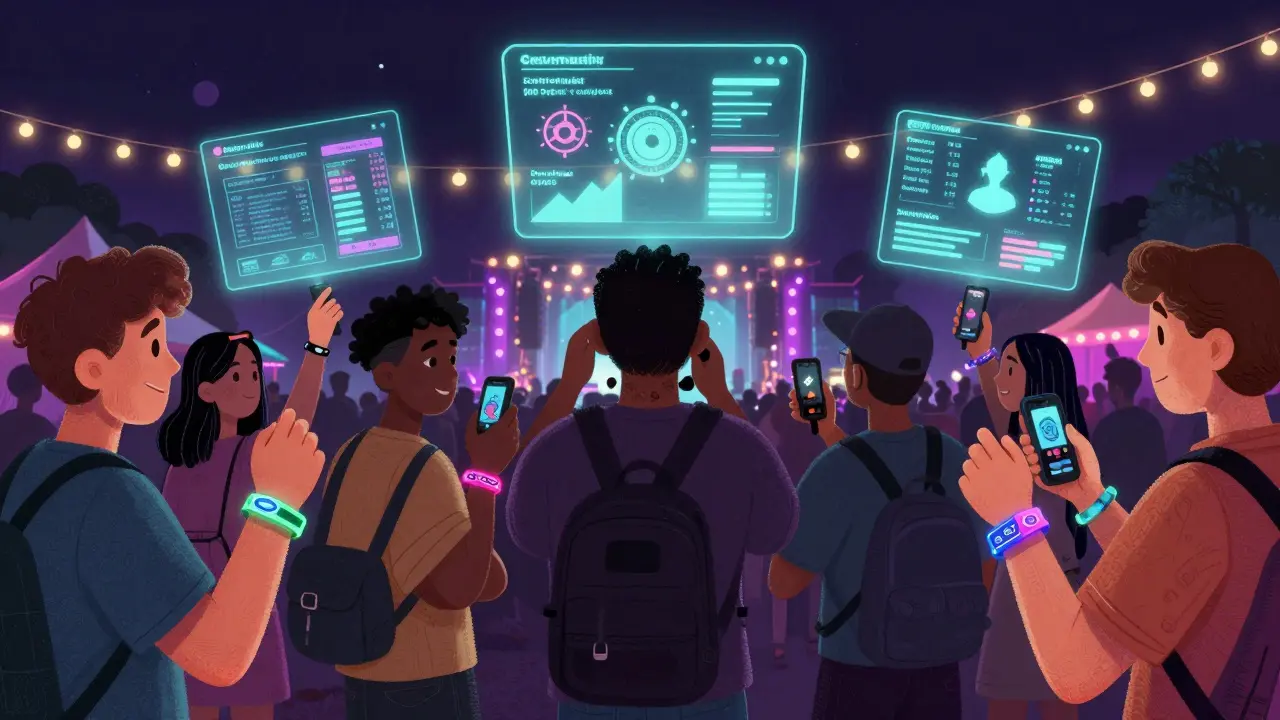
- SeatLabNFT runs on the NEAR Protocol and uses NFC chips embedded in physical wristbands or phone-based verification. It’s one of the few platforms that rewards holders with collectible airdrops. Perfect for artists building loyal fan communities.
- WICKET is Italy’s answer to ticket fraud. It’s built on the GET Protocol and uses dynamic QR codes that refresh every few minutes. That means screenshots won’t work. Scalpers can’t resell tickets they don’t physically hold.
- Oveit blends traditional and blockchain systems. You can pay with credit cards, but your ticket still becomes an NFT. It supports smart wristbands, multi-gate check-ins, and real-time syncing across venues. Used by mid-sized festivals and touring acts.
- TicketMint targets the Metaverse. If you’re attending a virtual concert or hybrid event, this platform lets you mint your ticket as a collectible that works in VR spaces too. It’s not just for real-world events-it’s for digital ones too.
- SquadUP + Sidechain offers a hybrid model. You buy a regular ticket, then convert it into an NFT later. Great for organizers who want to test NFTs without scaring off non-crypto fans.
Each platform has different fees. Most charge 1-4.5% per ticket sold, plus payment processing. Resale royalties usually sit at 5-10%. SeatLabNFT charges $4.50 to mint a ticket, while others start as low as $1.50. The cost isn’t cheap-but it’s often cheaper than losing 30% of sales to scalpers.
Why NFT Ticketing Beats Traditional Systems
Here’s the truth: traditional ticketing companies don’t want you to know how broken their system is. They make money off fees, not fairness. NFT ticketing flips the script.
No more scalping. With smart contracts, you can limit how many times a ticket can be resold. Or cap resale prices. Or require the original buyer to approve any transfer. WICKET cut resale prices by 87% in its first year in Italy because it made scalping impossible.
Zero counterfeits. A paper ticket can be copied. A PDF can be forwarded. An NFT? It’s tied to your wallet. If you didn’t buy it, you can’t access the event. Even if someone steals your phone, they can’t use the ticket unless they have your private key.
Direct artist-fan connection. Artists can send exclusive content to NFT ticket holders-behind-the-scenes videos, unreleased tracks, virtual meetups. Your ticket isn’t just a pass-it’s a key to a community.
Real-time analytics. Organizers see exactly who’s coming, how many tickets are resold, and where. No more guessing if the crowd is mostly locals or tourists. That data helps plan future shows.
The Real Downsides (And How to Work Around Them)
NFT ticketing isn’t perfect. If you think it’s all sunshine and royalties, you’re missing the hard parts.
Wallet setup is confusing. Most attendees don’t know what a MetaMask wallet is. If you’re not tech-savvy, you’ll get stuck at the gate. Platforms are fixing this with simplified onboarding-some now let you sign up with email and link your wallet later. Others offer QR code access without needing a wallet at all.
Transaction fees add up. Ethereum gas fees can spike during big sales. That’s why platforms like SeatLabNFT moved to NEAR, which costs pennies per transaction. Always check which blockchain the platform uses before buying.
Mobile apps are still lagging. A lot of platforms only work on desktop. If you’re on the go, that’s a problem. Oveit and WICKET now have solid mobile apps. SeatLabNFT is still catching up.
Not for everyone. If you’re selling tickets to a local high school play or a 10,000-person festival with $20 tickets, NFTs are overkill. The tech shines at premium events: music festivals, VIP concerts, exclusive gaming tournaments, or collector-driven experiences.
Who Should Use NFT Ticketing?
This isn’t for every event. But if you’re organizing one of these, NFT ticketing makes sense:
- Independent musicians who want to keep 80% of ticket revenue
- Festivals with a history of scalping and fake tickets
- Artists building fan communities around collectibles
- Events with limited capacity and high demand (e.g., sold-out theater runs, crypto conferences)
- Hybrid events that include both physical and virtual attendance
If you’re running a county fair, a church fundraiser, or a local comedy night-stick with Eventbrite or Ticketmaster. Save NFTs for where the value is high and the fraud risk is too big to ignore.
The Future: What’s Coming Next
In 2025, NFT ticketing is evolving fast. Here’s what’s on the horizon:
- Interoperability - Your NFT ticket from one platform will work on another. No more being locked into one ecosystem.
- AI-powered pricing - Smart contracts adjust resale prices based on demand, weather, or even the artist’s social buzz.
- Metaverse integration - Your NFT ticket unlocks not just the live show, but a virtual afterparty in Decentraland or Spatial.
- Carbon-neutral options - Platforms are now offsetting blockchain energy use. NEAR and Polygon are already low-energy. Expect more to follow.
Regulators are watching too. Some countries are starting to classify NFT tickets as digital assets. That means new rules around refunds, transfers, and consumer protection. But for now, the tech is moving faster than the laws.
Getting Started as an Organizer
Want to try NFT ticketing? Here’s how to start without drowning in crypto jargon:
- Choose a platform that matches your event size. For small acts, try SeatLabNFT or TicketMint. For larger festivals, Oveit has the tools.
- Use a white-label solution. Most platforms let you brand the ticketing page as your own. No blockchain logos needed.
- Offer a hybrid option. Let people buy traditional tickets-but give them the option to upgrade to an NFT for free.
- Record a 90-second video explaining how to set up a wallet. Send it to your email list. Most people just need to see it done once.
- Start small. Test it on one show. See how your fans react. Then scale.
You don’t need to be a blockchain expert. You just need to care more about your fans than about keeping the old system running.
Final Thought: It’s Not About the Tech. It’s About Trust.
NFT ticketing isn’t about blockchain. It’s about trust.
Artists trust that they’ll get paid fairly. Fans trust that their ticket is real. Organizers trust that their event won’t be ruined by scalpers. And that’s something no PDF or paper ticket ever gave anyone.
In 2025, the best events aren’t the ones with the biggest stages. They’re the ones where people feel safe, valued, and connected. NFT tickets are just the tool that makes that possible.
Are NFT tickets more expensive than regular tickets?
The base ticket price is usually the same. But NFT platforms charge minting fees-typically $1.50 to $4.50-and take 2-4.5% on sales. You might pay a bit more upfront, but you avoid inflated resale prices. Over time, artists get more money, and fans pay less for scalped tickets.
Do I need a crypto wallet to use NFT tickets?
Most platforms now let you buy with a credit card and create a wallet automatically. You’ll still need to claim your ticket in a wallet later, but you don’t need to understand crypto to get started. Some even send you a link to access your ticket via email or SMS.
Can I resell my NFT ticket?
Yes-but only if the event organizer allows it. Smart contracts can limit resale to approved marketplaces, cap prices, or require the original buyer’s approval. This stops scalpers from flipping tickets for 10x profit. You can still resell, but you can’t exploit the system.
What happens if the blockchain crashes?
Blockchains like NEAR and Ethereum are designed to be extremely stable. Even if there’s a temporary network delay, your ticket data is stored across thousands of computers. If a platform goes down, your NFT still exists on the blockchain-you can always access it with your wallet. The ticket doesn’t disappear.
Are NFT tickets environmentally bad?
Not anymore. Early blockchains like Ethereum used a lot of energy, but most NFT ticketing platforms now use low-energy chains like NEAR, Polygon, or the GET Protocol. These use less electricity than sending a single email. Many platforms also offset carbon emissions automatically.
Can I use NFT tickets for international events?
Yes. Since NFTs are digital and blockchain-based, they work globally. A fan in Tokyo can buy a ticket for a show in Auckland, and the system handles currency conversion and local compliance automatically. The only limit is whether the platform supports your country’s payment methods.
What if I lose my wallet or phone?
If you backed up your wallet seed phrase, you can recover your NFT ticket on any new device. Most platforms also offer customer support to help you restore access if you’ve lost your keys. Always store your seed phrase offline-on paper, not in the cloud.
Do NFT tickets work for outdoor festivals?
Absolutely. Platforms like Oveit and SeatLabNFT support NFC wristbands and offline verification. Even without cell service, staff can scan your wristband or phone with a Bluetooth reader. No internet? No problem.
NFT ticketing feels like the first real win for fans in decades. No more watching your favorite artist get ripped off while scalpers cash in. It’s not just tech-it’s justice with a QR code.
And the royalties? That’s the quiet revolution. Artists finally get paid when their work keeps selling. No middlemen. No corporate greed. Just direct value flow.
I’ve seen fans cry when they got their first NFT ticket with exclusive merch unlocked. That’s not a transaction. That’s belonging.
It’s not perfect, but it’s the first time the system actually works for the people who matter-the ones showing up, not the ones gaming it.
Uhh yeah sure. NFTs fix everything. Except the fact that 90% of people can’t even open a wallet without calling their nephew. And now you want them to care about blockchain gas fees before they can see a concert? 🤡
OMG I’m so done with this crypto bro nonsense. 🥴 I paid $120 for a ticket last year and got scammed. Now you’re telling me I need to download MetaMask and pray to the Ethereum gods just to get in? No thanks. I’ll stick with my paper ticket and my trusty $500 scalper.
Also, ‘carbon neutral’? Lol. You think mining NFTs is less energy than printing paper? 😂
While the theoretical framework of blockchain-based ticketing presents compelling advantages in terms of provenance and non-fungible asset integrity, the practical implementation remains fraught with systemic inefficiencies, particularly regarding user onboarding, regulatory ambiguity, and the continued reliance on centralized infrastructure for identity verification. One cannot simply assume decentralized protocols will resolve deeply entrenched sociotechnical problems without addressing the human factor.
Moreover, the assertion that NFTs eliminate scalping is empirically unsound-market forces adapt. If resale is capped, secondary markets will evolve into tokenized derivatives or off-chain agreements. This is not innovation. It is obfuscation with a blockchain sticker.
Man, I saw this in India last month. A local band used SeatLabNFT for their show in Bangalore. Half the crowd didn’t know what NFT meant, but they got their wristbands scanned with NFC and had a blast. The band even dropped a free song for everyone who held the ticket.
It’s not about tech. It’s about making fans feel special. That’s what stuck.
Stop lying. NFT tickets are more expensive. You’re just hiding the fee in the ‘minting cost.’ And ‘royalties’? That’s just the artist’s cut from your resale-so you’re still paying more. It’s a tax on fans disguised as empowerment.
Also, ‘zero counterfeits’? My buddy got hacked. Lost his ticket. Platform didn’t help. Now he’s at home while the show goes on. Nice.
Start small. Seriously. If you’re a local artist, don’t go all-in on NFTs on day one.
Try one show. Offer a free NFT upgrade with your traditional ticket. Make a 2-minute video showing how to claim it. Most people just need to see it done once.
I helped a friend do this last year. 80% of fans upgraded. Not because they loved crypto-because they loved the extra merch and early access. That’s the hook. Not the tech. The feeling.
Let’s be clear: this is just a rebranding of loyalty programs with blockchain jargon. ‘Dynamic QR codes’? That’s just time-based OTPs. ‘Royalty tracking’? That’s a 10% cut on resale-like a digital commission.
The real innovation here? Marketing. The real cost? User friction. The real winner? The platform taking 4.5%.
I just cried reading this. Like… really cried. 😭
After years of getting ghosted by promoters and watching my favorite band get ripped off… this feels like the universe finally listened.
I don’t care if it’s blockchain or magic fairy dust. If it means my favorite artist gets paid and I don’t get scammed? I’m all in.
My wallet’s set up. My ticket’s minted. My heart? Open.
I used TicketMint for a virtual concert last month. Paid with PayPal. Got the NFT in my wallet automatically. No crypto talk. No confusion.
Then I went into VR and watched the show with 20,000 people from all over the world. We all had the same ticket. Same experience.
That’s the future. Not the tech. The connection.
This is why America is falling behind. We’re letting crypto bros dictate how we experience live music. Real Americans don’t need wallets. They need cash. And if you can’t sell tickets the old way, you’re not trying hard enough.
Also, NEAR Protocol? That’s a foreign blockchain. Why not use American tech?
Bro in India we’ve been doing this for years-just not with blockchain. We use WhatsApp groups and local agents. But I get it. NFTs make it look fancy.
Here’s the truth: if you can’t trust your fans, no tech will fix that. If you treat them like customers, they’ll treat you like a vendor.
But if you treat them like family? Even a paper ticket becomes sacred.
Blockchain just helps scale that love.
Back home in Nigeria we’ve got people selling tickets under trees and charging 500 naira extra for ‘front row’ that don’t exist. So when I saw NFT tickets actually work? I was stunned.
My cousin bought one for a festival in Lagos. No fake tickets. No fights. Just scanned wristbands and free drinks for holders.
It’s not magic. It’s just fairness. And that’s rare enough to be revolutionary.
Just got my first NFT ticket for a virtual concert this weekend 🌟
It unlocked a behind-the-scenes video AND a digital art piece from the artist 🎨
I’m not even a crypto person… but I felt seen. Like my support mattered.
That’s the real win. Not the blockchain. Not the fee. The feeling.
❤️