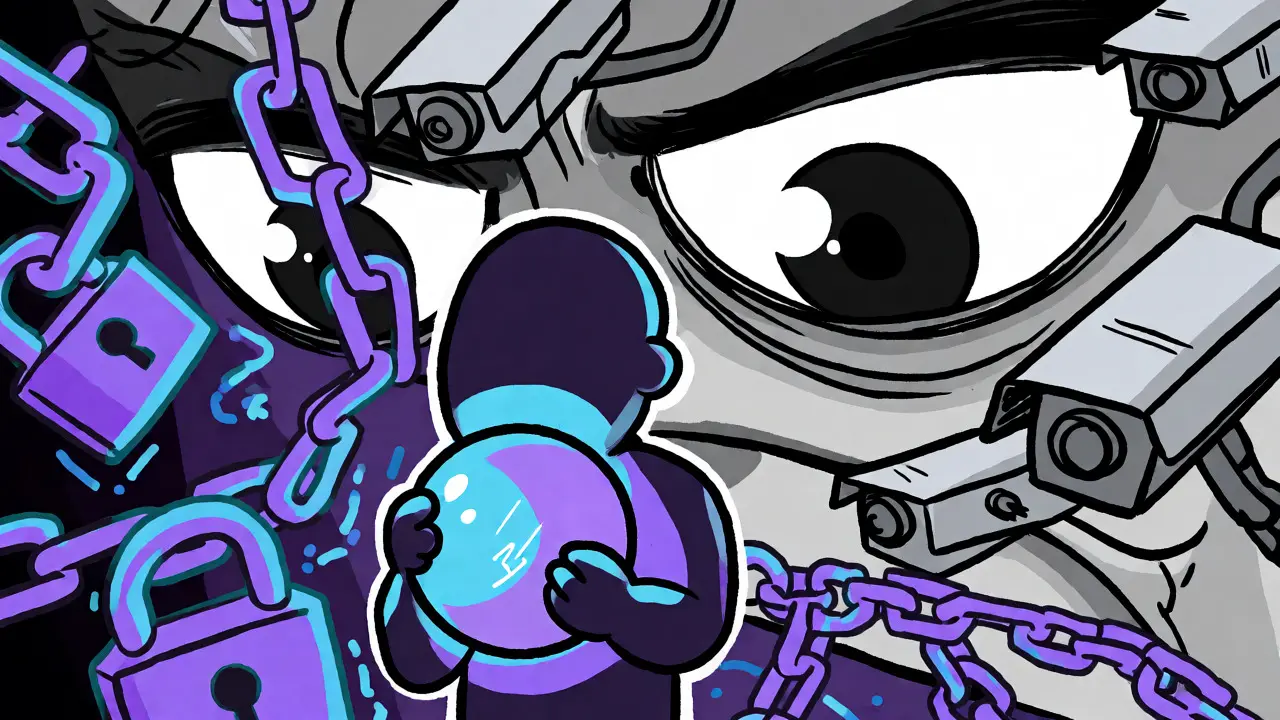
Imagine trying to buy a coffee with cash, but the bank demands to know exactly who you gave it to, where they spent it, and why. That is essentially what regulators are asking of privacy coins. These digital assets, designed to hide transaction details, have hit a regulatory wall. By late 2025, the clash between financial surveillance and user anonymity reached a boiling point. If you hold Monero (XMR) or Zcash (ZEC), your ability to trade them on major exchanges might already be limited. This isn't just about fear; it's about hard data showing a 34% surge in regulatory actions against these tokens since 2024.
The Core Conflict: Anonymity vs. Compliance
Why do governments dislike privacy coins? It comes down to tracing money. Traditional cryptocurrencies like Bitcoin offer pseudonymity-your name isn't on the blockchain, but every transaction is public. Privacy coins go further by hiding the sender, receiver, and amount. For law enforcement tracking illicit flows, this opacity is a nightmare. The Financial Action Task Force (FATF) extended its "Travel Rule" in 2025, requiring exchanges to share customer data for transactions over certain thresholds. This rule directly impacts 57% of privacy coin transactions, forcing platforms to choose between delisting these assets or investing heavily in new compliance tech.
The tension is palpable. On one side, users want financial sovereignty and protection from surveillance. On the other, regulators argue that without visibility, tax evasion and money laundering thrive. A stark example involves darknet markets, where vendors used Monero to sell fentanyl-laced products, making it nearly impossible for US authorities to trace the supply chain. These real-world cases drive policy more than theoretical debates ever could.
Monero: Mandatory Privacy as a Liability
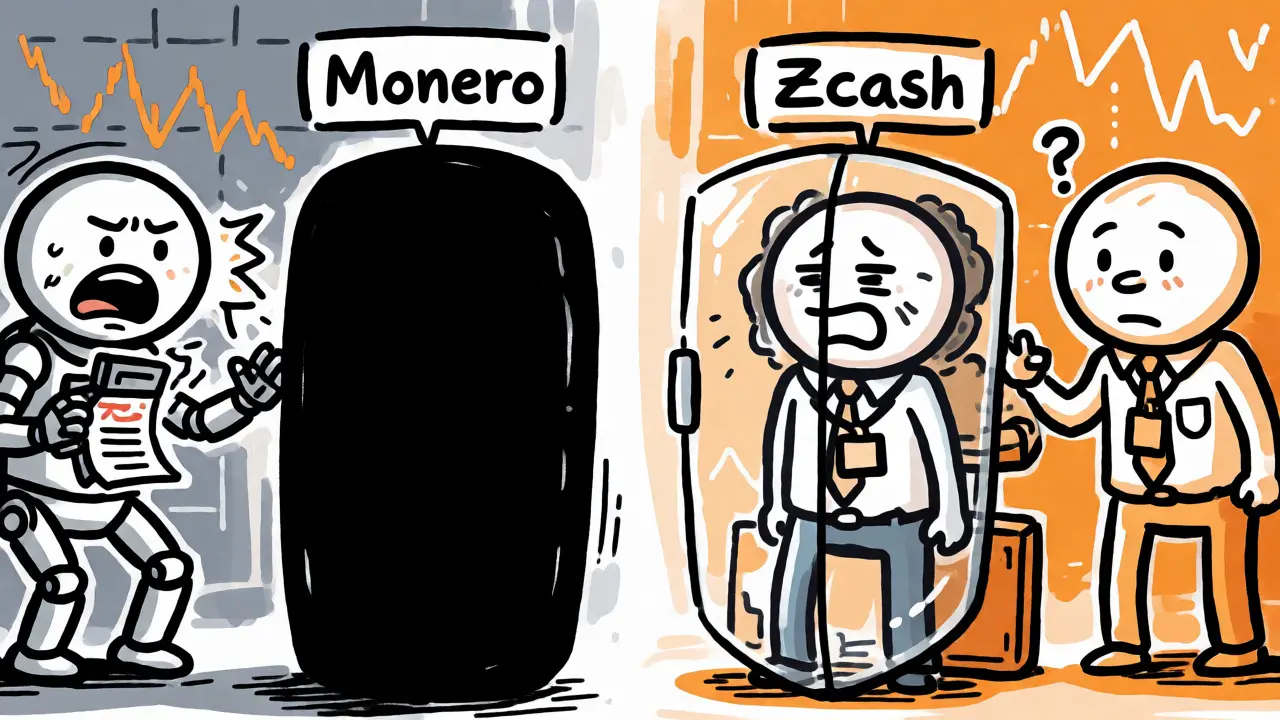
Monero takes an uncompromising approach. Its architecture uses ring signatures, stealth addresses, and RingCT (Ring Confidential Transactions) to ensure every transaction is private by default. You cannot accidentally send a transparent Monero transaction. While this guarantees security, it makes compliance difficult. Exchanges cannot easily audit specific transactions because the data simply isn't there in a readable format.
This rigidity has led to widespread delistings. Major platforms like Binance and Kraken removed Monero pairs in 2025 to align with stricter EU and Asian banking standards. The result? A 19% spike in peer-to-peer (P2P) trading volumes in regions with economic instability, as users sought alternatives to centralized exchanges. Developers face a tough choice: maintain pure anonymity or add optional transparency layers that compromise the protocol's core ethos.
Zcash: The Flexible Compromise
In contrast, Zcash offers a hybrid model using zk-SNARKs (Zero-Knowledge Succinct Non-Interactive Arguments of Knowledge). Users can choose between "shielded" private transactions and "transparent" public ones. This flexibility theoretically allows for easier regulation-if a regulator asks for proof of origin, a user can reveal the necessary keys without exposing their entire history.
However, adoption patterns tell a different story. Many Zcash users stick to transparent transactions due to ease of use or exchange support, which reduces the overall anonymity set. When shielded transactions are rare, they become statistically identifiable, weakening privacy for those who do use them. Zcash saw an 8% decline in active addresses after strict KYC measures were implemented, proving that regulatory pressure changes user behavior even when technology permits compliance.
| Feature | Monero (XMR) | Zcash (ZEC) |
|---|---|---|
| Privacy Model | Mandatory (Always Private) | Optional (Shielded vs. Transparent) |
| Key Technology | Ring Signatures, Stealth Addresses | zk-SNARKs |
| Regulatory Hurdle | High (No audit trail available) | Medium (Selective disclosure possible) |
| Exchange Support | Declining rapidly post-2025 | Stable but restricted in some jurisdictions |
| User Adoption Trend | Niche but loyal community | Fragmented due to dual-mode usage |
Global Regulatory Divergence
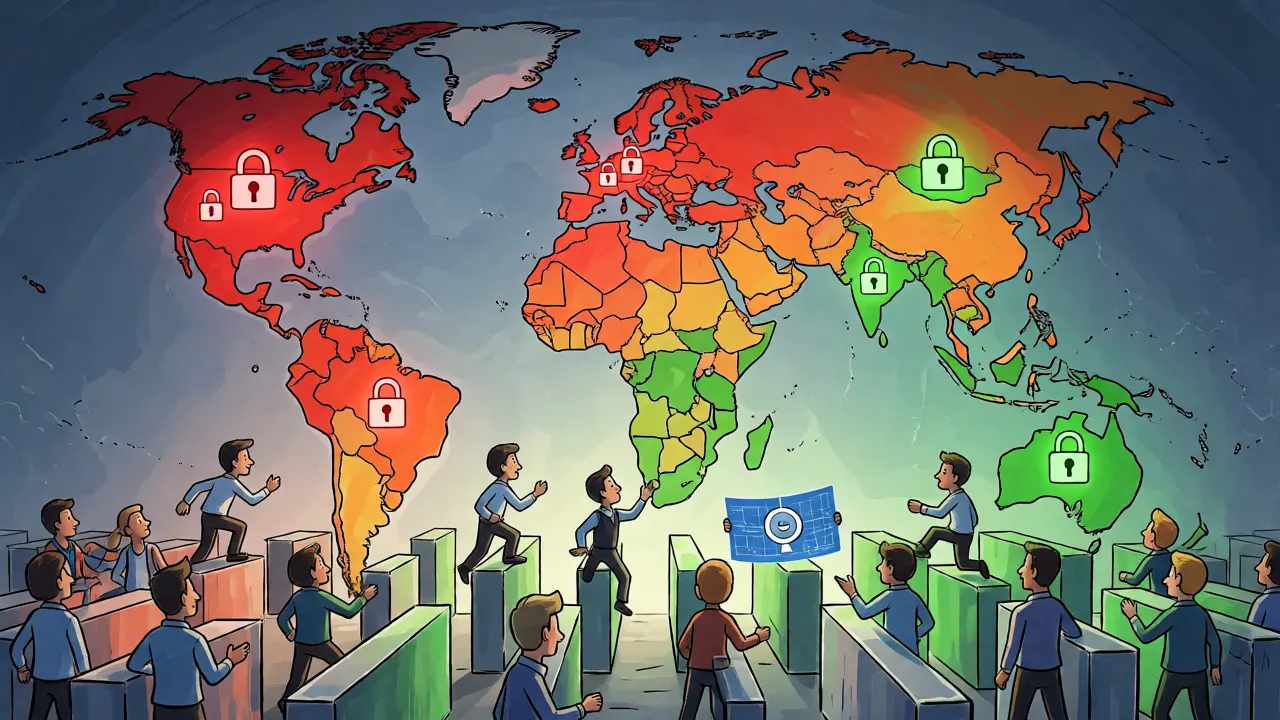
There is no single global stance on privacy coins. The European Union’s Markets in Crypto-Assets (MiCA) regulation reduced privacy coin offerings by 22% by enforcing strict transparency requirements. Conversely, jurisdictions like Singapore and Switzerland have created regulated sandboxes. These environments allow privacy coin development under oversight, balancing innovation with control. This divergence creates arbitrage opportunities for traders and developers, who often move operations to friendlier territories.
Meanwhile, countries like Japan and South Korea maintain tight restrictions, effectively banning privacy coins from registered exchanges. In the United States, while not fully banned, the Securities and Exchange Commission (SEC) and Treasury Department scrutinize these assets under Anti-Money Laundering (AML) laws. The designation of privacy coins as Anonymity-Enhanced Cryptocurrencies (AECs) subjects them to additional reporting protocols, increasing operational costs for businesses handling them.
Technical Solutions and Future Outlook
Can technology solve this political problem? Developers are exploring selective disclosure mechanisms. Imagine a scenario where you prove you paid taxes on your crypto income without revealing who you bought from. Zero-knowledge proofs could enable this, allowing AML compliance without total surveillance. However, implementing these solutions requires significant computational resources and complex code audits.
Looking ahead, expect continued tightening. Industry analysts predict further delistings as traditional banks integrate with crypto infrastructure. Success for privacy coins now hinges on proving that anonymity does not equal illegality. Projects that can demonstrate robust compliance tools alongside strong privacy features will likely survive. For investors, holding privacy coins means accepting higher volatility and liquidity risks compared to mainstream assets like Bitcoin or Ethereum.
Frequently Asked Questions
Why are exchanges delisting privacy coins?
Exchanges delist privacy coins primarily to comply with international anti-money laundering (AML) regulations. Rules like the FATF Travel Rule require platforms to track transaction origins and destinations. Since privacy coins obscure this data, exchanges find it costly or impossible to meet these legal obligations, leading them to remove these assets to avoid fines and license revocations.
Is Monero illegal to own?
In most countries, owning Monero is not illegal. However, buying, selling, or exchanging it on regulated platforms may be restricted. Some jurisdictions ban its use in commercial transactions, while others only restrict it on licensed exchanges. Always check local laws, as regulations vary significantly between regions like the EU, US, and Asia.
How does Zcash differ from Monero regarding regulations?
Zcash offers optional privacy through shielded and transparent addresses. This allows users to provide compliance information if required by regulators, whereas Monero enforces privacy for all transactions. This flexibility makes Zcash slightly easier to regulate, though both face scrutiny. Zcash's transparent mode helps exchanges maintain audit trails, potentially easing its regulatory burden compared to Monero.
What happens to my privacy coins if an exchange delists them?
If an exchange delists a privacy coin, you usually have a window of time to withdraw your funds to a personal wallet. After that period, you may not be able to trade that specific pair anymore. Your coins remain safe in your custody, but liquidity decreases, meaning it might take longer or cost more to sell them via peer-to-peer methods or alternative exchanges.
Are privacy coins only used for illegal activities?
No. While early adoption included darknet markets, many legitimate users value financial privacy for everyday purchases, salary payments, and avoiding price discrimination. Just as people don't shout their bank balances in public, many prefer not to broadcast every crypto transaction globally. Regulators focus on misuse, but the majority of privacy coin usage is benign.