Imagine buying a high-end ASIC miner, setting it up in your garage, and having the power company remotely shut it off because you’re using too much electricity. That’s not a hypothetical nightmare-it’s daily reality for many crypto miners in Russia. Since late 2024, the Russian government has shifted from ignoring the industry to tightly controlling it. If you are thinking about digging into digital gold in Russia, or just curious how a major nation handles decentralized tech, you need to know exactly where the lines are drawn.
The Big Shift: From Gray Zone to Regulated Sector
For years, mining in Russia was a bit of a wild west. You could set up rigs almost anywhere, often hiding them from utility companies. But that era ended with new legislation enacted in August and October 2024, which came into full force on January 1, 2025. The goal wasn’t to ban mining entirely but to bring it under state control. Why? Because miners consume massive amounts of electricity, and the grid can’t always handle the load, especially during winter peaks.
The law defines who counts as a legal miner. If you are a business or an entrepreneur, you must register. If you are an individual, you have a safety net: if your equipment consumes less than 6,000 kWh per month, you don’t need to register. This threshold is crucial. It allows hobbyists to keep mining without drowning in paperwork, while large-scale industrial operations face strict scrutiny. As of mid-2025, only about 30% of miners had actually registered with the Federal Tax Service, according to Deputy Minister Ivan Chebeskov. That means 70% are still operating in the shadows, risking fines.
Where You Can (and Cannot) Mine
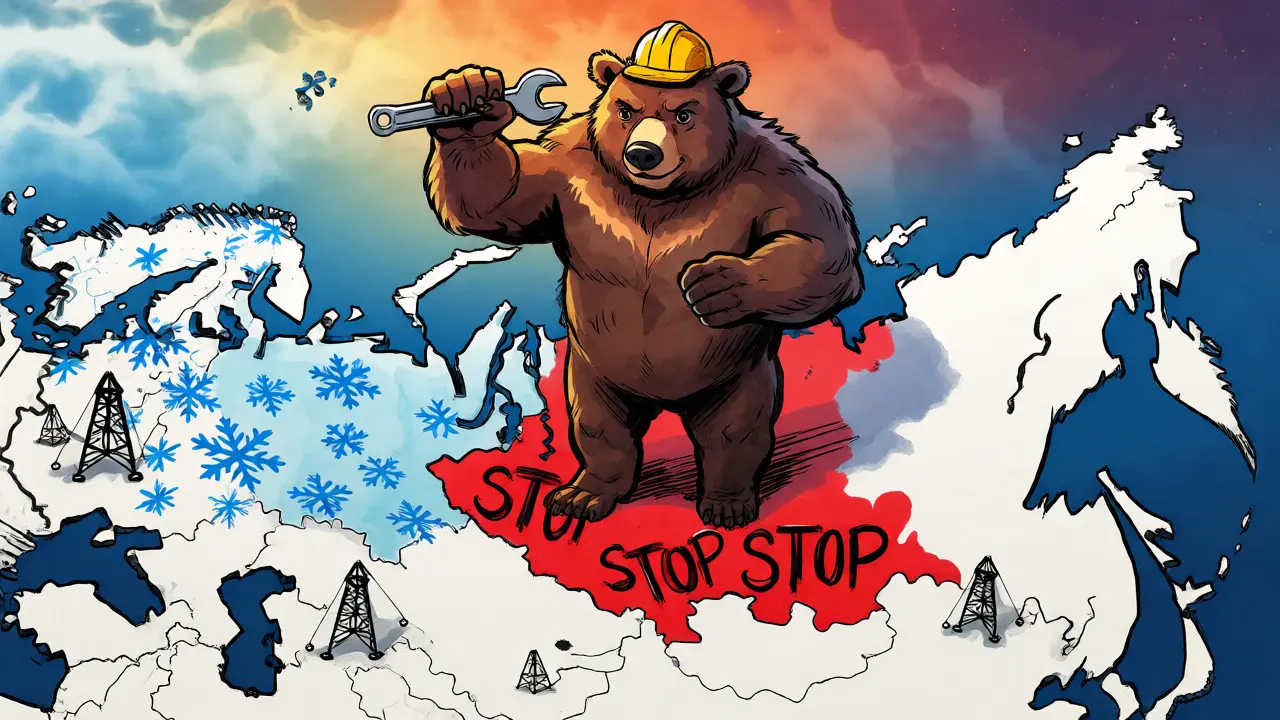
Geography is destiny in Russian crypto mining. The country is huge, but energy infrastructure isn’t evenly distributed. To prevent blackouts, the government implemented a two-tier restriction system affecting 13 regions. Ten regions have a complete blanket ban on mining until March 15, 2031. These include Dagestan, Ingushetia, Kabardino-Balkaria, Karachay-Cherkessia, North Ossetia, Chechnya, and the disputed territories of Donetsk, Lugansk, Zaporizhzhia, and Kherson.
If you try to mine in these places, you aren’t just breaking a rule; you are facing significant penalties. Fines range from 200,000 rubles to potentially 2 million rubles (roughly $25,500) for illegal activities. Authorities are even discussing raising the upper limit further to ensure compliance.
| Restriction Type | Regions Affected | Duration | Key Reason |
|---|---|---|---|
| Total Ban | Dagestan, Chechnya, North Caucasus areas, New Territories | Until March 15, 2031 | Severe energy deficits and grid instability |
| Seasonal Ban | Irkutsk, Buryatia, Zabaikalsky Krai | Winter months (Nov 15 - Mar 15) | Peak residential heating demand |
| Open Zone | Most other regions (e.g., Siberia outside banned zones) | N/A | Surplus energy capacity |
Siberian regions like Irkutsk, Buryatia, and Zabaikalsky operate differently. They don’t ban mining year-round. Instead, they enforce seasonal bans during winter when households need maximum power for heating. Initially, this was January to March, but the window expanded to November through March in subsequent years. This makes location scouting critical. You might buy a rig for cheap in Irkutsk, but you’ll be idle for four months of the year unless you have backup generators-which defeats the purpose of low-cost hydro power.
The Power Grid Priority: Miners Are Last
Here is the most important technical detail for any miner in Russia: you are a "fourth category" consumer. In the hierarchy of the national power grid, homes, hospitals, and critical industries come first. Mining comes last. This classification gives authorities the right to remotely disconnect your equipment during periods of high electrical demand.
This isn’t just a threat; it’s a built-in feature of the smart grid. When the system detects strain, it can cut power to registered miners instantly. For industrial operators, this means revenue loss. For individuals, it means your rig stops hashing. The state registry of mining equipment enables this precision. All imported hardware must be labeled and certified. This allows authorities to track electricity usage patterns and identify non-compliant users. If your meter spikes unexpectedly, they know something is wrong.
Taxes and Registration: The Cost of Legitimacy
Legality comes with a price tag. In November 2024, Russia introduced a 15% tax on Bitcoin mining profits. This marked the sector’s transition from a gray-market activity to a regulated economic contributor. If you are registered, you pay this tax. If you aren’t, you risk fines, but many bet that the hassle of registration outweighs the cost of occasional penalties.
However, the rules extend beyond mining. Owning and trading crypto is generally permitted in Russia. You can buy, sell, and hold digital assets. But you cannot use them to pay for goods and services directly. The ruble remains the sole legal tender. Additionally, if your transactions exceed 600,000 rubles, you must report them to tax authorities. Failure to do so triggers penalties. This framework reflects Russia’s strategy: leverage blockchain technology for economic benefits (like attracting foreign capital via mining) while keeping tight control over domestic monetary policy.

Compliance Challenges and Market Dynamics
Despite the clear rules, enforcement is tricky. Deputy Minister Chebeskov admitted at the St. Petersburg International Economic Forum that bringing the industry out of the shadows is "far from complete." With only 30% of miners registered, the remaining two-thirds are essentially invisible to the taxman. The government is considering harsher measures, including increasing fines for illegal mining from 200,000 to 2 million rubles, to close this gap.
Interestingly, the regulatory clarity has sparked growth. Demand for industrial mining equipment tripled in the fourth quarter of 2024 compared to the previous year. Why? Because investors prefer certainty. Knowing the rules-even if they are strict-allows businesses to plan. Large-scale operators are entering the market, attracted by Russia’s relatively low energy costs in open zones. However, this rapid expansion puts more pressure on the grid, leading to tighter controls in subsidized regions.
Practical Advice for Miners in Russia
If you are planning to mine in Russia today, here is what you need to do:
- Check your region: Avoid the 10 banned regions entirely. If you are in Siberia, account for the winter shutdown.
- Monitor consumption: Keep your usage under 6,000 kWh/month if you want to avoid registration hassles.
- Register if you scale: Once you go industrial, register with the Federal Tax Service to avoid heavy fines.
- Plan for disconnections: Assume your power will be cut during peak hours. Have a financial buffer for lost mining days.
- Report transactions: If you trade large volumes, stay compliant with the 600,000 ruble reporting threshold.
Mining in Russia is no longer a free-for-all. It is a structured industry with clear winners and losers. Those who adapt to the energy constraints and tax obligations can still find profitability, especially in regions with surplus hydroelectric power. But those who ignore the regulations risk losing their equipment and paying steep fines.
Is crypto mining illegal in Russia?
No, it is not illegal nationwide. However, it is heavily restricted. Mining is banned completely in 10 specific regions and seasonally restricted in three others. In allowed regions, you must follow registration and taxation rules if you exceed certain energy consumption limits.
Do I need to register my home miner in Russia?
If your monthly energy consumption is below 6,000 kWh, you are exempt from mandatory registration. Individuals above this threshold or businesses must register with the national miners' registry to operate legally.
What is the tax rate for crypto mining in Russia?
As of late 2024, there is a 15% tax on Bitcoin mining profits for registered entities. Additionally, cryptocurrency transactions exceeding 600,000 rubles must be reported to tax authorities.
Can the government turn off my miner remotely?
Yes. Registered miners are classified as "fourth category" consumers. During periods of high electrical demand, authorities can remotely disconnect mining equipment to prioritize power for homes and essential services.
Which Russian regions ban crypto mining?
A total ban applies to Dagestan, Ingushetia, Kabardino-Balkaria, Karachay-Cherkessia, North Ossetia, Chechnya, and the territories of Donetsk, Lugansk, Zaporizhzhia, and Kherson. Seasonal bans apply to Irkutsk, Buryatia, and Zabaikalsky Krai during winter months.
Wow, the "fourth category" consumer status is absolutely brutal... and honestly? Kinda hilarious in a dark, dystopian sort of way. 😅
You spend thousands on high-end ASICs, set up your little garage empire, and then some bureaucrat in Moscow just flips a switch because someone needs to heat their apartment in Novosibirsk? That's not mining; that's gambling with your hardware lifespan! 🎲💸
I mean, I get it-grid stability is crucial, especially in winter-but calling miners the lowest priority feels like kicking you when you're already down. If I were there, I'd probably just buy a massive battery bank or go full off-grid solar/hydro mix. Anything to avoid being remotely turned off like a bad TV channel. 📺🚫
The so-called "regulation" is nothing more than a mechanism for state surveillance and capital extraction disguised as energy management.
It is evident that the Russian government seeks to control every aspect of decentralized technology to prevent any form of economic independence among its citizens. By classifying miners as fourth-category consumers, they ensure that the populace remains dependent on the state’s whim regarding electricity supply. This is not about grid stability; this is about dominance. The fines mentioned are merely tools to instill fear. We must recognize that such measures are often precursors to total bans in other sectors as well. Do not be fooled by the term "regulated sector." It is a trap.
Omg yes!! The remote shut-off thing is actually super stressful to think about 😰 But hey, at least they have that 6,000 kWh exemption for hobbyists! That’s huge for people just starting out with one or two rigs in their basement 🏠⛏️
If you’re under that limit, you basically fly under the radar which is awesome 👌 Just make sure you keep an eye on those meter spikes though! And definitely check the regional maps before buying equipment-don’t wanna end up in Dagestan with no power lol 😂🚫
i appreciate the breakdown of the regional restrictions it helps clarify why some areas are banned while others aren't seems like a balanced approach to protect residential heating during peak winter months while still allowing industrial activity in surplus zones i think respecting local infrastructure limits is fair for everyone involved
While I understand the necessity of grid stability and the importance of prioritizing residential heating during the harsh Russian winters, I feel compelled to point out that labeling miners as "fourth category" consumers essentially treats them as disposable entities rather than valuable contributors to the digital economy, which creates a precarious environment for investment and long-term planning.
Furthermore, the fact that only 30% of miners are registered suggests that the current regulatory framework is either too complex or too punitive, leading many individuals to operate in the shadows where they face the risk of heavy fines but also escape the tax burden, creating an uneven playing field for those who choose to comply with the laws.
I believe that if the government truly wants to integrate crypto mining into the formal economy, they need to offer more incentives for registration rather than relying solely on the threat of disconnection and financial penalties, because right now it feels like they are pushing legitimate businesses away rather than inviting them in.
Also, the seasonal bans in Siberia seem particularly counterproductive for industrial operators who rely on consistent uptime to maximize returns on expensive hardware, and without reliable backup solutions, the cost of idleness during those four months could easily outweigh the profits made during the rest of the year.
Ultimately, we need a system that balances the needs of the grid with the rights of entrepreneurs to innovate and profit from new technologies, otherwise we risk stifling growth and driving talent to more welcoming jurisdictions.
its kinda funny how u guys act shocked that govts regulate stuff its literally what they do best esp when ur talking about something as volatile as crypto ppl really think they can just plug in a rig and ignore the state lol sue me for having common sense but i think if u cant handle regs maybe dont mine in a country known for strict control its not rocket science its basic civics 101 and honestly the elitist attitude of some miners thinking theyre above the law is exhausting to witness day after day
It is morally wrong to prioritize profit over community welfare especially when the grid is strained during winter months and yet many miners refuse to register simply to evade taxes which shows a lack of civic duty
We should all contribute fairly to the infrastructure we use instead of hiding in the shadows hoping the authorities wont catch us
Registration is not a burden it is a responsibility and those who complain about it are likely doing so because they want to benefit from public resources without paying their share
Let us stop making excuses and start acting like responsible citizens who respect the laws of the land
This is a fantastic overview of the current landscape for crypto miners in Russia!
For anyone looking to navigate these regulations successfully, I highly recommend focusing on regions with surplus hydroelectric capacity outside of the seasonal ban windows. Planning ahead is key here.
Remember, knowledge is power. Understanding the specific constraints of your chosen location will save you headaches and money in the long run.
Keep pushing forward and stay compliant!
I agree with the sentiment that clarity allows for better business planning, although the enforcement gap is concerning. It might help to look at historical precedents in other countries where similar transitions occurred. Patience and adaptation are virtues here.
finally someone admits that miners are just leeches on the grid 🙄 if u cant pay for premium power then u shouldnt be hogging resources during winter ❄️ its selfish plain and simple 😤
I hear the frustration about the remote disconnects, and it sounds incredibly challenging for those trying to build a stable income stream. It takes a lot of resilience to deal with that kind of uncertainty, but seeing how some are adapting with batteries gives me hope for human ingenuity. 💪❤️