You click "buy" on your favorite crypto exchange. You expect to pay $60,000 for Bitcoin. Instead, you get filled at $60,150. Or worse, you set a buy order at $59,000 and watch the price rocket away without ever buying a single satoshi. This frustration isn't bad luck; it's a misunderstanding of how order books function.
The difference between market orders and limit orders is the single most important concept in trading execution. It dictates whether you control the price or control the timing. Getting this wrong costs money through slippage or missed opportunities. Let’s break down exactly how these mechanisms work inside the engine room of financial markets.
The Anatomy of an Order Book
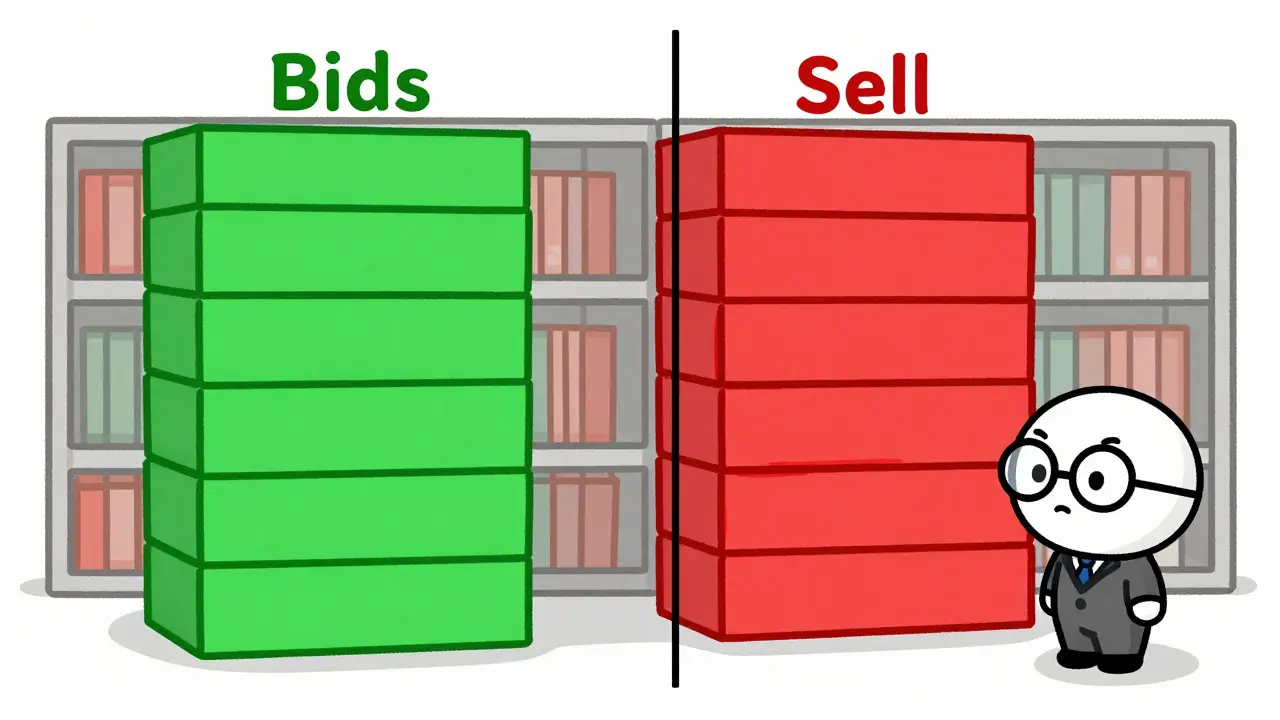
To understand why market and limit orders behave differently, you first need to visualize the order book. Think of it as a live spreadsheet where every buyer and seller lists their intentions. On one side, you have buyers (bids) wanting to purchase assets. On the other, sellers (asks) wanting to offload them. The gap between the highest bid and the lowest ask is the spread.
This book is not static. It updates milliseconds per second. Every time someone places a limit order, they add a row to this book. When someone places a market order, they tear out rows from the book. This interaction creates liquidity. Without limit orders providing depth, there would be nothing for market orders to trade against. Understanding this dynamic helps you see yourself not just as a trader, but as either a provider or consumer of liquidity.
Limit Orders: You Control the Price
A limit order is an instruction to buy or sell only at a specific price or better. If you want to buy Ethereum at $3,400, you place a buy limit order at that exact figure. The system will sit on your hands until the market price drops to $3,400 or lower. Conversely, if you want to sell at $3,500, the order executes only when the price hits that mark or higher.
The primary advantage here is precision. You never pay more than intended for a buy, and you never accept less than intended for a sell. This makes limit orders ideal for patient traders who are targeting specific entry points based on technical analysis. For example, if a support level sits at $3,350, placing a limit order slightly above it ensures you catch the bounce without chasing the price up.
However, there is a catch: execution uncertainty. If the market never touches your price, your order remains unfilled. In fast-moving markets, prices can skip over your limit entirely-a phenomenon known as price gapping. Additionally, while your order is pending, your capital is often locked up, reducing your available balance for other trades. Most brokers allow these orders to remain active for days or even months, depending on settings like Good-Till-Canceled (GTC).
Market Orders: You Control the Timing
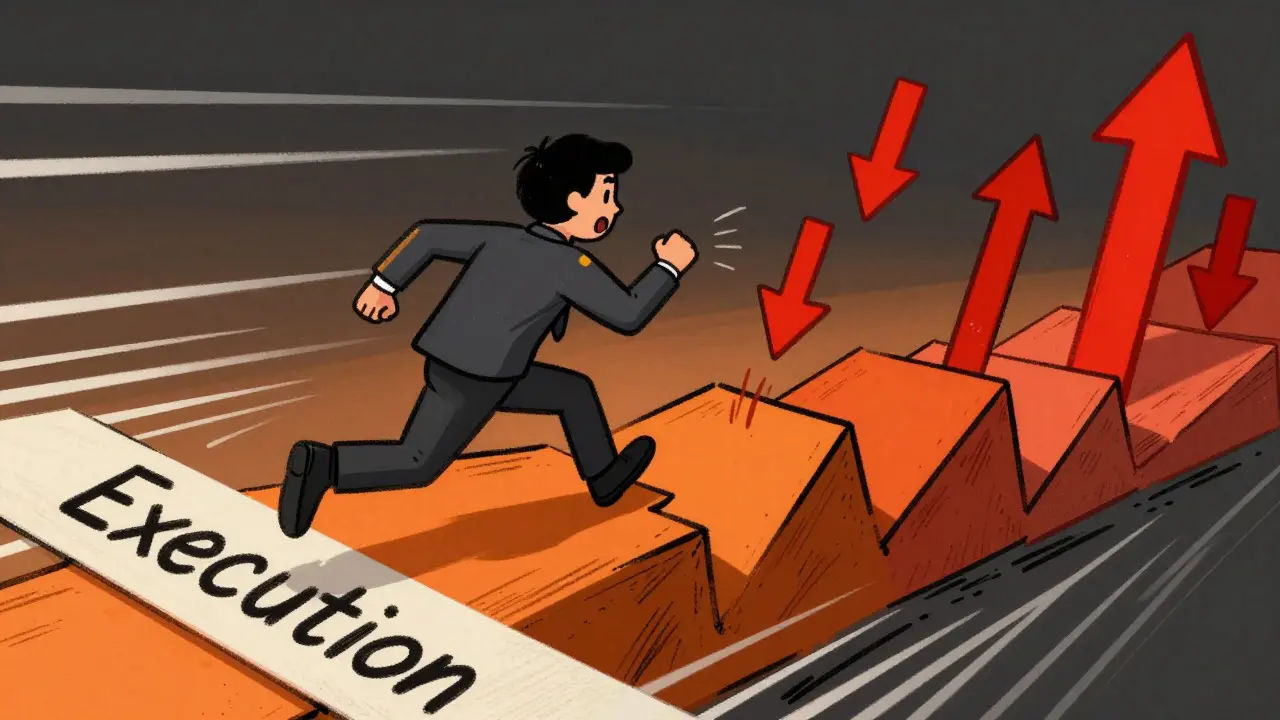
In contrast, a market order demands immediate execution. You tell the broker, "Buy this asset right now, whatever the cost." The system scans the order book for the best available sell prices and fills your order instantly. There is no waiting, no guessing. You get in or out of the position immediately.
This speed comes with a hidden cost: slippage. Slippage occurs when the actual execution price differs from the expected price due to low liquidity or high volatility. Imagine trying to buy 100 shares of a thinly traded stock. The top three sell orders might only cover 50 shares. To fill the rest, the system must grab offers at progressively higher prices. Your average entry price ends up worse than the last traded price showed.
Market orders are essential for urgent situations. Perhaps a news event breaks, and you need to exit a position before losses mount. Or maybe a breakout pattern confirms, and you don’t want to risk missing the move by waiting for a limit order to fill. In highly liquid markets like major forex pairs or blue-chip cryptocurrencies, slippage is minimal, making market orders efficient and predictable.
Liquidity Dynamics: Makers vs. Takers
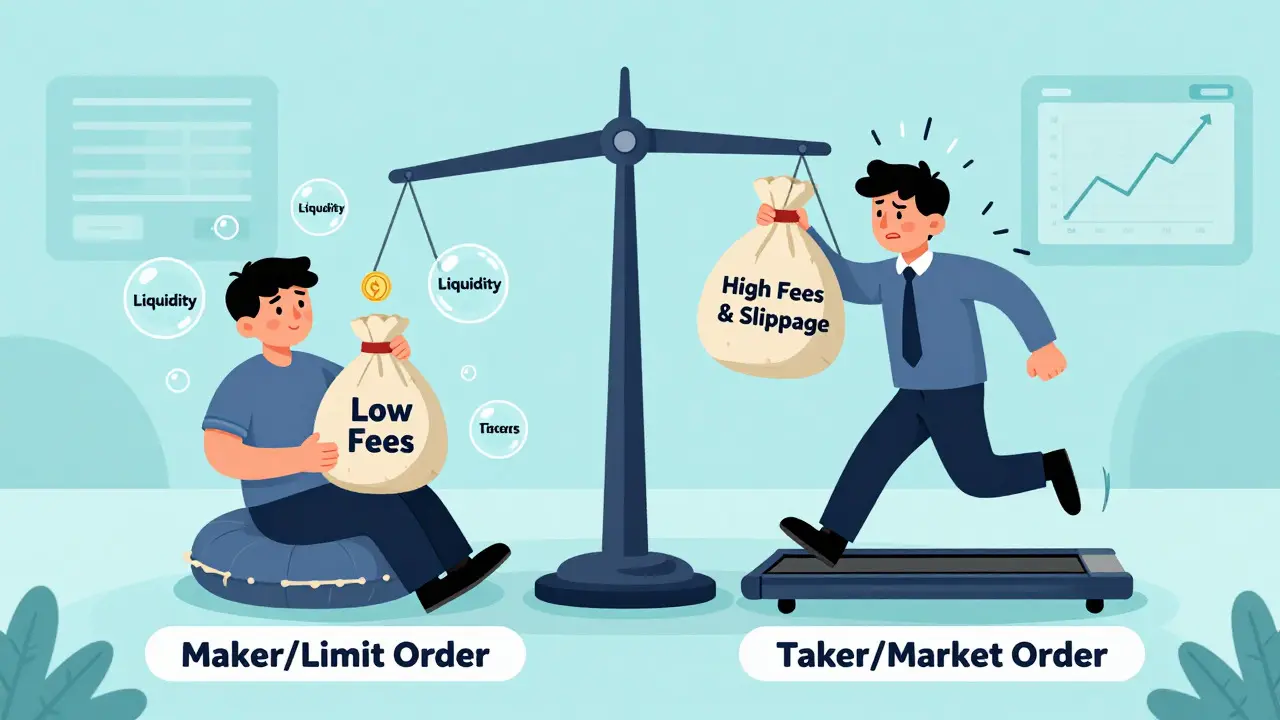
Your choice between order types defines your role in the market ecosystem. Traders using limit orders are called makers because they provide liquidity to the order book. They stand ready to trade, adding depth and stability. Exchanges often reward makers with reduced fees or even rebates to encourage this behavior.
Traders using market orders are takers. They consume existing liquidity by matching against open limit orders. Because they impose immediacy on the market, exchanges typically charge them higher fees. This fee structure incentivizes patience. By placing limit orders, you not only control your entry price but also potentially lower your transaction costs. Over hundreds of trades, these small savings compound significantly.
Consider a scenario during high volatility. Spreads widen as uncertainty grows. Market takers face severe slippage risks. Meanwhile, limit makers can widen their own limits to account for the chaos, capturing value when the dust settles. Recognizing whether you are acting as a maker or taker helps optimize long-term profitability beyond just picking the right asset.
| Feature | Market Order | Limit Order |
|---|---|---|
| Execution Speed | Immediate | Conditional (when price matches) |
| Price Certainty | Low (subject to slippage) | High (guaranteed max/min price) |
| Timing Certainty | High (fills instantly) | Low (may never fill) |
| Liquidity Role | Taker (consumes liquidity) | Maker (provides liquidity) |
| Best Use Case | Urgent entries/exits, high liquidity | Patient entries, tight budget control |
| Fee Structure | Typically higher (taker fees) | Often lower or rebated (maker fees) |
When to Use Which Order Type
Choosing between market and limit orders depends on your strategy, the asset’s liquidity, and current market conditions. Here are practical guidelines:
- Use Market Orders When: You need instant execution. This includes stop-loss exits where preserving capital matters more than the exact price. Also suitable for highly liquid assets like BTC/USD or EUR/USD where spreads are negligible.
- Use Limit Orders When: You have a target price derived from technical analysis. Ideal for accumulating positions over time or taking profits at resistance levels. Essential for illiquid altcoins where large market orders could spike the price against you.
- Hybrid Approaches: Consider split orders. Place half your position via market order to secure entry, then use limit orders for the remainder to average down. This balances urgency with cost efficiency.
During earnings reports or macroeconomic announcements, volatility spikes. Market orders become risky due to widened spreads. Switching to limit orders protects you from adverse gaps, though you risk missing the trade entirely. Assessing the risk-reward ratio beforehand guides this decision.
Advanced Tactics: Stop-Limit and Post-Only
As you gain experience, basic market and limit orders may feel restrictive. Advanced tools combine features for greater control. A stop-limit order activates a limit order once a specified stop price is hit. For instance, setting a stop-limit sell at $3,300 with a limit of $3,290 ensures you exit if the price falls, but only if you can get at least $3,290. This prevents disastrous slippage during crashes.
Another pro tip involves post-only flags. Some platforms let you submit orders that automatically cancel if they would execute immediately. This guarantees you act as a maker, avoiding taker fees. It’s perfect for sniping slight inefficiencies in the order book without paying premium costs.
Understanding these nuances transforms you from a passive participant to an active strategist. You’re no longer just reacting to prices; you’re shaping your interactions with the market infrastructure itself.
Common Pitfalls to Avoid
New traders often fall into traps related to order execution. One major mistake is assuming limit orders guarantee filling. In trending markets, prices can glide past your limit without touching it. Always monitor your open orders. Another error is overusing market orders in low-volume environments. Large market buys can push prices up dramatically, eating into your margin.
Also, beware of hidden costs. While limit orders save on slippage, tying up capital reduces opportunity cost. Calculate whether the potential gain justifies locking funds for days or weeks. Finally, check expiration settings. Day orders vanish at market close, which might leave you exposed overnight if volatility resumes early.
Conclusion: Mastering Execution Mechanics
Mastering market and limit orders isn’t about memorizing definitions. It’s about aligning your execution style with your goals. Do you prioritize certainty of price or certainty of entry? Are you willing to wait for the perfect setup, or do you need to act now? Answering these questions shapes your trading identity.
By respecting the mechanics of the order book, you reduce friction and maximize returns. Whether you’re day trading crypto swings or investing long-term in stocks, treating order placement as a strategic decision rather than a button click separates amateurs from professionals. Start experimenting with both types in low-stakes environments. Observe how liquidity responds. Refine your approach. The market rewards those who understand its underlying architecture.
What happens if a limit order never gets filled?
If the market price never reaches your specified limit, the order remains open until it expires or you cancel it. Your capital stays reserved but unused. No transaction occurs, and no fees are charged unless the platform has specific inactive order policies.
Can a market order result in a worse price than expected?
Yes, this is called slippage. It happens when there isn't enough liquidity at the current best price to fill your entire order. The system fills the remainder at progressively worse prices. This is common in volatile or illiquid markets.
Are limit orders always cheaper than market orders?
Generally, yes. Most exchanges charge lower fees for makers (limit orders) and higher fees for takers (market orders). However, some platforms offer flat-rate pricing, so always check your broker's fee schedule before trading.
Should I use market orders for stop-losses?
It depends. Market stop-losses guarantee exit but risk significant slippage during crashes. Stop-limit orders protect price but risk non-execution if the price gaps below your limit. For critical risk management, many pros prefer stop-limits with conservative buffers.
How does liquidity affect my choice of order type?
High liquidity allows market orders to execute cleanly with minimal slippage. Low liquidity makes market orders dangerous due to wide spreads. In thin markets, limit orders are safer to avoid moving the price against yourself.
Slippage is the silent killer of retail portfolios 📉
One must consider the philosophical implications of liquidity provision. Are we not merely participants in a grand dance of supply and demand? The limit order represents patience, a virtue often forgotten in our hyper-connected age. It is a promise to the market that you are willing to wait for value rather than chase it. This approach fosters a deeper connection with the asset itself, allowing one to understand its rhythm rather than just reacting to its noise. In contrast, the market order is an act of desperation or urgency, a surrender to the immediate moment. While efficient, it lacks the soulful deliberation of the maker. We should strive to be makers, adding stability to the chaotic ecosystem of finance.
Great breakdown! I used to panic sell all the time using market orders during dips. Now I set limits and let the market come to me. It feels so much better knowing I’m getting a fair price instead of paying the premium for fear. Keep these educational posts coming!
The way you described tearing out rows from the book is such a vivid image. It really clicks when you visualize the mechanics like that. Most people just see numbers flashing and forget there’s actual human intent behind every bid and ask. Makes me want to sit back and watch the tape more carefully instead of just clicking buttons blindly.
honestly most of this is basic stuff but i guess ppl need handholding now days. the real issue is manipulation by whales who spoof the book to trigger stops. nobody talks about how the order book is rigged against the little guy. its all about predation and liquidity harvesting. you think you are making money but you are just fuel for the algos. wake up sheeple.
This article is fundamentally flawed because it ignores the institutional rigging of the spread. The 'spread' is not a natural phenomenon; it is a tax imposed by centralized exchanges to bleed retail traders dry. They widen spreads intentionally during news events to ensure maximum slippage on your market orders. You are being farmed. The only true freedom is holding cold storage and never interacting with these fraudulent ledgers. But no, everyone wants to gamble on their phone. Typical.
The distinction between makers and takers is crucial for understanding market microstructure. However, the fee rebates mentioned are often negligible for small accounts compared to the opportunity cost of capital tied up in unfilled limit orders. One must calculate the expected value of waiting versus the certainty of execution. In highly volatile regimes, the risk of non-execution can outweigh the fee savings. It is a nuanced decision that requires constant assessment of market conditions rather than a rigid adherence to one strategy.
Actually, if you knew what you were talking about, you'd know that post-only orders are the only sane way to trade unless you're scalping. Everyone here seems obsessed with speed but speed kills profits. Just place your limits and walk away. Simple as that. :)
the system is designed to make you fail. they want you to use market orders so they can front run you. its a moral failing of the industry. simple words for simple minds. trust nothing.
I feel like everyone misses the emotional toll of watching your limit order not fill while the price rockets away. It hurts my soul honestly. But then again, paying slippage also hurts. I try to balance both but it's hard when FOMO hits. We need more self-care in trading routines maybe? Like meditation before placing orders?
It’s interesting how different strategies suit different personalities. Some of us are naturally patient and thrive on limit orders, while others need the adrenaline of instant execution. There’s no right or wrong, just what fits your risk tolerance. I appreciate how this post laid out the facts without judging either side. Let’s all learn from each other and find our own edge. Peace and profit to everyone navigating these markets today.