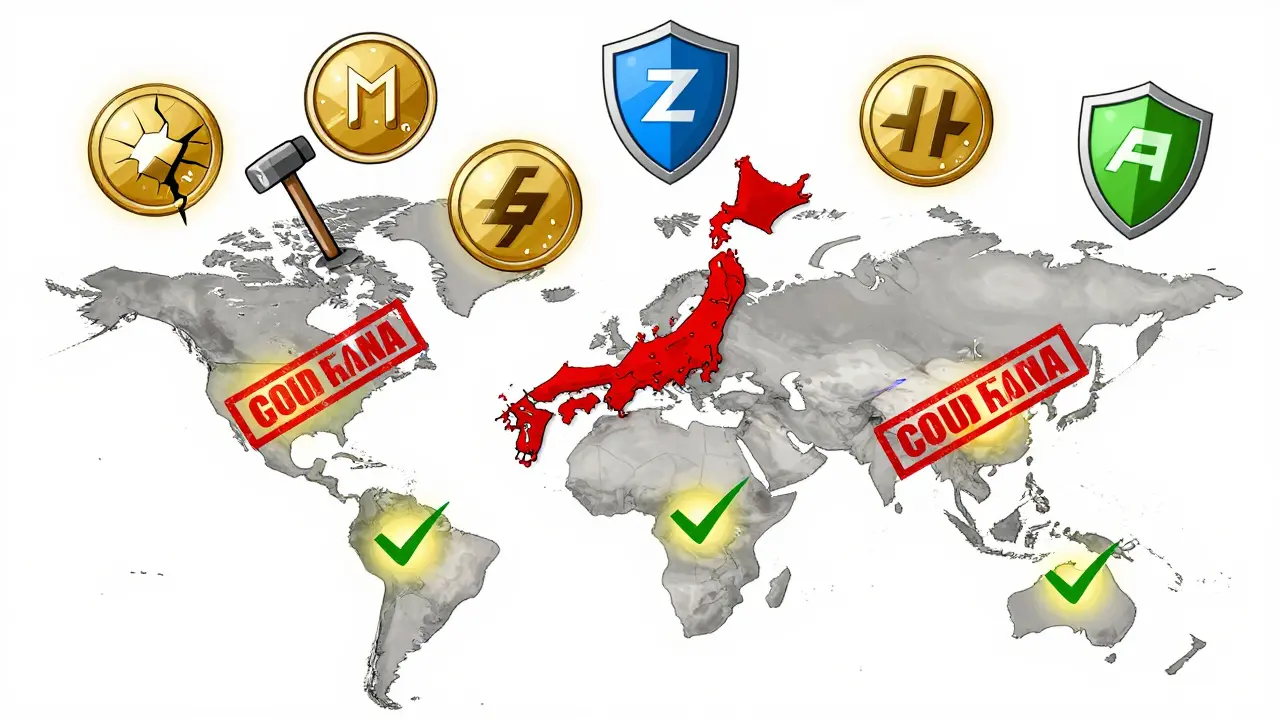
When you send Bitcoin, anyone can see who sent it, who received it, and how much was transferred. It’s all on the public ledger. But what if you didn’t want anyone to know? That’s where privacy coins come in. These are cryptocurrencies built to hide transaction details - who sent money, who got it, and how much. They’re not just another crypto option. They’re a direct challenge to how financial systems track money. And that’s why governments around the world are reacting - some with bans, others with warnings, and a few with silence.
What Exactly Are Privacy Coins?
Privacy coins are designed to make transactions untraceable. Unlike Bitcoin or Ethereum, where every transfer is visible, these coins use advanced math to scramble the data. Three main technologies do this:
- Monero (XMR) uses ring signatures and stealth addresses. Ring signatures mix your transaction with others so you can’t tell which one is yours. Stealth addresses create a new, one-time address for every payment, so no one can link your past transactions.
- Zcash (ZEC) uses zk-SNARKs, a type of zero-knowledge proof. This lets the network verify a transaction is valid without showing the sender, receiver, or amount. Users can choose between public or private transactions.
- Dash (DASH) uses PrivateSend, a coin-mixing system that combines multiple users’ funds into one transaction, making it hard to trace who paid whom.
These aren’t theoretical. Monero processes about 35,000 transactions a day. That’s 10% of Bitcoin’s volume. And while privacy coins make up less than 1% of total crypto market value, they’ve been linked to 89% of all illicit crypto activity in 2021, according to Chainalysis. Critics say that proves they’re dangerous. Supporters say that’s misleading - most crypto crime still happens on public blockchains, and privacy coins are just tools, like cash.
Where Are Privacy Coins Banned?
Several countries have taken a hardline stance. Japan led the charge in 2018, banning all privacy coins from licensed exchanges. The Financial Services Agency didn’t just warn - it outright prohibited Monero, Zcash, and Dash. South Korea followed in early 2020, with its Financial Services Commission ordering exchanges to delist them. Australia’s rules, updated in May 2021, made privacy coins technically illegal by requiring full sender and receiver info on every transaction - something Monero and Zcash simply can’t provide.
The European Union took the biggest step yet. In April 2023, the European Parliament voted 580-12 to ban anonymous crypto wallets and privacy coins under the new Anti-Money Laundering Regulation (AMLR). The ban takes effect in July 2027. No more shielded Zcash transactions. No more private Monero payments. If you’re in the EU, you’ll have to use transparent wallets or face penalties.
The United Arab Emirates also joined the crackdown. In September 2023, Dubai’s financial regulator, the DFSA, banned all financial institutions in its free zone from dealing with privacy coins. That includes banks, exchanges, and investment firms.
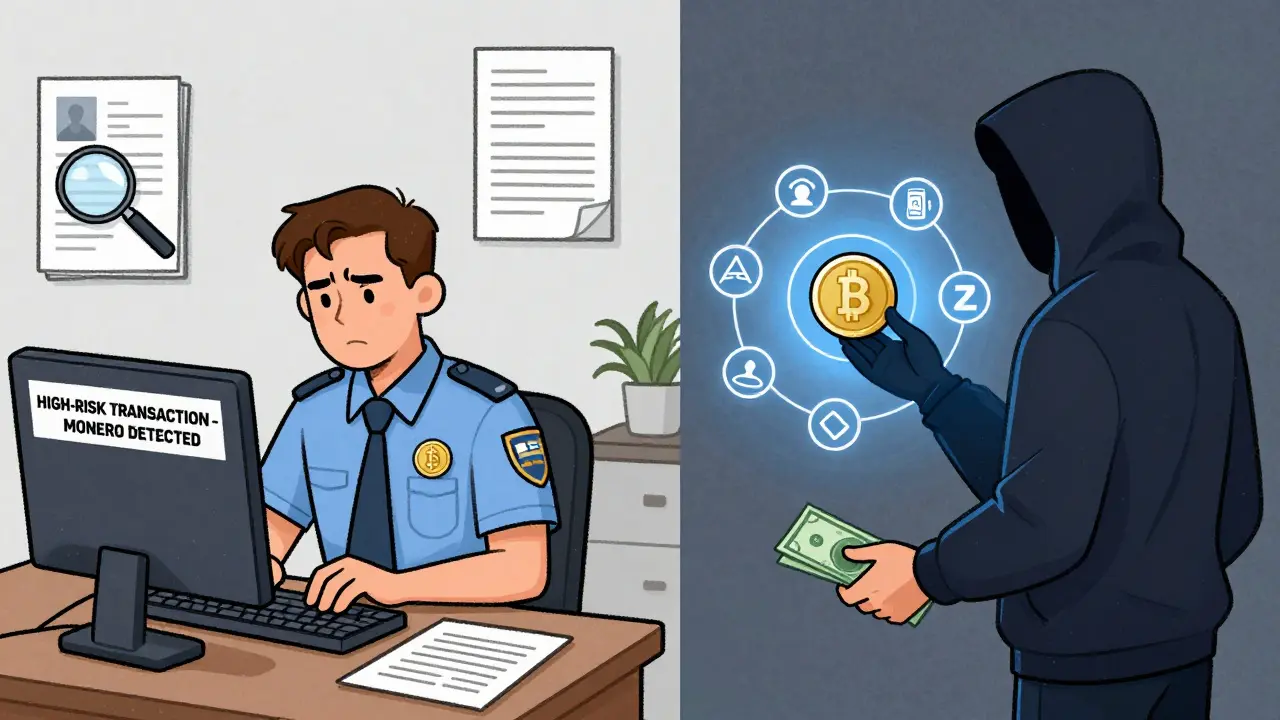
These bans aren’t random. They all tie back to the FATF’s 2021 guidance, which called privacy coins a “high-risk” product. The FATF says exchanges must treat them like high-risk customers - or stop offering them entirely. Many exchanges did. Kraken dropped Monero in January 2021. Bittrex removed all three major privacy coins by 2020. Huobi Global followed in March 2021. The message was clear: comply or lose access to mainstream users.
Where Are They Still Legal?
Not everywhere is shutting them down. The United States has taken a different path. The Treasury’s Financial Crimes Enforcement Network (FinCEN) hasn’t banned privacy coins. Instead, it says they’re legal - but subject to strict rules. Virtual Asset Service Providers (VASPs) like Coinbase or Binance US must now treat privacy coin transactions as high-risk. They need to collect more data, monitor for suspicious activity, and report anything odd under the Bank Secrecy Act.
That’s a big deal. It means if you send Monero to a U.S. exchange, they’ll ask for more ID. They’ll flag the transaction. They might freeze it. But they can’t refuse to list it. The U.S. approach is about control, not elimination.
The United Kingdom is similar. The Financial Conduct Authority hasn’t banned privacy coins. But it warned in January 2021 that they carry “higher money laundering risks.” That’s not a ban - it’s a red flag. Exchanges can still list them, but they’re on notice.
Even more surprising, some countries are welcoming them. El Salvador made Bitcoin legal tender in 2021 - and didn’t exclude privacy coins. The Central African Republic passed a crypto law in 2022 that explicitly allows all cryptocurrencies, including Monero and Zcash. These nations aren’t necessarily pro-privacy. They’re pro-crypto. And they see privacy coins as part of the ecosystem.
Why the Big Push to Ban Them?
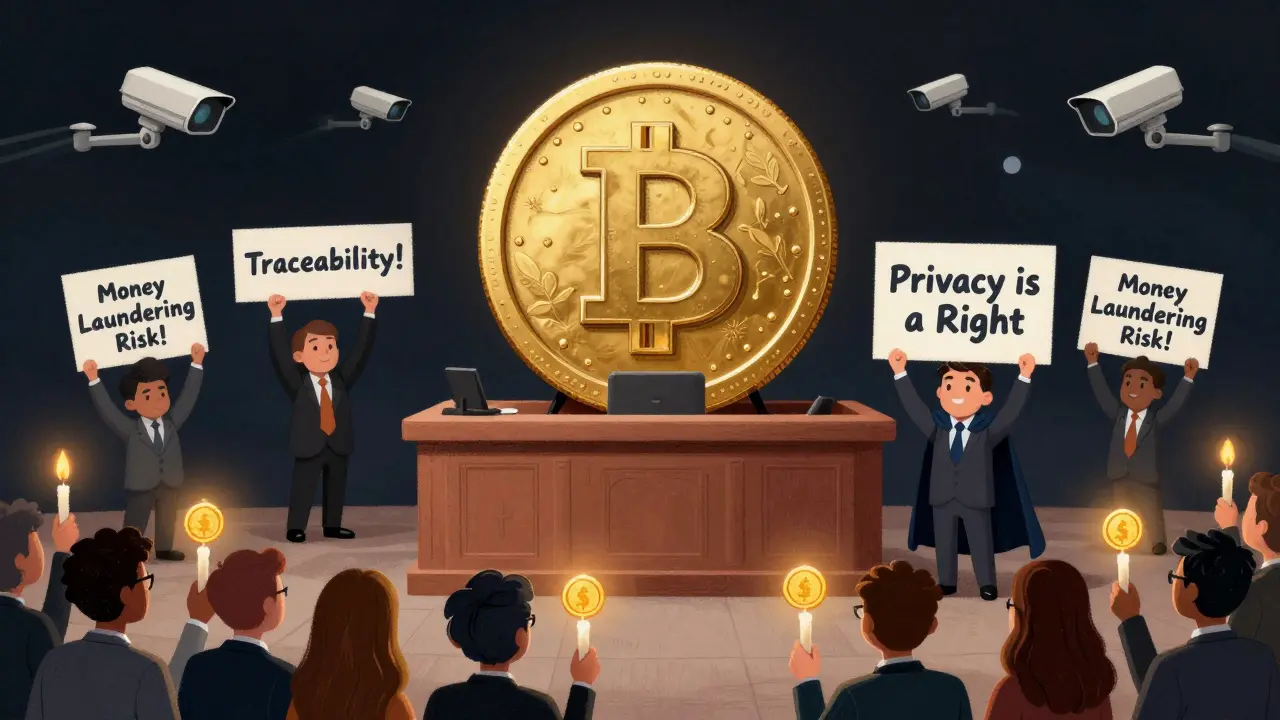
The argument for banning privacy coins comes down to one word: traceability. Law enforcement and regulators say they can’t investigate crime if they can’t see where money goes. The U.S. Treasury’s FinCEN director, Kenneth Blanco, said in 2020 that privacy coins “complicate user identification and transaction monitoring.” The European Central Bank called them a “systemic risk” in its 2022 report.
But there’s another side. The Electronic Frontier Foundation argues that privacy coins are just digital cash. Cash is anonymous. No one’s trying to ban dollar bills. Why should digital money be any different? The Zcash Foundation commissioned a 2020 legal report from Perkins Coie that found privacy coins “do not pose more of an inherent risk than traditional financial systems.” They pointed out that numbered bank accounts and offshore trusts offer similar secrecy - and no one’s banning those.
Then there’s the data. Chainalysis says privacy coins made up 89% of illicit crypto volume in 2021. But that’s 1.7 billion out of over 1.2 trillion in total crypto transactions. That’s 0.15%. Most crime still happens on Bitcoin and Ethereum. So are privacy coins the problem - or just the easiest target?
What This Means for Users and Businesses
If you’re a regular user, your experience depends on where you live. In Japan or Australia, you can’t buy Monero on any local exchange. In the U.S., you can - but you’ll jump through hoops. You might need to submit extra ID, wait for manual reviews, or face limits on how much you can send.
For businesses, compliance is a nightmare. In the U.S., VASPs have to use blockchain analysis tools to detect privacy coin activity. TRM Labs claims its tools can identify 85% of Monero transactions - but that’s not perfect. And even if they catch it, they still have to decide: Do they block it? Report it? Freeze it? The average compliance officer needs 120 hours of specialized training just to handle these cases, according to ACAMS.
And the rules keep changing. In August 2023, the U.S. Treasury issued a notice asking for public comment on whether to restrict privacy-enhancing tech. That could mean tighter rules, or even a future ban. Meanwhile, the EU is preparing for its 2027 deadline. By then, exchanges will need to build systems that strip away privacy - or exit the market.
The Future: Will Privacy Coins Survive?
It’s not a simple yes or no. Privacy coins are being squeezed from two sides. On one side, governments are tightening controls. On the other, users are finding ways around them. Some people are moving to decentralized exchanges that don’t require KYC. Others are using peer-to-peer platforms or running their own nodes.
The Cambridge Centre for Alternative Finance predicts that by 2030, 60% of major economies will have eliminated privacy coins from regulated markets. But the Electronic Frontier Foundation believes the opposite - that as surveillance grows, demand for privacy will rise. People want to protect their financial data from corporations, hackers, and governments alike.
One thing is clear: privacy coins aren’t going away because they’re unpopular. They’re being targeted because they’re powerful. And as long as there’s a need for financial secrecy - whether for whistleblowers, activists, or just people who don’t want their spending tracked - these coins will keep evolving. The question isn’t whether they’ll survive. It’s whether the world will let them exist openly.
Are privacy coins illegal everywhere?
No. Privacy coins are banned in countries like Japan, South Korea, Australia, and the European Union (starting in 2027). But they remain legal in the United States, the United Kingdom, El Salvador, and the Central African Republic - though with varying levels of regulation. In the U.S., they’re legal but subject to strict anti-money laundering rules.
Why do governments want to ban privacy coins?
Governments argue that privacy coins make it harder to track illegal activity like money laundering, drug trafficking, and ransomware payments. Agencies like the FATF and FinCEN say these coins complicate financial oversight. Critics counter that cash and offshore accounts offer similar anonymity - and that bans hurt legitimate users who value financial privacy.
Can I still buy Monero or Zcash in the U.S.?
Yes. Major U.S. exchanges like Kraken and Coinbase still list Monero and Zcash. However, you’ll likely face stricter identity checks, transaction limits, and longer processing times. Some exchanges may flag or freeze privacy coin transactions as high-risk.
Do privacy coins have any legitimate uses?
Absolutely. Journalists, activists, and whistleblowers use privacy coins to protect sources. People in countries with capital controls or hyperinflation use them to send money safely. Even regular users may want to keep their spending private from advertisers, insurers, or employers. Privacy isn’t just for criminals - it’s a basic financial right.
What happens after the EU’s 2027 ban takes effect?
After July 2027, all cryptocurrency exchanges and financial institutions in the EU must comply with full transaction transparency rules. That means no more shielded Zcash or anonymous Monero transfers. Users will be forced to use transparent wallets. Non-compliant platforms risk losing their operating licenses. Some users may turn to peer-to-peer networks or non-EU exchanges, but regulated access will vanish.
Privacy coins aren't about hiding crime-they're about protecting rights. If the government can track every dollar you spend, what's left of freedom? Cash doesn't need KYC. Why should digital cash?
The EU ban is a disaster for innovation. They're not banning crime-they're banning privacy. Monero and Zcash have legitimate use cases: journalists, dissidents, people in hyperinflation zones. This isn't regulation. It's digital authoritarianism.
I used to think privacy coins were for criminals. Then I met a woman in Ukraine who used Monero to send money to her sister across the border while Russian drones were overhead. No bank would touch it. No PayPal. No SWIFT. Just XMR. That’s not crime. That’s survival. And now the EU wants to take that away? We’re not just regulating finance-we’re erasing dignity.
If you're not doing anything wrong, why hide? This whole 'financial privacy' thing is a smokescreen for tax evaders and drug dealers. The world doesn't need anonymous money. It needs accountability.
You people are delusional. Privacy coins = crime. That’s it. End of story. Stop romanticizing criminals.
I work in crypto compliance. We flag 80% of Monero transactions. It’s a nightmare. But here’s the thing-most of those are legitimate. People sending rent. Donations to NGOs. Paying freelancers in unstable countries. The tech isn’t the problem. The policy is. We need better tools, not bans.
There’s a quiet irony here. The same governments banning privacy coins are the ones building facial recognition networks, digital ID systems, and mass surveillance infrastructure. They want to know everything about you-your location, your purchases, your relationships-yet they call Monero 'dangerous'. It’s not hypocrisy. It’s control. And it’s terrifying.
The FATF guidelines are fundamentally flawed in their risk assessment methodology. They conflate technological anonymity with illicit intent, ignoring the systemic vulnerabilities of traditional financial instruments like shell corporations and real estate trusts, which are far more instrumental in global money laundering than privacy coins. The regulatory framework is misaligned with empirical data.
They’re coming for us. You think this is about crime? No. This is the first step. Once they ban privacy coins, what’s next? Ban encrypted messaging? Ban VPNs? Ban cash? They want total visibility. Every dollar. Every thought. Every breath. They’re building the panopticon and calling it 'security'. And we’re letting them. One day, you’ll wake up and realize you can’t buy coffee without the government knowing what kind you like. And they’ll say 'it’s for your safety'. Don’t be fooled. This is the beginning of the end of freedom.
If you're using privacy coins, you're either a criminal or an idiot. Stop pretending you're some digital Robin Hood. You're just helping bad actors.
America lets you buy Monero? Pathetic. The US is becoming a haven for crypto anarchists. Meanwhile, real countries like Japan and the EU are building a future where finance is transparent, lawful, and accountable. We don’t need your libertarian fantasyland. We need order.
I just want to send money to my cousin in Nigeria without paying $50 in fees. Why can't I use something that just works?
Honestly, the whole debate is so reductive. The real issue is that regulatory frameworks haven't evolved to accommodate decentralized, cryptographic privacy mechanisms. We're applying 19th-century banking paradigms to 21st-century cryptographic primitives. It's like trying to regulate the internet with telegraph laws. The entire system is archaic. And until we acknowledge that, we're just rearranging deck chairs on the Titanic.