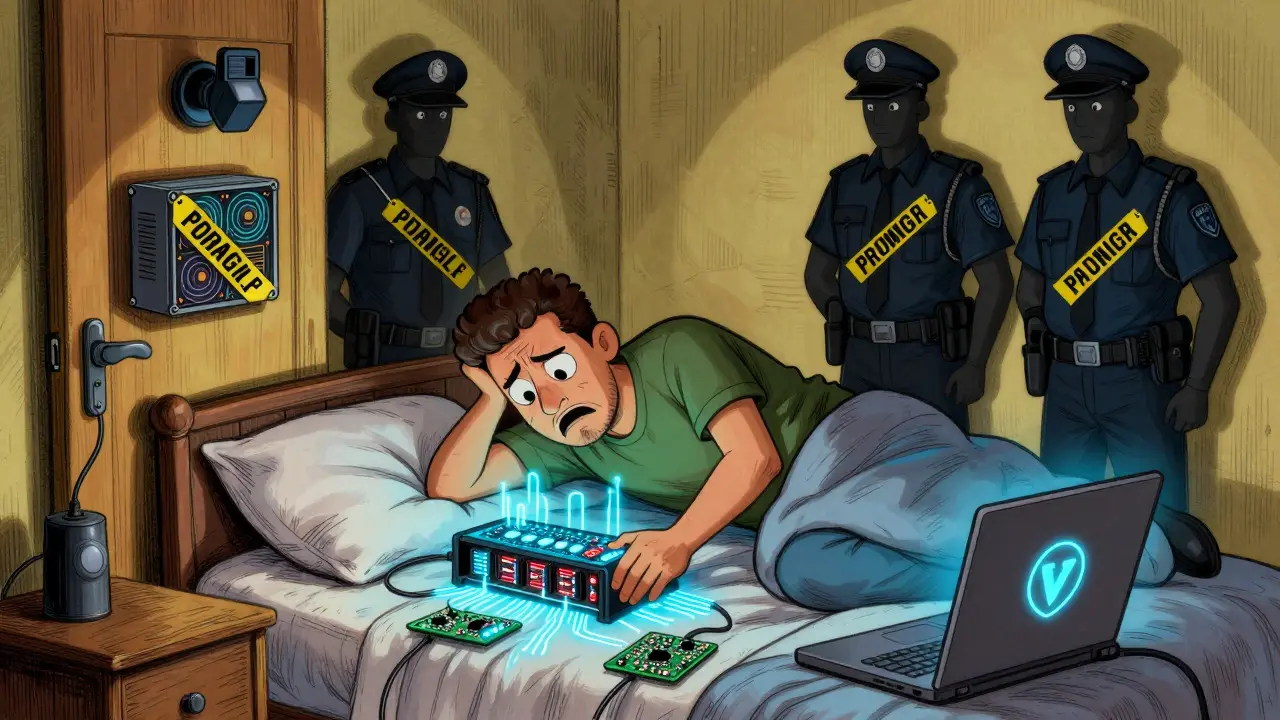
If you're in Tunisia and you're holding, trading, or mining cryptocurrency, you're breaking the law. Not just a little bit - completely. As of 2026, the Central Bank of Tunisia (BCT) still enforces a total ban on all cryptocurrency activities, and the penalties aren't just fines. They can land you in jail for up to five years.
What exactly is illegal?
It's not just about buying Bitcoin or selling Ethereum. The 2018 directive from the BCT makes every single crypto-related action illegal in Tunisia. That includes:- Buying, selling, or trading any cryptocurrency - even on foreign exchanges
- Mining Bitcoin or other coins using ASIC rigs or GPUs
- Accepting crypto as payment for goods or services
- Running or promoting a crypto exchange, wallet, or token sale
- Transferring money to or from crypto platforms through local banks
- Using crypto to pay for anything, even if the transaction happens overseas
There are no gray areas. No exceptions. Even if you're using a VPN to access Binance or Coinbase, you're still violating Tunisian currency law. The government doesn't care where the transaction happens - if you're a Tunisian citizen, you're subject to their rules.
How are they catching people?
The authorities don't just wait for reports. They're actively hunting for violations. Customs officials at Tunisian airports and ports are trained to seize mining equipment. If you try to import an ASIC miner, it will be confiscated. Your name will be logged. And if you later try to cash out your crypto into Tunisian dinars through a peer-to-peer trade, your bank is legally required to report it to the National Anti-Money-Laundering Commission (CTAF).Banks have been ordered to freeze any account that shows even a hint of crypto activity. That means if you receive a transfer from a foreign exchange like Kraken or Binance - even if it's from a friend - your account could be locked for months while investigators dig through your history. There's no appeal process. No warning. Just silence and a blocked account.
What happens if you get caught?
The punishment is harsh, and it applies to everyone - whether you're a student trading on weekends or a business owner trying to accept crypto payments.- Fines: Up to 50,000 Tunisian dinars (about $16,000 USD)
- Imprisonment: Up to five years
- Asset seizure: All crypto holdings are considered illegal proceeds and can be taken without compensation
- Business penalties: Companies that record crypto assets on their books can be fined, shut down, or lose their operating license
There have been documented cases. In 2024, a 28-year-old engineer in Sousse was sentenced to three years after police found $22,000 worth of Bitcoin on his hardware wallet. He had mined it over two years using a small rig in his apartment. The court ruled he violated Article 15 of Tunisia's Currency Control Code. He’s still serving his sentence.
What about blockchain? Isn’t that different?
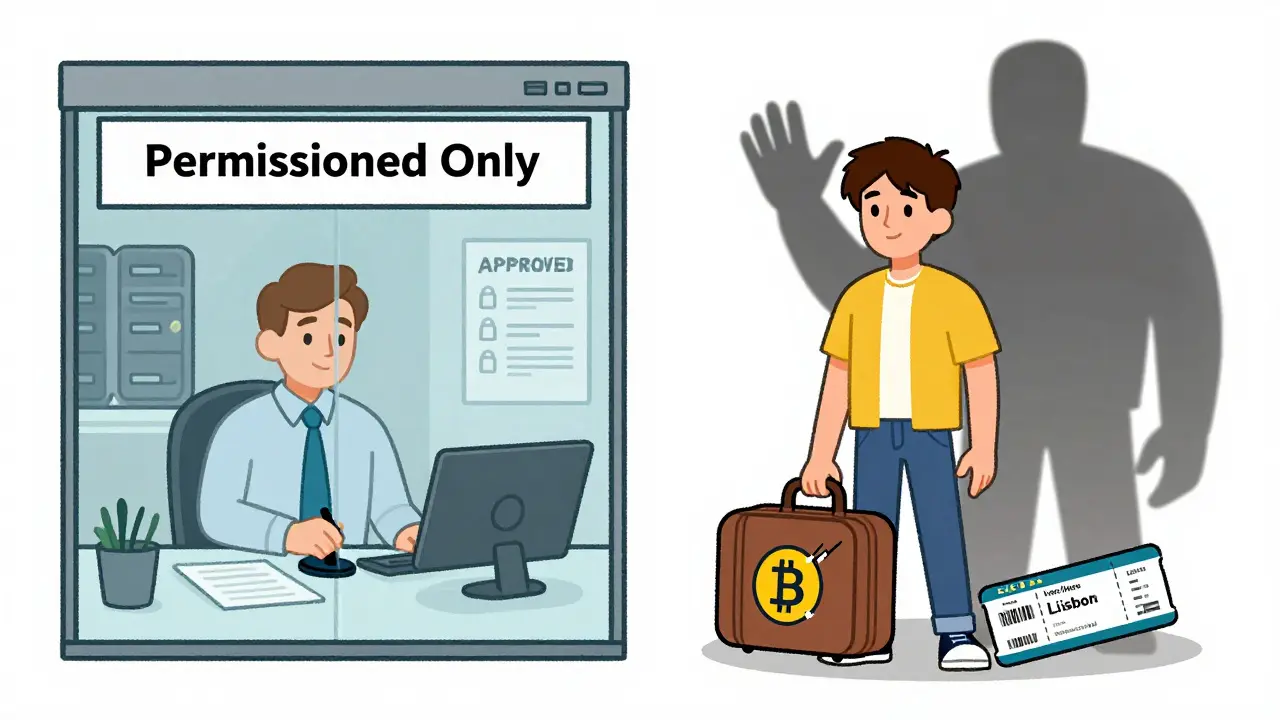
Yes - and no. The government allows blockchain technology, but only under strict control. The BCT runs a regulatory sandbox for companies that want to test blockchain for supply chain tracking, public record-keeping, or digital identity systems. But here's the catch: these systems must use permissioned ledgers. That means only government-approved entities can participate. No public access. No decentralization. No tokens.Projects like VFunder (a crowdfunding platform) and Hydro E-Blocks (a carbon credit tracker) are allowed to operate - but they host their servers in Germany or the UAE. They can't use Tunisian infrastructure. They can't accept Tunisian dinars. They can't have Tunisian users. It’s blockchain, but stripped of everything that makes it useful.
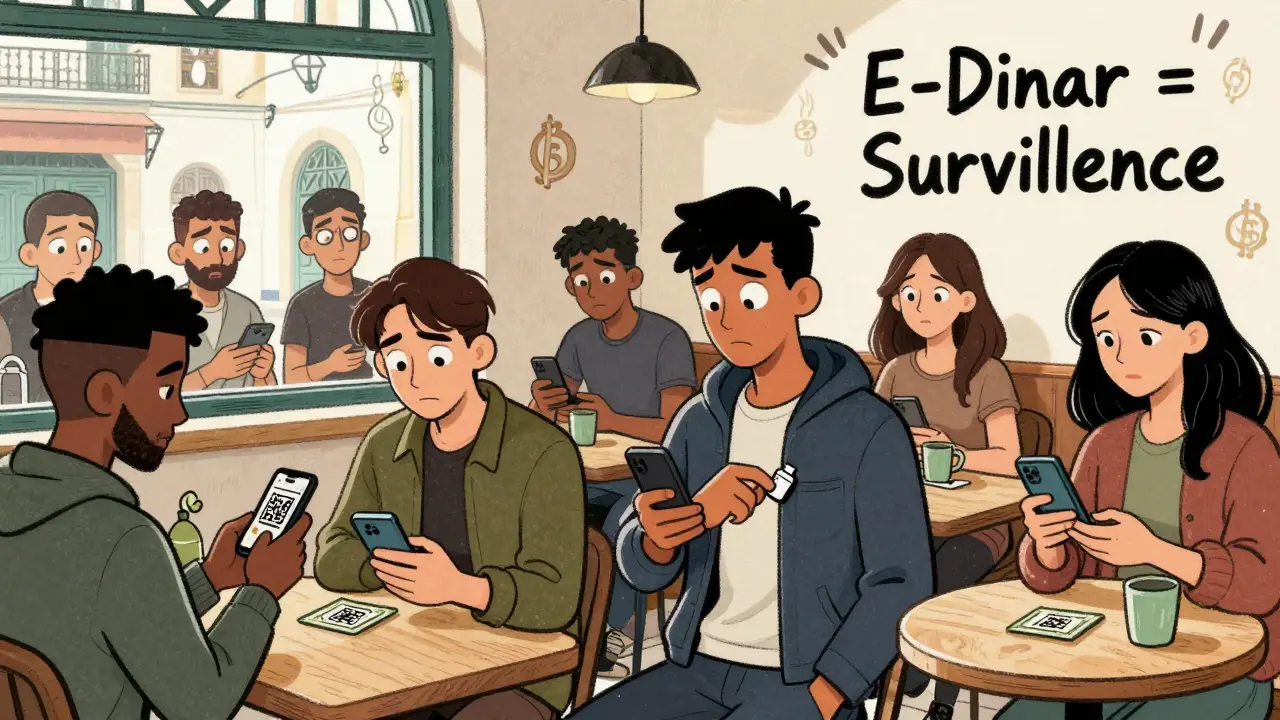
The BCT even built its own digital currency - the E-Dinar - as part of the Digital Tunisia 2025 project. But it’s not a cryptocurrency. It’s a centralized digital dinar. You can’t mine it. You can’t trade it. You can’t send it to someone else without government oversight. It’s just electronic cash with more surveillance.
Why does this still exist in 2026?
Tunisia’s stance is one of the strictest in the world. While countries like El Salvador made Bitcoin legal tender, and Switzerland created clear crypto regulations, Tunisia doubled down. Why?- They fear losing control over the national currency
- They worry about capital flight - people moving money out of the country
- They’re afraid of money laundering through anonymous wallets
- They see crypto as a threat to the banking system’s monopoly
But the ban hasn’t stopped demand. In fact, it’s made it worse. Underground P2P trading networks have grown since 2018. People meet in cafes, use Signal and Telegram, and exchange cash for crypto. Some even use crypto to pay for imported goods - like electronics from Turkey or laptops from China - bypassing traditional banking entirely.
It’s not just individuals. Entrepreneurs are leaving. Developers, engineers, and blockchain talent are moving to Morocco, Egypt, or even Portugal because they can’t build anything legal at home. Tunisia is losing its tech future - not because people don’t want innovation, but because the law won’t let them.
Can you avoid the risks?
Technically, yes - but only by doing nothing.- Don’t buy crypto. Ever.
- Don’t mine. Don’t hold. Don’t trade.
- Don’t use any exchange, even if it’s offshore.
- Don’t accept crypto as payment - even if you’re not in Tunisia.
- Don’t mention crypto on social media if you’re using your real name.
Using a VPN won’t protect you. Banks don’t care if your IP is in Germany. They care that your account received a transfer from a crypto exchange. Your phone number, ID, and bank details are all tied to your identity. The government has access to all of it.
What’s next?
There are rumors. Some lawmakers in the Tunisian parliament have started discussing a new crypto framework - one that might classify crypto as a “virtual asset” and bring it under the Financial Market Council’s oversight. There’s talk of licensing exchanges, requiring KYC, and enforcing the FATF travel rule.But nothing has passed. No bill has been voted on. No timeline exists. The BCT hasn’t signaled any shift. And until it does, the ban remains absolute.
If you're thinking about entering the crypto space from Tunisia - don’t. The risks aren’t worth it. The penalties are real. The chances of getting caught are high. And there’s no safety net.
The world is moving toward crypto. Tunisia isn’t. And right now, that gap is a legal trap.
Is it illegal to hold cryptocurrency in Tunisia?
Yes. Holding cryptocurrency is considered an illegal financial activity under Tunisia’s 2018 directive. Even if you never trade it, simply possessing digital assets can lead to asset seizure, bank account freezes, and investigation by the National Anti-Money-Laundering Commission. Authorities treat crypto holdings as unregulated, illegal funds.
Can I use a foreign crypto exchange if I’m in Tunisia?
Using a foreign exchange like Binance or Kraken is illegal under Tunisian law. The Central Bank of Tunisia prohibits Tunisian citizens from engaging with any crypto platform, regardless of where it’s based. Banks are required to monitor and report any transfers to or from crypto exchanges. Even if you use a VPN, your bank transaction history will still show the connection, triggering a report to authorities.
What happens if I mine Bitcoin in Tunisia?
Mining Bitcoin or any other cryptocurrency is a criminal offense. Importing mining equipment like ASIC miners is illegal, and customs officials seize such devices at ports. If you’re caught mining, your equipment will be confiscated, your crypto holdings seized, and you could face up to five years in prison. There have been multiple cases of miners being arrested and prosecuted since 2020.
Can I legally accept crypto as payment for my business?
No. Businesses in Tunisia are strictly prohibited from accepting cryptocurrency as payment. The Central Bank of Tunisia explicitly bans all crypto-based transactions. Even if you set up a website that accepts Bitcoin, you’re violating currency control laws. Doing so can lead to fines, business shutdown, and criminal charges against the owner.
Are there any legal ways to use blockchain in Tunisia?
Yes - but only under government control. The Central Bank of Tunisia allows blockchain for specific uses like supply chain tracking, public record-keeping, and digital identity - but only in permissioned systems where the government controls access. No public blockchains, no tokens, no decentralization. These are internal tools, not consumer services. Any attempt to use public blockchain tech outside this framework is illegal.
This is wild. Tunisia's holding onto 2018 like it's the last bastion of financial sovereignty. Meanwhile, the rest of the world is building on blockchain. They're not stopping crypto. They're just making it underground. And underground markets? They're way harder to regulate.
You think they're scared of crypto? Nah. They're scared of people realizing they don't need the government to move money. The moment you bypass the bank, you bypass their control. That's why they jail miners. Not because it's illegal. Because it's dangerous.
The E-Dinar is a fascinating case study. It's not crypto. It's not even digital currency. It's a surveillance tool wrapped in a digital interface. The government wants visibility, not innovation. They'd rather have 100% control over 1% adoption than 30% adoption with 70% decentralization.
I've read a lot of regulatory nonsense, but this is next level. Five years in jail for owning Bitcoin? That's not policy. That's performance art. The state is performing obedience. The people? They're just trying to survive a collapsing economy. The irony? The ban is accelerating capital flight.
They call it currency control. I call it economic self-sabotage. Tunisia's youth are smarter than their laws. They're using Telegram, cash handoffs, and burner phones to keep the network alive. You can outlaw tech, but you can't outlaw human ingenuity. The real crime here? The government's refusal to evolve.
I mean... why even have a bank account if you're gonna get locked for using crypto? I'd just take my cash, hop on a flight to Morocco, and do it all in person. At least then you get to keep your freedom and your Bitcoin. This law is just a tax on hope.
The mining equipment seizures are brutal. Imagine working for years to build a rig, then having it ripped from your home because the state says you're not allowed to earn money your way. This isn't regulation. It's theft dressed up as law.
I'm not surprised. When a government fears its own people having financial autonomy, it doesn't fix the system. It just criminalizes the workaround. The real tragedy? The engineers, devs, and entrepreneurs leaving. That's the brain drain no one talks about.
I just... I can't believe this is real. Like, people are getting jailed for holding digital assets? I thought we were past this. What if someone inherited crypto? What if they didn't even know it was illegal? There's no due process here. Just fear. And that's not justice.
The ban will fail. Not because people are brave. But because it's economically unsustainable. When your youth have no legal path to innovation, they leave. And when they leave, the country dies slowly. This isn't about money. It's about who gets to decide what the future looks like.