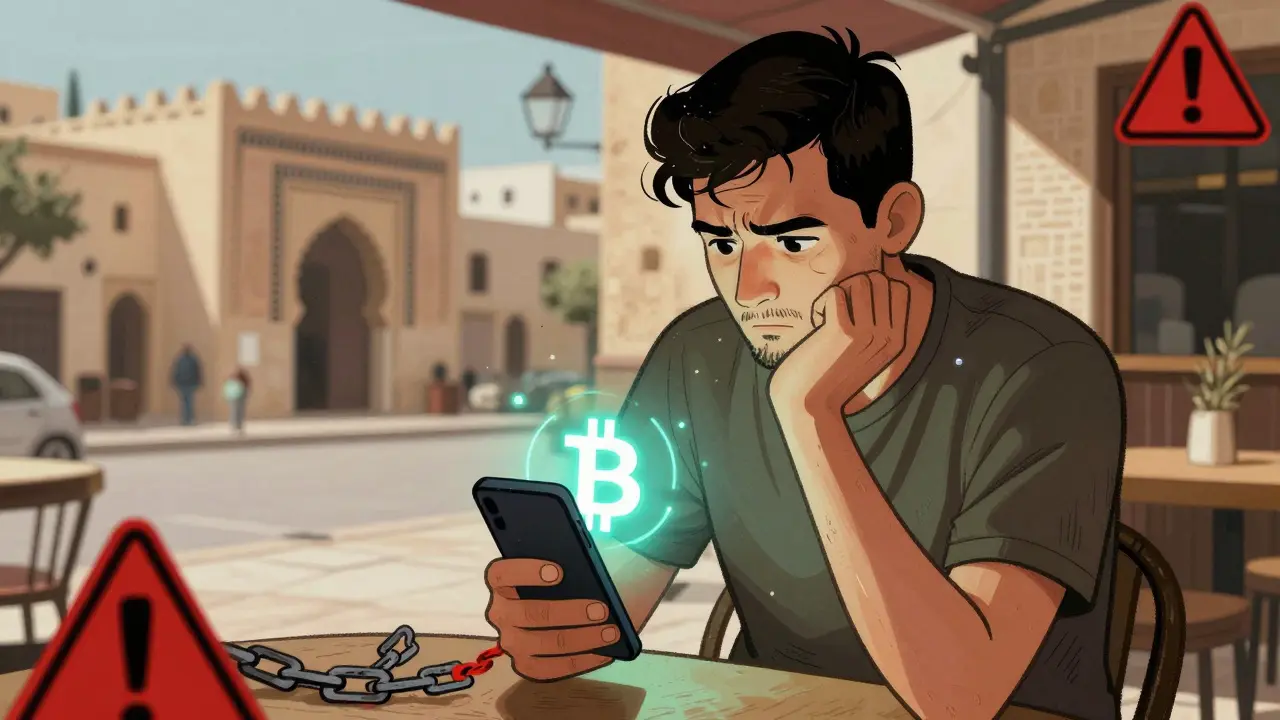
Imagine buying a Bitcoin on your phone while sitting in Algiers. In most of the world, that’s just another transaction. In Algeria, it is a criminal offense. You are not just breaking a rule; you are violating one of the strictest anti-crypto laws globally enacted under Law No. 25-10, which criminalizes all cryptocurrency activities including possession, trading, and promotion within Algeria. The consequences are real, immediate, and severe.
If you have been holding onto crypto assets or thinking about starting to trade in Algeria, you need to understand exactly what the law says. This isn’t about gray areas anymore. The government has drawn a hard line. Below, we break down the specific penalties, who they apply to, and why this matters for anyone connected to the digital asset space in North Africa.
The Core Prohibition Under Law No. 25-10
To understand the penalties, you first need to know what is illegal. Before July 24, 2023, Algeria had restrictions under its 2018 Financial Law, but those rules were vague and lacked clear punishment structures. That changed with the passage of Law No. 25-10, formally titled 'Amendment to Regulations Aimed at Combating Terrorism and Money Laundering.'
This law defines cryptocurrencies as "virtual instruments used as means of exchange via a computer system, without support from a central bank." It explicitly bans:
- Purchasing or selling any virtual currency.
- Holding or possessing crypto assets (including Bitcoin, Ethereum, and stablecoins).
- Mining cryptocurrencies.
- Using crypto wallets or exchanges.
- Promoting or advertising crypto services.
The scope is incredibly broad. It doesn't just target traders. It targets developers, influencers, educators, and even people who host blockchain nodes. If you are creating content about crypto, building a tool that interacts with a blockchain, or simply talking about it online, you could be viewed as promoting these prohibited assets.
Specific Criminal Penalties: Fines and Prison Sentences
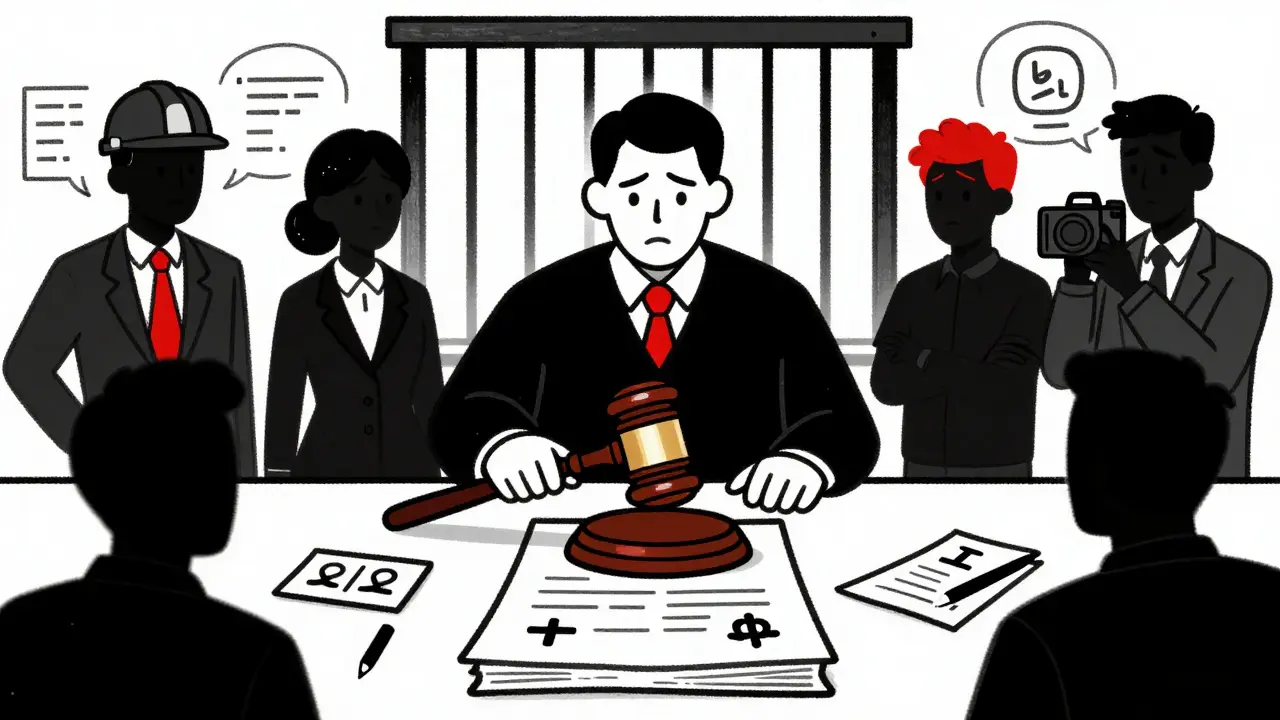
So, what happens if you get caught? The penalties are structured to deter participation through both financial pain and loss of liberty. According to multiple legal analyses and reports from authorities like ANLCCFT (National Agency for the Fight Against Money Laundering and the Financing of Terrorism), the standard penalties for individuals are:
- Imprisonment: A sentence ranging from two months to one year.
- Fines: Monetary penalties between 200,000 and 1,000,000 Algerian dinars (approximately $1,540 to $7,700 USD).
Courts can impose both prison time and fines simultaneously. For example, you might serve three months in jail and pay a fine of 500,000 DZD. Some analyses suggest higher penalty ranges for aggravated cases, citing fines up to 2 million Algerian dinars ($14,700 USD). Regardless of the exact figure, these amounts are significant relative to average incomes in the country.
If you are a repeat offender, the penalties double. This means a second conviction could lead to two years in prison and massive fines. Furthermore, if your crypto activities are linked to organized crime, money laundering, or involve large sums of money, the court will likely impose the maximum penalties available.
| Offense Type | Prison Sentence | Financial Fine (DZD) | Estimated Fine (USD) |
|---|---|---|---|
| Standard Violation | 2 months - 1 year | 200,000 - 1,000,000 | $1,540 - $7,700 |
| Repeat Offender | Doubled (up to 2 years) | Doubled (up to 2,000,000+) | $3,080 - $15,400+ |
| Aggravated/Criminal Link | Maximum applicable | Maximum applicable | High variable |
Who Is at Risk? Beyond Just Traders
Many people think only active traders are in danger. That is a dangerous misconception. Law No. 25-10 casts a wide net. Here is who else faces potential prosecution:
- Content Creators & Influencers: Posting videos, articles, or social media updates explaining how to buy Bitcoin or review an exchange can be classified as "promotion."
- Developers: Building software, apps, or tools that interact with blockchains, even if hosted overseas, can be seen as facilitating prohibited activity.
- Educators: Hosting seminars or teaching courses about blockchain technology may violate the ban on dissemination of information regarding virtual currencies.
- Affiliate Marketers: Earning commissions by referring users to foreign crypto platforms is strictly prohibited.
The law applies to passive holders too. Simply having Bitcoin in a wallet on your phone is enough to trigger charges. There is no "personal use" exemption. The government’s stance is absolute: no crypto, period.
Enforcement Mechanisms: How They Catch You
You might wonder, "How can they track me?" Algeria has significantly upgraded its enforcement capabilities. The National Agency for the Fight Against Money Laundering and the Financing of Terrorism (ANLCCFT) has established a specialized financial crimes unit dedicated to this law.
They are using advanced digital monitoring tools. Reports indicate they are implementing blockchain analysis software similar to what the U.S. Internal Revenue Service uses. These tools can trace transactions across public ledgers. While cryptocurrencies offer pseudonymity, they do not offer true anonymity against state-level forensic analysis.
Additionally, internet service providers and local banks are under pressure to monitor suspicious digital transactions. If you try to move fiat money into a crypto-friendly channel, or if your IP address accesses known exchange servers, flags are raised. The combination of financial monitoring and digital surveillance makes evasion increasingly difficult.
Regional Context: Why Algeria Is So Strict
Algeria’s approach stands in stark contrast to its neighbors. While the United Arab Emirates has created the Virtual Assets Regulatory Authority (VARA) to license crypto businesses, and Bahrain regulates exchanges through its Central Bank, Algeria has chosen total prohibition. Even Morocco and Tunisia are exploring regulatory sandboxes for blockchain innovation.
Why such a hardline stance? The government cites three main reasons:
- Anti-Money Laundering (AML): Aligning with Financial Action Task Force (FATF) guidelines to prevent terror financing.
- Capital Flight Prevention: Preventing citizens from moving wealth out of the country during periods of economic instability.
- Monetary Policy Control: Protecting the value of the Algerian dinar by preventing alternative currencies from gaining traction.
This strategy effectively removes Algeria from the global crypto economy. Where Chainalysis ranked Algeria among the top five fastest-growing crypto markets in MENA in 2022, it now sits alongside China and Egypt as one of the most restrictive jurisdictions worldwide.
Real-World Impact: Talent Exodus and Market Disruption
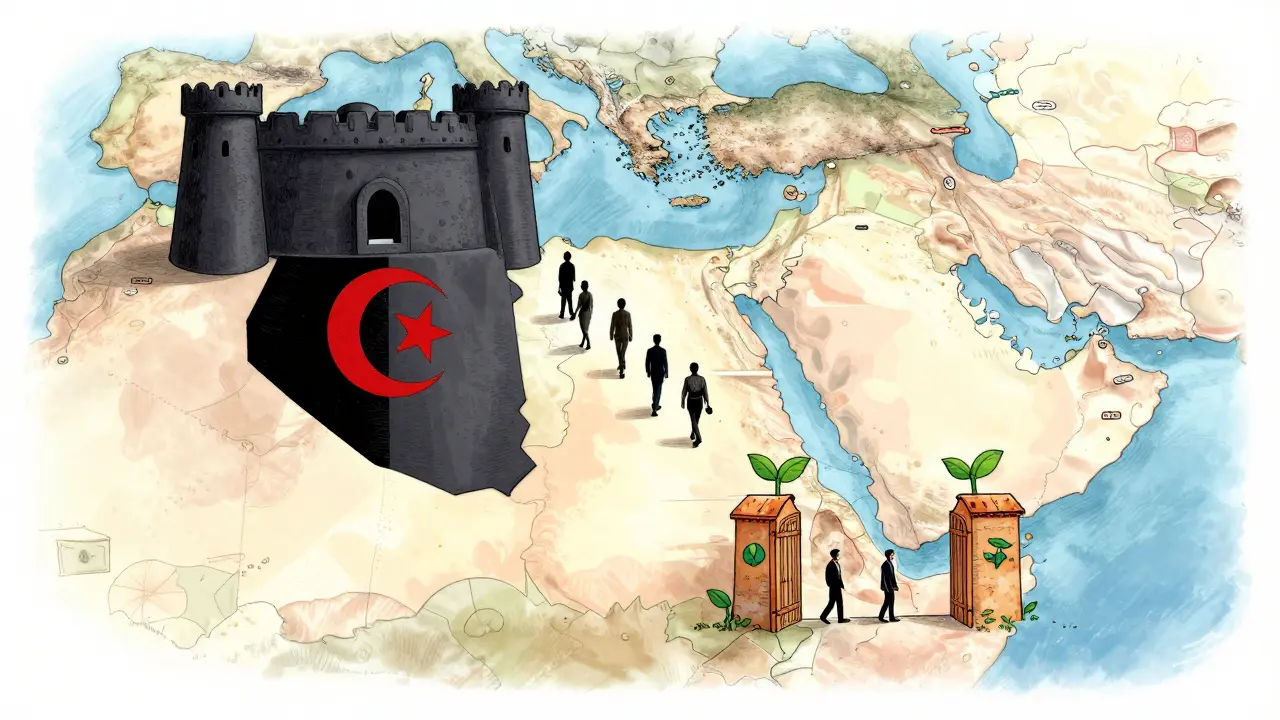
The human cost of these penalties is already visible. Since the law’s enactment, there has been a noticeable "brain drain." Skilled blockchain developers and entrepreneurs are leaving for Tunisia, Morocco, or other crypto-friendly regions. Local startups have shut down or relocated operations entirely.
Community groups on platforms like Reddit have disbanded, deleting content to avoid prosecution. An estimated $200 million in annual informal trading volume has vanished overnight. For students studying blockchain technology, career prospects in Algeria have dimmed significantly. The message from the state is clear: innovate elsewhere, or face the law.
What Should You Do?
If you are currently residing in Algeria, the safest course of action is complete compliance with the ban. This means:
- Selling off any existing crypto holdings before traveling to Algeria or taking steps to ensure they are inaccessible from Algerian networks (though possession remains illegal regardless of access).
- Avoiding any discussion, promotion, or educational content related to cryptocurrencies.
- Not engaging with any websites or apps that facilitate crypto trading.
For those considering business ventures, look to neighboring countries with clearer regulatory frameworks. Trying to operate a crypto-related business from Algeria is a high-risk strategy that invites criminal liability.
Is it legal to mine Bitcoin in Algeria?
No. Mining is explicitly prohibited under Law No. 25-10. Engaging in mining activities can result in prison sentences of up to one year and fines ranging from 200,000 to 1,000,000 Algerian dinars.
Can I hold crypto in a wallet if I don't trade it?
No. Possession itself is a criminal offense. The law bans holding, purchasing, selling, and using virtual currencies. There is no exemption for personal storage or long-term holding.
What happens if I am a repeat offender?
Penalties are doubled for repeat offenses. This could mean up to two years in prison and significantly higher fines, potentially exceeding 2 million Algerian dinars depending on the severity and context of the violation.
Does the law affect crypto developers and influencers?
Yes. The law prohibits the promotion and dissemination of information about cryptocurrencies. Developers building blockchain tools and influencers creating educational content risk being charged with facilitating or promoting prohibited activities.
How does Algeria's crypto ban compare to its neighbors?
Algeria is one of the most restrictive countries globally, similar to China and Egypt. In contrast, neighbors like the UAE, Bahrain, and Saudi Arabia have established regulatory frameworks that allow licensed crypto businesses to operate legally.
Are there any exceptions for institutional investors?
No. Law No. 25-10 applies to all entities and individuals within Algeria's jurisdiction. There are no current exemptions for institutions, corporations, or financial organizations.
They are not just banning crypto. They are banning freedom of thought and financial sovereignty because the state cannot control what it cannot see. The real conspiracy is that these governments know their currencies are failing, so they criminalize alternatives to keep you trapped in a system designed to exploit you. I have seen this pattern everywhere from Russia to China. It is always about control, never about safety.
It’s honestly wild how different laws can be depending on where you live. One day you’re in Dubai sipping coffee and trading ETH, the next you’re in Algiers and suddenly you’re a criminal for having a wallet app. Cultural shock is real, but legal shock is terrifying. 🤷♀️
The irony is palpable here. While Algeria locks down its citizens, the elites probably hold offshore accounts in jurisdictions with zero restrictions. Typical. But hey, at least we get to read about the prison sentences while they enjoy their privacy. What a joke.
This is exactly why America remains superior. We allow innovation and free markets to flourish without government interference stifling progress. Countries like Algeria fail because they prioritize ideological purity over economic reality. Weak nations ban technology; strong nations harness it. Wake up people.
Let me explain something to you simpletons. This law exists because Algeria has a weak currency and high inflation. If everyone converts DZD to Bitcoin, the dinar collapses. It is basic economics. You think the government cares about your 'freedom'? No. They care about survival. Grow up. 📉💸
i mean its kinda harsh tho. like if u just want to save some money? but i guess every country has its own rules and we gotta respect that even if it sucks lol
You need to look at the bigger picture here! This is a test of resilience for the global community. How do we support developers in these regions? We must rally behind them and provide resources for relocation or remote work opportunities that don't violate local laws. Let's turn this negative into a positive movement for digital nomads!
The enforcement mechanisms described are quite sophisticated. The use of blockchain analysis software by the ANLCCFT indicates a significant investment in surveillance infrastructure. It is fascinating to observe how authoritarian regimes adapt to decentralized technologies not by understanding them, but by weaponizing traditional monitoring tools against them.
I bet half the people complaining about this law are secretly trading on P2P platforms anyway. Rules are made to be broken. You think a piece of paper stops anyone who really wants to make money? Please. The market always finds a way, no matter how many jails they build.
This situation highlights a critical challenge for emerging economies. While capital flight is a genuine concern, outright prohibition often drives activity underground rather than eliminating it. A more nuanced approach, perhaps involving regulated sandboxes like those in neighboring Tunisia, might yield better long-term results for both stability and innovation.
My heart breaks for the developers forced to leave their homes. Imagine pouring your soul into code, only to have your livelihood criminalized overnight. It is a tragedy of talent lost to bureaucracy. We need to remember the human cost behind these cold legal statutes. So much potential wasted.
The jargon here is dense but the implications are clear. When you ban possession, you ban the tool itself. This creates a black market where prices are inflated and security is non-existent. Users will still trade, but now they have no recourse if scammed. It is a recipe for disaster for the average citizen trying to navigate this new economy.