
Imagine flipping a switch in your living room and waiting ten seconds for the lights to flicker on. For millions of people in Kazakhstan, this isn't a hypothetical nightmare-it’s a daily reality driven by an aging power infrastructure that is buckling under the weight of modern demand. The country’s energy grid is not just struggling; it is deteriorating at an alarming rate, with over one-third of its power plants showing wear and tear levels between 70% and 90%. This systemic fragility has forced the government to take drastic measures against high-energy consumers, placing cryptocurrency mining squarely in the crosshairs of new restrictions.
The narrative here isn’t just about banning digital assets. It’s about survival. When your national grid loses nearly 18% of electricity through transmission inefficiencies alone, every kilowatt counts. As Kazakhstan pushes toward a green energy transition, the clash between industrial-scale crypto operations and household stability has become impossible to ignore. Let’s look at why this conflict is happening now and what it means for miners and investors watching this Central Asian hub.
The State of Kazakhstan’s Power Grid
To understand why crypto mining is under pressure, you first need to grasp the sheer scale of the infrastructure crisis. The backbone of the nation’s electricity supply is the Unified Power System (UPS), managed by the national grid operator, KEGOC. As of early 2024, this system comprised 220 active power plants, including 144 renewable energy sources contributing 2.8 gigawatts to a total available capacity of roughly 20.4 gigawatts. While those numbers sound robust on paper, the physical condition of the network tells a different story.
Regional electric grid companies have reported catastrophic deterioration levels. In some areas, grid infrastructure shows up to 97% deterioration. What does that actually mean for the average citizen? It means frequent blackouts, voltage drops that destroy appliances, and a constant risk of technical accidents. Zhakyp Khairushev, managing director of the Atameken National Chamber of Entrepreneurs, highlighted a stark divide: while major cities like Almaty or Astana keep losses below the acceptable 9%, regional networks are failing miserably. In Oral, for instance, losses once reached 18%, meaning nearly one-fifth of all generated electricity vanished before it reached consumers.
- Total Installed Capacity: Approximately 24,641 MW as of January 2024.
- Available Capacity: Roughly 20,428 MW, indicating significant operational constraints.
- Renewable Contribution: Only 6% of total generation, despite growing investment.
- Transmission Losses: Averaging 17.42% in worst-case regional grids, far exceeding the 10-12% global standard.
This inefficiency creates a financial and technical burden that the state can no longer subsidize indefinitely. When the grid is this fragile, adding massive, unregulated loads-like crypto farms-is seen as a direct threat to national stability.
The Hidden Cost of Transmission Losses
One of the most critical factors driving policy changes is the concept of technical transmission losses. In developed economies, keeping these losses below 10% is considered best practice. Kazakhstan, however, struggles with figures that often exceed 17% in certain regions. These losses aren’t just abstract numbers; they represent wasted fuel, increased carbon emissions, and higher costs for everyone connected to the grid.
The Ministry of Energy has identified smart power grid technology as a potential solution, but implementation takes time and capital. In the meantime, the strain on the system is visible in the fluctuating number of technological violations. Cases rose from 18,609 in 2022 to over 28,000 in 2023, before dropping slightly in early 2024. Each violation represents a moment where the grid failed to meet demand or safety standards. For policymakers, allowing energy-intensive industries like Bitcoin mining to operate without strict oversight is akin to pouring gasoline on a fire. The priority has shifted from encouraging unrestricted industrial growth to ensuring basic reliability for households and essential services.
| Metric | Kazakhstan (Regional Worst Case) | Developed Economy Standard | Impact on Policy |
|---|---|---|---|
| Transmission Losses | Up to 17.42% | Below 10% | High priority for reduction via regulation |
| Grid Deterioration | Up to 97% in some zones | < 20% | Necessitates load shedding and bans |
| Renewable Share | 6% | 20-40%+ | Slow transition limits flexible supply |
Crypto Mining: The Elephant in the Room
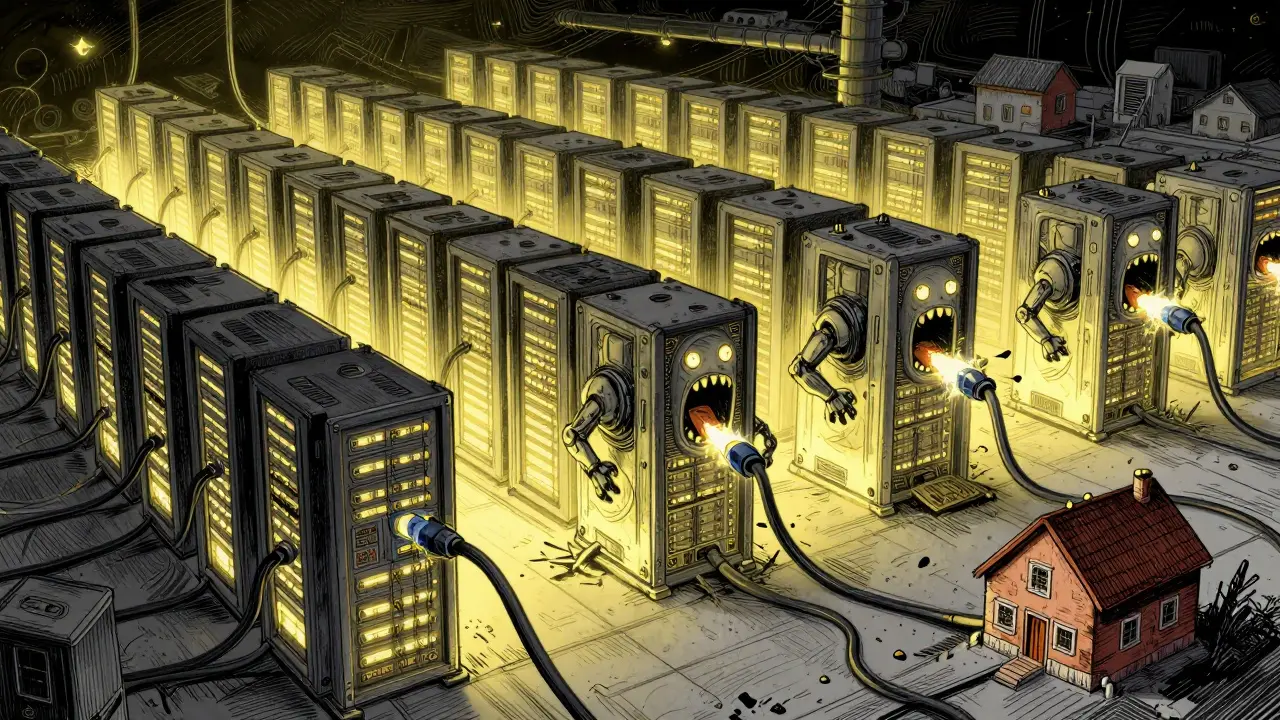
While specific legislative texts detailing a total "ban" may be sparse in public records, the practical reality on the ground is one of severe restriction. Kazakhstan was once a top-five global destination for Bitcoin mining due to cheap electricity. However, that era is effectively over. The government has moved away from welcoming large-scale mining farms because their energy consumption spikes during peak hours, exacerbating grid instability.
The strategy is no longer about outright criminalization but rather about energy rationing and strict licensing. Miners are being forced to either move to remote areas with dedicated renewable sources or shut down. The lack of clear, supportive legislation for distributed generation means small businesses cannot easily offset their usage with solar or wind power. Without the ability to generate their own clean energy, miners remain dependent on a grid that is already overstretched. This dependency makes them prime targets for curtailment during winter peaks or summer heatwaves.
Furthermore, the economic pressure is mounting. Tariffs have increased significantly, with reports indicating a 50% rise by April 2025 compared to the previous year. For a margin-driven industry like crypto mining, such cost increases can render operations unprofitable overnight. The combination of higher prices, stricter access controls, and the threat of disconnection serves as a de facto ban for many operators who cannot adapt quickly enough.
The Renewable Energy Transition Gap
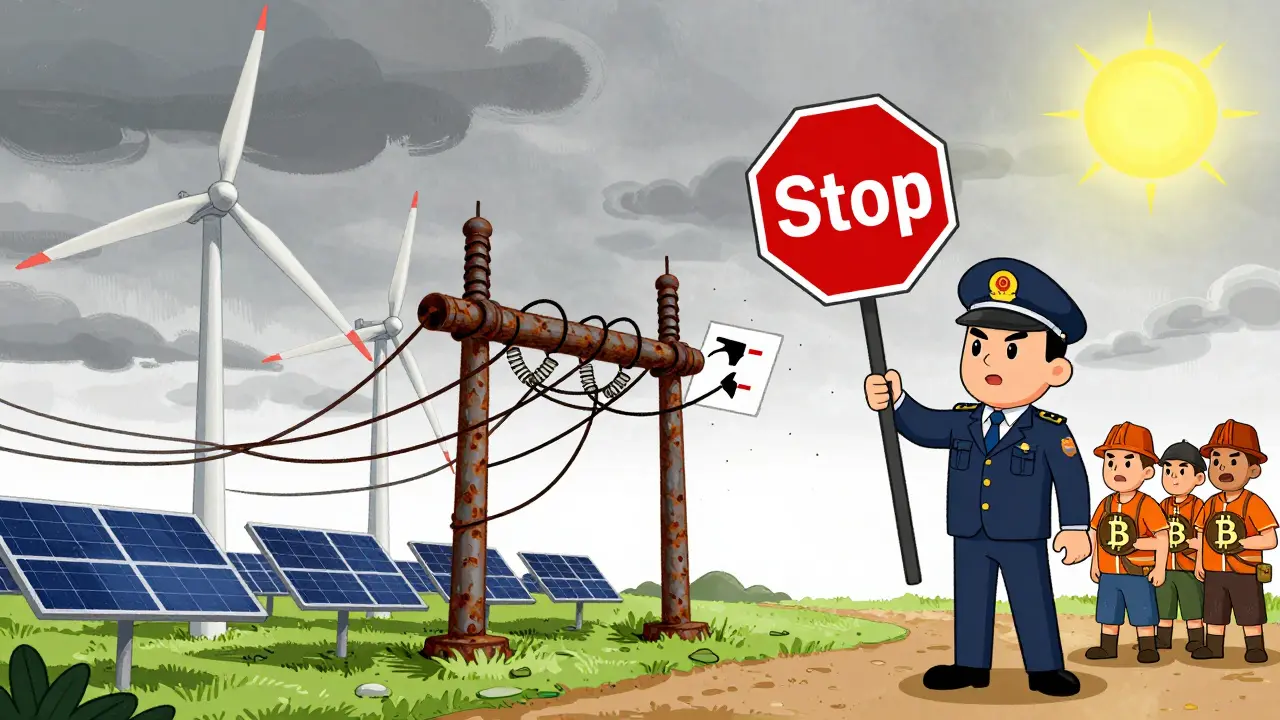
Kazakhstan is not standing still. The government has announced ambitious plans to build three major wind farms, each with a capacity of one gigawatt. Investment commitments for the renewable sector exceed $2.6 billion, signaling a serious intent to diversify away from coal. By 2024, solar PV and wind generation were projected to surpass hydropower, with renewables expected to overtake coal-fired generation by 2025.
However, there is a catch. Renewables are intermittent. The sun doesn’t always shine, and the wind doesn’t always blow. Integrating these sources requires a flexible grid capable of balancing supply and demand in real-time. Currently, Kazakhstan’s grid lacks this flexibility. Coal-fired plants, which make up the bulk of baseload power, are inflexible and slow to adjust. This mismatch creates a bottleneck. Even if more renewable energy is added, the existing transmission infrastructure (the North-South HVDC Line, for example) needs to be fully operational to move that power efficiently. Until then, the grid remains rigid, and high-load users like miners continue to strain the system.
- Legislative Support: Favorable laws exist for net consumers, but upfront costs prevent widespread adoption.
- Infrastructure Barriers: Weak dispatch capacity limits the integration of intermittent renewables.
- Future Projects: The CASA-1000 project aims to import hydroelectricity, offering a cleaner alternative to domestic coal.
What This Means for Investors and Miners
If you are considering investing in or operating within Kazakhstan’s crypto space, the message is clear: the low-hanging fruit of cheap, unlimited power is gone. The regulatory environment is shifting from permissive to protective. The state prioritizes social stability and industrial continuity over speculative tech sectors.
For existing miners, the path forward involves localization and efficiency. Moving operations closer to renewable sources, investing in battery storage to smooth out consumption peaks, and engaging directly with KEGOC for specialized tariffs are becoming necessary steps. Simply plugging into the local residential grid is no longer viable or legal for commercial-scale operations. The era of wild west mining is ending, replaced by a structured, albeit constrained, framework that demands responsibility from energy consumers.
Looking ahead, the completion of the Western Zone integration by 2040 and the North-South HVDC Line by 2029 will eventually improve transmission capacity. But until those projects come online, the grid will remain tight. Any expansion in crypto mining must be weighed against the reality of a system that is still fighting to keep the lights on for its citizens.
Is cryptocurrency mining completely banned in Kazakhstan?
There is no absolute nationwide ban on cryptocurrency mining, but it faces severe restrictions. The government has implemented strict licensing requirements, energy quotas, and higher tariffs to curb excessive consumption. Many informal miners have been disconnected, and large-scale operations are pressured to relocate to remote areas with dedicated renewable energy sources or cease operations.
Why is Kazakhstan’s energy grid so unstable?
The instability stems from severe infrastructure deterioration, with some grids showing up to 97% wear and tear. Additionally, high transmission losses (averaging 17% in some regions) and an over-reliance on inflexible coal-fired power plants limit the grid's ability to handle sudden spikes in demand, such as those caused by crypto mining farms.
How much does electricity cost for miners in Kazakhstan now?
Electricity tariffs have risen significantly, with reports indicating a 50% increase by April 2025 compared to the previous year. These hikes are designed to discourage high-volume industrial consumption and encourage efficiency, making previously profitable mining operations financially challenging.
What is KEGOC’s role in these restrictions?
KEGOC is the national grid operator responsible for managing the Unified Power System. They enforce grid stability protocols, monitor transmission losses, and implement load-shedding measures when necessary. Their development plans prioritize modernizing backbone grids to reduce losses and integrate new transmission lines, indirectly influencing how much power is available for discretionary uses like mining.
Will renewable energy solve Kazakhstan’s grid problems soon?
Not immediately. While investments exceed $2.6 billion and renewables are growing, they currently account for only 6% of total generation. The lack of grid flexibility and outdated transmission infrastructure hinders rapid integration. Major projects like the North-South HVDC Line are scheduled to complete between 2024 and 2029, suggesting significant improvements are still years away.